

Why So Many Retirees Sell Themselves Short on Hobbies
After 16 years of writing about how Americans navigate life after 50, I can tell you this with certainty: the biggest obstacle between retirees and a richer life isn’t money, health, or time. It’s outdated beliefs about what hobbies in retirement are supposed to look like and what they can actually do for you.
We’ve all heard the stereotypes. Retirement hobbies mean knitting in a rocking chair, playing bingo, or puttering around the garden. And while there’s absolutely nothing wrong with any of those activities, the assumptions around them — that hobbies are trivial, that you’re “too old” to start something new, that they can’t possibly generate income — are flat-out wrong.
A 2023 survey from AARP found that 83% of adults over 50 said having a sense of purpose was essential to their well-being, yet only 44% felt they were actively pursuing meaningful activities. That’s a massive gap, and much of it traces back to myths that need busting.
Let me walk you through seven of the most persistent ones — and what the evidence actually says.
Myth #1: Hobbies Are Just “Nice to Have” — They Don’t Affect Your Health
This is probably the most damaging myth on the list because it causes people to deprioritize the very activities that could extend their lives. The science is overwhelming: hobbies in retirement are a legitimate health intervention.
A landmark 2023 study published in Nature Medicine analyzed data from over 93,000 adults aged 65 and older across 16 countries. Researchers found that those who engaged in regular hobbies had significantly lower rates of depression, higher self-reported health, and greater life satisfaction — regardless of income level or country of residence.
The National Institute on Aging has been even more specific, noting that cognitively stimulating hobbies — learning a language, playing a musical instrument, strategic board games — can strengthen neural pathways and may delay the onset of dementia symptoms. As I covered in a related piece, brain health myths are rampant among older adults, and one of the biggest is that cognitive decline is inevitable. It’s not, and hobbies are part of the reason why.
The Physical Side Matters Too
It’s not only about the brain. Hobbies that involve movement — gardening, dancing, hiking, swimming, woodworking — contribute to cardiovascular health, balance, and muscle retention. The CDC reports that only 28% of adults over 75 meet federal physical activity guidelines. Active hobbies can close that gap in a way that feels like play, not punishment.
Myth #2: You’re Too Old to Start Something New
I hear this one constantly from readers, and it breaks my heart every time. “I’m 68 — isn’t it too late to learn guitar?” “I’ve never painted before. What’s the point of starting now?”
The point is neuroplasticity. Your brain doesn’t stop forming new connections at 50 or 60 or even 90. Research from the University of Texas at Dallas found that older adults who learned a demanding new skill — in this case, digital photography and quilting — for 15 hours a week showed measurable improvements in episodic memory after just three months.
As the research increasingly shows, aging doesn’t mean decline for most seniors. Starting a new hobby at 70 isn’t futile — it’s one of the smartest cognitive investments you can make.
Real People, Real Late Starts
Grandma Moses didn’t begin painting seriously until she was 78. Justice Ruth Bader Ginsburg started her famous workout regimen in her 60s. These aren’t anomalies — they’re proof that potential doesn’t expire. In my experience, the retirees who thrive aren’t the ones with the most talent; they’re the ones willing to be beginners again.
Myth #3: Hobbies in Retirement Are Too Expensive
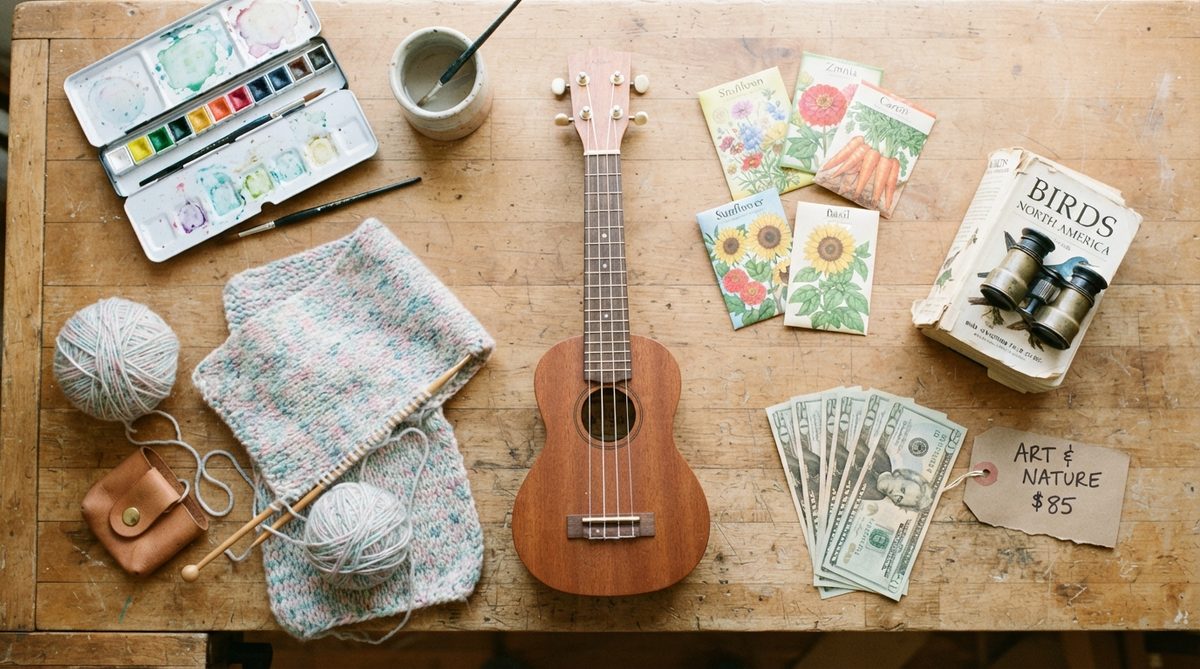
Cost is a genuine concern for retirees, especially with financial pressures continuing into 2026. But the belief that all worthwhile hobbies require significant investment is simply false.
The National Council on Aging has compiled extensive resources on free and low-cost activities for older adults, from volunteer programs to community-based classes. Many libraries now offer free access to digital learning platforms like Coursera and LinkedIn Learning. And community colleges across the country provide tuition-free enrollment for adults over 60 in at least 20 states.
Here’s a comparison of popular hobbies in retirement, broken down by startup cost, health benefit, and income potential:
| Hobby | Estimated Startup Cost | Primary Health Benefit | Income Potential |
|---|---|---|---|
| Bird Watching | $0 – $75 (binoculars) | Walking, stress reduction | Low (guiding, blogging) |
| Watercolor Painting | $30 – $80 | Fine motor skills, cognition | Moderate (art fairs, Etsy) |
| Vegetable Gardening | $20 – $100 | Physical activity, nutrition | Moderate (farmers markets) |
| Ukulele | $40 – $75 | Memory, dexterity | Low (busking, teaching) |
| Woodworking | $150 – $500 | Strength, problem-solving | High (custom pieces, repair) |
| Walking/Hiking Groups | $0 – $60 (shoes) | Cardio, balance, social | None directly |
| Creative Writing | $0 – $15 (notebook) | Cognitive, emotional | Moderate (self-publishing) |
| Genealogy Research | $0 – $100/yr (subscriptions) | Cognitive engagement | Moderate (freelance research) |
Notice how many of those options cost less than a dinner out. The myth that hobbies require deep pockets usually stems from comparing everyday pastimes to extreme examples like boating or international photography tours.
Myth #4: A Hobby Can’t Generate Real Income
This one surprises a lot of people I talk to. In reality, the “hobby economy” among retirees is booming. A 2024 AARP report found that 27% of adults aged 50+ who sell goods or services online started by monetizing a hobby. Platforms like Etsy, Poshmark, Facebook Marketplace, and even Substack have made it remarkably easy to turn craftsmanship or expertise into cash.
Five Realistic Ways to Monetize a Retirement Hobby
- Sell handmade goods online or at local markets. Woodworking, jewelry-making, knitting, pottery, and soap-making all have active buyer communities. An Etsy shop costs just $0.20 per listing, with a 6.5% transaction fee.
- Teach what you know. If you’ve mastered a skill — whether it’s fly-fishing, calligraphy, or bread baking — platforms like Skillshare, Outschool (for teaching kids), or your local parks and recreation department will pay you to share it. Private lessons can bring $25–$75 per hour depending on the subject.
- Offer freelance services. Hobby-level photography, editing, gardening design, or genealogy research can all become part-time freelance gigs through sites like Fiverr and Thumbtack.
- Start a niche blog or YouTube channel. Retirees often underestimate the value of their knowledge. A blog about budget container gardening or a YouTube channel reviewing national park campsites can generate advertising revenue once it builds an audience. It takes patience — typically 6–12 months to see meaningful income — but the overhead is minimal.
- License your creative work. Photographers can sell stock images through Shutterstock or Adobe Stock. Writers can self-publish through Amazon’s Kindle Direct Publishing, where royalties range from 35% to 70%. Artists can sell print-on-demand products through Redbubble or Society6.
The key isn’t quitting retirement to start a business. It’s recognizing that a few hundred dollars a month from something you genuinely enjoy can ease financial pressure while keeping you mentally sharp. Just be careful about online marketplaces — scam awareness is critical for any senior operating online.

Myth #5: Solo Hobbies Are Just as Good as Social Ones
Let me be clear: any hobby is better than no hobby. But the research consistently shows that social hobbies deliver outsized benefits compared to solitary ones, particularly for older adults living alone.
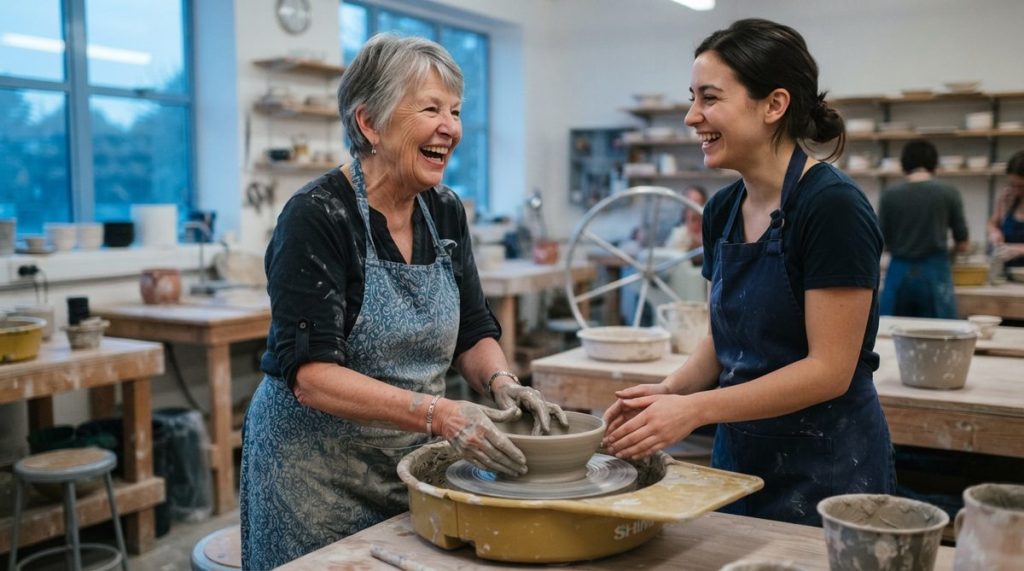
The U.S. Surgeon General’s 2023 advisory on loneliness declared social isolation a public health crisis, noting that its health impact is equivalent to smoking 15 cigarettes a day. For retirees who’ve lost the built-in social network of a workplace, hobbies that involve other people — a choir, a pickleball league, a book club, a community garden — serve double duty as both mental stimulation and social connection.
How to Add a Social Dimension to Any Hobby
Even traditionally solo hobbies can be made social with a small shift. Knit alone? Join a local stitch-and-chat group. Love reading? Start or join a book club at your library. Enjoy walking? SilverSneakers and local recreation departments offer group walking programs nationwide at no cost to Medicare-eligible adults.
What I see most often is that the social component becomes the reason people stick with a hobby long-term. The activity gets you in the door; the friendships keep you coming back.
Myth #6: If You Weren’t Creative Before, You Won’t Be Creative Now
This myth is rooted in a fundamental misunderstanding of what creativity is. It’s not a fixed trait you’re born with — it’s a practice. And multiple studies suggest older adults may actually have creative advantages over younger people.
A 2019 study from Harvard’s Graduate School of Education found that adults in their 60s and 70s demonstrated higher levels of “crystallized creativity” — the ability to combine life experience, wisdom, and knowledge into novel solutions. In other words, decades of living give you raw material that younger minds simply don’t have.
I often tell my readers that the best time to start a creative pursuit is when you finally have the time and life experience to bring something meaningful to it. That moment, for most people, is retirement.
Myth #7: Hobbies Stop Mattering Once Health Declines
This is perhaps the cruelest myth of all — the idea that once mobility or health becomes limited, hobbies become irrelevant. The opposite is true. Adapted hobbies become even more critical when physical capacity changes.
Occupational therapists routinely prescribe hobby-based activities for older adults recovering from strokes, managing arthritis, or coping with vision loss. Audiobook clubs, seated yoga, adaptive gardening with raised beds, digital art on tablets — these aren’t consolation prizes. They’re evidence-based interventions that maintain identity, purpose, and cognitive function.
For those thinking about maintaining independence at home as abilities change, setting up your home to age in place on a budget can include creating dedicated hobby spaces that are accessible and safe.
How to Actually Get Started (Without Overthinking It)
If you’ve been held back by any of these myths, here’s a simple framework I recommend:
- Pick one thing that made you curious in the last month. Not what sounds impressive — what genuinely sparked your interest, even briefly.
- Give it a 30-day trial. Commit to trying it for just one month. Don’t buy expensive equipment. Borrow, rent, or use free resources.
- Find one other person. Whether it’s a friend, a neighbor, or someone you meet at a community center class, having a single hobby partner dramatically increases the likelihood that you’ll stick with it.
- Lower the bar for “success.” You don’t need to paint like Monet or run a marathon. You need to feel engaged, curious, and a little more alive than you did yesterday.
- Rotate and evolve. Hobbies aren’t marriages. If something stops energizing you after a fair trial, try something else. The goal is sustained engagement, not lifelong commitment to a single activity.
The Bigger Picture: Hobbies as a Retirement Strategy
In my 16 years covering this beat, the single greatest shift I’ve witnessed is the reframing of hobbies from “leisure” to “strategy.” The data is clear: retirees who actively pursue hobbies report higher life satisfaction, better physical and cognitive health, stronger social networks, and — in many cases — supplemental income that eases financial anxiety.
The myths I’ve outlined above aren’t just incorrect. They’re costly. Every year that a retiree sits on the sideline because they believe they’re too old, too broke, or too uncreative is a year of compounding health benefits and personal fulfillment left on the table.
You don’t need permission to start. You don’t need to be good at it. You just need to begin.
Frequently Asked Questions
What are the best hobbies in retirement for brain health?
Learning a musical instrument, studying a new language, strategic games like chess or bridge, and creative writing are among the most effective hobbies for cognitive health. The National Institute on Aging highlights that activities requiring sustained learning and problem-solving build the strongest neural connections and may help delay dementia symptoms.
Can I really make money from a retirement hobby?
Yes. According to a 2024 AARP report, 27% of adults over 50 who sell online started by monetizing a hobby. Realistic options include selling handmade goods on Etsy, teaching skills through community programs or platforms like Skillshare, freelancing through Fiverr, or self-publishing creative work. Earnings of $200–$800 per month are common for those who treat it as a consistent part-time effort.
How do I find free hobby groups for seniors near me?
Start with your local library, community center, or parks and recreation department — most offer free classes and clubs. The National Council on Aging (ncoa.org) maintains a directory of local programs. SilverSneakers provides free fitness and social activities for Medicare-eligible adults. Many churches, veterans organizations, and senior centers also host hobby groups at no cost.
About Jennifer Adams, 16 Years in Lifestyle Journalism
Jennifer Adams is a lifestyle journalist with 16 years of experience writing about travel, hobbies, relationships, home life, and the art of aging well. She has contributed to national publications focused on the interests and aspirations of adults over 50 — from budget-friendly travel destinations to rediscovering hobbies in retirement. At Daily Trends Now, Jennifer writes warm, practical articles that celebrate life after 50 and help readers make the most of every chapter.