

The Brain Health Conversation Has Changed—Most People Haven’t Caught Up
If you’re over 50 and worried about cognitive decline, you’re not alone. According to the National Institute on Aging, approximately 6.9 million Americans aged 65 and older are living with Alzheimer’s disease in 2025, and that number is projected to climb past 13 million by 2060. Those statistics are staggering, and they’ve fueled an enormous amount of fear—along with a surprising amount of misinformation.
In my 20 years as a registered dietitian and nutritional scientist, I’ve watched brain health myths calcify into “common knowledge.” Clients walk into my office convinced that memory loss is simply inevitable, that supplements can replace real food, or that only genetics determine their fate. A major international trial published in early 2025 confirmed what many of us in the field have been saying for years: healthy behaviors—specifically diet, exercise, cognitive engagement, and social connection—measurably protect the aging brain.
Let me walk you through the most persistent brain health myths I encounter, why they’re wrong, and what the evidence actually supports. Some of these will surprise you.
Myth #1: “Memory Loss Is Just a Normal Part of Aging”
This is the single most damaging myth I hear. Yes, some cognitive processing speed naturally slows after age 60. You might take longer to recall a name or find a word. But progressive memory loss—forgetting recent conversations, getting lost in familiar places, struggling with routine tasks—is not a normal consequence of aging. It’s a sign of pathology.
The distinction matters enormously. When people assume decline is inevitable, they stop taking action. They dismiss early warning signs. They skip conversations with their doctors.
What the Science Actually Shows
A 2024 Lancet Commission update estimated that up to 45% of dementia cases worldwide are attributable to 14 modifiable risk factors, up from 40% in their 2020 report. That means nearly half of all dementia could theoretically be prevented or delayed through behavioral changes. Those risk factors include hypertension, physical inactivity, social isolation, hearing loss, depression, diabetes, excessive alcohol use, air pollution, and poor diet.
“Nearly 45% of dementia cases globally are linked to modifiable risk factors—meaning the choices you make today about diet, movement, and social connection can meaningfully alter your cognitive trajectory decades from now.”
I often tell my clients that your brain is not a ticking time bomb. It’s an organ that responds to how you treat it, just like your heart or your liver. And the latest research from Mayo Clinic reinforces that adults who adopt multi-domain lifestyle interventions—combining diet, exercise, and cognitive training—show measurably better executive function and processing speed compared to control groups.
If you’re curious about practical ways to gauge your overall health trajectory, simple screening tools can predict older adults’ health outcomes with surprising accuracy.
Myth #2: “Brain Games Are the Best Way to Prevent Cognitive Decline”
The brain-training industry is worth over $8 billion globally, and it has done an exceptional job marketing the idea that puzzles and apps are cognitive insurance policies. But the evidence is far more nuanced than the advertisements suggest.
The Transfer Problem
Most commercial brain-training programs improve your performance on the specific tasks they train. If you practice a pattern-recognition game, you get better at that game. The problem is “transfer”—whether those gains carry over into real-world cognitive abilities like remembering medication schedules, managing finances, or navigating a new city.
A large-scale 2023 meta-analysis in Psychological Bulletin found that while some cognitive training programs show modest near-transfer effects, the evidence for broad, lasting cognitive protection remains limited. The Federal Trade Commission actually fined Lumosity $2 million back in 2016 for deceptive advertising about preventing dementia.
What Actually Works Better
Physical exercise consistently outperforms brain games in clinical trials. A 2024 systematic review published in the British Journal of Sports Medicine found that 150 minutes per week of moderate-intensity aerobic exercise—brisk walking, swimming, cycling—increased hippocampal volume by 1-2% in adults over 60. The hippocampus is the brain region most critical for memory formation, and it typically shrinks 1-2% per year after age 50. Exercise doesn’t just slow that shrinkage; it can reverse it.
I’m not saying throw away your crossword puzzles. Novelty and cognitive challenge do contribute to cognitive reserve. But if you’re doing Sudoku on the couch while skipping your daily walk, you have it backwards.
Myth #3: “You Need Expensive Supplements for Brain Health”
This one hits particularly close to home for me as a dietitian. The supplement industry generates roughly $60 billion annually in the U.S., and brain health supplements—marketed with terms like “neuro-boost,” “cognitive clarity,” and “memory support”—represent one of its fastest-growing segments.
The Supplement Reality Check
Here’s what I see most often in my practice: older adults spending $80-$200 per month on brain supplement stacks while eating processed food for most meals. The irony is painful. The majority of brain health supplements have either no strong clinical evidence or evidence that applies only to people with specific deficiencies.
Let me be specific about the most popular ones:
- Fish oil (omega-3s): Beneficial if you have low omega-3 status, but a 2024 Cochrane review found no consistent evidence that omega-3 supplementation prevents dementia in well-nourished adults. Eating fatty fish twice a week is more effective and better absorbed.
- Vitamin E: High-dose vitamin E supplementation showed no benefit in Alzheimer’s prevention trials and may increase hemorrhagic stroke risk.
- Ginkgo biloba: The landmark GEM trial (Ginkgo Evaluation of Memory) followed 3,069 adults for six years and found zero reduction in dementia incidence.
- B vitamins: Genuinely important if you’re deficient (common in adults over 60 due to reduced absorption), but mega-dosing beyond what you need provides no extra cognitive benefit.
What to Focus on Instead
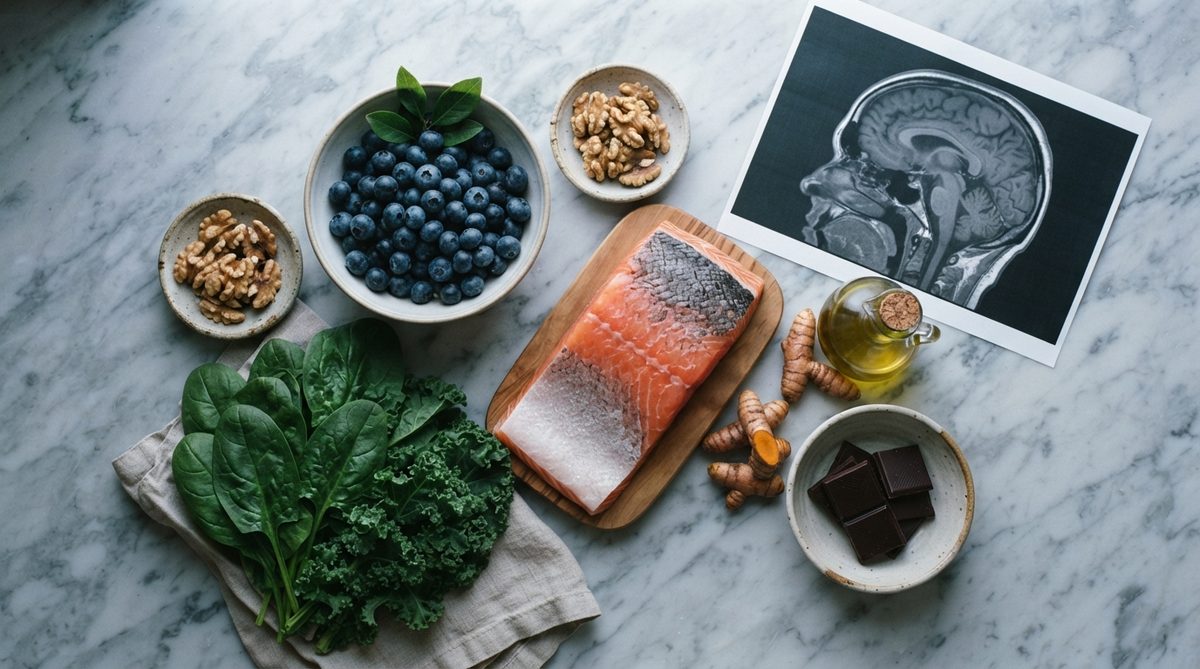
The MIND diet—a hybrid of the Mediterranean and DASH diets specifically designed for brain health—reduced Alzheimer’s risk by up to 53% in observational studies among participants who followed it rigorously, and by about 35% among those who followed it moderately. This diet emphasizes leafy greens, berries, nuts, whole grains, fish, poultry, olive oil, and beans while limiting red meat, butter, cheese, sweets, and fried food.
The financial angle matters here, too. Many seniors on fixed incomes are spending precious dollars on supplements instead of nutrient-dense food. When rising costs are already eroding retirement portfolios in 2026, every dollar should work as hard as possible for your health.
Myth #4: “If Dementia Runs in My Family, There’s Nothing I Can Do”
Genetics load the gun, but lifestyle pulls the trigger. I’ve used that phrase with hundreds of clients, and I use it because it captures a critical truth that genetic determinism obscures.
The APOE4 Gene Isn’t a Death Sentence
The APOE4 gene variant is the strongest known genetic risk factor for late-onset Alzheimer’s. Carrying one copy increases risk 2-3 times; carrying two copies increases risk 8-12 times. But “increased risk” is not certainty. Many APOE4 carriers never develop Alzheimer’s, and many people without the variant do.
A landmark 2019 study in JAMA found that among APOE4 carriers, those who maintained a favorable lifestyle (regular exercise, healthy diet, moderate alcohol, no smoking) had a 32% lower risk of dementia compared to carriers with unfavorable lifestyles. That’s a massive reduction, and it tells us something profound: even high genetic risk is modifiable.
“Among people with the highest genetic risk for Alzheimer’s, those who maintained healthy lifestyles reduced their dementia risk by 32%. Your genes are not your destiny—your daily habits are powerful medicine.”
I encourage every client with a family history of dementia to get proactive rather than fatalistic. Request a cognitive baseline assessment from your physician. Optimize your cardiovascular health. Address hearing loss—an often overlooked risk factor that the CDC estimates affects nearly two-thirds of adults over 70.

Myth #5: “It’s Too Late to Start Making Changes After 60 or 70”
This might be the myth I fight hardest against. In my clinical experience, I’ve seen 72-year-olds transform their metabolic health in six months. I’ve watched 68-year-old sedentary patients build measurable muscle mass and improve their balance scores. The brain is no different.
Neuroplasticity Doesn’t Expire
Your brain retains the ability to form new neural connections throughout life. A 2024 study from Columbia University found evidence of neurogenesis—the birth of new neurons—in the hippocampi of adults well into their 80s. The rate slows with age, but it doesn’t stop.
The international trial making headlines right now followed over 15,000 older adults across multiple countries and found that participants who adopted healthy behaviors—even starting in their late 60s and 70s—showed significantly better cognitive outcomes over two years compared to those who received only general health advice. Starting late is infinitely better than never starting.
A Practical 7-Step Brain Health Protocol for Seniors
Based on the best available evidence as of 2025-2026, here is what I recommend to my clients over 50. These steps are listed in order of impact based on current research.
- Move your body for 150 minutes weekly. Brisk walking counts. Swimming counts. Pickleball counts. The key is elevating your heart rate consistently, not occasionally.
- Follow the MIND diet pattern. Aim for at least six servings of leafy greens per week, two servings of berries, and fish at least once a week. You don’t need to be perfect—moderate adherence still reduces risk by about 35%.
- Address hearing loss immediately. Get tested, and if recommended, use hearing aids. Untreated hearing loss is one of the largest modifiable risk factors for dementia, especially in midlife.
- Prioritize sleep quality. Target 7-8 hours. During deep sleep, your brain’s glymphatic system clears amyloid-beta proteins—the same proteins that accumulate in Alzheimer’s. Talk to your doctor about untreated sleep apnea, which affects an estimated 56% of adults over 65.
- Maintain social connections. Loneliness and social isolation increase dementia risk by approximately 50%, according to a CDC analysis. Join a class, volunteer, schedule regular calls—structure connection into your week like medicine.
- Manage blood pressure and blood sugar. Midlife hypertension (consistently above 130/80) is strongly associated with later-life cognitive decline. Uncontrolled type 2 diabetes doubles Alzheimer’s risk. Work with your physician to optimize both.
- Learn something genuinely new. Not just puzzles—learn a musical instrument, study a language, take up watercolor painting. Novel skill acquisition builds cognitive reserve far more effectively than repetitive brain games.
If you’re looking for additional ways to measure whether your efforts are paying off, consider exploring simple tools that predict health outcomes and can track your progress over time.
The Emerging Science: What’s Coming Next
I’d be remiss not to mention the exciting frontiers in brain aging research. Recent studies—including one where scientists boosted a single protein and reversed aging markers in mice—are pointing toward molecular interventions that could complement lifestyle approaches in the near future. NIH-funded AI research is also accelerating the identification of at-risk individuals years before symptoms appear.
But here’s my caution as a scientist: these breakthroughs are still years from clinical application. The interventions that work right now—diet, exercise, social engagement, sleep, and cardiovascular management—are free or low-cost and available to everyone today. Don’t wait for a miracle drug when you have powerful tools already in your hands.
The Bottom Line on Brain Health Myths
After two decades in nutrition science, the pattern I see is consistent: the seniors who maintain the sharpest cognition aren’t the ones with the best genes or the most expensive supplements. They’re the ones who eat real food, move their bodies, stay socially connected, and manage their chronic conditions aggressively.
The brain health myths I’ve outlined here—that decline is inevitable, that games or supplements are silver bullets, that genetics override behavior, that it’s too late to start—are not just wrong. They’re dangerous, because they encourage passivity when action is exactly what’s needed.
You have far more control over your cognitive future than you’ve probably been told. Use it.
Frequently Asked Questions
What is the best diet for brain health in older adults?
The MIND diet, which combines elements of the Mediterranean and DASH diets, has the strongest evidence for brain health. It emphasizes leafy greens, berries, nuts, fish, olive oil, and whole grains while limiting red meat, butter, sweets, and fried food. Rigorous adherence has been associated with up to a 53% reduction in Alzheimer's risk in observational studies.
Do brain-training apps actually prevent dementia?
Current evidence does not support the claim that commercial brain-training apps prevent dementia. While they can improve performance on specific trained tasks, the benefits rarely transfer to real-world cognitive abilities. Physical exercise, social engagement, and learning genuinely new skills are more strongly supported by clinical research.
At what age is it too late to improve brain health?
It is never too late. Research shows that adults who adopt healthy behaviors in their late 60s and 70s still experience measurable cognitive benefits. The brain retains neuroplasticity throughout life, and studies have found evidence of new neuron formation in people well into their 80s.
Does the APOE4 gene mean I will definitely get Alzheimer's?
No. While carrying the APOE4 gene variant increases Alzheimer's risk, it does not guarantee the disease. A 2019 JAMA study found that APOE4 carriers who maintained healthy lifestyles—regular exercise, nutritious diet, no smoking, and moderate alcohol—had a 32% lower dementia risk compared to carriers with unhealthy lifestyles.
How much exercise do seniors need for brain health benefits?
Research supports at least 150 minutes per week of moderate-intensity aerobic exercise, such as brisk walking, swimming, or cycling. This amount has been shown to increase hippocampal volume by 1-2% in adults over 60, effectively counteracting age-related brain shrinkage in the memory center of the brain.
About Dr. Linda Park, PhD, RD (Registered Dietitian)
Dr. Linda Park is a Registered Dietitian with a PhD in Nutritional Science and 15 years of clinical and research experience focused on older adults. She has published peer-reviewed research on the role of nutrition in managing diabetes, cardiovascular health, and cognitive decline in seniors. At Daily Trends Now, Dr. Park writes evidence-based articles on senior nutrition, supplement safety, meal planning, and the foods that truly make a difference for aging well.