

Key Takeaways
- Simple, low-cost screening tools like grip strength tests and walking speed assessments can predict hospitalization, disability, and mortality in older adults with surprising accuracy.
- You don't need expensive imaging or bloodwork to get a meaningful snapshot of your health trajectory—many predictive tools take under five minutes.
- Combining two or three simple assessments gives a more complete picture than any single test, helping doctors intervene before serious decline begins.
- Seniors who track these metrics regularly at home can advocate more effectively during medical appointments and catch warning signs months or years earlier.
The Day a Handshake Changed Everything for Margaret
Margaret Chen, 74, had always been the strongest person in her family—figuratively and literally. She’d raised three kids mostly on her own, managed a bakery for 30 years, and still carried her own groceries up two flights of stairs every Saturday. So when she came to my clinic for a routine fall-risk screening last spring, she expected to sail through.
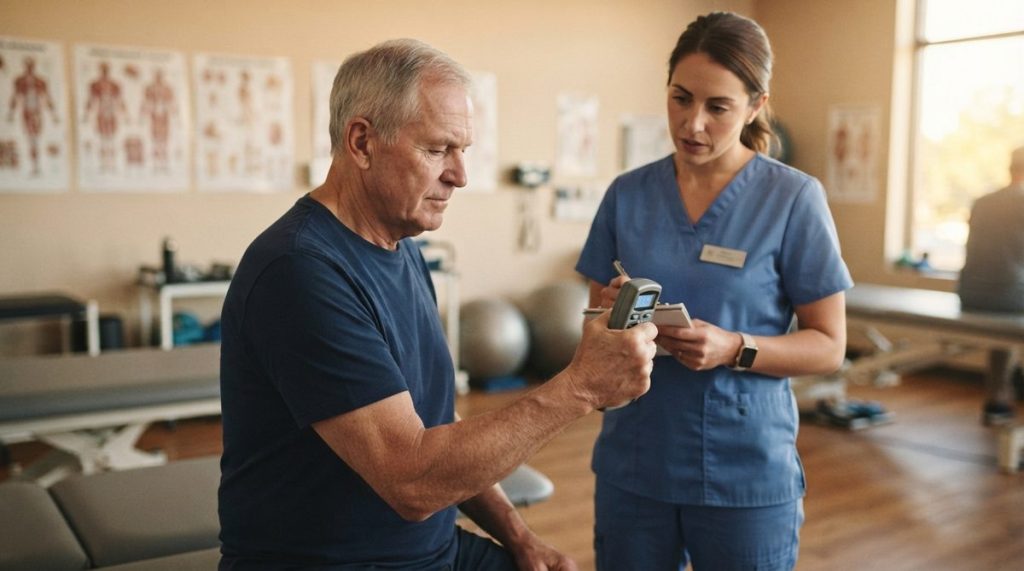
I asked her to squeeze a handheld dynamometer—a device about the size of a small stapler that measures grip strength. She squeezed. The reading came back at 14 kilograms. For a woman her age and size, that number should have been closer to 20.
Margaret looked at me like I’d told her the sky was green. “I feel fine,” she said. And she did feel fine—right then. But in my 18 years of clinical practice as a board-certified geriatric physical therapist, I’ve learned that “feeling fine” and “being on a trajectory toward serious decline” can coexist for months, sometimes years, before a crisis hits. That single grip strength reading told me Margaret was at significantly elevated risk for hospitalization within the next two years.
We didn’t panic. We got to work. And six months later, Margaret’s grip strength was back up to 21 kg. But her story raises a question that I believe every American over 50 should be asking: What simple tools can predict my health outcomes before I ever feel sick?
Why Simple Health Prediction Tools Matter More Than Ever
The United States is aging rapidly. According to the National Institute on Aging, Americans aged 65 and older will make up nearly 22% of the population by 2040—up from about 17% today. Our healthcare system is already strained, and the demand for geriatric specialists far outpaces supply. There are roughly 7,300 certified geriatricians serving over 58 million older adults.
This gap means that many seniors see general practitioners who have limited time during appointments—often just 15 to 18 minutes. In that window, complex geriatric assessments rarely happen. What I see most often is a reliance on lab panels and imaging, which are valuable but expensive, time-consuming, and sometimes miss the functional decline that actually predicts whether someone will end up in the hospital or lose their independence.
That’s where simple prediction tools come in. These are quick, validated assessments—most take under five minutes—that have been shown in large-scale studies to forecast outcomes like falls, disability, cognitive decline, hospitalization, and even mortality. They don’t replace comprehensive medical evaluations, but they fill a critical gap.
And here’s the part that surprises most of my patients: many of these tools are things you can do at home.
The Five Simple Tools That Science Says Work
Over the past two decades, researchers have identified several straightforward assessments that predict older adults’ health outcomes with remarkable accuracy. I want to walk you through the five that I use most frequently in my practice and that have the strongest evidence behind them.
1. Grip Strength Testing
This is the test that flagged Margaret’s risk. Grip strength is measured with a handheld dynamometer, and it’s been called a “vital sign” of aging by researchers. A 2022 meta-analysis published in BMJ Open involving over 3 million participants found that low grip strength was associated with a 20% higher risk of all-cause mortality, independent of other health conditions.
Why does squeezing a device predict so much? Because grip strength is a proxy for overall muscle mass and neuromuscular function. When it drops below established thresholds—typically below 26 kg for men and 18 kg for women—it signals systemic decline that may not yet show symptoms.
You can purchase a basic dynamometer online for $25 to $40, and testing takes about 60 seconds.
2. Gait Speed (The Walking Speed Test)
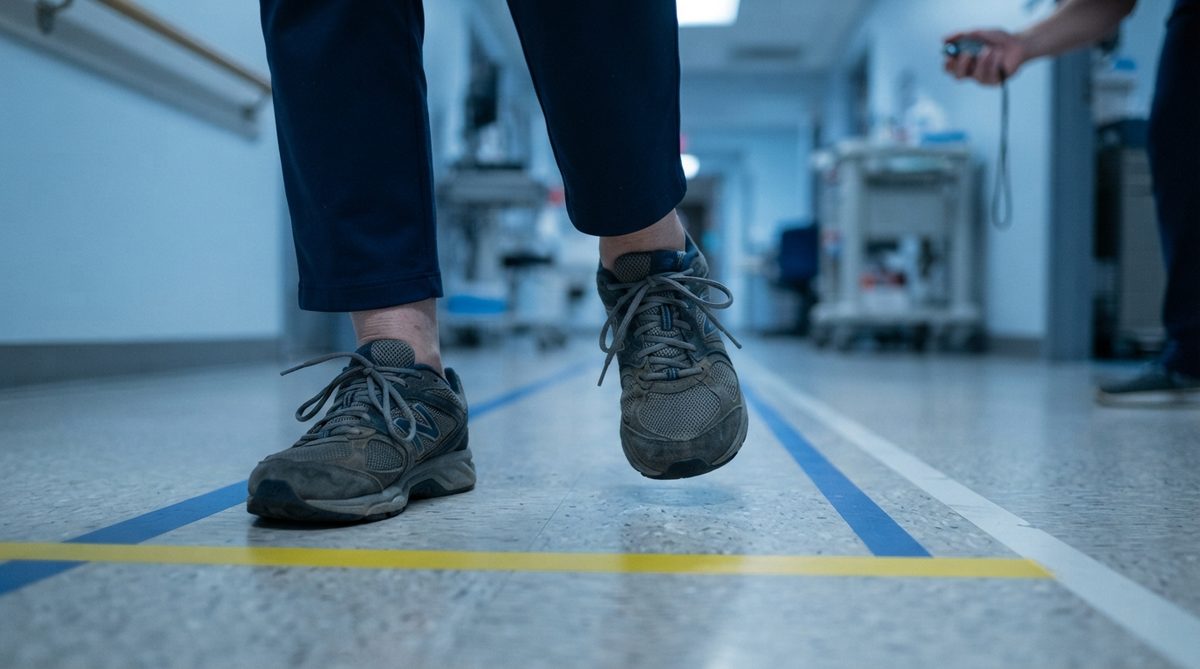
I often tell my patients that their walking speed is one of the most powerful numbers in geriatric medicine. The test is absurdly simple: walk at your normal pace over a measured distance (usually 4 meters, or about 13 feet), and time it.
A gait speed below 0.8 meters per second is a red flag. Research from the Journal of the American Medical Association has shown that gait speed predicts survival in older adults as reliably as many complex medical assessments. Seniors who walk slower than 0.6 m/s have a substantially higher five-year mortality risk compared to those walking at 1.0 m/s or faster.
The Mayo Clinic has noted that gait speed reflects the integrated function of multiple organ systems—cardiovascular, musculoskeletal, neurological, and respiratory. When walking slows, something in that chain is weakening.
3. The Timed Up and Go (TUG) Test
This one is a staple in my clinic. The patient starts seated in a standard chair, stands up, walks 10 feet, turns around, walks back, and sits down again. I time the whole thing.
Completing the TUG in under 12 seconds is generally considered normal for community-dwelling older adults. Taking longer than 13.5 seconds has been associated with a significantly increased risk of falling. A 2019 systematic review found that the TUG predicted falls with moderate-to-good accuracy in adults over 65, and it costs absolutely nothing to perform.
What makes the TUG valuable is that it combines several functional components—lower extremity strength, balance, coordination, and confidence—into a single timed task.
4. The Chair Stand Test (30-Second Sit-to-Stand)
Can you stand up from a chair and sit back down without using your arms? How many times can you do it in 30 seconds? This test measures lower body strength, which is the single biggest factor in fall prevention and independent living.
Normative data from the CDC’s STEADI initiative provides age- and sex-specific benchmarks. For example, a 70-year-old woman should be able to complete at least 10 to 12 repetitions in 30 seconds. Falling below these norms is associated with increased disability risk and greater likelihood of needing assisted living within five years.
5. Single-Leg Balance (The Stand-on-One-Foot Test)
This might be the simplest test on this list. Stand on one foot with your eyes open and time how long you can hold it. A 2022 study published in the British Journal of Sports Medicine involving over 1,700 adults found that the inability to stand on one leg for 10 seconds in mid-to-late life was associated with an 84% higher risk of all-cause mortality over seven years.
That statistic gets people’s attention, and it should. Balance is foundational. When it goes, everything else tends to follow—falls lead to fractures, fractures lead to immobility, and immobility leads to a cascade of complications including pneumonia, blood clots, and depression.
How These Tools Compare: Accuracy, Cost, and Accessibility
I’ve put together a comparison of these five assessments to help you understand what each one measures, how accurate it is, and what you’d need to do it yourself.
| Assessment Tool | What It Predicts | Time to Perform | Equipment Needed | Can You Do It at Home? | Evidence Strength |
|---|---|---|---|---|---|
| Grip Strength | Mortality, hospitalization, disability | 60 seconds | Dynamometer ($25–$40) | Yes | Strong (3M+ participants) |
| Gait Speed | Survival, cognitive decline, falls | 1–2 minutes | Tape measure, stopwatch | Yes | Very Strong |
| Timed Up and Go (TUG) | Fall risk, functional mobility | 1–2 minutes | Chair, tape measure, stopwatch | Yes (with caution) | Strong |
| 30-Second Chair Stand | Lower body strength, disability risk | 30 seconds | Standard chair, stopwatch | Yes | Strong |
| Single-Leg Balance | Mortality, fall risk | 30 seconds | None (wall nearby for safety) | Yes | Moderate-Strong |
Notice something? Every single one of these assessments is either free or costs less than $40. Compare that to an MRI ($1,000–$3,000) or a comprehensive metabolic panel ($100–$500 depending on insurance), and you start to see why researchers are calling these simple tools a game-changer for preventive geriatric care.
Combining Tools for a Complete Picture
No single assessment tells the whole story. In my clinic, I rarely use just one of these tests. The real power comes from combining two or three of them to create what researchers call a “functional profile.”
For example, Margaret’s grip strength was low, but her gait speed was normal (0.95 m/s) and her balance was solid (22 seconds on one leg). That combination told me her issue was likely isolated upper-body sarcopenia—age-related muscle loss concentrated in her hands and arms—rather than systemic frailty. That distinction matters enormously because it changes the intervention plan.
If all three of those metrics had been poor, we’d be looking at a very different conversation—one that might include evaluating the costs and logistics of aging in place versus considering assisted living options.
Researchers at Johns Hopkins and the University of Pittsburgh have developed composite frailty indices that incorporate these simple tools alongside basic questions about weight loss, fatigue, and physical activity. The Fried Frailty Phenotype, which uses grip strength and gait speed as two of its five criteria, has been validated in dozens of studies and can predict adverse outcomes with roughly 70–80% accuracy.
How to Start Tracking Your Own Health Metrics
Here’s my step-by-step guide for anyone over 50 who wants to start using these tools proactively. You don’t need a clinic visit to begin.
- Pick your starting tests. I recommend beginning with gait speed and the 30-second chair stand—they require no equipment beyond a stopwatch and a chair, and they cover two critical domains (mobility and lower body strength).
- Establish your baseline. Perform each test three times on the same day and record the average. Do this on a day when you’re feeling your usual self—not after a particularly strenuous day or when you’re under the weather.
- Compare to normative data. The CDC’s STEADI toolkit provides free, downloadable reference charts by age and sex. Your doctor can also help interpret results.
- Retest every three months. Quarterly testing lets you spot trends before they become crises. A decline of more than 10–15% in any metric over six months warrants a conversation with your healthcare provider.
- Bring your data to appointments. Print out or write down your numbers and share them with your doctor. In my experience, physicians appreciate this kind of proactive data—it gives them actionable information that a standard office visit might not capture.
- Act on the results. If your numbers are declining, don’t wait. A referral to a physical therapist, a targeted exercise program, or even nutritional adjustments can reverse early decline in many cases.

What Margaret’s Story Teaches Us About Early Intervention
Let me return to Margaret, because her case illustrates why these simple tools matter so much. When her grip strength tested low, we didn’t order a battery of expensive diagnostics. Instead, we started a targeted resistance training program focused on her upper body—three sessions per week, 30 minutes each, using resistance bands and light dumbbells.
We also addressed her protein intake. Margaret was eating only about 40 grams of protein per day—well below the 60–75 grams recommended for older women engaged in strength training. She added a morning Greek yogurt and an afternoon handful of almonds, bumping her daily intake to around 65 grams.
Six months later, her grip strength had climbed from 14 kg to 21 kg—a 50% improvement. Her chair stand count went from 11 to 15 repetitions. And her TUG time dropped from 11.2 seconds to 9.4 seconds, even though it had been in the “normal” range to begin with.
Margaret’s trajectory shifted. Without that initial grip strength screening, she would have continued her gradual decline undetected, potentially until a fall or a hospitalization forced the issue. That’s the scenario I’ve seen play out hundreds of times, and it’s preventable.
The Emerging Science: AI, Proteins, and the Future of Aging
These simple tools are powerful right now, but the science of predicting and intervening in aging is evolving rapidly. NIH-funded research into artificial intelligence is developing algorithms that can analyze gait patterns from smartphone accelerometer data, potentially turning your phone into a continuous health monitoring device.
Meanwhile, laboratory research has shown that boosting a single protein called klotho reversed age-related muscle and cognitive decline in mice, opening the door to future therapies that could complement the exercise and nutrition strategies we use today.
There’s also growing interest in how these simple functional assessments can be integrated with wearable technology. Companies are developing smartwatch algorithms that continuously estimate gait speed and balance metrics, alerting users and their physicians when values drift outside normal ranges. We’re not quite there yet in terms of clinical validation, but I expect these tools to become mainstream within five to ten years.
When to Involve Your Doctor—And What to Ask
Self-screening is a starting point, not a replacement for professional evaluation. Here are the situations where I recommend bringing your results to a healthcare provider immediately:
- Your gait speed has dropped below 0.8 m/s
- You can’t complete 8 or more chair stands in 30 seconds
- Your TUG time exceeds 13.5 seconds
- You can’t balance on one leg for at least 10 seconds
- Any metric has declined more than 15% since your last measurement
When you see your doctor, ask specifically: “Can we incorporate functional assessments into my annual wellness visit?” Many Medicare Annual Wellness Visits already include fall-risk screening, but patients often need to request the specific tests they want performed.
I’d also encourage you to ask about a referral to a geriatric physical therapist if you’re experiencing any functional decline. We’re trained to interpret these assessments in context and design individualized intervention programs. If cost is a concern, know that Medicare Part B typically covers outpatient physical therapy with a valid referral, and many clinics offer sliding-scale fees.
The Financial Connection: Health Predicts Wealth in Retirement
There’s one more reason to pay attention to these numbers, and it’s one that doesn’t get discussed enough: your functional health directly impacts your financial future.
A 2023 analysis by Genworth found that the median annual cost of a home health aide in the U.S. was $75,504, and a private room in a nursing home exceeded $108,000 per year. Adults who experience functional decline in their 60s and 70s are far more likely to need these services earlier—and for longer.
Every month you can delay or prevent the need for assisted care through early intervention saves thousands of dollars. That’s why I encourage patients to think of these simple health screenings as both a medical strategy and a financial one. If you’re also thinking about how to protect your retirement savings from rising costs, it’s worth exploring strategies to inflation-proof your retirement in 2026.
A Five-Minute Test Could Change Your Next Decade
I’ve been a physical therapist for 18 years, and if there’s one message I wish I could deliver to every American over 50, it’s this: you don’t need to wait for something to go wrong to understand where your health is heading. The tools exist. They’re simple. They’re cheap. And they work.
Margaret didn’t feel sick the day she walked into my clinic. She felt strong. But a 60-second grip test revealed a trajectory she couldn’t feel yet—and gave us the time to change it. That window of opportunity is what these simple prediction tools offer. They turn invisible decline into visible, actionable data.
Start with one test this week. Time your walk down the hallway. Count your chair stands. Stand on one foot and see what happens. Write the number down. Then do it again in three months. Those two data points could be the most valuable health information you collect all year.
Because the best time to change your health trajectory isn’t after the fall, after the fracture, after the diagnosis. It’s right now, while you still feel fine—and while these simple tools can show you the path forward.
Frequently Asked Questions
How accurate are simple health prediction tools compared to traditional medical tests?
Research shows that simple functional assessments like gait speed and grip strength predict hospitalization and mortality with 70–80% accuracy when combined, rivaling many expensive diagnostic tests. They measure real-world functional capacity rather than isolated biomarkers, which often makes them more relevant to daily living outcomes for older adults.
Can I perform these health screening tests safely at home by myself?
Most of these tests—grip strength, gait speed, chair stands, and single-leg balance—can be done at home with minimal equipment. For balance and walking tests, always stand near a wall or sturdy surface for safety. If you have a history of falls or dizziness, have a family member present or consult your physical therapist first.
How often should older adults repeat these simple health assessments?
I recommend quarterly testing—every three months—to establish meaningful trends. Annual testing may miss rapid changes, while monthly testing can create unnecessary anxiety from normal day-to-day fluctuations. Quarterly intervals hit the sweet spot for detecting genuine decline early enough to intervene effectively.
Does Medicare cover functional health assessments performed by a physical therapist?
Yes, Medicare Part B generally covers outpatient physical therapy services, including functional assessments, when ordered by a physician and deemed medically necessary. The Medicare Annual Wellness Visit also includes fall-risk screening components. Contact your Medicare plan directly to confirm specific coverage details for your situation.
At what age should I start tracking grip strength and gait speed?
I recommend starting baseline measurements at age 50, even if you feel perfectly healthy. Age-related muscle loss (sarcopenia) can begin as early as your 40s, and establishing strong baseline numbers in your 50s gives you and your doctor a clear reference point for detecting future changes. Early tracking leads to earlier intervention, which consistently produces better outcomes.
About Michael Torres, DPT, Board-Certified Geriatric Specialist
Michael Torres is a Doctor of Physical Therapy and board-certified geriatric clinical specialist with 18 years of experience working with older adults. He has treated thousands of seniors recovering from hip replacements, managing arthritis, rebuilding strength after hospitalizations, and preventing dangerous falls. At Daily Trends Now, Michael writes practical guides on exercises, mobility, pain management, and the physical strategies that help seniors stay strong and independent.