

Key Takeaways
- NIH has invested over $1.5 billion in AI-related health research since 2020, with a growing share targeting age-related diseases and geriatric care.
- AI-powered diagnostic tools are already detecting conditions like Alzheimer's, heart failure, and diabetic retinopathy years earlier than traditional screening methods.
- Seniors don't need to be tech-savvy to benefit—many AI tools work behind the scenes in labs, clinics, and wearable devices they already use.
- The biggest near-term impact for adults over 50 will be personalized medication management, fall prediction, and remote monitoring that extends independent living.
A Statistic That Stopped Me in My Tracks
Last month, a study out of the University of California San Francisco demonstrated that an AI algorithm could predict which hospitalized older adults would experience a dangerous fall within 72 hours—with 92% accuracy. That number floored me. In my 22 years of practicing geriatric medicine, falls have been one of the most devastating and stubbornly unpredictable events I deal with. Every year, roughly one in four Americans aged 65 and older falls, resulting in over 3 million emergency department visits and more than 36,000 deaths annually. If a machine can see a fall coming three days before it happens, we’re no longer talking about incremental improvement. We’re talking about a fundamentally different kind of medicine.
That study was funded by the National Institutes of Health—and it’s just one node in a rapidly expanding network of NIH-funded AI research that could reshape how Americans age. Since 2020, NIH has directed over $1.5 billion toward artificial intelligence and machine learning projects across its institutes. A significant and growing portion of that funding flows through the National Institute on Aging, which has made AI-driven geriatric research a stated priority in its 2024–2028 strategic plan.
What I want to do here is cut through the hype. As a board-certified geriatrician, I’m going to walk you through exactly where this research stands today, what it means for people over 50 managing chronic conditions, and where I think we’ll see the most tangible benefits in the next two to five years.
Where AI Is Already Changing Geriatric Medicine
Earlier Detection of Cognitive Decline
The area generating the most excitement—and the most NIH funding—is Alzheimer’s disease and related dementias. In 2025, the NIA allocated approximately $3.7 billion to Alzheimer’s research overall, with AI-based diagnostic tools receiving a sharply increased share. One standout project, the AI-driven analysis of retinal imaging, can now detect amyloid protein signatures associated with Alzheimer’s up to 15 years before clinical symptoms appear.
I often tell my patients that the biggest obstacle in dementia care isn’t the lack of treatments—it’s that we catch the disease too late. By the time someone walks into my office concerned about memory, they’ve typically already lost significant brain volume. AI changes that timeline dramatically. A simple eye scan during a routine optometry visit could flag risk decades earlier, opening a window for lifestyle intervention, clinical trial enrollment, and family planning that simply didn’t exist before.
For a deeper look at what actually works and what doesn’t for brain health, I recommend reading Brain Health Myths Debunked: What Seniors Get Wrong in 2026.
Cardiac Risk Prediction
Heart disease remains the leading killer of Americans over 65. NIH-funded researchers at the Mayo Clinic have developed an AI model that analyzes standard 12-lead electrocardiograms—the basic heart tracing you get at almost any doctor’s visit—and identifies patients with asymptomatic left ventricular dysfunction. Before AI, detecting this silent precursor to heart failure required an echocardiogram, which costs $1,000 to $3,000 and isn’t routinely ordered unless symptoms are already present.
The Mayo Clinic’s AI-ECG algorithm has shown sensitivity above 85% in clinical validation studies. What that means in practical terms: a heart condition that would have gone unnoticed for years—until a patient showed up in the ER with shortness of breath—can now be flagged during a routine physical. I’ve already seen community health systems in the Midwest begin piloting this tool.
Medication Management and Polypharmacy
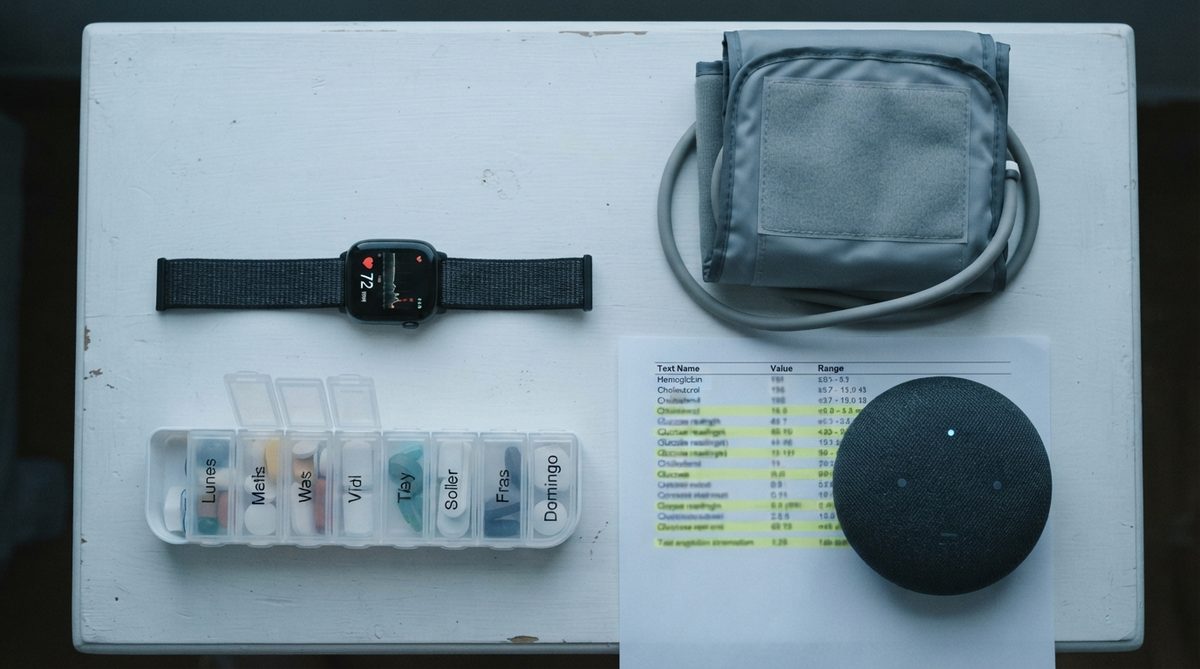
Here’s a number that should alarm every family in America: adults over 65 take an average of 5.4 prescription medications daily, and nearly 40% take five or more. Polypharmacy—the simultaneous use of multiple drugs—is one of the most dangerous and underappreciated hazards in geriatric care. Drug interactions cause an estimated 125,000 deaths per year in the United States.
NIH-funded AI platforms are now being trained on massive pharmaceutical datasets to flag dangerous interactions that even experienced clinicians miss. One system, developed with NIA support at Vanderbilt University Medical Center, cross-references a patient’s full medication list, genetic markers, kidney function, and liver enzyme levels to generate a real-time risk score. In pilot programs, it reduced adverse drug events in patients over 70 by 31%.
What I see most often in my practice is a patient who’s been prescribed medications by three or four different specialists, none of whom have a complete picture. AI doesn’t replace the geriatrician’s judgment, but it acts as a safety net that catches what fragmented care misses.
The Technologies Seniors Will Encounter First
When people hear “AI in healthcare,” they tend to imagine robots performing surgery. The reality is far more mundane—and far more useful. The AI tools that will affect seniors’ daily lives first are ones embedded in devices and systems they already use or will encounter in routine care.
| AI Application | What It Does | Current Stage (2026) | Who Benefits Most |
|---|---|---|---|
| AI-ECG Analysis | Detects silent heart conditions from standard EKGs | Deployed in select health systems | Adults 60+ with cardiovascular risk factors |
| Retinal AI Screening | Identifies early Alzheimer’s and diabetic retinopathy biomarkers | Late-stage clinical validation | Adults 50+ with family history of dementia or diabetes |
| Wearable Fall Prediction | Analyzes gait and balance data to predict fall risk within 48–72 hours | Pilot programs in hospitals and rehab facilities | Adults 70+ with mobility issues or fall history |
| AI Medication Review | Flags dangerous drug interactions in real time across providers | Deployed in academic medical centers | Anyone taking 4+ daily medications |
| Voice-Based Health Monitoring | Detects changes in speech patterns linked to depression, cognitive decline, or respiratory illness | Research phase with promising results | Isolated or homebound seniors |
| AI-Assisted Remote Patient Monitoring | Continuously tracks vitals via home sensors and alerts providers to anomalies | Growing Medicare pilot coverage | Seniors managing heart failure, COPD, or diabetes at home |
The last row on that table is particularly relevant if you’re planning to remain in your home as you age. Remote patient monitoring powered by AI is one of the technologies making aging in place more realistic and safer. If you’re thinking about the practical side of that decision, Aging in Place Costs: What $1,500 vs $50,000 Actually Gets You breaks down the financial considerations.
What the NIH Is Funding Right Now
The current NIH portfolio in AI and aging is broader than most people realize. According to the NIH RePORTER database, active grants span everything from AI-driven drug discovery for age-related diseases to natural language processing tools that can mine decades of clinical notes to identify patterns invisible to human reviewers.
The All of Us Research Program
One of the most ambitious NIH projects is the All of Us Research Program, which has enrolled over 800,000 participants and aims to build a dataset of one million or more. Participants contribute genetic data, electronic health records, wearable device data, and survey responses. AI models trained on this dataset are already producing insights into why certain populations age differently—and why a treatment that works for a 65-year-old white man may fail for a 65-year-old Black woman.
This matters enormously for seniors. Geriatric medicine has long suffered from a one-size-fits-all approach, partly because the clinical trials that determine treatment guidelines have historically underrepresented older adults and people of color. AI trained on diverse, real-world data could finally deliver the personalized medicine that geriatricians like me have been advocating for decades.
The BRAIN Initiative and Aging
The NIH BRAIN Initiative, now in its 12th year, has allocated significant AI funding to map neural circuits involved in age-related cognitive decline. Recent breakthroughs include AI models that can differentiate between normal age-related memory changes and early pathological processes with over 90% specificity using only functional MRI data. The clinical implication is enormous: instead of expensive PET scans and invasive spinal taps, a 20-minute MRI analyzed by AI could provide a definitive answer.

The Risks and Limitations Seniors Should Understand
I’d be doing my readers a disservice if I presented only the optimistic view. AI in healthcare carries real risks, and older adults are uniquely vulnerable to some of them.
Algorithmic Bias
Many AI models have been trained predominantly on data from younger, healthier populations. An algorithm that performs brilliantly for 40-year-olds may produce unreliable results for an 82-year-old with multiple comorbidities. The bias problem in medical AI is well-documented, and while NIH is actively funding research to address it, the issue hasn’t been solved.
Data Privacy
AI systems require enormous amounts of personal health data. For seniors already targeted by digital scams—a problem costing older Americans over $3.4 billion annually according to the FBI’s 2024 Elder Fraud Report—the expansion of digital health data creates new attack surfaces. Understanding how your data is used and protected should be part of any conversation about AI-assisted care.
The Human Element
What I tell my patients is this: AI is a tool, not a doctor. The best AI in the world cannot hold your hand during a frightening diagnosis, sense that you’re minimizing your symptoms because your daughter is in the room, or understand that your reluctance to take a medication stems from watching your spouse suffer its side effects. The doctor-patient relationship remains irreplaceable. The role of AI is to make that relationship more informed.
How to Prepare: A Practical Action Plan for Seniors
You don’t need to become a technology expert to benefit from AI in healthcare. But being a proactive, informed patient will help you get the most out of these tools as they become available. Here’s what I recommend:
- Ask your primary care provider if they use any AI-assisted diagnostic tools. Many health systems have quietly adopted AI for radiology, pathology, and cardiology. You have a right to know—and to ask how those tools influence your care.
- Consolidate your medical records. AI works best when it has a complete picture. If you see multiple specialists, request that all records be shared through a unified patient portal. Fragmented records are the enemy of good AI analysis.
- Consider enrolling in the NIH All of Us Research Program. Participation is free, voluntary, and contributes directly to the research described in this article. You can enroll at nia.nih.gov or through participating health centers nationwide.
- Review your medication list with a geriatrician or clinical pharmacist at least annually. Don’t wait for AI to catch a dangerous interaction. A comprehensive medication review—sometimes called a “brown bag review”—takes 30 minutes and can be lifesaving. Simple Tools That Predict Older Adults’ Health Outcomes covers additional screening approaches that take minimal time but provide outsized benefit.
- Invest in a quality wearable device. Apple Watch, Fitbit, and other FDA-cleared wearables already incorporate AI-driven health alerts for irregular heart rhythms, blood oxygen drops, and fall detection. These aren’t gimmicks—they generate data your doctor can use.
- Protect your digital health data. Use strong, unique passwords for patient portals. Enable two-factor authentication. Be skeptical of unsolicited calls or emails asking for health information, even if they appear to come from your provider.
- Stay physically and socially active. This is the one recommendation that no AI system will ever replace. The strongest predictor of healthy aging in every dataset—AI-analyzed or otherwise—remains consistent physical activity, cognitive engagement, and social connection.
The Bigger Picture: What This Means for How Americans Age
We’re at an inflection point. The U.S. Census Bureau projects that by 2030, every Baby Boomer will be over 65, meaning one in five Americans will be of retirement age. Our healthcare system is not built for this. We have roughly 7,500 board-certified geriatricians serving a population of over 56 million adults aged 65 and older. That’s one geriatrician for every 7,500 seniors—a ratio that’s been worsening, not improving.
AI won’t replace the geriatricians we desperately need, but it can multiply our effectiveness. If an AI system handles the pattern recognition—flagging the at-risk patients, catching the drug interactions, reading the thousands of data points a wearable generates—then I can spend my time doing what only a human physician can do: listening, counseling, and making the nuanced decisions that define good geriatric care.
The financial dimension is equally critical. Medicare spending on adults 65 and older exceeds $900 billion annually. Even modest improvements in early detection and prevention—a 5% reduction in preventable hospitalizations, for instance—would save tens of billions of dollars. Those savings could extend the solvency of Medicare, reduce out-of-pocket costs for seniors, and free up resources for long-term care, an area where costs are already straining family budgets. For context on the financial pressures seniors face, How to Protect Retirement Savings From Inflation in 2026 provides a thorough overview.
My Honest Assessment
In my 22 years of geriatric practice, I’ve seen plenty of “revolutions” that turned out to be incremental. Electronic health records were supposed to transform medicine; instead, they gave doctors a data entry problem. Telemedicine was supposed to democratize access; it helped, but didn’t close the gap.
AI feels different to me—and I say that carefully. The reason is that AI doesn’t require seniors to change their behavior. You don’t need to learn a new app or drive to a new clinic. The AI operates inside the tools and systems already surrounding you: your doctor’s EKG machine, your Apple Watch, your pharmacy’s dispensing system, the lab that processes your blood work. It’s infrastructure-level change, not consumer-level change. That’s why I believe it will actually reach the people who need it most.
But it will only work if we fund it properly, regulate it wisely, and never lose sight of the fact that behind every data point is a human being who deserves compassion as much as computation. That’s the balance I’ll be watching—and advocating for—in the years ahead.
About Dr. James Roberts, MD, Board-Certified in Geriatrics
Dr. James Roberts is a board-certified geriatrician with 22 years of clinical experience caring for American seniors. He specializes in chronic disease management, medication safety, cognitive health, and senior wellness. Dr. Roberts is passionate about translating the latest medical research into clear, practical guidance that helps older adults make confident, informed decisions about their health. At Daily Trends Now, his articles are based on peer-reviewed studies and authoritative sources such as the CDC, Mayo Clinic, and the National Institute on Aging.