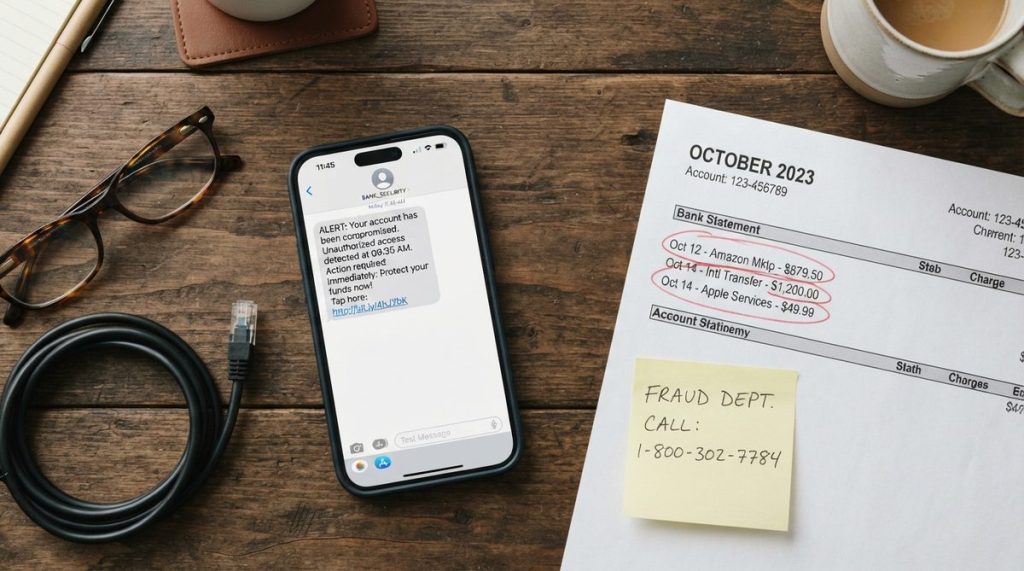


The Phone Call That Almost Cost Margaret Everything
Margaret Chen had been managing her own finances for 43 years. A retired school principal in suburban Phoenix, she paid her bills on time, kept meticulous records, and considered herself sharp as ever at 74. So when her phone rang on a Tuesday afternoon and a calm, professional voice told her that her Social Security number had been “compromised in a federal data breach,” she listened.
The caller knew her full name. He recited the last four digits of her Social Security number. He transferred her to a “supervisor” who explained that her bank accounts would be frozen unless she acted immediately. Within 90 minutes, Margaret had purchased $8,000 in gift cards from two different stores and read the redemption codes over the phone.
It wasn’t until her daughter called that evening that Margaret realized what had happened. “I felt so stupid,” she told me when I interviewed her for a consumer protection story last spring. “I’ve warned my students about strangers their whole lives. But this man sounded like he was from the government.”
Margaret isn’t stupid. She’s a victim of an epidemic. And in my 12 years covering consumer technology, I’ve never seen elder fraud escalate as fast — or as ruthlessly — as it has in the past two years.
The Staggering Scale of Elder Fraud in 2025
According to the FBI’s Internet Crime Complaint Center (IC3), Americans over 60 reported losses exceeding $3.4 billion to online and phone scams in 2023 — a 11% jump from the year before. By the end of 2024, preliminary data suggested that number had climbed past $4 billion. And those are only the cases that get reported. The FBI estimates that fewer than one in five elder fraud victims ever files a complaint.
“Elder fraud is not a technology problem. It’s a trust problem. Scammers don’t hack your computer — they hack your emotions.” — Alex Rivera, Senior Technology Journalist
What’s driving the surge? A toxic combination of sophisticated AI tools, vast databases of stolen personal information, and the simple demographic reality that older Americans control roughly 70% of the nation’s disposable income. Criminals follow the money, and increasingly, they’re following it to retirees.
For a deeper look at how artificial intelligence is reshaping both the threats and the defenses older adults face, I recommend reading How NIH-Funded AI Research Could Change Aging in America.
The Five Scams Targeting Older Adults Right Now
I track consumer fraud trends constantly, and I want to walk you through the specific schemes I’m seeing most often in 2025. These aren’t theoretical — they’re hitting real people every single day.
1. The Government Impersonation Call
This is what got Margaret. Scammers pose as representatives from the Social Security Administration, the IRS, Medicare, or even the FBI itself. They create urgency — your benefits are at risk, there’s a warrant for your arrest, your identity has been stolen — and then demand immediate payment, often through gift cards, wire transfers, or cryptocurrency.
The new wrinkle: AI-powered voice cloning means these callers can now sound eerily natural, with no trace of a foreign accent or a robotic cadence. Some even use “spoofed” caller ID numbers that match the actual phone numbers of government agencies.
2. The Grandparent Scam (Now With AI Voice Cloning)
A frantic voice calls: “Grandma, I’m in trouble. I’ve been arrested. Please don’t tell Mom and Dad.” The caller sounds exactly like your grandchild. That’s because scammers are now scraping voice samples from social media videos and using AI to generate convincing clones in real time.
The FBI reported a 300% increase in AI-assisted impersonation scams between 2022 and 2024. What I see most often is that victims never question the voice — they react to the emotion.
3. Tech Support Fraud
A pop-up appears on your computer screen: “YOUR DEVICE HAS BEEN COMPROMISED. CALL MICROSOFT SUPPORT IMMEDIATELY.” You call the number. A helpful “technician” asks you to grant remote access to your computer. Within minutes, they’re inside your banking apps.
The FTC has documented that tech support scams cost older Americans over $900 million in 2023 alone. These schemes prey on a very understandable anxiety: the fear that your device has been hacked.
4. Romance and Companionship Scams
After the loss of a spouse or during periods of isolation, many older adults turn to online platforms for connection. Scammers create elaborate fake profiles, build weeks or months of emotional intimacy, and then engineer a financial crisis — a medical emergency abroad, a frozen bank account, a business deal gone wrong. The average romance scam victim over 60 loses more than $9,000 before realizing the relationship isn’t real.
5. Investment and Cryptocurrency Schemes
These have exploded. Fraudulent investment platforms — often promoted through social media ads or unsolicited emails — promise guaranteed returns on crypto or precious metals. Victims are walked through creating cryptocurrency wallets and transferring funds to addresses controlled by criminals. Once the money moves, it’s essentially unrecoverable.
If you’re concerned about protecting your retirement savings from threats beyond scams, including inflation, How to Protect Retirement Savings From Inflation in 2026 offers practical strategies worth reviewing.
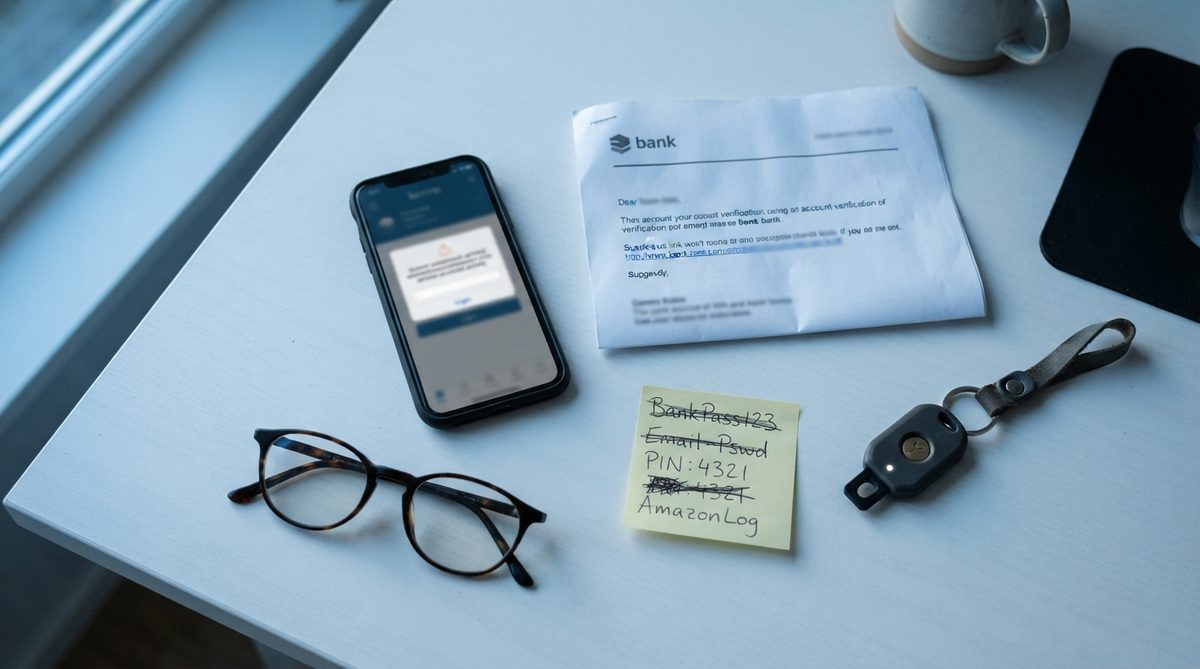
Why Older Adults Are Targeted — and Why It’s Not About Being “Gullible”
I want to address something directly, because I hear it constantly: the assumption that elder fraud victims are somehow naive or technologically illiterate. In my experience, that’s almost never true.
Margaret Chen ran a school with 600 students. I’ve interviewed retired engineers, former bank managers, and even a cybersecurity consultant’s own mother who fell for a tech support scam. Intelligence doesn’t protect you. Awareness does.
There are specific reasons criminals target adults over 50:
- Financial stability: Older Americans are more likely to have savings, home equity, and good credit — all valuable to thieves.
- Politeness and trust: Research from AARP shows that older adults are significantly less likely to hang up on a caller or ignore a seemingly official communication.
- Isolation: Those living alone may lack someone nearby to say, “Wait — let me look at this with you before you send anything.”
- Unfamiliarity with new tactics: While many seniors use technology confidently, the specific mechanics of spoofed numbers, deepfake voices, and phishing links evolve faster than most people’s defenses.
The AARP’s technology resources have documented that scam sophistication now surpasses the ability of many spam filters and call-blocking apps to catch threats in real time.
How to Outsmart Online Scams: A Step-by-Step Defense Plan
After covering this beat for over a decade, I’ve distilled what I tell every reader, every family member, and every person who emails me after an article. Here is a concrete action plan — not vague advice, but specific moves you can make this week.
- Establish a family “code word.” Pick a word or phrase that only your immediate family knows. If someone calls claiming to be a relative in distress, ask for the code word. AI can clone a voice, but it can’t guess a code word you’ve never spoken online. This single step stops the grandparent scam cold.
- Turn on two-factor authentication (2FA) for every financial account. This means that even if someone steals your password, they can’t log in without a second verification — usually a code sent to your phone. Your bank, your email provider, and your Social Security account all offer this. If you need help setting it up, most banks will walk you through it in person.
- Never trust caller ID. Spoofing technology allows scammers to display any phone number they choose. If someone claims to be from your bank, the IRS, or Social Security, hang up and call the official number on the back of your card or on the agency’s website. Never use the number the caller gives you.
- Install a call-screening app. Apps like Truecaller, Hiya, or the built-in call screening on Google Pixel phones can identify and block known scam numbers. They’re not perfect, but they reduce the volume of fraudulent calls significantly.
- Freeze your credit with all three bureaus. A credit freeze at Equifax, Experian, and TransUnion is free, takes about 10 minutes per bureau, and prevents anyone from opening new accounts in your name. You can temporarily lift the freeze anytime you legitimately need credit.
- Adopt the 24-hour rule. Before sending money, purchasing gift cards, clicking a link, or sharing personal information in response to any unsolicited contact, wait 24 hours. Discuss it with someone you trust. Scammers manufacture urgency because delay is their enemy.
- Report every suspicious contact. Even if you didn’t lose money, report scam calls and emails to the FTC at consumer.ftc.gov and to the FBI’s IC3 at ic3.gov. These reports feed databases that help law enforcement identify and shut down criminal operations.
- Keep your devices and software updated. Operating system updates and browser updates frequently patch security vulnerabilities that scammers exploit. Set your phone and computer to update automatically so you’re never running outdated software.
For a comprehensive look at how scammers are specifically draining retirement accounts and what legal protections exist, Seniors Losing Billions to Online Scams: How to Fight Back is essential reading.

The Role AI Plays on Both Sides of the Fight
Here’s the uncomfortable truth: the same AI technology that powers voice assistants and medical breakthroughs is also supercharging fraud. Deepfake audio, AI-written phishing emails that contain no spelling errors or grammatical red flags, and chatbot-driven romance scams are all here today — not in some dystopian future.
But AI is also fighting back. Banks are deploying behavioral analytics that can detect when a customer’s transaction patterns suddenly change — like when a retiree who normally spends $200 a month at the grocery store suddenly buys $5,000 in gift cards. The Cybersecurity and Infrastructure Security Agency (CISA) is actively developing AI-powered threat detection systems aimed at identifying scam infrastructure before it reaches consumers.
Americans over 60 lost more than $3.4 billion to online scams in 2023 — and fewer than 1 in 5 victims ever report it. The real number could be five times higher.
Some phone carriers, including T-Mobile and AT&T, now offer network-level scam call detection that analyzes call patterns before your phone even rings. If you haven’t checked your carrier’s free security features recently, call them and ask. Most of these tools are already included in your plan.
What Families Can Do: Starting the Conversation Without Condescension
One of the most damaging aspects of elder fraud is the shame it produces. Margaret didn’t tell her daughter for three hours because she was embarrassed. Many victims never tell anyone at all.
If you’re an adult child or caregiver, here’s what I’ve learned works:
Share your own close calls
Everyone — regardless of age — has received a sketchy text or a suspicious email. When you share your own experience (“I almost clicked on a fake Amazon notification last week”), you normalize the conversation. You’re not lecturing. You’re relating.
Offer to be the “second opinion” call
Tell your parent or older relative: “If anything ever feels weird — a phone call, an email, a text — call me before you respond. I won’t judge. I just want to be your backup.” This single offer can prevent thousands of dollars in losses.
Set up protections together
Don’t just tell someone to freeze their credit or install a call-blocking app. Sit down — in person or over a video call — and do it together. Walk through the steps. Make it a shared activity, not an assignment.
The Technology That Actually Helps You Stay Safer
Not all technology is a threat vector. In fact, the right tools can make you significantly harder to scam. Here’s what I recommend based on hands-on testing and years of consumer tech coverage:
- Password managers (like 1Password or Bitwarden): They generate and store unique, complex passwords for every account. You only need to remember one master password. This eliminates the dangerous habit of reusing passwords across sites.
- Built-in phone protections: Both iPhone (Settings → Phone → Silence Unknown Callers) and Android (Google’s Call Screen feature) offer free, effective ways to filter suspicious calls.
- Email filtering: Gmail and Outlook have strong built-in phishing detection, but you should still never click links in unsolicited emails. Navigate to websites directly by typing the URL yourself.
- Bank alerts: Set up text or email notifications for any transaction over a threshold you choose — say, $50. This way, if someone does access your account, you’ll know within minutes, not days.
If you’re also exploring how technology can help you live independently and safely as you age, How to Set Up Your Home to Age in Place on a Budget covers smart home devices and monitoring tools worth considering.
Margaret’s Update — and Why This Story Matters
Margaret Chen did get some of her money back. Her daughter helped her file reports with both the FTC and the FBI’s IC3 portal. One of the retailers refunded $3,000 in gift card purchases after reviewing the fraud claim. The remaining $5,000 was gone.
But Margaret did something else. She volunteered to speak at her local library’s digital literacy program. She stood in front of 40 people — many of them her age — and told her story without flinching. “If it happened to me,” she said, “it can happen to anyone. And the only thing worse than losing money is losing it in silence.”
That’s the message I keep coming back to after more than a decade of covering this space. Elder fraud thrives in silence, in shame, and in the assumption that it only happens to “other people.” The most powerful antidote isn’t a piece of software. It’s a conversation — with your family, your neighbors, and yourself — that says: I’m paying attention, I know the tactics, and I won’t be rushed into anything.
The scammers are sophisticated. But so are you. And now you’re better prepared.
Frequently Asked Questions
What is elder fraud and why is it increasing so rapidly?
Elder fraud refers to scams and financial crimes that specifically target older adults, typically those over 60. It's increasing because criminals are leveraging AI tools like voice cloning and sophisticated phishing, combined with the fact that older Americans hold a disproportionate share of the nation's wealth. The FBI reported over $3.4 billion in losses from elder fraud in 2023, and the number continues to climb.
What should I do immediately if I think I've been scammed?
Contact your bank or credit card company right away to freeze your accounts and dispute any unauthorized transactions. Then file a report with the FTC at consumer.ftc.gov and the FBI's Internet Crime Complaint Center at ic3.gov. If you shared personal information like your Social Security number, place a fraud alert and credit freeze with all three credit bureaus — Equifax, Experian, and TransUnion.
Can AI really clone a family member's voice convincingly?
Yes. Modern AI voice cloning technology can create a convincing replica of someone's voice from just a few seconds of audio, often scraped from social media videos, voicemail greetings, or public recordings. This is why establishing a family code word — a secret phrase only your family knows — is one of the most effective defenses against impersonation scams.
Are call-blocking apps effective at stopping scam calls?
Call-blocking apps like Truecaller and Hiya can significantly reduce the volume of known scam calls by cross-referencing incoming numbers against databases of reported fraud numbers. However, they're not foolproof, especially against newly created spoofed numbers. Combining an app with your phone's built-in protections — like iPhone's Silence Unknown Callers or Google's Call Screen — provides the strongest defense.
How do I talk to an older parent about scam risks without offending them?
The best approach is to share your own experiences with suspicious calls, texts, or emails first, which normalizes the conversation. Avoid language that implies they're vulnerable or incapable. Instead, offer to be their "second opinion" before they respond to any unusual request. Sitting down together to set up protections like credit freezes, two-factor authentication, and call-blocking apps makes it a collaborative activity rather than a lecture.
About Alex Rivera, 12+ Years in Consumer Tech Reporting
Alex Rivera is a senior technology journalist with over 12 years of experience making technology accessible to everyday readers. He has covered consumer electronics, smartphones, smart home devices, streaming platforms, and digital privacy for major publications. At Daily Trends Now, Alex focuses on the tech that matters most to American adults — from choosing the right phone plan to protecting your data online. His reviews and guides cut through the jargon to help readers make confident technology decisions.