
Why the Right Hobby Can Add Years to Your Life
I’ve spent 16 years writing about how people over 50 live their best lives, and if there’s one pattern I see again and again, it’s this: the retirees who thrive aren’t the ones with the biggest nest eggs. They’re the ones who stay curious, stay moving, and stay connected. And the vehicle for all three is almost always a well-chosen hobby.
The science backs this up emphatically. A 2023 study published in Nature Medicine found that older adults who engaged in regular mentally stimulating leisure activities had a 23% lower risk of developing dementia. The National Institute on Aging consistently recommends a combination of physical activity, social engagement, and cognitive challenge as the trifecta for healthy aging. Hobbies for seniors aren’t just “something to do”—they’re a legitimate health intervention.
What follows are 10 hobbies I’ve seen transform lives, backed by research, tested by real people, and accessible on almost any budget. Whether you’re newly retired or you’ve been at it for a decade, there’s something here worth trying.
1. Walking Groups: The Simplest Hobby With the Biggest Payoff
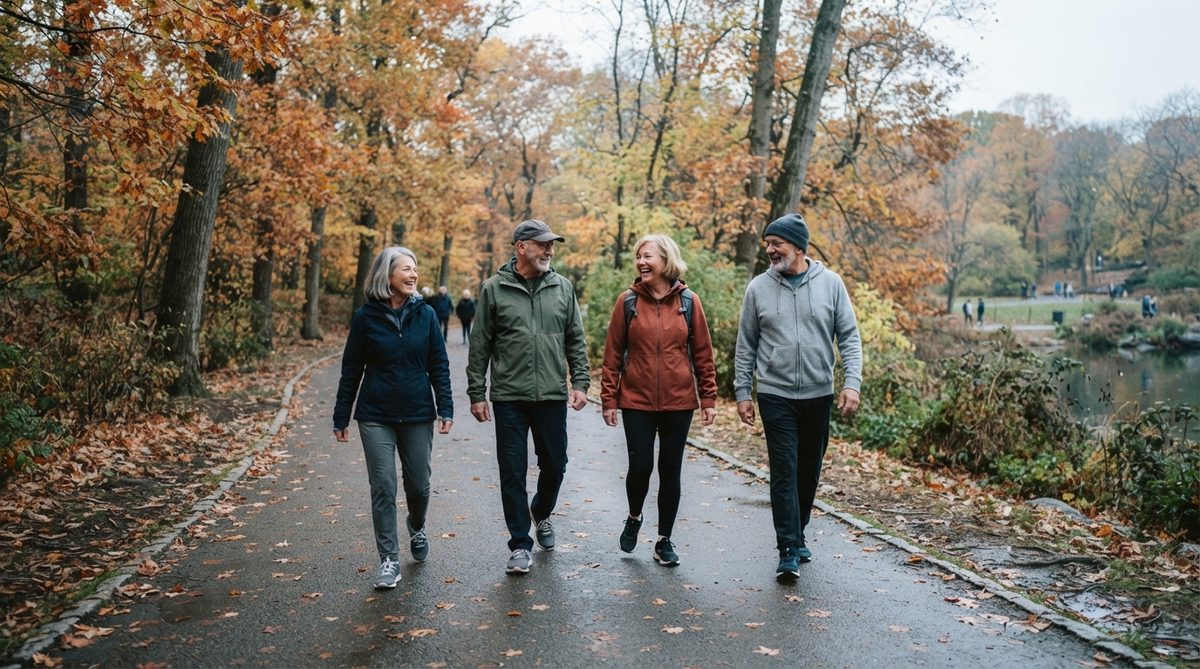
If I could recommend only one activity to every person over 50, it would be regular group walking. The American Heart Association reports that walking just 30 minutes a day, five days a week, reduces the risk of heart disease by 19% and stroke by 35%. When you add the social component of a group, you also combat isolation—which the Surgeon General has called as dangerous as smoking 15 cigarettes a day.
Walking groups are free, require no special equipment beyond decent shoes, and scale to any fitness level. Check your local recreation center, YMCA, or AARP community events page for groups near you. What I see most often is that people join for the exercise and stay for the friendships.
Getting Started
- Invest in a pair of supportive walking shoes fitted at a specialty running store (staff will analyze your gait for free).
- Search “walking group near me” on Meetup.com or your city’s parks and recreation website.
- Start with 15-20 minute walks and add five minutes each week until you reach 30-45 minutes.
- Bring water and wear layers—most groups walk rain or shine.
- If no group exists, start one. Post a flyer at your local library or senior center. You need exactly two people to begin.
2. Container Gardening: Grow Something Without Breaking Your Back
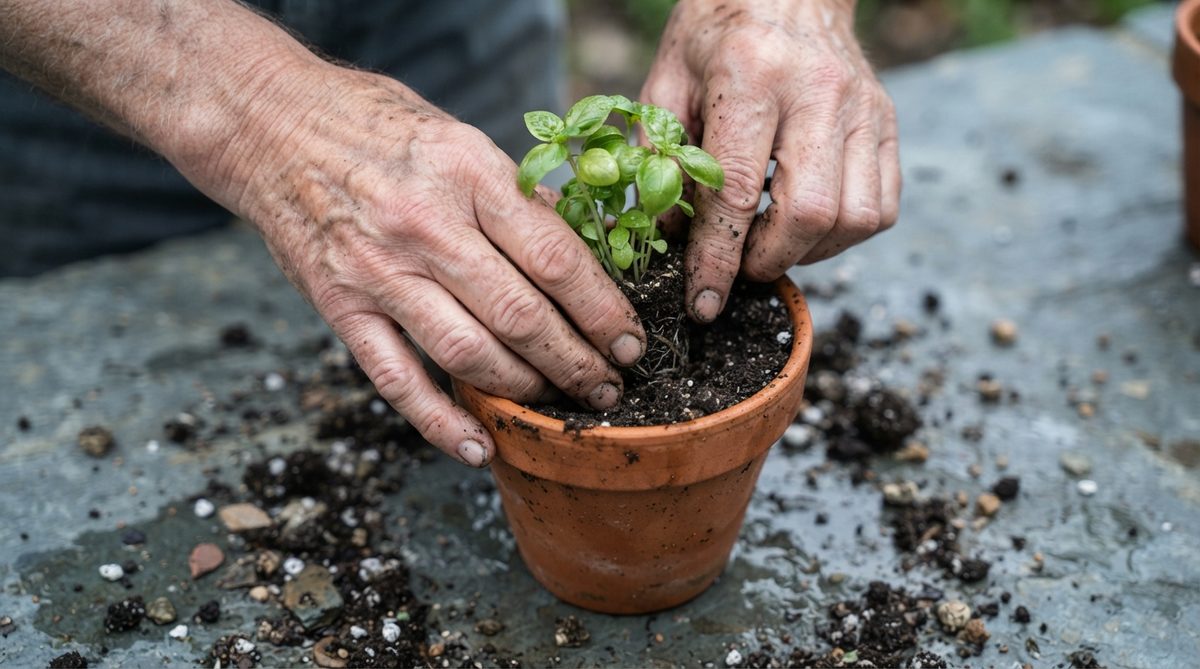
Traditional gardening can be rough on knees, hips, and lower backs. Container gardening eliminates most of that strain while delivering the same mental health benefits. A 2022 study from the University of Florida found that gardening activities reduced stress, anxiety, and depression in healthy women over 60—even among those with no prior gardening experience.
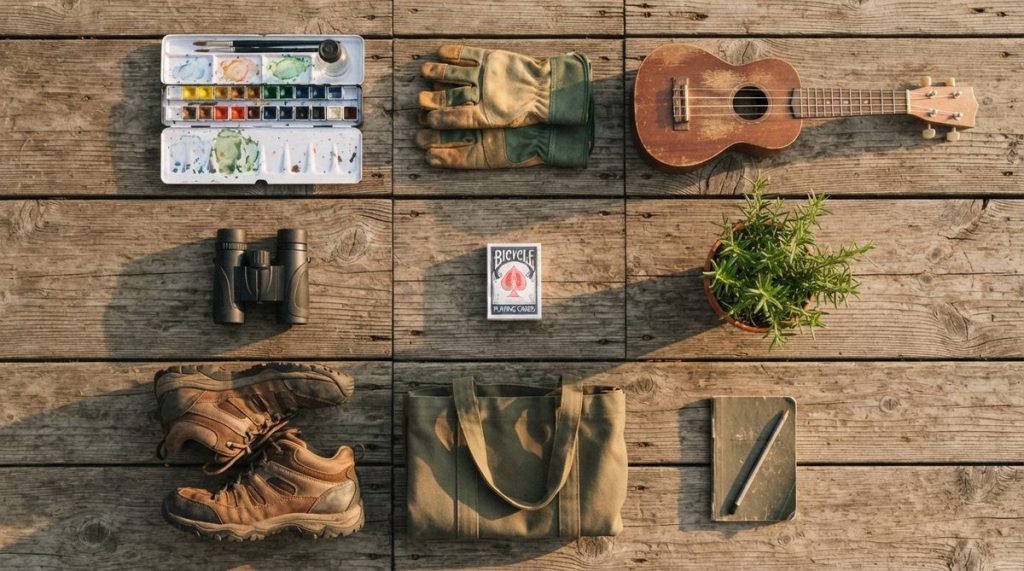
Raised planters, window boxes, and patio pots let you garden at waist height. Herbs like basil, rosemary, and mint are nearly foolproof and give you something tangible to harvest within weeks. In my experience covering active aging, gardeners consistently report better sleep, improved mood, and a satisfying sense of purpose.
If you’re also thinking about setting up your home to age in place on a budget, container gardens on patios and porches add beauty without creating tripping hazards—a genuine two-for-one benefit.
3. Learning a Musical Instrument: Your Brain’s Favorite Workout
Playing music engages more areas of the brain simultaneously than almost any other activity. A landmark study from the Baycrest Centre in Toronto found that learning to play a musical instrument in later life strengthened neural connections and improved memory recall by up to 25% after just four months of lessons.
The ukulele has become wildly popular among older beginners—it’s small, affordable (starter instruments run $40-$60), easy on arthritic fingers because of its nylon strings, and you can learn three chords in an afternoon. Piano, harmonica, and hand drums are other excellent entry points. YouTube offers thousands of free beginner tutorials, and many community colleges offer low-cost group lessons specifically for adults over 50.
4. Birdwatching: A Gateway to Mindfulness and Movement
Birdwatching—or “birding,” as enthusiasts call it—is one of the fastest-growing hobbies in the United States, with an estimated 96 million Americans participating, according to the U.S. Fish and Wildlife Service. A significant portion of those birders are over 55.
What makes birding so effective for healthy aging is its layered benefits. You’re outdoors (vitamin D, fresh air), you’re walking (cardiovascular health), you’re observing and identifying (cognitive challenge), and you’re often doing it with others (social connection). Free apps like Merlin Bird ID from the Cornell Lab of Ornithology turn your smartphone into a real-time identification tool that recognizes birds by their songs.
A decent pair of binoculars costs $75-$150 and lasts for years. Your local Audubon Society chapter likely hosts free guided bird walks year-round.
5. Tai Chi: The “Medication in Motion” You’re Not Taking
Harvard Medical School has called tai chi “medication in motion,” and the data supports the nickname. A meta-analysis of 18 studies published in the Journal of the American Geriatrics Society found that tai chi reduces the risk of falls in older adults by 43%. Falls are the leading cause of injury-related death in Americans over 65, so that statistic alone makes this hobby worth considering.
Beyond fall prevention, tai chi improves balance, flexibility, and joint health while lowering blood pressure and reducing chronic pain. Classes are widely available through senior centers, YMCAs, and community colleges. Many Medicare Advantage plans now cover tai chi classes as part of their SilverSneakers or fitness benefits—check your plan’s details.
Since healthcare costs eat into retirement income more than most people expect—Medicare premiums can consume most of your Social Security COLA increase—any hobby that reduces medical expenses is a smart financial move, too.
6. Watercolor Painting: Creativity Without Perfectionism
I often tell my readers that watercolor is the most forgiving art medium for beginners because its unpredictability is part of the charm. You can’t fully control how pigment spreads on wet paper, so perfectionism takes a back seat to experimentation. That mindset shift alone is therapeutic.
The National Council on Aging highlights creative arts as a key component of cognitive health in later life, noting that artistic activities build new neural pathways and improve emotional resilience. A starter watercolor set costs under $20, and free instructional videos from channels like “The Mind of Watercolor” on YouTube can have you painting recognizable landscapes within a week.
Community art centers often offer “paint and sip” style classes geared toward older adults, combining creativity with social interaction. Many local libraries also host free art workshops—another reason to visit your library for more than books.
7. Volunteering: The Hobby That Gives Back (Literally)
Volunteering might not seem like a “hobby,” but the research shows it functions exactly like one—with a bonus. A study from Carnegie Mellon University found that adults over 50 who volunteered at least 200 hours per year (about four hours a week) had a 40% lower risk of developing high blood pressure than non-volunteers.
The Corporation for National and Community Service reports that volunteers over 55 contributed 3.3 billion hours of service in 2023, valued at approximately $122 billion. Programs like RSVP (Retired and Senior Volunteer Program) and Foster Grandparents connect older adults with structured opportunities ranging from tutoring children to disaster relief to hospital support.
What I see most often among the volunteers I’ve profiled over the years is that the sense of purpose they gain is the real reward. It fills a gap that retirement sometimes creates—the feeling of being needed.
8. Swimming and Water Aerobics: Joint-Friendly Cardio
Water supports about 90% of your body weight when you’re submerged to the chest, making swimming and water aerobics ideal for anyone with arthritis, joint replacements, or chronic pain. The Arthritis Foundation actively recommends warm-water exercise as a primary treatment strategy, not just a supplement to medication.
Most public pools and community recreation centers offer water aerobics classes specifically designed for older adults, typically costing $3-$8 per session. Many SilverSneakers memberships include free pool access. If you haven’t been in a pool in years, don’t worry—these classes are taught at a comfortable pace, and instructors are trained to offer modifications.
Swimming laps, even slowly, burns roughly 400-500 calories per hour and builds cardiovascular endurance without the impact stress of running or jogging. It’s one of the few hobbies for seniors that works out virtually every major muscle group simultaneously.
9. Strategic Card and Board Games: Social Cognition at Its Best
Bridge, chess, mahjong, Scrabble—these aren’t just pastimes. A 2019 study from the University of Edinburgh tracked 1,091 participants over 15 years and found that those who regularly played analog games showed significantly less cognitive decline compared to non-players, even after accounting for education and socioeconomic factors.
The key ingredient is strategic thinking. Games that require planning, pattern recognition, and adapting to opponents activate prefrontal cortex functions that naturally weaken with age. And unlike solo brain-training apps (which have mixed evidence), in-person game playing adds the social engagement component that independently protects against cognitive decline.
Local senior centers, libraries, and community organizations often host weekly game groups. If you’re wary of online platforms, that’s wise—scams targeting older adults online are increasingly sophisticated—but in-person game groups keep you safely social. Can’t find a group? Start a weekly game night with neighbors or friends. Two card tables, a deck of cards, and some snacks are all the infrastructure you need.
10. Travel Journaling: Combining Exploration With Reflection
You don’t have to live out of a backpack at 75 (though some remarkable people do) to reap the brain benefits of travel. Even day trips to nearby towns, national parks, or cultural sites provide the novelty that neuroscientists say is critical for maintaining cognitive flexibility as we age.
Travel journaling adds a reflective layer that transforms experiences into lasting memories. Writing by hand—not typing—activates regions of the brain associated with memory consolidation, according to research from the Norwegian University of Science and Technology. Keep a small journal and sketch pen in your bag. Write three things you noticed, one thing that surprised you, and one thing you want to remember. That simple structure turns any outing into a mindfulness practice.
Travel + Leisure regularly features destinations ideally suited for older travelers, from wellness retreats to slow-travel itineraries that prioritize depth over distance. You don’t have to fly overseas—a road trip to a state park you’ve never visited counts. The point is novelty, observation, and reflection.
How to Choose the Right Hobby for You
With 10 options on the table, the question becomes: where do you start? In my 16 years covering this space, I’ve developed a simple framework I share with readers who feel overwhelmed by choices.
The Three-Question Filter
- What does your body need? If you’re sedentary, prioritize movement-based hobbies first—walking groups, swimming, or tai chi. Physical health is the foundation everything else rests on.
- What does your mind crave? If you feel mentally sluggish or unstimulated, lean toward learning-based hobbies—a musical instrument, watercolor painting, or strategic games. Novelty is the antidote to cognitive stagnation.
- What does your social life lack? If loneliness or isolation is creeping in, choose hobbies with built-in community—volunteering, group walks, or game nights. Connection is not optional for healthy aging; it’s essential.
The ideal approach is to maintain one hobby from each category. That gives you physical activity, cognitive stimulation, and social connection—the three pillars that every longevity researcher points to.
Budget Shouldn’t Be a Barrier
Every hobby on this list can be pursued for under $100 in startup costs, and several are completely free. Walking costs nothing. Volunteering costs nothing. Your local library likely offers free access to art supplies, games, gardening programs, and even musical instrument lending libraries (yes, those exist—over 700 U.S. libraries now lend instruments).
If retirement budgeting feels tight, you’re not alone. Inflation has hit retirees particularly hard, and understanding how to protect your finances from the inflation triple threat is crucial. But the beauty of these hobbies is that they deliver enormous health returns for minimal financial investment. A $50 ukulele that keeps your brain sharp for years is arguably the best deal in preventive medicine.
The Bottom Line: Start Before You’re Ready
The biggest obstacle I see isn’t money, time, or physical limitation. It’s inertia. People tell themselves they’ll start “when things settle down” or “after the holidays” or “once I feel better.” But hobbies for seniors aren’t rewards for already being healthy—they’re the tools that help you get there and stay there.
Pick one hobby from this list. Just one. Try it this week—not next month. Give it three sessions before you decide if it’s for you. The research is unambiguous: staying active, engaged, and connected isn’t just how you fill time in retirement. It’s how you extend it.
About Jennifer Adams, 16 Years in Lifestyle Journalism
Jennifer Adams is a lifestyle journalist with 16 years of experience writing about travel, hobbies, relationships, home life, and the art of aging well. She has contributed to national publications focused on the interests and aspirations of adults over 50 — from budget-friendly travel destinations to rediscovering hobbies in retirement. At Daily Trends Now, Jennifer writes warm, practical articles that celebrate life after 50 and help readers make the most of every chapter.