

A 3.8% Raise That Vanishes Before It Hits Your Bank Account
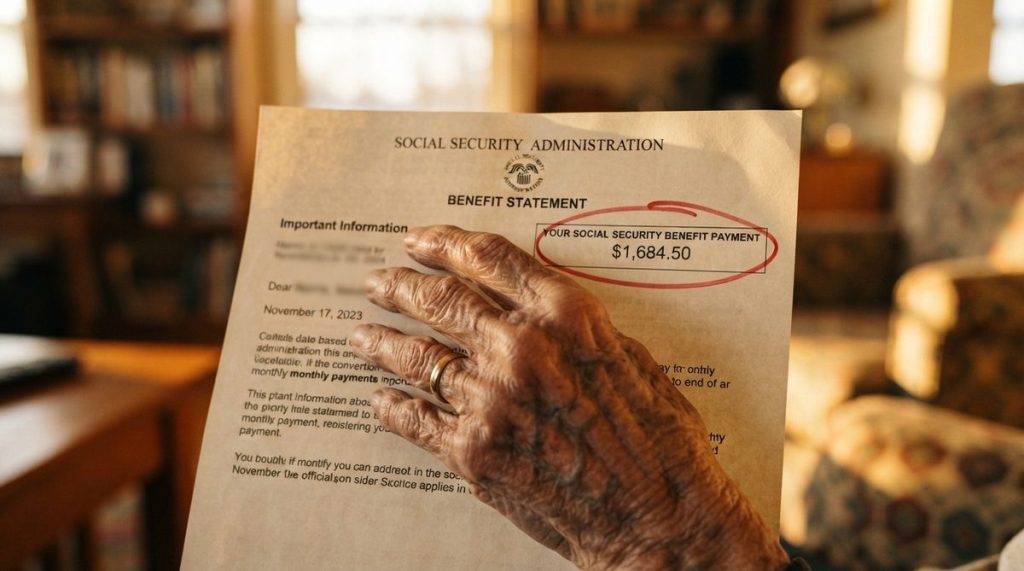
Here’s a number that should stop every retiree in their tracks: the projected 2027 Social Security cost-of-living adjustment (COLA) is tracking near 3.8%, according to early estimates from the Senior Citizens League. On paper, that sounds like meaningful relief. For the average retired worker collecting roughly $1,976 per month in 2026, it translates to about $75 more each month — or $900 over the course of the year.
But here’s the finding that prompted this deep dive: in four of the last six years, Medicare Part B premium increases have consumed between 30% and 100% of the Social Security COLA for beneficiaries enrolled in both programs. And 2027 is shaping up to follow the same pattern.
In my 15 years analyzing consumer finance policy — including my tenure at the Consumer Financial Protection Bureau — I’ve watched this dynamic repeat like clockwork. Congress celebrates a COLA announcement. Retirees briefly exhale. Then Medicare premiums, prescription drug costs, and supplemental insurance hikes quietly devour the increase. What I see most often is that seniors end up with less real purchasing power than they had the year before, despite the so-called “raise.”
“In four of the last six years, Medicare Part B premium increases have consumed between 30% and 100% of the Social Security COLA — leaving millions of retirees with a raise that exists only on paper.”
How the 2027 COLA Estimate Is Calculated — and Why It Matters Now
The Social Security Administration determines the annual COLA using the Consumer Price Index for Urban Wage Earners and Clerical Workers (CPI-W). Specifically, it compares the average CPI-W from the third quarter (July–September) of the current year against the same quarter of the previous year. The official 2027 COLA won’t be announced until October 2026, but the Senior Citizens League’s mid-year projection of 3.8% is based on CPI-W data through June 2026.
For context, the 2026 COLA came in at 2.8% — a significant drop from the 3.2% adjustment in 2025 and the 8.7% spike in 2023, which was the largest in four decades. The 3.8% projection for 2027 would represent a meaningful uptick, driven largely by persistent inflation in housing, healthcare, and food — three categories that disproportionately affect older Americans.
The CPI-W Problem Seniors Should Understand
There’s a structural issue embedded in the COLA formula that I often highlight for readers: the CPI-W tracks spending patterns of working-age urban consumers, not retirees. Seniors typically spend 2–3 times more of their budget on healthcare and housing than younger workers do. The Bureau of Labor Statistics does publish an experimental index called the CPI-E (for elderly consumers), and it has historically run 0.2 to 0.3 percentage points higher than the CPI-W annually.
That fraction of a percent may sound trivial, but compounded over a 20- or 25-year retirement, it represents thousands of dollars in lost purchasing power. There are several Social Security myths retirees still believe in 2026, and one of the most persistent is that the COLA fully keeps up with the real cost of aging. It doesn’t.
Medicare’s Premium Hike: The First Bite of Your Raise
The 2026 Medicare Trustees Report, released in early summer, painted a sobering picture. Medicare Part B premiums rose to $185.00 per month in 2026, up from $174.70 in 2025 — a $10.30 monthly increase, or roughly $123.60 per year. Meanwhile, the Part B deductible climbed to $257, up from $240.
For 2027, early CMS projections and independent actuarial estimates suggest Part B premiums could jump to between $194 and $200 per month. Let’s model what this means for the typical retiree using the midpoint estimate of $197.
| Category | 2026 (Current) | 2027 (Projected) | Change |
|---|---|---|---|
| Average Monthly SS Benefit | $1,976 | $2,051 (with 3.8% COLA) | +$75/mo |
| Medicare Part B Premium | $185.00 | ~$197.00 | +$12/mo |
| Part B Deductible | $257/yr | ~$270/yr (est.) | +$13/yr |
| Net Monthly Gain After Part B | — | ~$63/mo | — |
| Medigap/Supplement Avg. Increase | — | ~$8–$15/mo (est.) | — |
| Part D Premium Avg. Increase | — | ~$3–$7/mo (est.) | — |
| Actual Net Monthly Gain | — | ~$41–$52/mo | — |
That projected $75 monthly raise? After Medicare Part B, supplemental insurance, and Part D premium increases, the typical retiree may net somewhere between $41 and $52 per month — roughly $492 to $624 per year. And that’s before accounting for inflation in groceries, utilities, and property taxes.
As I detailed in an earlier analysis, Social Security benefits rose 2.8% in 2026 but Medicare ate most of the gain. The 2027 cycle appears poised to repeat this pattern, only with slightly larger numbers on both sides of the equation.

The Silent Killer: Inflation’s Compound Effect on Retirement Savings
Beyond the COLA-versus-Medicare tug-of-war, there’s a broader threat that financial planners increasingly call “the silent killer for retirement portfolios”: persistent, moderate inflation that compounds year after year.
A recent survey found that older adults are depleting retirement savings earlier than expected, with 37% of retirees reporting they’ve withdrawn more from savings accounts and IRAs than planned due to rising everyday costs. According to the Consumer Financial Protection Bureau, the median retired household headed by someone 65 or older holds approximately $200,000 in total financial assets — a figure that sounds substantial until you calculate that at a 4% withdrawal rate, it generates only $8,000 per year in supplemental income.
When inflation runs at 3–4% annually, the purchasing power of that $200,000 portfolio drops by roughly $6,000–$8,000 each year in real terms. Over a decade, a retiree’s savings can lose 25–30% of their real value even if the nominal account balance hasn’t changed. This is the math that keeps me up at night when I review consumer data.
“At 3.5% annual inflation, a retiree’s $200,000 portfolio loses roughly $60,000 in purchasing power over a decade — even if they never withdraw a single dollar. That’s the silent compound erosion most people don’t calculate until it’s too late.”
The Five Biggest Financial Concerns for Retirees in 2026–2027
New research from the Employee Benefit Research Institute and other sources reveals the top financial worries among Americans 50 and older. Based on my review of multiple data sets, here’s what rises to the top:
- Outliving their savings — 62% of retirees cite longevity risk as their primary concern, with the average 65-year-old today expected to live to 84.5 (men) or 87 (women).
- Healthcare costs exceeding coverage — Fidelity estimates the average 65-year-old couple retiring in 2026 will need approximately $330,000 for healthcare expenses in retirement, excluding long-term care.
- Social Security benefit cuts or insolvency — The 2026 Trustees Report projects the Old-Age and Survivors Insurance (OASI) trust fund will be depleted by 2033, potentially triggering a 21% across-the-board benefit cut if Congress doesn’t act.
- Inflation eroding purchasing power — Persistent above-2% inflation is the number one portfolio threat cited by financial advisors serving retirees.
- Falling victim to financial fraud — Seniors lost an estimated $3.4 billion to financial scams in 2023 alone, according to the FBI’s IC3 report. Our guide on online scams targeting older adults covers the latest tactics in detail.
New Approaches to Social Security Benefit Taxation: What’s Changing
One significant development that hasn’t received enough attention is the evolving conversation around Social Security benefit taxation. Currently, up to 85% of Social Security benefits can be subject to federal income tax, depending on your “combined income” (adjusted gross income + nontaxable interest + half your Social Security benefits). The income thresholds — $25,000 for single filers and $32,000 for joint filers — haven’t been adjusted for inflation since they were set in 1993.
This means that millions of middle-income retirees who were never intended to pay taxes on their benefits have been gradually pulled into the tax net through “bracket creep.” In 1984, only about 10% of Social Security recipients paid federal taxes on their benefits. Today, that figure is approximately 56%, according to the Social Security Administration.
Legislative Proposals on the Table
Several proposals circulating in Congress in 2026 would modify or eliminate the taxation of Social Security benefits. The most discussed include raising the combined income thresholds to $50,000/$100,000, indexing thresholds to inflation, and outright repeal of benefit taxation. Each approach carries different implications for the trust fund’s solvency timeline.
I should be candid: while eliminating the tax on Social Security sounds appealing, every independent analysis I’ve reviewed suggests it would accelerate trust fund depletion by 1–3 years unless offset by other revenue. Retirees should watch this legislative space closely through the IRS and SSA announcement channels, but plan conservatively in the meantime.
A Practical Action Plan: Protecting Your 2027 Income
Rather than waiting passively for the October 2026 COLA announcement, I recommend retirees take proactive steps now. Here’s the strategy framework I share with readers based on what actually moves the needle:
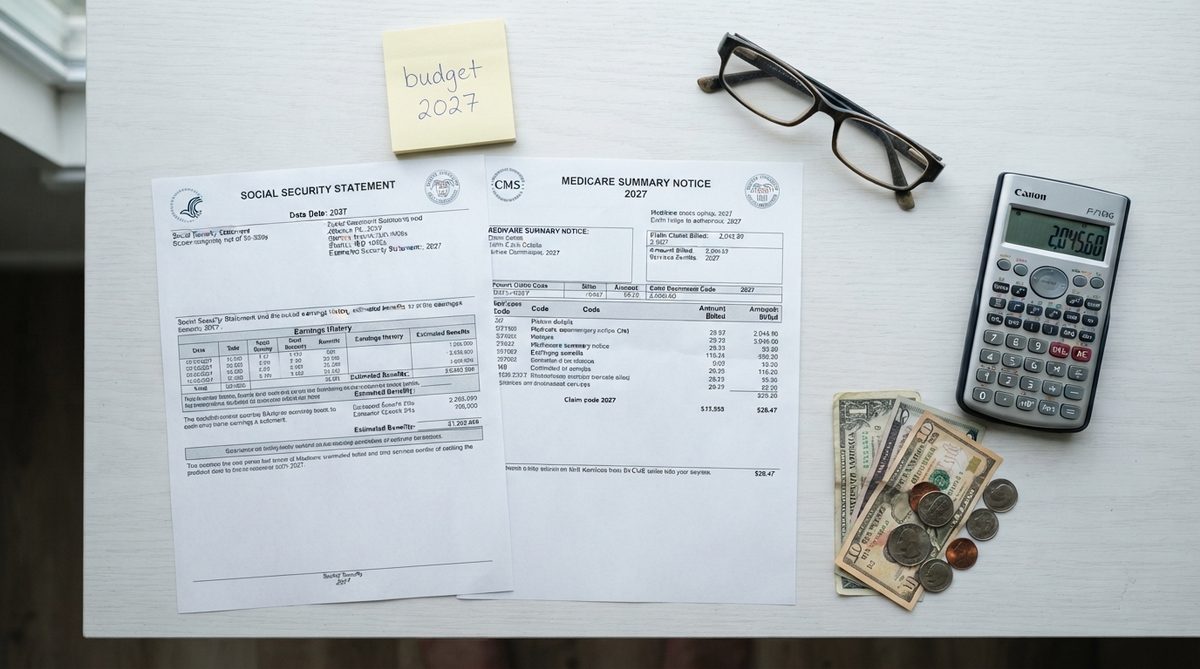
- Run a 2027 income projection today. Use the SSA’s my Social Security portal to pull your current benefit amount, then model a 3.5–4.0% increase. Subtract estimated Medicare premium hikes to see your realistic net gain.
- Review your Medicare coverage during Open Enrollment (October 15–December 7, 2026). Compare your current Part D plan and any Medigap or Medicare Advantage plan against 2027 options. Even a $20/month premium difference compounds to $240 per year. Check plan options at Medicare.gov.
- Audit your supplemental insurance. Medigap plans (especially Plans F and G) can vary by 30–50% in premium between carriers in the same ZIP code for identical coverage. Get quotes from at least three insurers.
- Adjust your withdrawal strategy. If you’re pulling from a traditional IRA or 401(k), consider a Roth conversion strategy while tax brackets remain relatively low. Even partial conversions can reduce future Required Minimum Distributions and keep you below Social Security taxation thresholds.
- Rebalance for inflation protection. Allocating 15–25% of a retirement portfolio to Treasury Inflation-Protected Securities (TIPS), I-Bonds (currently yielding above 4% composite rates for some issues), or short-duration bond funds can help offset purchasing power loss. For a deeper dive, see our guide on how to protect retirement savings from inflation in 8 steps.
- Check your IRMAA bracket. Higher-income retirees pay Income-Related Monthly Adjustment Amounts on Medicare Parts B and D. A single retiree with modified AGI above $106,000 (2026 threshold) pays significantly more. Strategic income management — including the timing of Roth conversions and capital gains — can potentially keep you below the next IRMAA tier.
- Build a 6-month cash buffer. With inflation volatility likely continuing into 2027, having 6 months of essential expenses in a high-yield savings account (currently averaging 4.5–5.0% APY at online banks) provides both liquidity and a modest inflation hedge.
The Bigger Picture: What Happens If Congress Doesn’t Act
Let me be direct about the long-term risk that frames all of this: the Social Security OASI trust fund’s projected 2033 depletion date. If Congress takes no action — and given the political difficulty of Social Security reform, inaction is a historically common outcome — beneficiaries would face an automatic reduction to roughly 79 cents on the dollar for every benefit payment.
For the average retiree collecting $2,051 per month in 2027, a 21% cut would reduce the monthly check to approximately $1,620. That’s a $431 monthly shortfall, or $5,172 per year. For seniors who depend on Social Security for 50% or more of their income — and that includes roughly 40% of all retirees — such a cut would be devastating.
This is precisely why I emphasize building multiple income streams and treating Social Security as a foundation rather than an entire retirement plan. The COLA adjustments, the Medicare premium interplay, the taxation thresholds — they’re all pieces of a system that was designed for a different demographic reality. Today’s retirees live longer, face higher healthcare costs, and navigate more complex financial landscapes than any previous generation.
The Bottom Line for 2027
A 3.8% Social Security COLA in 2027 would be the strongest adjustment in two years, and it’s genuinely better than nothing. But after Medicare Part B premiums, supplemental insurance increases, Part D adjustments, and persistent inflation in the categories that matter most to older Americans, the real purchasing power gain may be less than 1%.
Don’t wait for the October announcement to act. The steps you take between now and December’s Open Enrollment period will determine whether you capture what value the 2027 COLA offers — or watch it disappear into rising premiums and bracket creep. Staying informed is the first defense, and understanding the myths around these programs is equally critical. Our analysis of inflation and retirement savings myths seniors still believe is a good next read.
The system wasn’t designed to work this way. But until it changes, retirees who plan aggressively — and question every assumption — are the ones who come out ahead.
Frequently Asked Questions
When will the official 2027 Social Security COLA be announced?
The Social Security Administration typically announces the official COLA in October, based on third-quarter CPI-W data (July through September). The 2027 COLA will likely be announced in mid-October 2026, with the new benefit amount taking effect in January 2027 checks.
Will the 2027 Social Security COLA of 3.8% be enough to cover rising costs?
For most retirees, no. After Medicare Part B premium increases, supplemental insurance hikes, and Part D adjustments, the net monthly gain is projected to be approximately $41–$52 rather than the full $75. Persistent inflation in food, housing, and healthcare further erodes any remaining purchasing power.
How does Medicare Part B premium affect my Social Security check?
Medicare Part B premiums are automatically deducted from your Social Security benefit before you receive payment. When Part B premiums rise, they directly reduce your net Social Security deposit. A "hold harmless" provision prevents your Social Security check from decreasing due to Part B increases, but it can cap your COLA benefit.
What is IRMAA, and could it reduce my 2027 Social Security benefits?
IRMAA (Income-Related Monthly Adjustment Amount) is a surcharge on Medicare Parts B and D premiums for higher-income beneficiaries. In 2026, individuals with modified adjusted gross income above $106,000 pay higher premiums. These additional charges are deducted from Social Security, further reducing your net benefit. Managing income through strategic Roth conversions or timing capital gains can help you stay below IRMAA thresholds.
What happens to Social Security benefits if the trust fund runs out in 2033?
If the OASI trust fund is depleted in 2033 and Congress takes no legislative action, the Social Security Administration would still collect payroll taxes but could only pay out approximately 79% of scheduled benefits. This would mean an automatic cut of roughly 21% to all beneficiaries, reducing the average monthly benefit by over $400 at current levels.
About Sarah Mitchell, Former CFPB Senior Analyst
Sarah Mitchell is a consumer finance expert with 15 years of experience protecting American consumers. She spent eight years as a senior analyst at the Consumer Financial Protection Bureau (CFPB), where she investigated financial fraud targeting older adults and developed consumer education programs. At Daily Trends Now, Sarah covers scam awareness, smart shopping strategies, discount programs, and consumer rights — helping seniors protect their wallets and avoid costly traps.