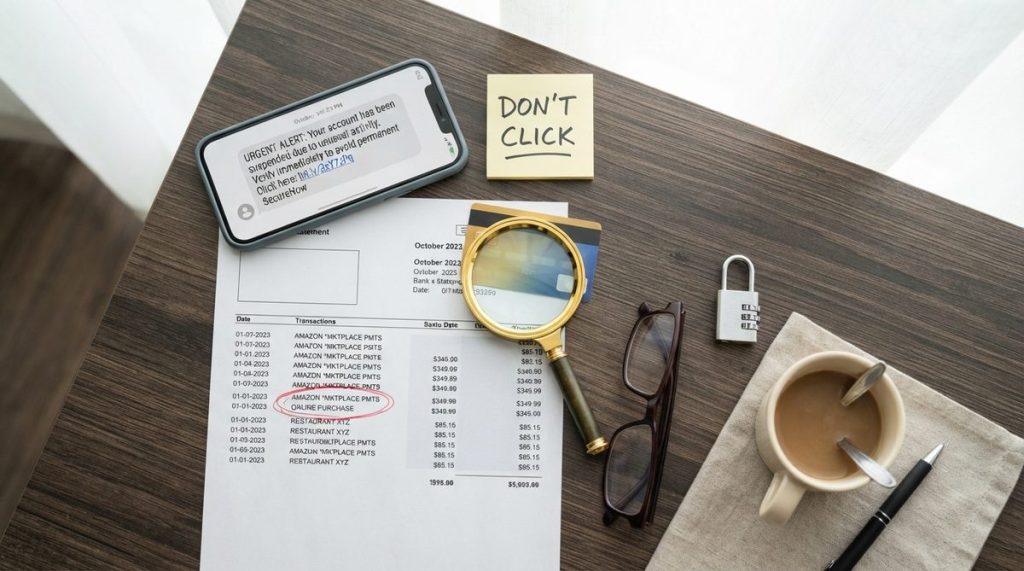


$3.4 Billion Lost — and Older Adults Bear the Heaviest Blow
Here’s the number that stopped me cold when I first pulled the FBI’s latest Internet Crime Complaint Center data: Americans aged 60 and over reported losses exceeding $3.4 billion to online fraud in 2023 alone — a 11% jump from the year before. That figure doesn’t even capture unreported cases, which the Bureau estimates could triple the real total. In my 12 years covering consumer technology, I have never seen a threat landscape evolve this fast or this ruthlessly toward one demographic.
This isn’t a story about gullibility. It’s a story about sophisticated criminal enterprises that exploit trust, isolation, and an ever-expanding digital surface area. If you’re 50 or older — or you love someone who is — this deep-dive analysis will walk you through exactly which online scams targeting older adults are surging right now, why they work, and the concrete, technology-backed defenses that actually stop them.
Why Scammers Zero In on Older Adults
Criminals don’t choose targets randomly. They follow the money and the psychology. Understanding their calculus is the first step to dismantling it.
The Financial Profile Scammers Exploit
Adults over 60 control roughly 70% of all disposable income in the United States, according to Federal Reserve consumer finance surveys. Many have built sizable retirement nest eggs, own homes outright, and maintain excellent credit scores. To a scammer running a romance fraud or investment scheme, that profile is pure gold.
Financial pressure can make targets even more vulnerable. With inflation continuing to squeeze fixed incomes — something we’ve explored in our guide on inflation’s triple threat for retirees — the promise of a high-yield “safe” investment becomes dangerously appealing.
The Psychological Playbook
Scammers weaponize three emotions above all: fear (your account has been compromised), urgency (act now or face arrest), and trust (I’m calling from Medicare). They also exploit loneliness. The National Institute on Aging reports that roughly one in four Americans over 65 is considered socially isolated — and isolated individuals are far less likely to have someone nearby to say, “Wait, that sounds wrong.”
“Fraud targeting older adults is not a problem of digital illiteracy. It’s a problem of criminal sophistication meeting human emotion. The scams that cost the most are the ones that feel the most personal.” — FBI IC3 Elder Fraud Report, 2023
The Five Most Dangerous Online Scams Targeting Older Adults Right Now
What I see most often in my reporting isn’t a single mega-scam — it’s a rotating cast of schemes that adapt faster than public awareness campaigns can keep up. Below are the five categories causing the most financial and emotional damage as of mid-2025, ranked by total reported losses.
1. Tech Support and Government Impersonation Scams
You’re browsing the web and a full-screen pop-up screams that your computer has been infected. A phone number urges you to call “Microsoft Support” immediately. Or your phone rings with a caller ID spoofed to read “Social Security Administration.” Both variations funnel you toward a person who sounds professional, patient, and helpful — right up until they ask you to buy gift cards or wire money to “secure your account.”
The FTC reports that impersonation scams — combining government and business impersonation — generated over $1.1 billion in reported losses in 2023, with the median individual loss for adults 70+ hitting $800. The real median is almost certainly higher.
- Red flag: Any unsolicited call or pop-up demanding immediate payment or remote access to your device.
- Red flag: Requests for payment via gift cards, cryptocurrency, or wire transfer — methods that are nearly impossible to reverse.
- Red flag: Caller ID that matches a government agency. Spoofing technology makes this trivially easy for criminals.
2. Romance and Confidence Scams
These are the scams I find hardest to write about because the damage extends far beyond money. A connection forms on a dating app, a Facebook group, or even a Words With Friends chat. Weeks or months of daily conversation build genuine emotional attachment. Then comes the ask: a medical emergency, a business opportunity, a plane ticket to finally meet in person.
The FBI’s IC3 data shows romance scams cost Americans 60+ over $356 million in a single year. I’ve interviewed victims who lost six-figure retirement savings — money they cannot recover. The cruelty is compounded by shame, which keeps many from reporting.
3. Investment and Cryptocurrency Fraud
Crypto investment scams — sometimes called “pig butchering” — have exploded since 2022. The scheme typically begins on social media or a messaging app. A friendly stranger shares screenshots of massive trading gains and invites you to a “private” platform. Early “returns” look real because the platform is entirely fabricated. By the time you try to withdraw funds, the site vanishes.
Losses from crypto-related fraud among older adults surged 78% between 2022 and 2023. If you’re looking for legitimate ways to protect your retirement funds from market volatility and inflation, our piece on protecting retirement savings from inflation covers verified strategies — no crypto speculation required.
4. Phishing Emails and Smishing Texts
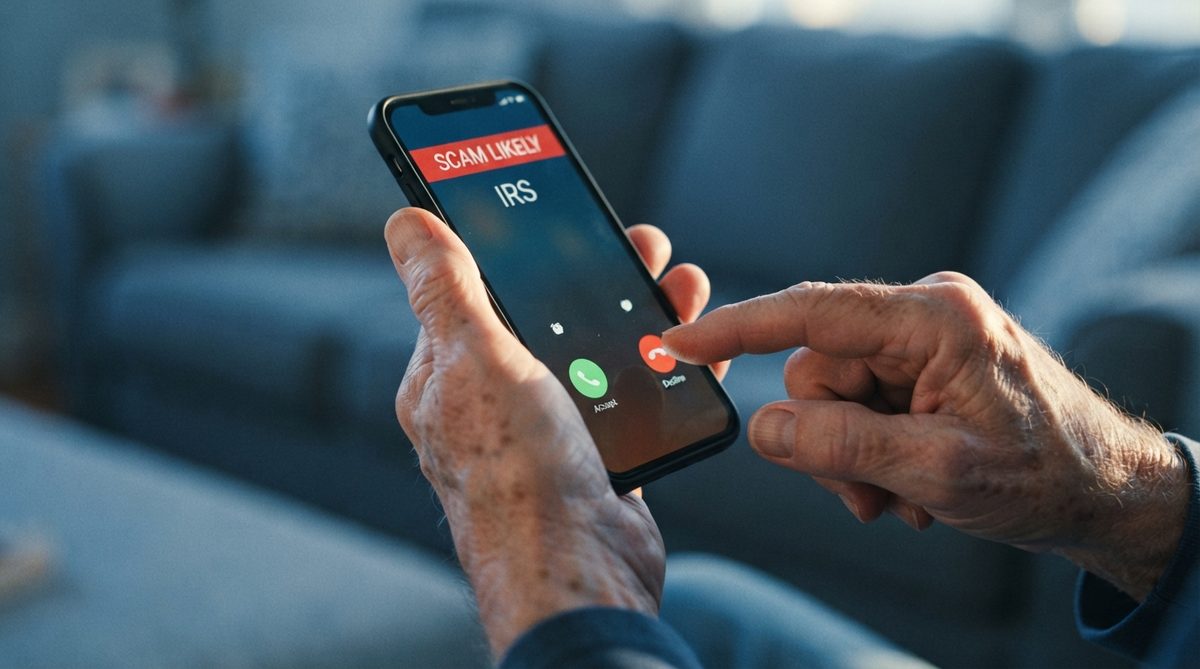
Phishing remains the front door for most cyber fraud. A convincing email from “Amazon” warns of a suspicious purchase. A text from “USPS” says your package can’t be delivered without address confirmation. Clicking the embedded link leads to a counterfeit login page that harvests your username, password, and sometimes credit card details in seconds.
The Cybersecurity and Infrastructure Security Agency (CISA) estimates that over 90% of successful cyberattacks begin with a phishing email. For older adults who may be less familiar with the visual cues of a spoofed URL, these messages are devastatingly effective.
- Smishing (SMS phishing) now accounts for roughly 39% of all mobile-based social engineering attacks, up from 22% in 2021.
- Scam texts often use link-shortening services to disguise malicious URLs.
- Legitimate companies will almost never ask you to verify personal information through a text message link.
5. Grandparent and Family Emergency Scams
The phone rings. A panicked voice says, “Grandma, I’ve been arrested — please don’t tell Mom and Dad.” In 2025, AI voice-cloning technology has made this scam terrifyingly convincing. Criminals can replicate a grandchild’s voice from a few seconds of social media audio. A “lawyer” or “police officer” then gets on the line and instructs the grandparent to send bail money via wire or cash courier.
This scam specifically targets the instinct to protect family — and the instruction to keep it secret eliminates the one safeguard (a second opinion) that would expose the fraud instantly.
A Defense Framework That Actually Works
I often tell my readers that the best cybersecurity strategy isn’t a single product — it’s a layered system of habits, tools, and human checkpoints. Below is the framework I’ve refined over more than a decade of testing consumer security products and interviewing fraud investigators.
Layer 1: Secure Your Devices
Before anything else, make sure the technology in your hands isn’t working against you.
- Enable automatic software updates on your smartphone, tablet, and computer. Unpatched devices are the easiest targets. Both iOS and Android now offer one-toggle auto-update settings.
- Use a password manager. Consumer Reports consistently recommends tools like 1Password and Bitwarden for their ease of use and strong encryption. A password manager eliminates the risky habit of reusing the same password across sites.
- Turn on two-factor authentication (2FA) for email, banking, and social media accounts. An authenticator app (Google Authenticator, Microsoft Authenticator) is safer than SMS codes, which can be intercepted via SIM-swap attacks.
- Install a reputable call-screening app. Both Android and iPhone now have built-in tools that flag likely scam calls before you answer. On Pixel and Samsung phones, Google’s call-screening AI can even interrogate unknown callers on your behalf.
Layer 2: Build Human Verification Habits
Technology catches a lot — but the most effective firewall between a scammer and your bank account is a trusted second voice.
The 10-Minute Rule: If any communication creates a feeling of panic or urgency, hang up or close the message and wait 10 minutes. Then call the organization directly using a number you find independently (not the one in the message). Scammers depend on speed; delay is their enemy.
The Family Code Word: Establish a secret word or phrase with close family members that must be used in any emergency phone call requesting money. AI can clone a voice, but it cannot guess a code word it’s never heard.
“Every fraud investigator I’ve spoken to in the past five years gives the same advice: the single most powerful anti-scam tool is a phone call to someone you trust before you send a dollar.” — Alex Rivera, Daily Trends Now
Layer 3: Monitor Your Financial Footprint
Even with strong defenses, breaches happen. Early detection limits damage.
- Set up transaction alerts on every bank account and credit card. Most banks allow real-time push notifications for any charge over $1.
- Check your credit report quarterly. Under federal law, you can access free weekly reports from all three bureaus at AnnualCreditReport.com through the end of 2026.
- Consider a credit freeze. A credit freeze — free at all three bureaus — prevents anyone from opening new accounts in your name. You can temporarily lift it when you need to apply for credit yourself.
If inflation concerns are already making you rethink your financial strategy, pairing these security measures with a solid retirement plan is critical. Our analysis of inflation myths seniors still believe can help you separate legitimate advice from dangerous misconceptions — the same critical-thinking skill that defends against scam pitches.
What to Do If You’ve Already Been Scammed
Shame keeps an estimated 60% of elder fraud victims from reporting, according to AARP research. But reporting is critical — not just for potential fund recovery, but to help law enforcement build cases that take down fraud networks affecting thousands.
Immediate Steps
- Contact your bank or credit card company within 24 hours. Many institutions have dedicated fraud departments with 24/7 hotlines. The sooner you report, the higher the chance of reversing a charge or freezing a wire transfer.
- File a report with the FBI’s IC3 at ic3.gov. This is the central database federal investigators use to track elder fraud patterns.
- Report to the FTC at ReportFraud.ftc.gov. Your report feeds into a national database shared with over 2,800 law enforcement agencies.
- Call the Eldercare Locator at 1-800-677-1116. This federally funded service connects older adults with local support, including legal assistance for fraud victims.
Emotional Recovery Matters
I’ve spoken with dozens of scam victims over the years, and the emotional toll — anger, embarrassment, broken trust — is often worse than the financial loss. Organizations like AARP’s Fraud Watch Network offer free peer-support groups specifically for fraud victims. You are not alone, and being targeted says nothing about your intelligence.
The Technology Landscape Is Shifting in Your Favor
While the threat is real and growing, so is the counter-technology. In the last 18 months alone, I’ve tested AI-powered scam-detection tools built directly into Android 15 and iOS 18 that analyze call patterns and message content in real time. Google’s on-device AI can now warn you mid-conversation if a caller is using known social engineering tactics — without sending your conversation to the cloud.
Major U.S. carriers (AT&T, Verizon, T-Mobile) have also expanded free call-labeling and blocking services. If you haven’t activated your carrier’s scam-blocking tool, call or visit their website today — it takes under five minutes.
Banks are following suit. JPMorgan Chase, Bank of America, and Wells Fargo all introduced enhanced real-time transaction verification for customers over 60 in 2024, including mandatory cooldown periods on large wire transfers initiated online.
The Bottom Line: Awareness Is Armor
Online scams targeting older adults aren’t a niche problem — they’re a national crisis costing billions and accelerating year over year. But in my 12 years of reporting on consumer technology, I’ve also seen that informed users are dramatically harder to exploit. The data is clear: adults who can recognize even one common scam tactic are 80% less likely to fall victim, according to a 2024 Stanford-AARP behavioral study.
You don’t need to become a cybersecurity expert. You need a password manager, automatic updates, a family code word, the 10-minute rule, and the willingness to talk about fraud openly. That combination — technology plus human judgment — is the defense scammers cannot defeat.
Frequently Asked Questions
What are the most common online scams targeting older adults in 2025?
The five most prevalent categories are tech support and government impersonation scams, romance and confidence scams, investment and cryptocurrency fraud, phishing and smishing attacks, and grandparent or family emergency scams. Tech support impersonation and investment fraud generate the highest dollar losses according to FBI IC3 data.
How can I tell if a phone call or text message is a scam?
Key warning signs include unsolicited contact creating urgency or panic, requests for payment via gift cards, wire transfers, or cryptocurrency, pressure to keep the interaction secret, and caller ID that appears to be from a government agency. Legitimate organizations will never demand immediate payment or threaten arrest over the phone.
What should I do immediately if I think I've been scammed?
Contact your bank or credit card company within 24 hours to attempt to reverse the transaction. File reports with the FBI's Internet Crime Complaint Center at ic3.gov and the FTC at ReportFraud.ftc.gov. You can also call the Eldercare Locator at 1-800-677-1116 for local fraud-recovery assistance.
Is two-factor authentication really necessary for older adults?
Yes. Two-factor authentication (2FA) adds a critical second barrier that prevents criminals from accessing your accounts even if they obtain your password. An authenticator app such as Google Authenticator or Microsoft Authenticator is more secure than SMS-based codes, which can be intercepted through SIM-swap attacks.
How does a credit freeze protect me from fraud?
A credit freeze prevents anyone — including you — from opening new credit accounts in your name until you temporarily or permanently lift it. It is free to place and remove at all three major credit bureaus (Equifax, Experian, TransUnion) and is one of the most effective tools for preventing identity theft that could result from a data breach or phishing attack.
About Alex Rivera, 12+ Years in Consumer Tech Reporting
Alex Rivera is a senior technology journalist with over 12 years of experience making technology accessible to everyday readers. He has covered consumer electronics, smartphones, smart home devices, streaming platforms, and digital privacy for major publications. At Daily Trends Now, Alex focuses on the tech that matters most to American adults — from choosing the right phone plan to protecting your data online. His reviews and guides cut through the jargon to help readers make confident technology decisions.