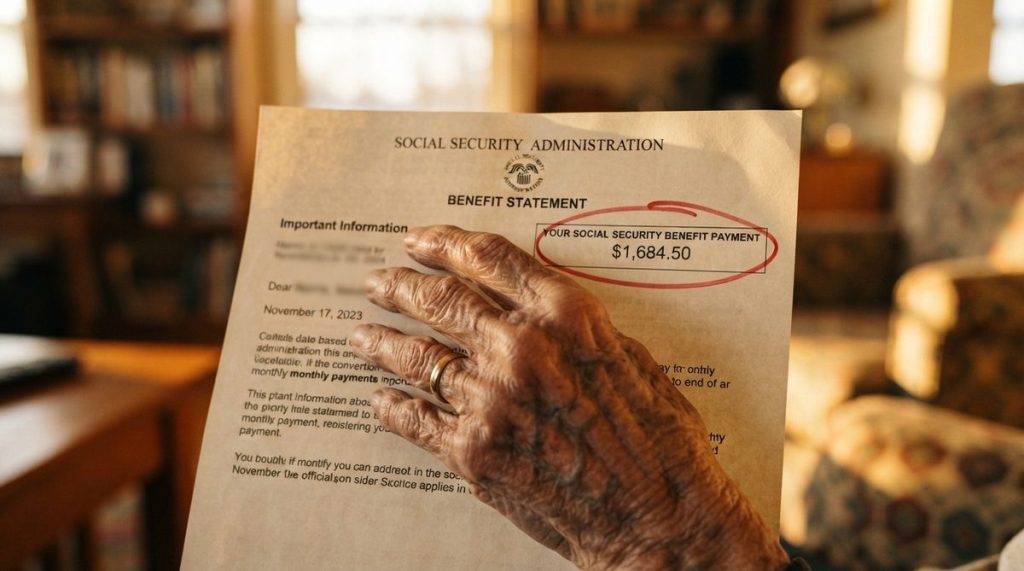


The Phone Call That Changed How I Talk About Retirement
Last March, a client I’ll call Barbara called me in tears. She’s 71, a retired school librarian from outside Philadelphia, and she’d done everything right — or so she thought. She’d saved diligently into her 403(b) for 28 years. She’d delayed Social Security until 67. She’d paid off her mortgage before retiring. By every conventional measure, Barbara was set.
But when she called me, she was staring at a credit card statement with a $4,200 balance — the first credit card debt she’d carried since 1994. Her grocery bill had climbed from roughly $340 a month to over $500. Her Medicare Supplement premium had jumped 14% at renewal. Her property taxes had risen for the third consecutive year. And her retirement account, which she’d projected would last until age 88, was now on pace to run dry before her 82nd birthday.
Barbara isn’t an outlier. She’s the new normal. And in my 18 years as a Certified Financial Planner, I’ve never seen so many retirees facing the same quiet crisis at the same time.
Why Inflation Is the Silent Killer for Retirement Portfolios
You’ve probably heard the term “silent killer” applied to high blood pressure. Financial professionals have started using the same phrase for inflation’s effect on retirement savings — and the comparison is disturbingly accurate. Like hypertension, inflation doesn’t announce itself with dramatic symptoms. It erodes your financial health slowly, persistently, and often without you noticing until real damage is done.
A recent survey found that older adults are depleting retirement savings earlier than expected, with inflation identified as the primary culprit. The Consumer Price Index may have retreated from its 2022 peak of 9.1%, but cumulative inflation since 2020 has pushed everyday costs up by more than 20%. That means a retiree who budgeted $50,000 annually in 2020 now needs roughly $60,000 to maintain the same lifestyle — and that gap keeps widening.
What I see most often is clients who planned for a 2-3% annual inflation rate, which was perfectly reasonable based on the 20 years before the pandemic. But the inflationary surge of 2021-2023 blew those projections apart, and even with moderation since then, prices haven’t come back down. They never do. Inflation doesn’t reverse — it just slows its climb.
This is exactly why the retirement savings depletion crisis is accelerating faster than most experts predicted.
The Three Places Retirees Feel It Most
Healthcare Costs That Outpace Everything
General inflation runs around 3-4% right now. Healthcare inflation for seniors? It’s been averaging closer to 5.5-7% annually, depending on the category. Prescription drug costs, even with the Inflation Reduction Act’s $2,000 out-of-pocket cap taking effect under Medicare Part D, still represent a growing burden when you factor in supplemental coverage premiums, dental work, hearing aids, and the long-term care services that Medicare simply doesn’t cover.
The 2026 Medicare Trustees Report projected that Part B premiums will continue their upward trajectory, and for retirees counting on a 2027 Social Security COLA of 3.8% to provide relief, the math is sobering. A significant portion of that increase will be absorbed by higher Medicare premiums before it ever reaches your bank account. I wrote about this dynamic in detail — here’s why your 3.8% COLA raise may not feel like a raise at all.
Food and Everyday Essentials
The Bureau of Labor Statistics reports that food-at-home prices have increased approximately 25% since January 2020. For someone on a fixed income, that’s not an abstract statistic — it’s the difference between buying fresh produce and buying canned goods. It’s the difference between hosting Thanksgiving dinner and quietly hoping someone else offers.
Barbara told me she’d started shopping at three different grocery stores each week, chasing sales. “I spend two hours every Sunday with the circulars,” she said. “That’s not how I imagined retirement.”
Housing Costs That Were Supposed to Be “Locked In”
Even homeowners with paid-off mortgages aren’t immune. Property taxes, homeowners insurance, and maintenance costs have all surged. The national average for homeowners insurance rose 33% between 2020 and 2025, according to industry data. If you’re in Florida, Texas, or Louisiana, the increases have been dramatically higher.
Renters face an even steeper challenge. The median rent for a one-bedroom apartment in the US has climbed significantly, and for seniors on fixed incomes in competitive housing markets, the squeeze is relentless.

The Withdrawal Rate Problem Nobody Wants to Talk About
For decades, financial planners relied on the “4% rule” — the idea that you could safely withdraw 4% of your retirement portfolio annually, adjusted for inflation, without running out of money over a 30-year retirement. This guideline, originally developed by financial planner William Bengen in 1994, was based on historical market returns and inflation rates.
Here’s what I tell my clients now: the 4% rule was designed for a different economic era. When inflation runs persistently above 3%, when bond yields spent years near zero before their recent recovery, and when sequence-of-returns risk hits retirees who retired between 2020 and 2023 particularly hard, that old rule needs serious recalibration.
Research from Investopedia and various academic studies now suggests that a safer withdrawal rate for today’s retirees might be closer to 3.3-3.5%, depending on portfolio allocation and retirement horizon. That’s a meaningful reduction — on a $500,000 portfolio, it’s the difference between $20,000 and $16,500 in annual income.
But here’s the cruel paradox: inflation forces retirees to withdraw more while prudence demands they withdraw less. Something has to give, and too often, what gives is the longevity of the portfolio itself.
Barbara’s Turnaround: A Practical Blueprint
Let me return to Barbara’s story, because it doesn’t end with that tearful phone call. Over the next four months, we rebuilt her financial plan from the ground up. Not with dramatic moves or risky bets — with methodical, evidence-based adjustments that any retiree can consider.
Restructuring the Income Stream
Barbara’s portfolio was sitting in a classic 60/40 stock-bond allocation, which had served her well during accumulation but wasn’t optimized for the income-distribution phase. We shifted a portion of her fixed-income allocation into Treasury Inflation-Protected Securities (TIPS) and I-Bonds, which adjust their principal based on the CPI. This gave her a built-in hedge against the very inflation that was eating into her purchasing power.
We also looked at her Social Security benefit through fresh eyes. Barbara had claimed at her full retirement age of 67, which made sense at the time. But her ex-husband, to whom she’d been married for 22 years, had a significantly higher earnings record. She didn’t realize she was eligible for an ex-spousal benefit that would have been higher than her own. We filed the necessary paperwork with the Social Security Administration, and while the retroactive adjustment was limited to six months, her ongoing monthly benefit increased by $380.
I often tell my clients: there are benefits sitting on the table that people don’t claim simply because they don’t know they exist. This is one of the most common ones I encounter.
The Expense Audit That Found $6,800 a Year
We conducted what I call a “retirement expense audit” — a line-by-line review of every recurring charge, subscription, insurance premium, and tax obligation. Here’s what we found:
- Barbara was paying $189/month for a cable and internet bundle she barely used. We switched to a streaming service and a standalone internet plan, saving $117/month.
- Her auto insurance hadn’t been re-quoted in four years. A new policy with the same coverage saved $43/month.
- She was paying for a supplemental cancer insurance policy that duplicated coverage she already had through her Medigap Plan G. Eliminating it saved $67/month.
- Her cell phone plan included unlimited international data she never used. A senior-oriented plan cut her bill from $85 to $35/month.
- She was still paying $14.99/month for a credit monitoring service when her bank offered the same thing free.
None of these changes required sacrifice. They required attention. And collectively, they freed up $6,800 annually — money that went straight toward reducing her credit card balance and rebuilding her emergency fund.
For more strategies along these lines, I’d recommend reading about the specific CPA-recommended moves retirees can make against inflation’s triple threat.

Investment Moves That Actually Help (Without Casino-Level Risk)
When inflation is the silent killer for retirement portfolios, the instinct is often to chase higher returns. I understand that impulse, but I’ve watched it destroy portfolios. A 72-year-old who puts 40% of their savings into growth stocks because they’re scared of inflation has simply traded one risk for another.
Instead, here’s the framework I use with clients in their 60s and 70s:
The Bucket Strategy
Divide your assets into three mental “buckets” based on time horizon:
- Bucket 1 (Years 1-2): Cash and cash equivalents — high-yield savings, money market funds, short-term CDs. This is your spending money and emergency fund. It won’t beat inflation, but that’s not its job. Its job is to be there, no matter what markets do.
- Bucket 2 (Years 3-7): Income-producing assets — TIPS, investment-grade bonds, dividend-paying blue-chip stocks, fixed annuities. This bucket should generate reliable income while providing modest inflation protection.
- Bucket 3 (Years 8+): Growth assets — diversified equity index funds, real estate investment trusts (REITs), and other assets that historically outpace inflation over longer periods. You won’t touch this money for years, so short-term volatility is irrelevant.
The beauty of this approach is psychological as much as financial. When the market drops 15%, you don’t panic-sell because you know your next two years of expenses are safe in Bucket 1. When inflation spikes, you know Bucket 3 is growing to compensate over time.
The Tax Efficiency Angle Most Retirees Miss
Where you hold your investments matters almost as much as what you hold. I’ve seen retirees lose thousands annually to unnecessary taxes because their asset location — not allocation, but location — was inefficient.
For example, holding bond funds (which generate ordinary income) inside a tax-deferred IRA while keeping growth stocks (which generate lower-taxed capital gains) in a taxable brokerage account can meaningfully reduce your annual tax burden. This becomes especially important as proposals around Social Security benefit taxation continue to evolve — changes that could affect how much of your Social Security income is subject to federal taxes.
If you’re not already working with a tax-aware financial professional, this is one area where the investment in advice often pays for itself many times over. The IRS retirement plans page is a useful starting point for understanding the rules around required minimum distributions and taxable income in retirement.
The Emotional Weight of Financial Anxiety in Retirement
I want to pause here and acknowledge something that spreadsheets and strategies can’t fully address: the emotional toll of financial uncertainty after age 65. Barbara didn’t just have a money problem — she had an identity problem. She’d spent her career helping students discover books and ideas. She’d lived modestly and saved responsibly. And suddenly, she felt like she’d failed.
She hadn’t failed. The economic ground shifted beneath her feet, as it has beneath millions of retirees. Research consistently shows that financial stress in retirement correlates with worse health outcomes, increased isolation, and higher rates of depression. The five biggest financial concerns for retirees — outliving savings, healthcare costs, inflation, market volatility, and unexpected expenses — aren’t just financial fears. They’re existential ones.
This is why I believe financial planning for retirees must include emotional honesty. When a client tells me they’re afraid, I don’t start with numbers. I start with validation. Then we build a plan that addresses both the math and the anxiety.
What You Can Do This Week
If Barbara’s story resonates with you, here are concrete actions you can take right now — not next month, not next year:
- Request your Social Security statement. Log into my Social Security at ssa.gov and verify your earnings record. Errors are more common than you’d think, and they directly affect your benefit amount.
- Review your Medicare coverage during open enrollment. Plans change every year. A plan that was ideal in 2024 might be overpriced or poorly suited to your prescription needs in 2026.
- Conduct your own expense audit. Pull three months of bank and credit card statements. Highlight every recurring charge. You will find money you didn’t know you were spending.
- Check your portfolio’s inflation exposure. Ask your financial advisor (or review yourself) what percentage of your investments has explicit inflation protection. If the answer is close to zero, that’s a conversation worth having immediately.
- Talk to someone. A CFP®, a trusted family member, a community financial counseling service. Financial isolation — making all money decisions alone — is one of the most dangerous patterns I see in retirement.
And while you’re reviewing your financial security, don’t overlook digital security. Retirees facing financial stress are particularly vulnerable to scams, and there are common tech safety myths that continue to put older adults at risk.
Barbara Today
I spoke with Barbara last week. She’s paid off that credit card. Her revised withdrawal rate is sustainable through age 90 based on conservative projections. She’s spending $200 less per month than she was a year ago — not because she’s deprived, but because she eliminated waste she didn’t know existed.
“I sleep better,” she told me. “Not because I’m rich. Because I understand my numbers now. The fear was worse than the reality.”
That’s the thing about inflation as the silent killer for retirement portfolios — once you can hear it, once you can see what it’s doing to your specific situation, you can fight it. The silence is the dangerous part. The awareness is the cure.
Your retirement isn’t over. Your options aren’t gone. But the time to act is always now — not after the next COLA announcement, not after the next market correction, not after the next election. Now.
Frequently Asked Questions
How does inflation silently destroy retirement savings over time?
Inflation erodes purchasing power gradually, meaning retirees need more money each year to cover the same expenses. Since 2020, cumulative inflation has exceeded 20%, so a retiree who budgeted $50,000 annually now needs about $60,000 for the same lifestyle. Unlike a market crash, this erosion happens slowly and often goes unnoticed until savings are depleted years ahead of schedule.
Is the 4% withdrawal rule still safe for retirees in 2026?
Many financial professionals now consider the traditional 4% rule too aggressive given recent inflation levels and market conditions. Current research suggests a safer withdrawal rate of 3.3% to 3.5% for retirees who want their portfolios to last 30 years. Retirees should work with a financial advisor to determine a personalized withdrawal rate based on their specific portfolio, expenses, and life expectancy.
What are the best inflation-protected investments for retirees?
Treasury Inflation-Protected Securities (TIPS) and I-Bonds are specifically designed to adjust with inflation and are backed by the U.S. government. Dividend-paying blue-chip stocks and REITs have also historically outpaced inflation over longer periods. A "bucket strategy" that separates short-term cash needs from medium-term income assets and long-term growth investments can help retirees balance inflation protection with stability.
About Margaret Chen, CFP®, MBA Finance
Margaret Chen is a Certified Financial Planner™ (CFP®) with more than 18 years of experience guiding American seniors through retirement planning, Social Security optimization, and Medicare decisions. She holds an MBA in Finance and has dedicated her career to helping retirees protect their savings, maximize their benefits, and avoid the most common financial mistakes that derail retirement. At Daily Trends Now, Margaret writes practical, fact-checked guides that translate complex financial topics into clear action steps for older Americans.