
Why Aging in Place Is the Fastest-Growing Housing Trend for Adults Over 50
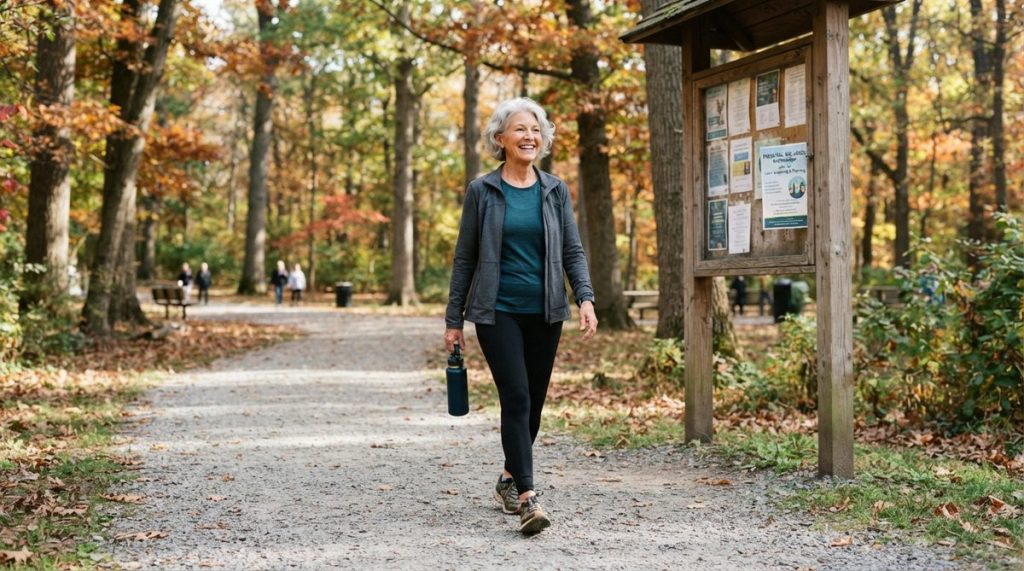
Consider this statistic: according to AARP, roughly 77% of adults aged 50 and older want to remain in their current homes as they age. That’s not a slim majority—it’s an overwhelming consensus. Research on lifestyle trends for older Americans shows this desire to stay put has only intensified since the pandemic reshuffled everyone’s priorities around home, safety, and independence.
Aging in place doesn’t mean ignoring reality. It means proactively reshaping your living space so it works with your body and your life for decades to come. The good news? Most of the modifications you need are surprisingly affordable, and many can be completed in a single weekend.
This guide walks you through every major area of your home, explains what to change and why, offers real cost ranges based on 2025 data, and helps you prioritize so you’re not overwhelmed. Think of it as a coaching session from someone who’s toured hundreds of age-friendly homes and interviewed countless occupational therapists, contractors, and real people who’ve done this successfully.
Start With an Honest Home Assessment
Before you pick up a single tool or call a contractor, you need a clear picture of where your home currently falls short. Walk through every room with fresh eyes—pretend you’re visiting a friend’s house for the first time, and you’re using a walker or carrying a laundry basket with one hand.
The National Council on Aging offers a free home safety checklist that covers lighting, flooring, stairs, and more. Print it out, clipboard-style, and go room by room. You’ll be surprised how many hazards hide in plain sight—a throw rug at the top of the stairs, a shower with no grab bar, a bedroom that requires climbing a full flight to reach.
Key Questions to Ask During Your Walkthrough
- Can you enter and exit the house without climbing steps, or is there a step-free route available?
- Are hallways and doorways wide enough for a wheelchair or walker (at least 36 inches)?
- Is there a full bathroom on the main floor?
- Are light switches, outlets, and thermostats at accessible heights?
- Could you safely live on one floor if stairs became difficult?
If you answered “no” to more than two of those, you’re not alone—and you’re exactly who this guide is for. Prioritizing these areas first gives you the biggest return on safety and independence.
Bathroom Modifications: The Single Most Important Room
The bathroom is often ground zero for aging in place home modifications. The CDC reports that roughly 235,000 Americans over age 15 visit emergency rooms each year for injuries in the bathroom, and adults over 65 account for a disproportionate share of those falls. Wet surfaces, tight spaces, and awkward transitions between standing and sitting make this room inherently risky.
Grab Bars and Support Rails
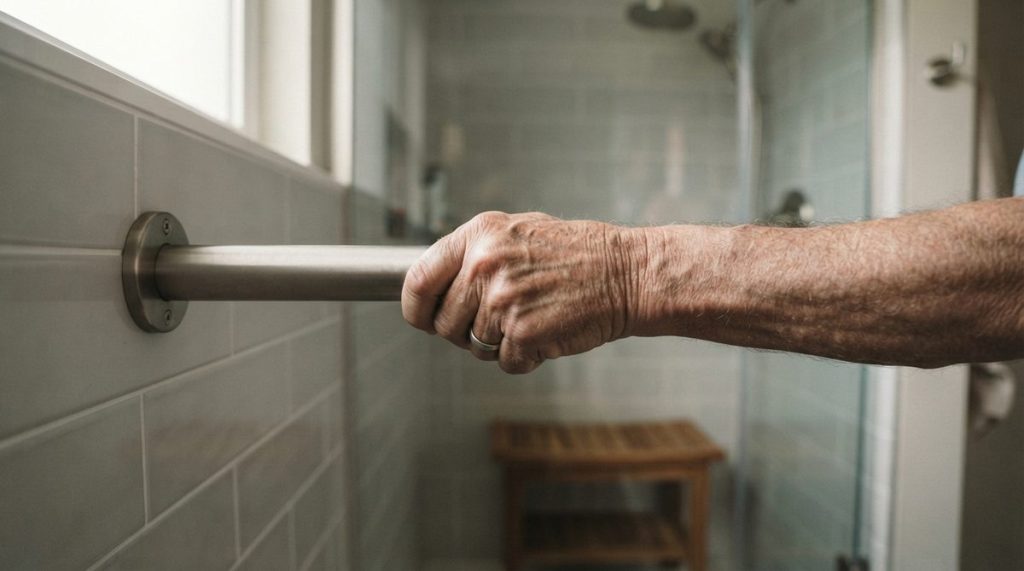
Forget the institutional look of old hospital-style bars. Today’s grab bars come in brushed nickel, matte black, and even decorative styles that blend seamlessly with modern bathrooms. Better Homes & Gardens has featured several designer-friendly options that double as towel bars.
Install them beside the toilet, inside the shower or tub, and near the bathroom entrance. Professional installation typically runs $100–$300 per bar, including hardware rated for 250+ pounds of force. If you’re handy and can locate wall studs, a quality grab bar kit costs $25–$75 at most hardware stores.
Walk-In Showers and Curbless Designs
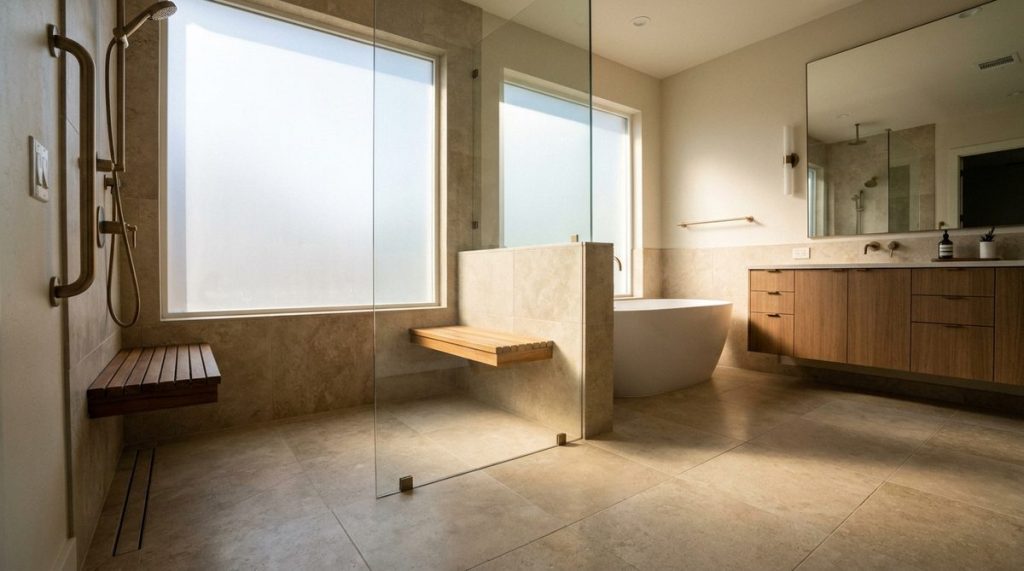
Replacing a traditional tub with a curbless, zero-threshold shower is one of the most impactful changes you can make. Average cost in 2025 ranges from $2,500 to $6,500 depending on your region, tile choices, and whether plumbing needs rerouting. Add a built-in shower bench or a fold-down teak seat for $150–$500.
If a full remodel isn’t in the budget right now, a simple tub-cut insert—where a contractor removes a section of the tub wall to create a lower entry point—costs around $800–$1,500 and can be done in a single day.
Non-Slip Flooring and Comfort-Height Toilets
Swap slick tile for textured vinyl, matte-finish ceramic, or slip-resistant luxury vinyl plank (LVP). A full bathroom reflooring runs $500–$2,000. Pair that with a comfort-height toilet (17–19 inches versus the standard 15 inches), which makes sitting and standing dramatically easier. A new comfort-height toilet installed costs $250–$600.
For a deeper dive into costs across all rooms, our guide on aging in place home modifications and what they cost in 2025 breaks down every dollar.
Entryways and Accessibility: Getting In and Out Safely
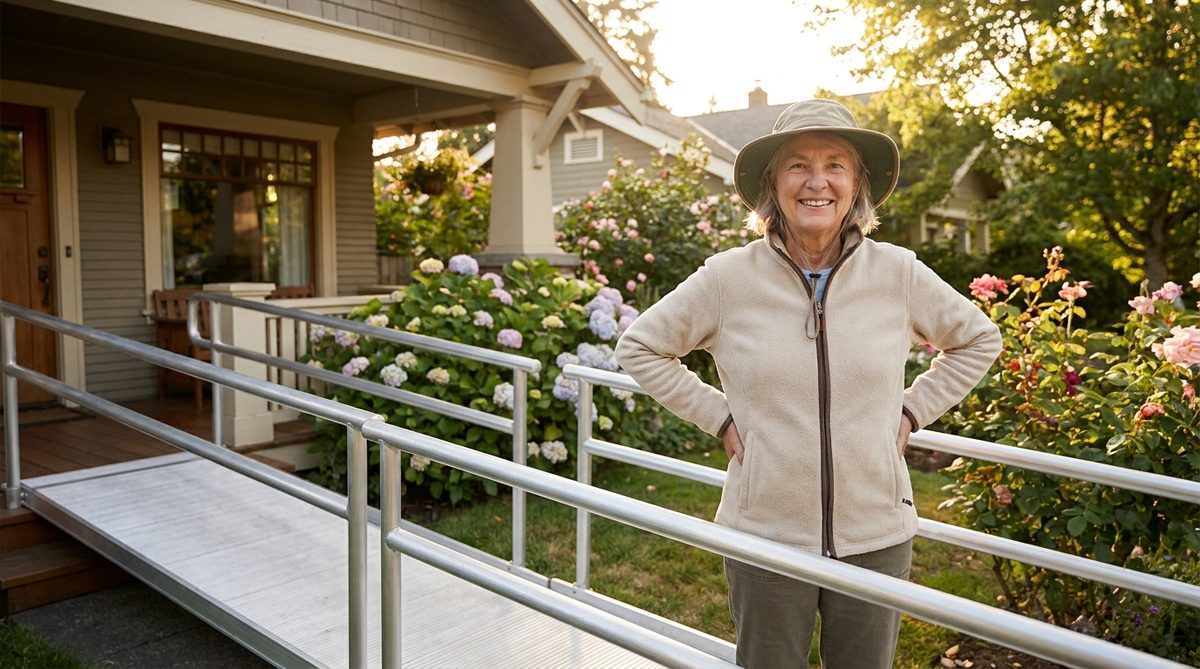
A home you can’t easily enter or exit isn’t truly safe—no matter how perfect the interior is. This is the modification category many people postpone the longest, often because they associate ramps with disability rather than smart design. But a well-built ramp or zero-step entry adds curb appeal and resale value while removing the number-one fall risk: steps.
Ramps and Zero-Step Entries
A professionally built wooden ramp with handrails typically costs $1,000–$3,000 for a modest elevation change of two to three steps. Aluminum modular ramps, which can be reconfigured or moved, run $1,500–$4,000 but last decades with almost no maintenance.
If your front entry is relatively level, a landscape-grade pathway that eliminates even a single step can cost as little as $500–$1,200. Some homeowners opt to regrade the walkway and add a gently sloped concrete approach—a permanent, nearly invisible solution.
Lighting the Path
Motion-activated LED pathway lights cost $15–$50 each and can be solar-powered, meaning zero wiring. Line your front walkway, back patio, and garage entry with them. The National Institute on Aging at nia.nih.gov emphasizes that adequate lighting is one of the simplest and most effective fall-prevention measures—yet it’s routinely overlooked.
Lever Handles and Smart Locks
Round doorknobs are surprisingly difficult to grip for anyone with arthritis or reduced hand strength. Replacing them with lever-style handles costs $15–$40 per door and takes about 10 minutes with a screwdriver. Smart locks with keypad or smartphone entry eliminate fumbling with keys entirely—expect to spend $150–$300 for a quality deadbolt model.
Kitchen Adjustments That Make Daily Life Easier
The kitchen is where independence lives. If you can prepare your own meals safely, you’ve preserved one of the most fundamental aspects of self-sufficiency. Homes that haven’t been adapted often feature an over-reliance on upper cabinets that require reaching, stepping on stools, or straining shoulders.
Pull-Down Shelving and Drawer-Style Storage
Pull-down shelf inserts for upper cabinets cost $100–$300 per unit and bring everything within arm’s reach. Alternatively, reorganize so that daily essentials—plates, cups, spices, medications—live between waist and shoulder height. Base cabinets with pull-out drawers (retrofit kits run $50–$150 each) eliminate crouching and digging.
Countertop and Appliance Adjustments
Consider a countertop microwave or toaster oven to reduce reliance on a traditional oven that requires bending. Induction cooktops, which only heat when a pan is present and cool almost instantly when removed, cost $250–$1,000 and dramatically reduce burn risk. Touch-activated or lever-handle faucets ($100–$350) replace hard-to-turn knobs.
Creating a Main-Floor Living Setup
If your bedroom is upstairs, establishing a complete living space on the main floor offers the biggest long-term payoff. Many people delay this decision until an injury forces an emergency reconfiguration. Planning ahead is always cheaper and less stressful.
Converting a Dining Room or Den
A formal dining room you use twice a year can become a comfortable, light-filled bedroom for a fraction of the cost of an addition. You’ll need a closet solution (a freestanding wardrobe runs $200–$600), adequate outlets, and ideally proximity to a main-floor bathroom. If you need to add a half-bath or convert a closet into a small powder room, budget $5,000–$15,000 depending on plumbing access.
Stairlifts as a Bridge Solution
Not ready to move downstairs entirely? A straight stairlift for a standard staircase costs $2,500–$5,000 installed, and curved models run $8,000–$15,000. Rental programs exist in many states for $100–$300 per month, which can make sense if you view this as a transitional solution while planning a larger renovation. Our roundup of age tech devices that help you live independently at home covers several options worth exploring alongside physical modifications.
Smart Home Technology That Supports Aging in Place
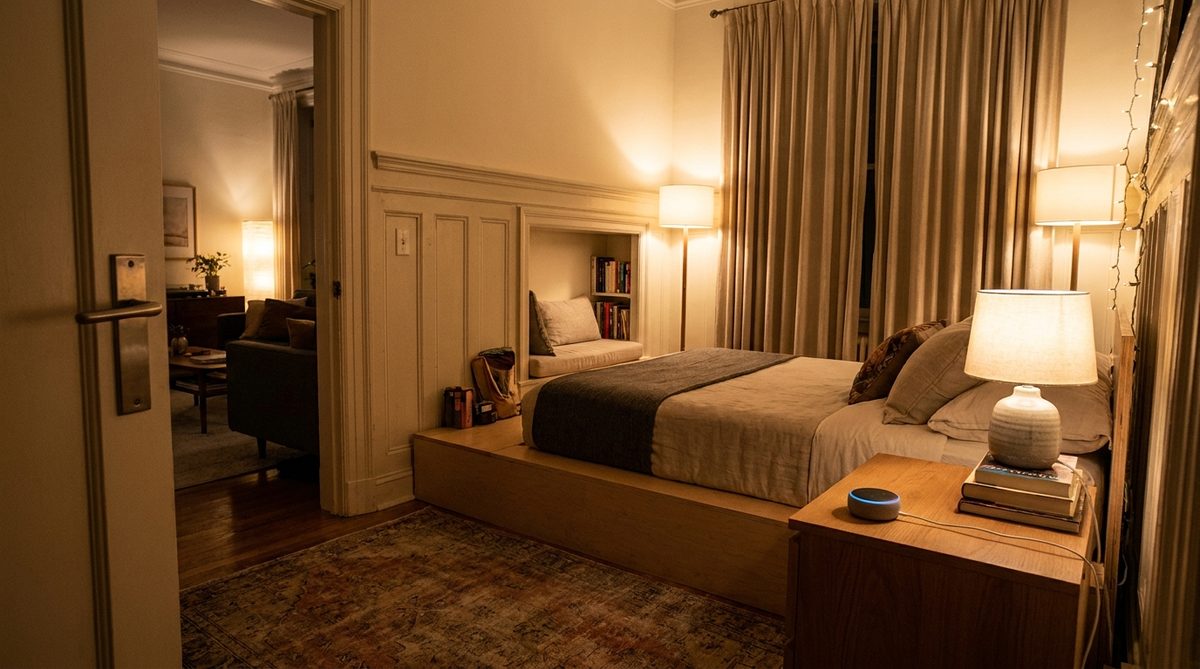
Technology has become one of the most powerful allies for aging in place, and it doesn’t require being “tech-savvy.” Voice-activated assistants like Amazon Echo and Google Nest let you control lights, locks, thermostats, and even make phone calls without touching a device. Setup takes about 20 minutes, and most devices cost $30–$100.
Medical Alert Systems and Fall Detection
Modern medical alert systems have moved far beyond the “I’ve fallen and I can’t get up” era. Today’s wearable pendants and smartwatches include automatic fall detection, GPS tracking, and two-way communication for $25–$50 per month with no long-term contracts required. Some newer models integrate with telehealth platforms, giving you instant video access to a nurse.
Smart Lighting and Automated Routines
Program lights to turn on gradually at 6 a.m. and illuminate the hallway path to the bathroom at night via motion sensors. Smart plugs ($10–$25 each) can automatically turn off space heaters, curling irons, or stovetop appliances after a set time—removing a common fire risk. For a comprehensive breakdown, check out our guide to aging in place tech and smart home solutions for adults over 50.
How to Pay for Aging in Place Modifications
Cost is a common concern, so let’s address it directly. The median cost of a comprehensive aging-in-place retrofit—bathroom, entryway, lighting, and kitchen basics—runs $8,000–$20,000. That sounds like a lot until you compare it to assisted living, which averages $4,995 per month nationally in 2025 according to Genworth’s Cost of Care Survey. One year of assisted living costs more than the most extensive home modification project.
Funding Sources to Explore
- Medicaid Home and Community-Based Services (HCBS) waivers: Available in all 50 states, these can cover grab bars, ramps, and other modifications for qualifying individuals.
- VA Specially Adapted Housing grants: Veterans may qualify for grants up to $109,986 (2025 figure) for home modifications related to service-connected disabilities.
- USDA Rural Development grants: Homeowners 62+ in rural areas can receive up to $10,000 for safety-related repairs and modifications.
- Area Agency on Aging programs: Local AAA offices often administer small grant programs or connect homeowners with volunteer retrofit teams.
- Home equity lines of credit (HELOCs): If you have significant equity, borrowing against it at today’s rates can fund modifications while keeping your monthly costs manageable.
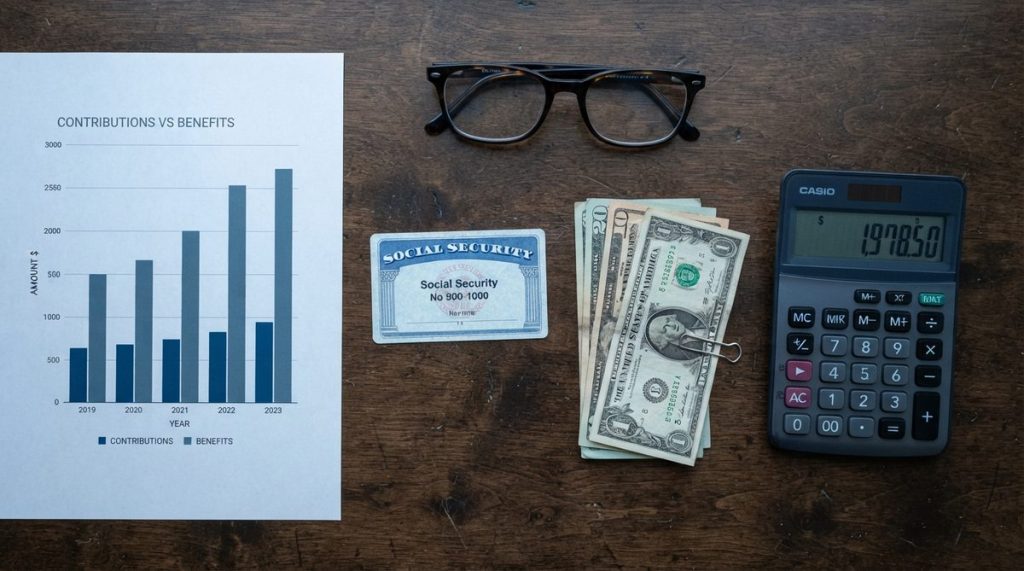
Understanding your full financial picture matters here. If you’re still working or considering part-time income, our article on working while collecting Social Security in 2026 clears up common misconceptions that could affect your planning.
Building Your Modification Priority List
You don’t have to do everything at once. In fact, spreading modifications across a 12–24 month timeline lets you budget more comfortably, live with each change before adding the next, and catch needs you didn’t anticipate during your initial walkthrough.
Suggested Priority Order
- Month 1–3: Bathroom grab bars, non-slip mats, improved lighting throughout the home, lever door handles. Total estimated cost: $500–$1,500.
- Month 4–6: Main-floor bedroom setup, comfort-height toilet, pull-down cabinet shelving. Total estimated cost: $1,000–$3,000.
- Month 7–12: Walk-in shower conversion, entryway ramp or zero-step approach, smart home basics. Total estimated cost: $3,500–$10,000.
- Year 2: Stairlift if needed, kitchen countertop modifications, medical alert system subscription, advanced smart home integration. Total estimated cost: $3,000–$8,000.
This phased approach keeps aging in place achievable rather than overwhelming. Each completed phase adds a tangible layer of safety, and you’ll feel the difference immediately.
The Emotional Side of Modifying Your Home
It’s worth addressing something most guides skip entirely: the feelings that come with this process. The hardest part isn’t choosing a grab bar finish or scheduling a contractor. It’s accepting that your home—and your body—need to evolve together.
Across interviews with people who completed these modifications, a consistent theme emerged: participants reported feeling more confident, not less. They felt liberated, not limited. Consider one Tucson resident’s experience: “I stopped dreading the shower. I stopped gripping the wall. I just… lived.” That sense of freedom—and restored independence—is the whole point.
Your home has held your life for years or decades. With thoughtful, affordable modifications, it can keep holding it—safely, comfortably, and on your terms—for many more years to come. Aging in place isn’t about standing still. It’s about building a home that moves forward with you.
Frequently Asked Questions
What is the most important aging in place home modification to start with?
Bathroom safety modifications, particularly grab bars and non-slip flooring, should be your first priority. The bathroom is where the majority of in-home falls occur among older adults, and these changes are both affordable and quick to install—often under $500 total.
How much does it cost to fully modify a home for aging in place?
A comprehensive aging-in-place retrofit typically costs between $8,000 and $20,000, covering the bathroom, entryway, lighting, kitchen, and main-floor living setup. However, basic safety upgrades like grab bars, lever handles, and improved lighting can be completed for under $1,500.
Does Medicare pay for aging in place home modifications?
Traditional Medicare generally does not cover home modifications. However, some Medicare Advantage plans include limited home safety benefits. Medicaid HCBS waivers, VA grants, and USDA Rural Development grants are more reliable funding sources for qualifying homeowners.
Can I do aging in place modifications myself or do I need a contractor?
Many modifications are DIY-friendly, including installing lever door handles, adding non-slip mats, improving lighting, and organizing cabinets for accessibility. However, grab bars must be anchored into wall studs to be safe, and projects like walk-in shower conversions, ramp construction, and plumbing work should be handled by licensed professionals.
At what age should I start making aging in place modifications?
Experts recommend starting in your 50s or early 60s, well before modifications become urgent. Planning ahead lets you spread costs over time, make design choices you genuinely enjoy, and avoid emergency renovations after an injury or health change forces the issue.