


Key Takeaways
- Older adults can lose up to 5% of their muscle strength per day of bed rest during hospitalization, triggering a dangerous cycle of decline.
- Hospital-acquired deconditioning is preventable with early mobility programs, but fewer than half of U.S. hospitals have formal protocols in place.
- Simple movements like seated marches, assisted hallway walks, and bed exercises can dramatically reduce falls, readmissions, and loss of independence after discharge.
- Families play a critical advocacy role by requesting physical therapy consultations and encouraging safe movement from the first day of admission.
The Morning Everything Changed for Margaret
Margaret was 74 years old, sharp as a tack, and still tending her garden every Saturday when she came into the hospital for what should have been a routine procedure — a gallbladder removal. The surgery went fine. But five days later, when her surgeon cleared her to go home, Margaret couldn’t stand up without two people holding her arms. Her legs shook. She was dizzy. She was afraid.
I met Margaret on day six. Her daughter had insisted on a physical therapy consult after watching her mother — a woman who had been walking two miles a day just a week earlier — struggle to get from the bed to the bathroom. “She went in walking,” her daughter told me, her voice cracking. “What happened?”
What happened to Margaret is what happens to hundreds of thousands of older Americans every year in hospitals across this country. It’s called hospital-acquired deconditioning, and in my 18 years as a board-certified geriatric physical therapist, I’ve seen it steal independence from people who came in with every expectation of walking back out. The surgery or illness that brought them in isn’t what breaks them. The bed rest is.
The Hidden Crisis: What Bed Rest Does to Aging Bodies
Here’s a number that stops most people cold: older adults can lose between 1% and 5% of their muscle strength for every single day they spend immobile in a hospital bed. That’s not a typo. The National Institute on Aging has documented that adults over 65 lose muscle mass at roughly three times the rate of younger patients during periods of inactivity.
For a 30-year-old recovering from surgery, a week in bed is an inconvenience. For a 75-year-old, it can be the difference between going home and going to a nursing facility. After just 10 days of bed rest, healthy older adults in research studies showed a 15% reduction in knee extensor strength and measurable decreases in aerobic capacity equivalent to aging 10 years.
I often tell my patients’ families that the hospital bed is both a place of healing and a place of risk. The body doesn’t know the difference between resting because you’re recovering and resting because you’ve given up. It responds the same way — by shutting down systems it thinks you don’t need anymore.
The Deconditioning Cascade
What makes hospital-acquired deconditioning so devastating is that it doesn’t just affect muscles. It triggers a cascade of physiological changes that compound on each other:
- Muscle atrophy begins within 48 hours of immobility, particularly in the large muscles of the legs and trunk that keep you upright and moving.
- Bone density loss accelerates. Older adults already losing roughly 1% of bone mass per year can see that rate spike during prolonged bed rest.
- Cardiovascular deconditioning sets in fast — blood volume decreases, resting heart rate rises, and orthostatic hypotension (that dizzy, faint feeling when you stand) becomes common.
- Cognitive decline worsens, especially for patients already at risk for delirium. The combination of immobility, disrupted sleep, and unfamiliar environments is a recipe for confusion.
- Depression and anxiety spike as patients feel their independence slipping away in real time.
This is what I saw with Margaret. Her gallbladder was gone, her surgical site was healing beautifully, and yet she was functionally worse than when she’d arrived. The surgery was a success, but the hospitalization was making her sicker.
The Numbers Tell a Sobering Story
This isn’t a small problem. According to the CDC, approximately 35% of adults aged 65 and older experience a measurable decline in their ability to perform daily activities after a hospital stay of three days or more. A landmark study published in the Journal of the American Medical Association found that one-third of patients over 70 were discharged from the hospital with a new disability in at least one activity of daily living — things like bathing, dressing, or getting out of a chair.
The financial toll is enormous. Hospital readmission rates within 30 days hover near 20% for Medicare patients, and a significant chunk of those readmissions are linked to falls, weakness, and deconditioning that occurred during the initial stay. If you’re concerned about how medical costs affect retirement finances, the connection between preventable hospital decline and ongoing healthcare spending is one that retirees navigating Medicare costs in 2026 cannot afford to ignore.
And here’s the part that keeps me up at night: much of this decline is preventable.
Why Hospitals Aren’t Built for Movement
If staying active during hospitalization is so critical, why don’t more patients do it? The answer is complicated, and it involves hospital culture, staffing realities, and a well-intentioned but misguided instinct to keep patients safe by keeping them still.
The “Stay in Bed” Reflex
Walk into most hospital rooms and you’ll find an environment designed around the bed. The call button, the TV remote, the meal tray, the IV pole — everything orbits that mattress. Many patients tell me they were explicitly told to stay in bed, or at least strongly discouraged from getting up without assistance. And in an understaffed unit where a nurse is juggling eight or nine patients, waiting 45 minutes for help getting to the bathroom means many older adults simply stop trying.
Fall prevention protocols, while absolutely necessary, sometimes have the unintended consequence of immobilizing patients. Bed alarms, restraint orders, and the ever-present fear of liability create an environment where the safest thing — from the institution’s perspective — is a patient who doesn’t move. But from the patient’s perspective, that stillness is quietly catastrophic.
The Physical Therapy Gap
Here’s a reality of hospital-based rehab that most people don’t know: a typical acute care physical therapy session lasts between 15 and 30 minutes. That’s once a day, if the patient is seen at all. Many hospitals don’t automatically consult PT for older patients unless they’ve had a specific orthopedic surgery or neurological event. A 72-year-old admitted for pneumonia? They might never see a physical therapist unless someone specifically asks.
In my experience, the patients who fare best are the ones whose families advocate loudly and early for mobility. That advocacy shouldn’t be necessary — it should be standard care — but until hospital systems catch up, it remains one of the most powerful tools families have.
What Early Mobility Actually Looks Like
When I talk about elderly patients in the hospital needing to keep moving, I’m not suggesting that your 78-year-old mother should be doing laps around the cardiac unit the day after a heart procedure. Early mobility is graded, careful, and individualized. But it starts sooner than most people expect — often within hours of admission or surgery.
A Step-by-Step Mobility Plan for Hospitalized Older Adults
Based on the protocols I’ve developed and refined over nearly two decades of geriatric practice, here’s what a safe, progressive mobility plan typically looks like:
- Hour 0–12 (Admission/Post-Op Day Zero): Begin with deep breathing exercises and ankle pumps in bed. These simple movements maintain circulation and begin engaging the muscular system. Even patients on supplemental oxygen or IV medications can do these safely in most cases.
- Day 1: Progress to seated exercises at the edge of the bed — what we call “dangling.” Practice sitting upright unsupported for 5–10 minutes, performing gentle neck rolls, shoulder shrugs, and seated marching (lifting knees alternately). This challenges balance and activates core stabilizers.
- Day 1–2: Attempt a supervised stand-pivot transfer to a bedside chair. Sitting in a chair — even for meals — is dramatically better for lung function, digestion, and muscle engagement than lying in bed. Aim for 20 minutes in a chair, three times daily.
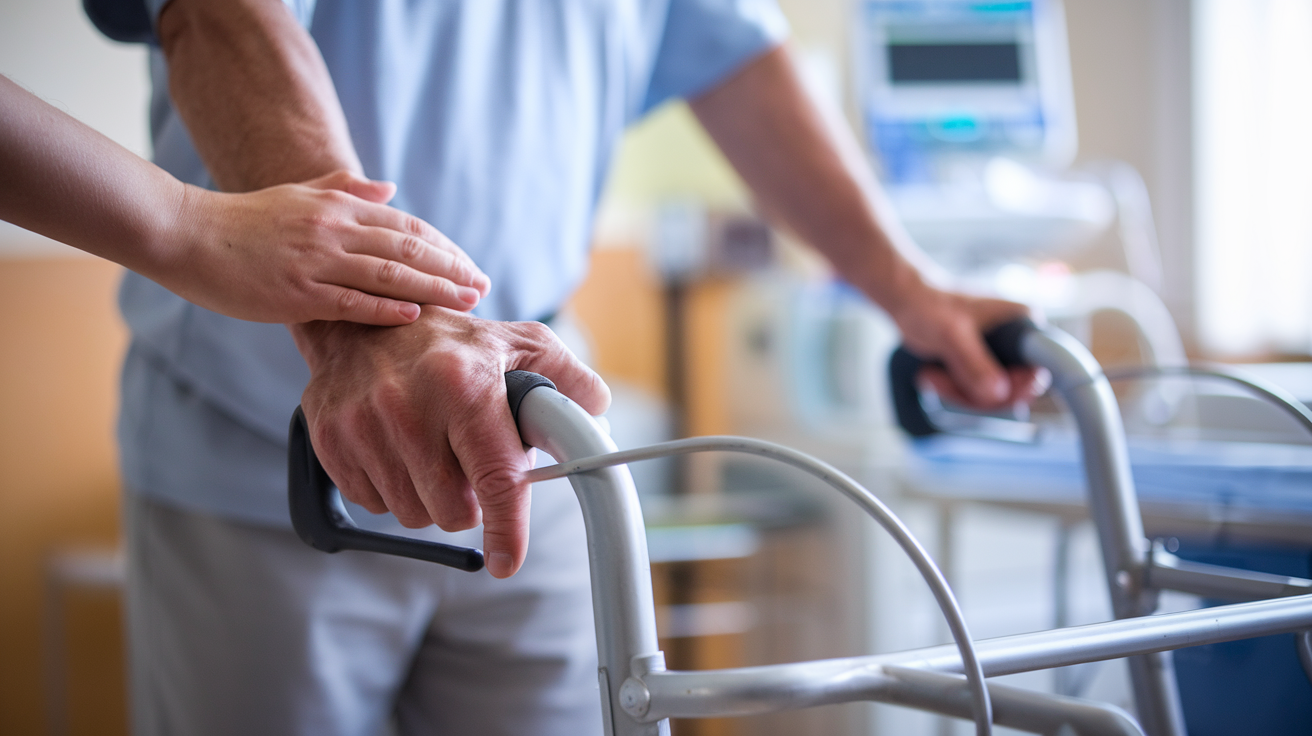
- Day 2–3: Begin assisted hallway walking. Even 50 feet with a walker and a helper counts. The goal is not distance but consistency. Two to three short walks per day, gradually increasing length.
- Day 3 and beyond: Progress to longer walks, stair practice (if stairs are needed at home), and functional training — practicing the specific movements the patient will need to manage safely at home, like getting in and out of a car or navigating a bathroom.
Every one of these steps is modified based on the patient’s medical status, pain level, cognitive function, and baseline fitness. The key principle is: do something. Do it early. Do it often. And do it safely.
The Evidence Is Overwhelming
This isn’t just my clinical opinion. The research base supporting early mobility for hospitalized older adults is deep and growing. A 2023 systematic review in the journal Age and Ageing found that structured mobility programs reduced hospital length of stay by an average of 1.3 days and decreased the incidence of new-onset disability by 20%. The Mayo Clinic has published extensively on their own early mobility protocols, reporting significant reductions in delirium, falls, and ICU readmissions among older patients who participated in daily movement programs.
The MOVE trial, one of the largest randomized controlled trials on hospital mobility, demonstrated that older patients who received twice-daily assisted mobility sessions were 30% more likely to be discharged home rather than to a skilled nursing facility. For someone like Margaret — a fiercely independent woman who wanted nothing more than to get back to her garden — that statistic isn’t abstract. It’s the difference between the life she wanted and one she feared.
The Gut-Muscle Connection
Emerging research is adding fascinating new dimensions to this conversation. A recent study from AIIMS (the All India Institute of Medical Sciences) found a significant link between gut microbiome composition, muscle weakness, and fall risk in elderly populations. While the research is still in its early stages, it suggests that immobility doesn’t just weaken muscles directly — it may also disrupt the gut bacteria that play a role in muscle protein synthesis and inflammation regulation.
This is a reminder that the body is deeply interconnected. When we immobilize an older adult, we’re not just affecting their legs. We’re potentially disrupting their digestion, their cognition, their mood, and their immune function — all systems that matter enormously for recovery.

What Families Can Do Right Now
If you have a parent, spouse, or loved one over 65 who is hospitalized — or who may be hospitalized in the future — here’s what I want you to know. You have more power than you think. And the time to act is before the deconditioning sets in, not after.
Be the Advocate
Request a physical therapy consultation on day one. Don’t wait for the medical team to suggest it. Ask the attending physician directly: “Can we get PT involved today?” In most cases, the answer is yes. If you’re told it’s not necessary, ask again. Politely, firmly, and on the record.
Ask the nursing staff what the patient’s mobility goal is for the day. Hospitals that have implemented structured mobility programs often use a “mobility level” system — a simple scale from 1 (bed rest) to 4 (independent ambulation). Knowing your loved one’s level and pushing gently toward the next one creates accountability.
Bring the Right Gear
This is practical advice that I give every family: bring non-slip socks or shoes with good traction, comfortable clothing that isn’t a hospital gown (it’s hard to feel motivated to walk when you’re worried about your backside showing), and any assistive devices they use at home — a cane, a walker, their own eyeglasses, hearing aids. Sensory deprivation compounds immobility. A patient who can’t see or hear well is far less likely to feel confident getting up.
Plan the Transition Home
Discharge planning should start on admission day, not the morning the patient leaves. Ask about home health physical therapy, outpatient rehab options, and what modifications might be needed at home to prevent falls. If your loved one is planning to age in place, understanding the real costs and priorities of home modifications before a hospitalization happens puts you miles ahead of a crisis-driven decision.
Many of the patients I see in outpatient rehab after a hospital stay are recovering not from their original illness, but from the deconditioning that happened while they were being treated for it. The earlier we break that cycle, the better the outcome.
Margaret’s Ending — And a New Beginning
I worked with Margaret for four days in the hospital before she was discharged. We started slow — seated marches, stand-to-sit transfers, short walks to the nurses’ station with her daughter at her side. By day three, she was walking the length of the hallway with a rolling walker. By day four, she was demanding to go home.
Margaret’s daughter arranged home health PT, cleared the throw rugs out of the hallway (a conversation we had at the bedside), and installed a grab bar in the bathroom before her mother walked through the front door. Six weeks later, Margaret sent me a photo. She was in her garden, kneeling in the dirt, holding up a tomato the size of a softball.
That photo sits on my desk. It reminds me every day that the difference between independence and institutionalization for an older adult can come down to whether someone helped them get out of bed on day one.
Building a Foundation Before the Hospital
The best time to prepare for a hospitalization is long before one happens. What I see most often is that patients who enter the hospital with a strong baseline of strength, balance, and cardiovascular fitness recover faster and experience less deconditioning. The healthy aging habits you build after 50 are essentially an insurance policy against the devastating effects of forced immobility.
Resistance training at least twice a week, daily walking, balance practice, and adequate protein intake (the current recommendation for older adults is 1.0–1.2 grams per kilogram of body weight daily, higher than for younger adults) all contribute to what researchers call “physiological reserve” — the buffer your body has to absorb a setback and bounce back.
If you’re over 65, ask your doctor or a physical therapist to assess your fall risk, grip strength, and gait speed. These three simple measures are among the strongest predictors of how well you’ll tolerate a hospitalization. Knowing your numbers gives you something concrete to work on — and something concrete to protect.
The System Is Changing — Slowly
There’s reason for cautious optimism. The Hospital Elder Life Program (HELP), developed at Yale and now implemented in over 200 hospitals worldwide, has been shown to reduce delirium by 40% and functional decline by 67% through a combination of early mobility, cognitive stimulation, nutrition support, and sleep protocols. Medicare’s value-based purchasing programs are increasingly tying hospital reimbursement to readmission rates, which is finally giving hospital administrators a financial incentive to invest in mobility programs.
But we’re not there yet. As of 2025, fewer than half of U.S. acute care hospitals have formal early mobility protocols for non-ICU patients over 65. That means the burden still falls largely on patients and families to demand what should be standard care.
I believe that will change within the next decade. The evidence is too strong, the demographic pressure too intense — with over 10,000 Americans turning 65 every day — and the cost of inaction too high. But until that day comes, I’ll keep meeting patients like Margaret, keep handing out non-slip socks, and keep saying the same thing I’ve said for 18 years: the most dangerous thing an older adult can do in a hospital is nothing.
Frequently Asked Questions
How soon after surgery should an elderly patient start moving in the hospital?
In most cases, gentle movements like ankle pumps and deep breathing can begin within hours of surgery. Sitting at the edge of the bed and short assisted walks often start within 24 to 48 hours, depending on the procedure and the patient's medical status. Always follow the care team's guidance, but don't hesitate to ask about early mobility on day one.
What should I do if hospital staff says my elderly parent doesn't need physical therapy?
You have the right to request a physical therapy consultation directly. Ask the attending physician to place the order and document the request in the medical record. If PT is still declined, ask for a written explanation. Advocacy from family members is one of the most effective ways to ensure older patients receive mobility support during hospitalization.
Can hospital bed rest really cause permanent disability in older adults?
Yes, it can. Research shows that approximately one-third of hospitalized adults over 70 are discharged with a new disability in at least one daily living activity. While some patients recover fully with rehabilitation, others — particularly those with limited physiological reserve before admission — may never regain their previous level of function. Early mobility significantly reduces this risk.
How can older adults prepare their bodies before a planned hospitalization?
Focus on building strength, balance, and cardiovascular fitness in the weeks leading up to a scheduled procedure. Resistance training at least twice weekly, daily walking, and increasing protein intake to 1.0–1.2 grams per kilogram of body weight daily can all improve your physiological reserve. Ask your doctor or physical therapist for a pre-habilitation program tailored to your upcoming surgery.
About Michael Torres, DPT, Board-Certified Geriatric Specialist
Michael Torres is a Doctor of Physical Therapy and board-certified geriatric clinical specialist with 18 years of experience working with older adults. He has treated thousands of seniors recovering from hip replacements, managing arthritis, rebuilding strength after hospitalizations, and preventing dangerous falls. At Daily Trends Now, Michael writes practical guides on exercises, mobility, pain management, and the physical strategies that help seniors stay strong and independent.