
Key Takeaways
- Nearly 90% of adults over 65 want to age in place, but fewer than half have made any home modifications to do so safely.
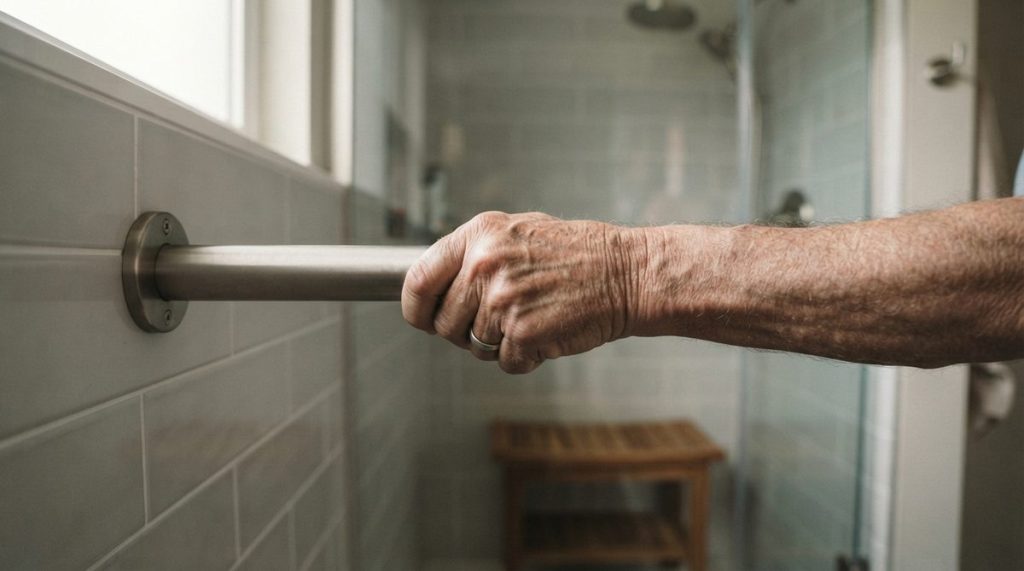
- Critical aging-in-place modifications like grab bars, better lighting, and zero-threshold showers can prevent the 36 million falls that injure older adults each year.
- Federal and state grant programs, including the Older Adults Home Modification Grant Program, can offset renovation costs significantly.
- Starting modifications in your 50s or early 60s—before they're urgently needed—saves money, reduces stress, and keeps you in control of the process.
The Dream of Staying Home—and the Reality Gap
Here’s a number that still catches people off guard: according to AARP‘s 2024 Home and Community Preferences Survey, 89% of adults age 50 and older say they want to remain in their current home as they age. That desire is powerful—and completely understandable. Your home holds decades of memories, neighborhood connections, and the kind of comfort no assisted living brochure can replicate.
But wanting to stay and being ready to stay are two very different things. In my 16 years covering lifestyle and active aging, I’ve interviewed hundreds of adults who assumed their home was “fine” until a fall on wet bathroom tile, a tumble down poorly lit stairs, or a struggle with a too-high kitchen cabinet forced an emergency move they never wanted. The gap between intention and preparation is enormous, and closing it is exactly what this guide is about.
If you’ve been thinking about how to make your home safe for aging in place but aren’t sure where to start, you’re in the right spot. We’ll walk through every major area of your home, compare costs, point you toward funding help, and give you a realistic timeline so nothing feels overwhelming. As I often tell my readers: the best time to start is before you need to.
Start with a Whole-Home Safety Audit
Before you pick up a drill or call a contractor, grab a notebook and walk through every room with fresh eyes. Pretend you’re evaluating the house for someone who uses a cane, has reduced vision, or tires easily. That mental shift reveals hazards you’ve been stepping over for years.
What to Look for Room by Room
- Entryways: Are there steps without handrails? Is the threshold high enough to trip over? Can you unlock the door easily with arthritic hands?
- Hallways and stairs: Is lighting bright and consistent? Are rugs secured or—better yet—removed? Are stair treads non-slip?
- Bathroom: Could you get in and out of the tub or shower if your balance changed? Is the toilet height comfortable? Are towel bars sturdy enough to support body weight? (Spoiler: most aren’t.)
- Kitchen: Are frequently used items within reach without a step stool? Are cabinet knobs easy to grip? Is the flooring slippery when wet?
- Bedroom: Can you reach a light switch from bed? Is the path to the bathroom clear in the dark? Is the bed height easy to get in and out of?
- Laundry area: Are the washer and dryer front-loading? Is there room to fold clothes without standing for extended periods?
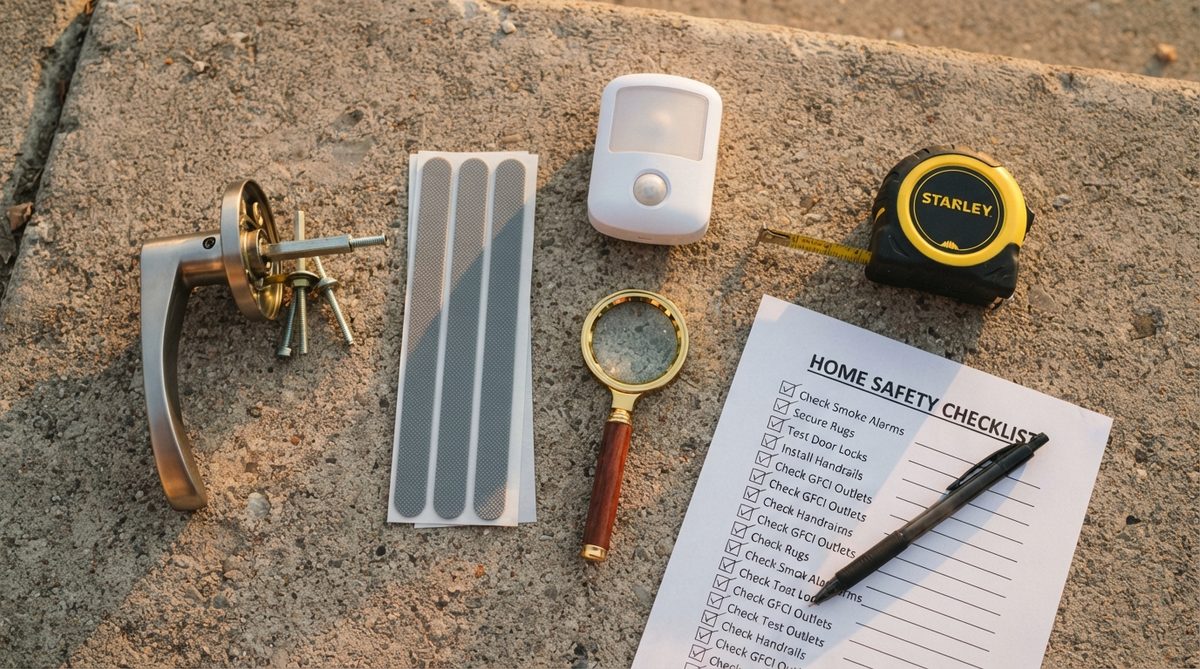
The National Institute on Aging offers a free fall-prevention checklist that covers many of these areas, and I recommend printing it out and checking items off as you go. A systematic audit takes about an hour but can save you years of independence.
The Modifications That Matter Most
Not every aging-in-place upgrade requires a five-figure renovation. In fact, some of the most life-saving changes cost less than a restaurant dinner. I’ve organized modifications into three tiers so you can prioritize based on urgency and budget.
Tier 1: Low-Cost, High-Impact (Under $200)
- Install grab bars in the shower, beside the toilet, and near any steps. Professional-grade bars cost $20–$50 each plus installation.
- Replace round doorknobs with lever-style handles—far easier for hands affected by arthritis.
- Add motion-sensor nightlights along the path from bedroom to bathroom.
- Apply non-slip adhesive strips to bathtub and shower floors.
- Secure or remove all throw rugs. The CDC reports that falls are the leading cause of injury among adults 65 and older, and loose rugs are a top culprit.
- Raise toilet seat height with an inexpensive riser ($25–$60).
Tier 2: Moderate Upgrades ($200–$2,000)
- Install a handheld showerhead on an adjustable slide bar for seated or standing use.
- Upgrade lighting throughout the home to bright, even LED fixtures—aim for 100 lux minimum in hallways.
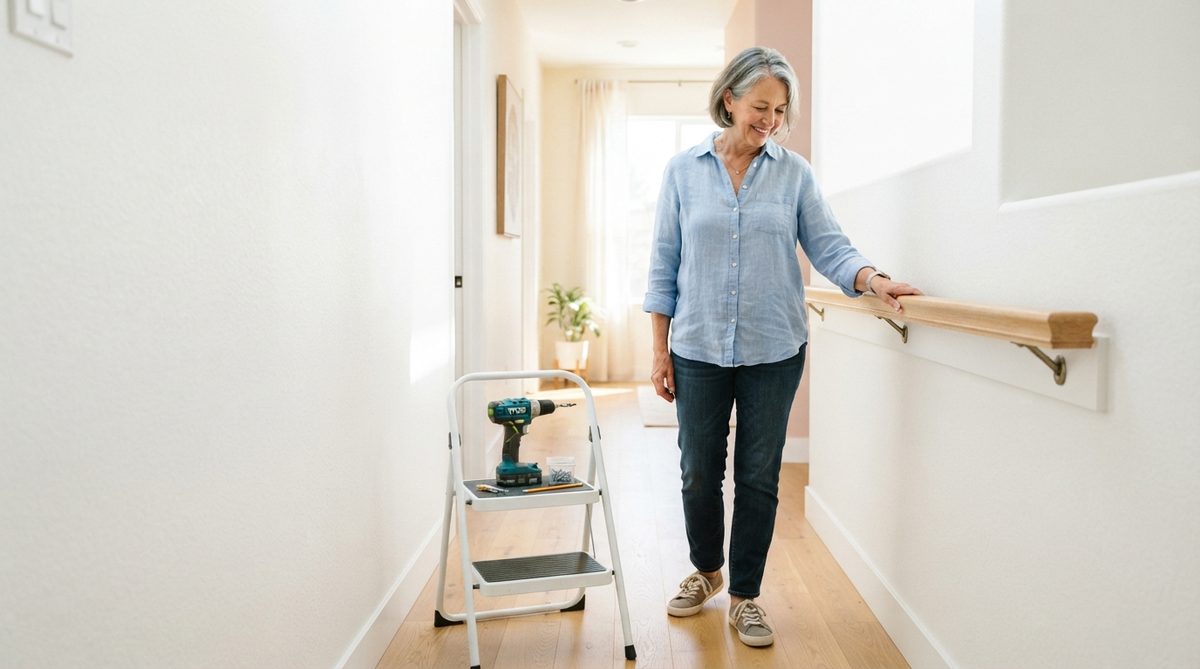
- Add a second handrail to staircases (most homes only have one).
- Replace traditional faucets with single-lever or touchless models.
- Install a smart doorbell and smart lock so you can see visitors and unlock the door remotely.
Tier 3: Major Renovations ($2,000–$25,000+)
- Convert a tub to a zero-threshold (curbless) walk-in shower with a built-in bench.
- Widen doorways to at least 36 inches for wheelchair or walker access.
- Build a ramp or zero-step entry at the main entrance.
- Relocate the master bedroom and a full bath to the main floor if they’re currently upstairs.
- Install a stairlift ($3,000–$15,000 depending on configuration).
Cost Comparison: Common Aging-in-Place Modifications
Costs vary by region and contractor, but the table below reflects 2025 national averages I’ve compiled from contractor databases, AARP resources, and home improvement industry reports. Use it as a planning baseline.
| Modification | Average Cost (DIY) | Average Cost (Professional) | Impact on Safety |
|---|---|---|---|
| Grab bars (per bar) | $20–$40 | $75–$150 | Very High |
| Non-slip floor treatments | $15–$50 | $100–$300 | High |
| Lever door handles (per door) | $15–$30 | $50–$100 | Moderate |
| Motion-sensor lighting (set of 6) | $30–$60 | $150–$300 | High |
| Walk-in shower conversion | N/A | $4,000–$12,000 | Very High |
| Doorway widening (per doorway) | N/A | $800–$2,500 | High |
| Stairlift (straight staircase) | N/A | $3,000–$6,000 | Very High |
| Zero-step entry / ramp | $200–$500 (portable ramp) | $1,500–$8,000 (permanent) | Very High |
| Smart doorbell + smart lock | $150–$350 | $250–$500 | Moderate |
How to Pay for It: Grants, Tax Breaks, and Programs You Might Not Know About
Cost is the number-one reason people delay aging-in-place modifications. But what I see most often is that people don’t realize how much financial help exists. Let me walk you through the main options.
Federal and State Grant Programs
The Older Adults Home Modification Grant Program, funded through the Administration for Community Living, provides grants to community organizations that then help older homeowners pay for accessibility upgrades. Eligibility and availability vary by state, so contact your local Area Agency on Aging to check current funding cycles.
The U.S. Department of Agriculture (USDA) offers the Section 504 Home Repair Program, which provides loans up to $40,000 and grants up to $10,000 for homeowners age 62+ with very low income who need to remove health and safety hazards. The National Council on Aging maintains an updated benefits finder tool that can match you with programs in your ZIP code.
VA Grants for Veterans
Veterans with service-connected disabilities may qualify for the Specially Adapted Housing (SAH) grant (up to $109,986 in 2025) or the Home Improvements and Structural Alterations (HISA) grant. These are substantial—and underused.
Tax Deductions and Credits
If a physician documents that modifications are medically necessary, some costs may qualify as deductible medical expenses on your federal tax return (subject to the 7.5% AGI threshold). Several states, including Georgia and Virginia, also offer state-level tax credits for aging-in-place improvements. Consult a tax professional to understand what applies in your situation—especially if you’re managing broader retirement finances. For more on protecting your savings, see our guide on the five biggest financial concerns for retirees and how to fix them.
Medicaid Waivers
Many states offer Home and Community-Based Services (HCBS) Medicaid waivers that cover home modifications for qualifying individuals. The scope of what’s covered varies widely—some states will fund bathroom renovations and ramp construction, while others limit assistance to grab bars and handrails.
The Bathroom: Your Single Most Important Project
If you only tackle one room, make it the bathroom. The data is sobering: approximately 235,000 Americans over age 15 visit emergency rooms each year for injuries sustained in the bathroom, according to the CDC, and the risk climbs sharply after 65. Wet surfaces, tight spaces, and the physical demands of getting in and out of a tub create a perfect storm.
The Gold-Standard Bathroom Setup
- A curbless (zero-threshold) shower with a built-in bench and a handheld showerhead on a slide bar.
- Grab bars at the shower entry, inside the shower at two heights, and beside the toilet. Use bars rated for at least 250 pounds of force.
- A comfort-height toilet (17–19 inches from floor to seat) or a quality seat riser.
- Non-slip flooring—textured tile or vinyl rated for wet conditions with a coefficient of friction above 0.60.
- A pocket door or barn-style door instead of a swing door, preserving maneuvering space inside the room.
In my experience, the walk-in shower conversion delivers the single biggest return in both safety and daily quality of life. People consistently tell me it’s the modification they wish they’d done five years sooner.
Kitchen and Living Areas: Comfort Meets Function
Falls in the kitchen often happen when people reach overhead or step on wet floors. Simple adjustments go a long way.
- Move everyday dishes, glasses, and pantry staples to countertop level or lower cabinets.
- Install pull-out shelves inside lower cabinets so you don’t have to kneel and dig.
- Use a flat, rubber-backed kitchen mat (not a loose rug) in front of the sink.
- Choose a single-lever or touchless faucet that doesn’t require grip strength to operate.
- Ensure at least one work surface is at a height comfortable for seated use—this matters more than people expect if recovery from surgery or a knee injury keeps you off your feet temporarily.
In living areas, clear traffic paths of at least 36 inches wide, secure electrical cords along baseboards, and swap low-profile coffee tables for models with rounded edges and visible contrast against the flooring.
Technology That Supports Independence
Smart home technology has moved far beyond the novelty stage. Today’s options are genuinely useful for aging in place—and older adults are adopting tech faster than most people think.
- Medical alert systems: Modern wearable pendants and smartwatches can detect falls automatically and call for help. Costs range from $20–$50 per month.
- Smart lighting: Voice-controlled or motion-activated lights eliminate the need to walk through a dark house.
- Video doorbells: See who’s at the door without getting up—and speak to them through your phone or a countertop display.
- Stove auto-shutoff devices: Products like FireAvert or CookStop turn off the burner if they detect smoke or prolonged unattended use. These cost $100–$300 and can prevent kitchen fires.
- Medication management apps and smart pill dispensers: Automated reminders reduce missed doses, which is critical for adults managing multiple prescriptions.
Building Your Team: Who to Hire
Not every contractor understands aging-in-place design. Look for professionals with specific credentials.
Certified Aging-in-Place Specialists (CAPS)
The National Association of Home Builders offers a CAPS designation for remodelers, designers, and healthcare professionals trained in aging-in-place principles. Hiring a CAPS-certified contractor means they understand ADA-adjacent design standards, fall-prevention principles, and the unique needs of older adults. You can search the NAHB directory by ZIP code.
Occupational Therapists
Before spending thousands on renovations, consider a one-time home assessment from a licensed occupational therapist (OT). An OT evaluates how you move through your specific home and recommends modifications tailored to your body, your health conditions, and your daily routines. Many insurance plans cover this assessment when ordered by a physician. It’s one of the smartest $100–$300 investments you can make.
Your Timeline: When to Start What
I get this question constantly: “When should I start making changes?” My answer is always the same—earlier than you think. Here’s the phased approach I recommend.
In Your 50s
- Complete a whole-home safety audit.
- Tackle all Tier 1 modifications (grab bars, lighting, lever handles, rug removal).
- Begin researching contractors and funding programs.
- If you’re planning any remodel for aesthetic reasons, build universal design features into the project now—it’s dramatically cheaper than retrofitting later.
In Your 60s
- Complete Tier 2 upgrades (improved lighting, handheld showerheads, second handrails).
- Convert at least one bathroom to a walk-in shower if you haven’t already.
- Ensure a bedroom and full bathroom are accessible on the main floor.
- Set up smart home technology and medical alert systems.
In Your 70s and Beyond
- Reassess annually—your needs will evolve. A home that was safe at 72 may need additional changes at 78.
- Consider major investments like stairlifts, zero-step entries, or wider doorways based on current mobility.
- Revisit financial planning to ensure ongoing home maintenance is sustainable. Rising costs can quietly erode your budget—our piece on inflation cutting into retirement savings offers practical strategies.
A Home That Grows with You
Making your home safe for aging in place isn’t about turning your house into a hospital. It’s about thoughtful, incremental changes that let your home evolve alongside you—so you keep living on your own terms, in the space you love, surrounded by the things and people that matter.
After 16 years of reporting on this topic, the pattern I see is clear: the people who start early, plan in phases, and treat modifications as investments in freedom—not signs of decline—are the ones who thrive at home well into their 80s and beyond. The grab bar you install this weekend might be the reason you never need a nursing home. That’s not an exaggeration. That’s what the research shows, and it’s what I’ve seen play out in real lives, again and again.
So pick one room. Start one project. Your future self will thank you.