

Key Takeaways
- Just four minutes of daily resistance training can dramatically improve strength and function in older adults, according to 2025 research.
- Protein needs increase as you age—most seniors need 1.0 to 1.2 grams per kilogram of body weight daily to prevent muscle loss.
- Addressing hydration, social connection, and mental health is just as critical as diet and exercise for healthy aging after 60.
- Small, consistent habit changes compound over time, making it never too late to start building a healthier lifestyle.
The Phone Call That Changed Margaret’s Routine
Margaret had always considered herself “pretty healthy for 68.” She walked the dog most mornings, ate what she thought was a balanced diet, and hadn’t been to the hospital in years. Then came the phone call from her daughter: “Mom, Grandma Ruth just fell again. They’re saying she’s too frail for surgery.”
Ruth was 89. She’d been independent until about 74, when things started to slowly unravel—muscle loss, fatigue, a shrinking appetite, and creeping isolation after her husband passed. Margaret hung up the phone and thought something I hear from clients almost every week in my practice: “I don’t want that to be me. But what should I actually be doing right now?”
In my 15 years as a registered dietitian and nutritional scientist, I’ve worked with hundreds of adults navigating their 60s, 70s, and beyond. And the most important thing I’ve learned is that healthy habits for aging well aren’t dramatic overhauls—they’re small, evidence-based adjustments that compound quietly over years. The science on this has never been clearer, and 2025 has delivered some genuinely exciting research that I want to walk you through.
Why the Conversation About Healthy Aging Is Shifting
For decades, the medical community focused almost entirely on lifespan—how long you live. But a growing body of research, including data from the National Institute on Aging, now emphasizes healthspan: the number of years you live in good health, free from disability and chronic disease. That distinction matters enormously.
Consider this: the average American who reaches 65 will live another 19 years, but roughly 10 of those years will involve at least one chronic condition that limits daily activity. The goal isn’t just to add years—it’s to add functional, independent, enjoyable years.
“Healthspan is the new metric that matters. It’s not about living to 95 in a wheelchair—it’s about being 82 and still carrying your own groceries, playing with grandchildren, and traveling if you choose to.”
That’s the lens through which I approach every recommendation below. Margaret didn’t need a juice cleanse or a marathon training plan. She needed a sustainable framework—five habits, grounded in current evidence, that she could start this week.
Habit 1: Resistance Training — Even Just Four Minutes a Day
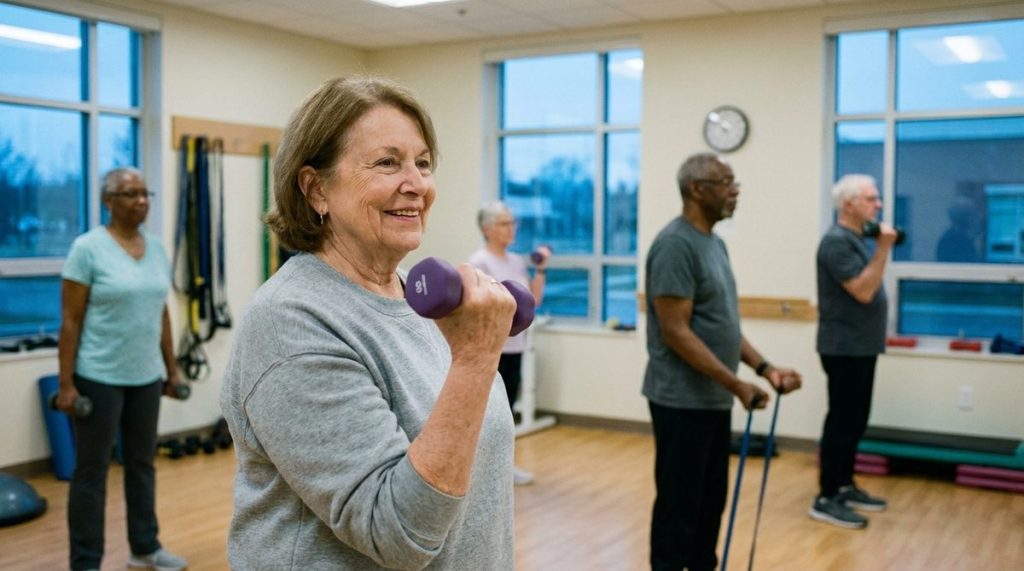
Let’s start with the habit that surprises people most. A compelling 2025 study published in the British Journal of Sports Medicine found that as little as four minutes of daily resistance training can quadruple functional fitness in older adults over a 12-week period. That’s not a typo—four minutes.
Participants who performed brief bouts of exercises like wall push-ups, chair squats, and resistance band rows saw measurable improvements in grip strength, balance, and walking speed. These are the exact metrics that predict fall risk, hospitalization, and the ability to live independently.
What This Looks Like in Real Life
I told Margaret to forget the gym membership for now. Instead, I gave her a simple daily circuit she could do in her living room:
- Chair squats (10 reps): Stand in front of a sturdy chair, lower yourself until you barely touch the seat, then stand back up. Hold the chair arms for balance if needed.
- Wall push-ups (10 reps): Stand arm’s length from a wall, place your palms flat, and push away. This builds chest and shoulder strength without floor strain.
- Standing calf raises (15 reps): Rise onto your toes, hold for two seconds, lower. This supports ankle stability and balance.
- Resistance band rows (10 reps per arm): Anchor a band at waist height, pull toward your hip. This targets the upper back muscles that keep posture upright.
- Single-leg stands (30 seconds per leg): Hold a counter edge for safety. This one exercise alone has been shown to reduce fall risk by up to 40%, according to the CDC.
The entire circuit takes about four to five minutes. Margaret texts me a thumbs-up emoji every morning when she finishes it. After eight weeks, she told me her knee pain during stairs had noticeably decreased. That’s the power of consistency over intensity.
For a deeper look at how exercise fits into a broader aging strategy, I’d recommend reading 6 Pillars of Healthy Aging After 50: A Dietitian’s Guide.
Habit 2: Prioritize Protein Like It’s Medicine
Here’s something that frustrates me as a dietitian: most nutrition advice for seniors still revolves around cutting things out—less sodium, less sugar, less fat. And while those guidelines have merit, they completely miss the nutrient most older adults are dangerously low on: protein.
After age 60, your body becomes less efficient at synthesizing muscle from dietary protein—a phenomenon researchers call “anabolic resistance.” The Mayo Clinic now recommends that older adults consume 1.0 to 1.2 grams of protein per kilogram of body weight daily, significantly higher than the standard 0.8 grams recommended for younger adults.
What That Means on Your Plate
For a 150-pound senior, that’s roughly 68 to 82 grams of protein per day. To put that in perspective, a single egg has about 6 grams. A typical breakfast of toast and coffee gives you maybe 4 grams total. You can see the gap.
What I see most often in my practice is that older adults front-load carbohydrates at breakfast and lunch, then try to catch up with a large protein serving at dinner. The research is clear: spreading protein across all three meals—aiming for 25 to 30 grams per meal—is far more effective for muscle maintenance.
Practical swaps I give my clients: add Greek yogurt (15g protein) to breakfast instead of regular yogurt (5g). Swap a side of chips at lunch for a half-cup of cottage cheese (14g). Snack on a handful of almonds and a cheese stick rather than crackers. These aren’t dramatic changes, but they add up to 20 or 30 extra grams per day—exactly the margin that separates muscle preservation from sarcopenia.
Habit 3: Hydrate Strategically, Not Just When Thirsty
Margaret mentioned during one of our sessions that she “never really feels thirsty.” That’s actually the problem. After age 60, the body’s thirst mechanism becomes blunted. You can be clinically dehydrated and feel completely fine—until you get dizzy standing up, develop a urinary tract infection, or end up in the ER with confusion that mimics dementia.
The CDC estimates that older adults account for a disproportionate share of hospitalizations related to dehydration, and many of those admissions are entirely preventable. I’ve written about this at length, and if hydration is something you struggle with, I’d encourage you to check out Dehydration in Older Adults: Hidden Risks Most Seniors Miss.
My Simple Hydration Rule
I tell my clients to follow the “anchor and sip” method. Choose three anchor points in your day—waking up, lunchtime, and 4 PM—and drink a full 8-ounce glass of water at each. Then sip throughout the rest of the day. If your urine is pale yellow, you’re on track. If it’s dark amber, you’re already behind.
Also, hydration isn’t just water. Broth-based soups, watermelon, cucumbers, and herbal teas all count. For seniors on diuretics or blood pressure medication, this becomes even more critical—talk to your doctor about your specific fluid targets.

Habit 4: Feed Your Brain — Nutrition and Social Connection
When Margaret’s mother Ruth became isolated after losing her husband, it wasn’t just loneliness she experienced. Research from the National Institute on Aging shows that chronic social isolation in older adults is associated with a 50% increased risk of dementia, a 29% increased risk of heart disease, and a 32% increased risk of stroke. Those numbers rival the risk profiles of smoking and obesity.
“Social isolation is not a lifestyle preference for most seniors—it’s a health emergency hiding in plain sight. The data is as stark as anything we see with smoking or high cholesterol.”
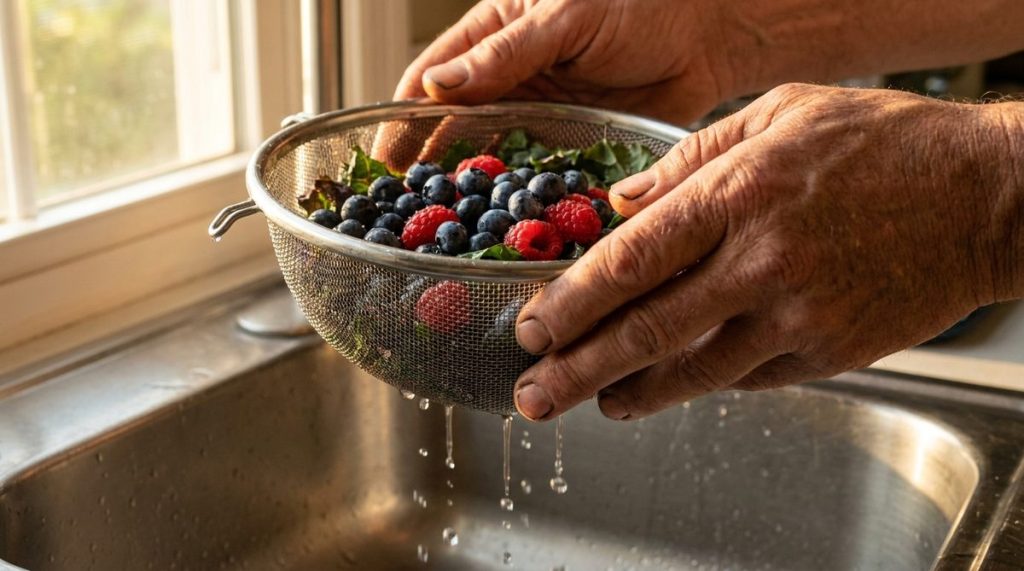
From a nutritional standpoint, brain health in your 60s and 70s is deeply tied to what you eat. The MIND diet—a hybrid of the Mediterranean and DASH diets—has been shown in longitudinal studies to reduce Alzheimer’s risk by up to 53% in people who follow it rigorously. Its core principles are straightforward: leafy greens daily, berries at least twice a week, nuts, olive oil, whole grains, fish once a week, and minimal processed food, fried food, and pastries.
Combining the Plate and the Social Table
I often tell my clients that the best nutrition intervention for brain health is eating a good meal with someone else. Shared meals encourage slower eating (better digestion), larger variety of foods (better nutrient diversity), and meaningful conversation (cognitive stimulation). If you live alone, consider joining a local senior center lunch program, a faith community meal, or even a weekly cooking group.
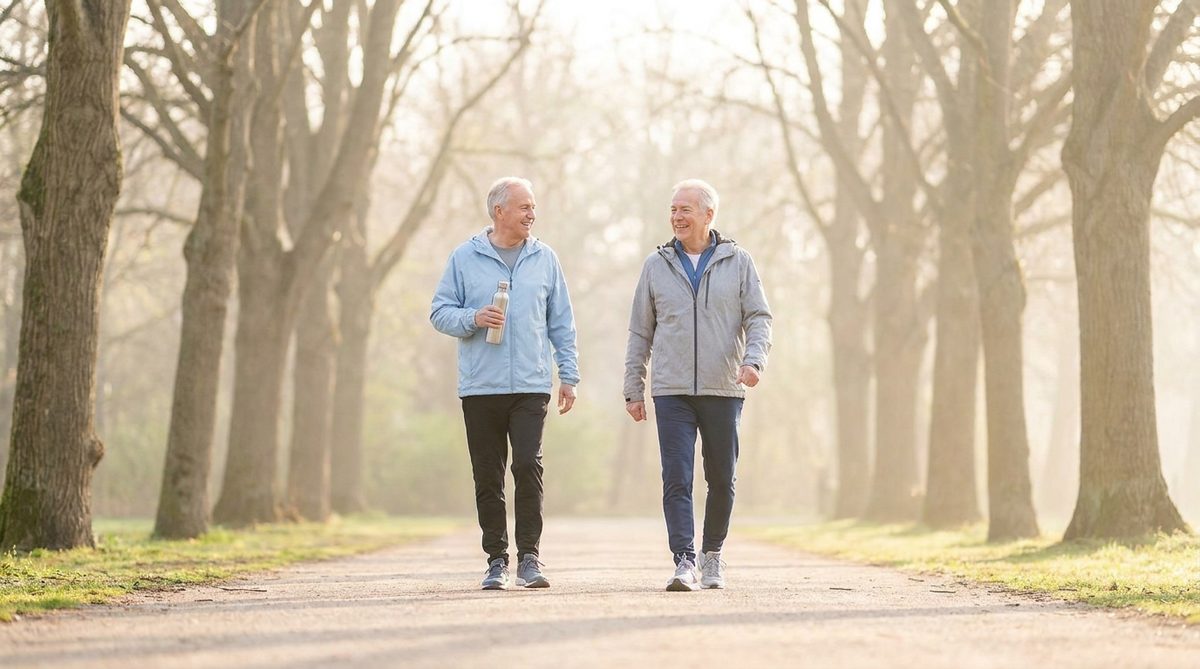
Margaret joined a Thursday morning walking group at her local YMCA. After the walk, three or four of them grab breakfast at a nearby diner. She orders an omelet with spinach and a side of fruit—30 grams of protein, leafy greens, and an hour of connection. That single weekly habit addresses exercise, nutrition, and social health simultaneously.
Habit 5: Take Your Mental Health as Seriously as Your Blood Pressure
Depression in older adults is staggeringly underdiagnosed. The National Institute on Aging reports that while depression affects approximately 7 million Americans over 65, fewer than 10% receive adequate treatment. Part of the problem is that late-life depression often doesn’t look like sadness—it shows up as fatigue, loss of appetite, chronic pain, irritability, or withdrawal from activities.
I raise this because nutrition and mental health are inseparable. A depressed senior skips meals, loses muscle, becomes weaker, loses confidence, and withdraws further—a vicious cycle that I’ve watched unfold in too many clients. Margaret noticed this pattern in her mother and initially dismissed it as “just getting older.” It wasn’t.
What You Can Do
If you or someone you love is experiencing persistent low mood, fatigue, or loss of interest in food and activities lasting more than two weeks, please talk to a healthcare provider. Depression is treatable at every age. Therapy, medication, lifestyle changes, and community support all have strong evidence behind them.
From a dietary perspective, emerging research points to the gut-brain axis as a critical factor in mood regulation. Probiotic-rich foods like yogurt, kefir, kimchi, and sauerkraut, combined with prebiotic fiber from onions, garlic, oats, and bananas, may support both digestive health and emotional well-being. This isn’t a substitute for professional mental health care, but it’s a meaningful complementary strategy.
For a comprehensive look at daily habits that support both physical and mental health as you age, see 7 Healthy Habits for Aging Well in Your 60s, 70s, and Beyond.
Margaret’s Update — Three Months Later
I checked in with Margaret recently. She’s been consistent with her four-minute morning resistance circuit for 14 weeks. She’s eating 75 to 80 grams of protein most days. She carries a water bottle everywhere now—her grandkids decorated it with stickers. She walks with her Thursday group every week. And she helped her mother Ruth connect with a geriatric psychiatrist who diagnosed and began treating her depression.
“I feel like I got a head start,” Margaret told me. “Not on getting old—on getting old well.”
That’s exactly the distinction that matters. Healthy habits for aging well aren’t about denying your age or chasing some impossible standard. They’re about building a body and a life that can support you through the decades ahead—with strength, clarity, and joy.
You don’t need to overhaul everything at once. Pick one habit from this list. Start tomorrow. And give yourself credit for every small, consistent step. Because in my experience, those are the steps that change everything.
Frequently Asked Questions
What are the most important healthy habits for aging well after 60?
The most impactful habits include daily resistance training (even brief sessions), adequate protein intake of 1.0 to 1.2 grams per kilogram of body weight, consistent hydration, maintaining social connections, and proactively managing mental health, including screening for depression.
How much protein do seniors need daily to prevent muscle loss?
Most adults over 60 need 1.0 to 1.2 grams of protein per kilogram of body weight per day, which is significantly higher than the 0.8 grams recommended for younger adults. For a 150-pound person, that translates to roughly 68 to 82 grams daily, ideally spread across three meals.
Can just four minutes of exercise a day really make a difference for older adults?
Yes. A 2025 study published in the British Journal of Sports Medicine found that four minutes of daily resistance exercises—such as chair squats, wall push-ups, and resistance band rows—quadrupled functional fitness in older adult participants over 12 weeks, improving grip strength, balance, and walking speed.
How do I know if I'm dehydrated as an older adult?
After age 60, your thirst mechanism becomes less reliable, so you may not feel thirsty even when dehydrated. Check your urine color—pale yellow indicates good hydration, while dark amber suggests you need more fluids. Common signs of dehydration include dizziness upon standing, confusion, fatigue, and increased urinary tract infections.
What diet is best for brain health and reducing dementia risk in seniors?
The MIND diet, which combines elements of the Mediterranean and DASH diets, has been shown to reduce Alzheimer's risk by up to 53% in those who follow it closely. It emphasizes daily leafy greens, berries at least twice a week, nuts, olive oil, whole grains, and weekly fish while limiting processed foods, fried items, and pastries.
About Dr. Linda Park, PhD, RD (Registered Dietitian)
Dr. Linda Park is a Registered Dietitian with a PhD in Nutritional Science and 15 years of clinical and research experience focused on older adults. She has published peer-reviewed research on the role of nutrition in managing diabetes, cardiovascular health, and cognitive decline in seniors. At Daily Trends Now, Dr. Park writes evidence-based articles on senior nutrition, supplement safety, meal planning, and the foods that truly make a difference for aging well.