

Key Takeaways
- Nearly 90% of adults over 65 want to age in place, but fewer than 10% of U.S. homes have the accessibility features required to support it safely.
- The average cost of aging-in-place home modifications ($10,000–$30,000) is a fraction of the $60,000+ annual price tag of assisted living.
- Falls are the leading cause of injury death among adults 65 and older, and most occur inside the home due to preventable hazards.
- Strategic modifications—from grab bars to smart-home technology—can extend independent living by a decade or more when paired with proactive health habits.
A Startling Disconnect Between Desire and Reality
Here’s a number that stopped me mid-research: according to AARP‘s latest Home and Community Preferences Survey, 89% of adults aged 50 and older say they want to remain in their current home as they age. That figure has held remarkably steady for over a decade. Yet when you flip the lens, fewer than 10% of America’s 140 million housing units have the three basic accessibility features—a no-step entry, single-floor living, and an accessible bathroom—needed to support aging in place safely.
In my 16 years covering lifestyle trends for older adults, I’ve never seen a gap this wide between what people want and what their homes can actually deliver. Aging in place has officially overtaken every other retirement living preference in the United States, surpassing active-adult communities, assisted living, and even the luxury senior residences now popping up in cities like Scottsdale, Aventura, and Charleston. But wanting it and being prepared for it are two very different things.
This deep-dive examines the data behind the aging-in-place movement in 2025 and 2026, identifies the specific failures lurking inside most American homes, and lays out the evidence-based modifications that actually extend independent living—sometimes by a decade or more.
Why Aging in Place Became the #1 Retirement Goal
The Financial Math Is Overwhelming
The economics alone explain much of the shift. Genworth’s 2024 Cost of Care Survey pegs the national median cost of an assisted living facility at $64,200 per year. A private room in a nursing home? That’s $108,405 annually. Meanwhile, the National Council on Aging estimates that the average suite of home modifications needed for safe aging in place runs between $10,000 and $30,000—a one-time investment that often pays for itself within a single year compared to facility-based care.
When you’re managing a fixed retirement income, those numbers aren’t abstract. I often tell my readers that the smartest financial decision in retirement isn’t always about portfolio allocation—sometimes it’s about installing a $300 grab bar before a $30,000 hip fracture forces the conversation. For more on protecting your retirement finances, our guide on 7 Ways to Fight Inflation Draining Your Retirement Savings is worth a careful read.
Emotional and Psychological Drivers
Money isn’t the only motivator—and in my experience, it’s rarely the primary one. Autonomy, community ties, and the deep psychological comfort of familiar surroundings consistently rank as the top reasons people resist relocating. A 2023 study published in The Gerontologist found that older adults who remained in their own homes reported 23% higher life-satisfaction scores compared to those who moved to institutional settings, even when controlling for health status and income.
There’s also a growing cultural rejection of the old “decline narrative” around aging. As we explored in our piece on aging research that challenges the decline assumption, the science increasingly shows that environment and agency matter as much as biology.
The Hard Data: Where American Homes Fall Short
If aging in place is the goal, the American housing stock is the obstacle. The U.S. Census Bureau’s American Housing Survey provides a sobering portrait of just how unprepared most homes are.
- Step-free entry: Only 42% of U.S. homes have at least one no-step entrance. For adults using wheelchairs or walkers, that first threshold becomes a literal barrier to independence.
- Single-floor living: Roughly 50% of owner-occupied homes have a bedroom and full bathroom on the entry level, but many of those bathrooms lack any accessibility features.
- Bathroom accessibility: Fewer than 5% of American bathrooms include a roll-in shower, grab bars, and adequate maneuvering space. Bathrooms remain the most dangerous room in the house for adults over 65.
- Doorway width: Standard interior doorways (28–30 inches) are too narrow for most wheelchairs. ADA-compliant width is 36 inches minimum.
- Lighting: The Illuminating Engineering Society recommends that adults over 60 need roughly three times more ambient light than a 20-year-old to perform the same tasks safely. Most residential lighting systems were never designed with this in mind.
What I see most often when I tour homes with aging-in-place consultants is a cascade of small hazards—loose area rugs, poorly lit stairways, slippery tile, cabinet handles that require a strong grip—that individually seem minor but collectively create an environment where a single fall can end independent living overnight.
Falls: The Silent Crisis Inside the Home
The National Institute on Aging reports that one in four Americans aged 65 and older falls each year. Falls are the leading cause of fatal and non-fatal injuries in this age group, responsible for over 3 million emergency department visits and more than 36,000 deaths annually, according to CDC data from 2024.
Here’s the detail that should reshape how every homeowner over 50 thinks about their living space: approximately 60% of falls among older adults occur inside the home. Not on icy sidewalks. Not on hiking trails. Inside the rooms where they feel safest.
The Bathroom Problem
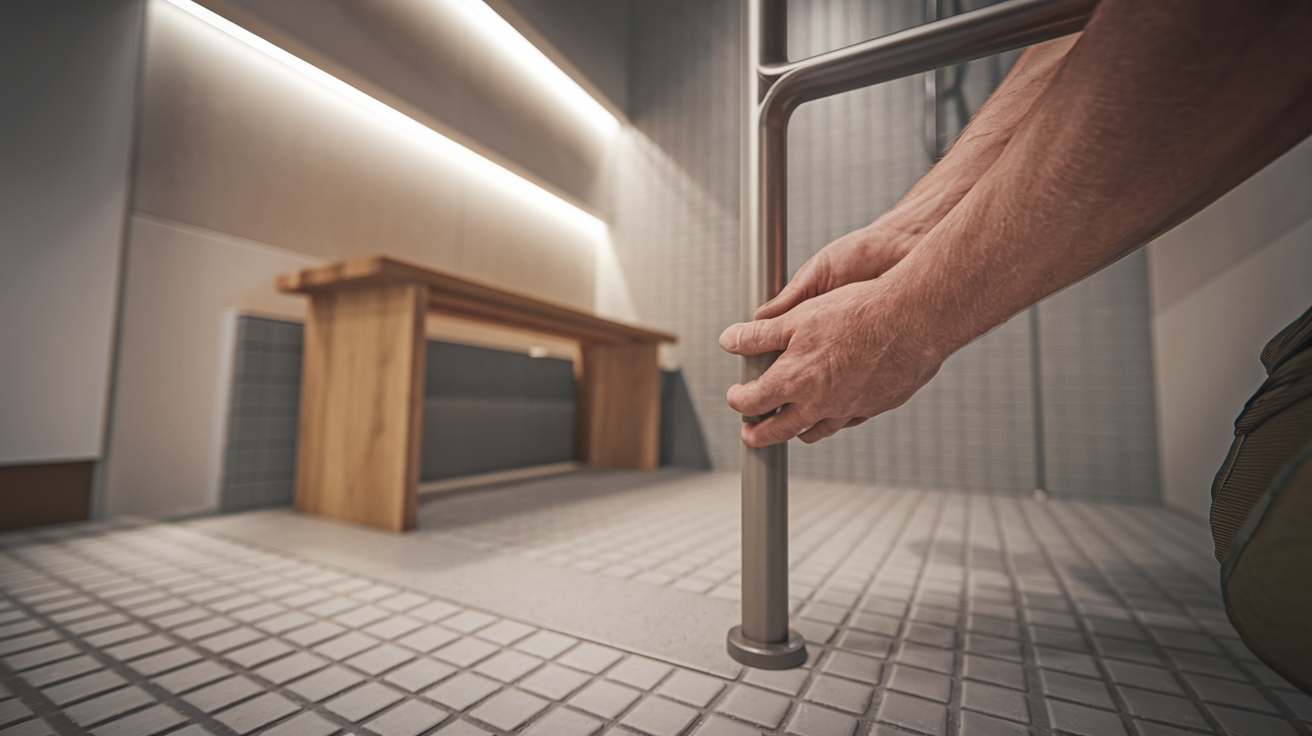
Bathrooms account for a disproportionate share of in-home falls—roughly 80% of fall-related injuries in the home happen in the bathroom, most commonly during transfers in and out of the tub or shower. Wet surfaces, minimal support structures, and cramped layouts create a perfect storm of risk.
The Stairway Problem
Stairs are the second most common fall location. More than 1 million Americans visit emergency rooms each year due to stairway falls, and adults over 65 account for the majority of fatal stairway incidents. For anyone seriously planning to age in place, relocating primary living functions to a single floor isn’t optional—it’s essential.
The Modification Blueprint That Actually Works
Not all home modifications are created equal. After reviewing data from the National Association of Home Builders’ Certified Aging-in-Place Specialist (CAPS) program and interviewing occupational therapists who specialize in home safety assessments, I’ve identified the modifications with the strongest evidence base for extending independent living.
High-Impact, Low-Cost Changes (Under $500)
- Grab bars in bathrooms: Installing grab bars near the toilet and inside the shower reduces fall risk by up to 40%, according to a systematic review in Age and Ageing. Cost: $50–$200 per bar installed.
- Lever-style door handles and faucets: These eliminate the grip-and-twist motion that becomes increasingly difficult with arthritis. Cost: $15–$50 per handle.
- Improved lighting: Adding LED under-cabinet lights, motion-activated nightlights in hallways and bathrooms, and brighter bulbs in stairways. Cost: $100–$400 for a whole-home upgrade.
- Area rug removal or securing: The single cheapest safety intervention available. Loose rugs are implicated in an estimated 38,000 fall injuries per year.
- Non-slip adhesive strips: Applied to bathtub and shower floors. Cost: under $20.
Medium-Investment Modifications ($500–$5,000)
- Walk-in shower conversion: Replacing a traditional tub with a curbless or low-threshold walk-in shower with a built-in bench. Cost: $2,500–$5,000.
- Comfort-height toilets: Standard toilets sit at 15 inches; comfort-height models at 17–19 inches significantly ease sit-to-stand transitions. Cost: $200–$600 installed.
- Stairlifts: For multi-story homes where single-floor conversion isn’t feasible. Cost: $3,000–$5,000 for a straight stairway model.
- Smart-home systems: Voice-controlled lighting, automated door locks, medical alert integration, and video doorbells. A basic smart-home aging-in-place package runs $500–$2,000.
Major Renovations ($5,000–$30,000+)
- Ramp construction or no-step entry creation: Critical for wheelchair or walker access. Cost: $1,000–$8,000 depending on materials and grade.
- Doorway widening: Expanding to 36-inch minimum clearance throughout main living areas. Cost: $500–$1,500 per doorway.
- First-floor bedroom and bathroom addition: The most expensive but often most transformative modification for two-story homes. Cost: $15,000–$30,000+.
- Kitchen redesign: Lowered countertops, pull-out shelving, side-opening ovens, and touchless faucets. Cost: $10,000–$25,000.
For a comprehensive walkthrough of essential modifications, our detailed guide on 14 Home Modifications That Keep You Safe breaks down each project with cost ranges and contractor tips.
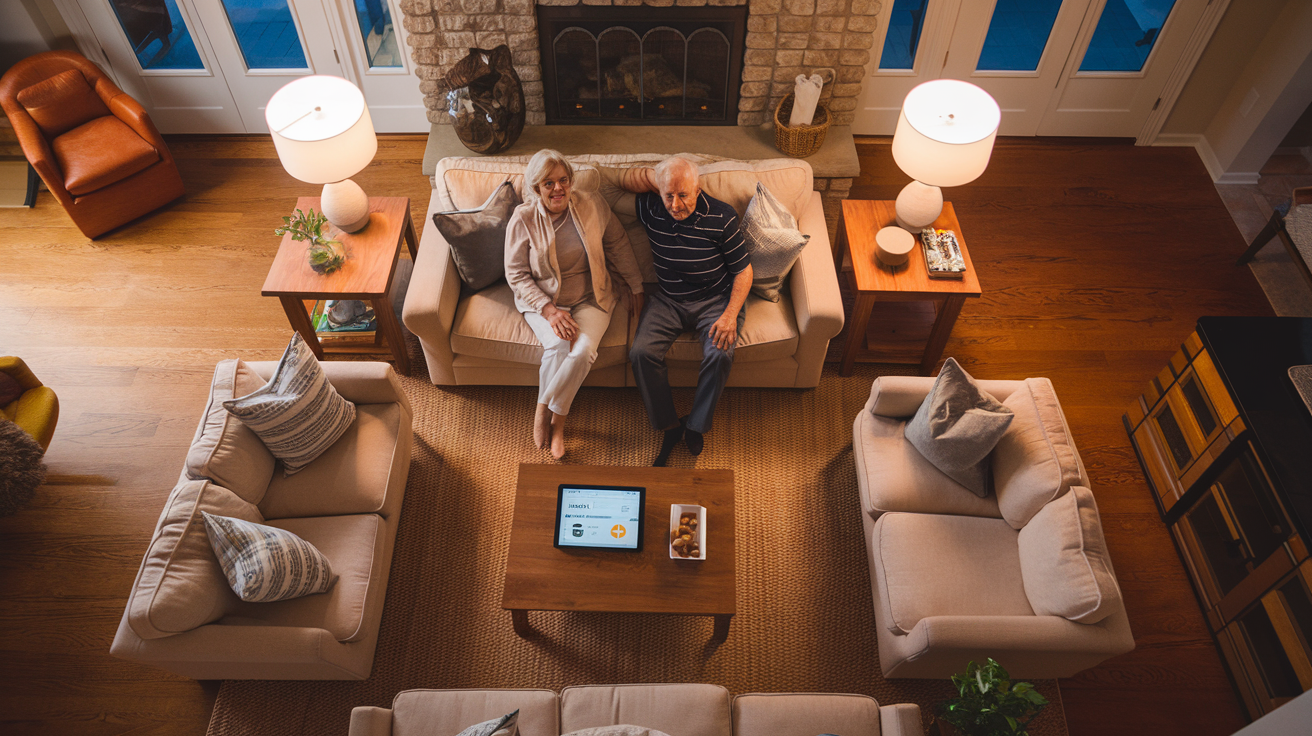
The Technology Layer: Smart Homes for Aging in Place
One of the most rapidly evolving aspects of aging in place is the integration of smart-home technology. What was science fiction five years ago is now available at consumer price points, and the implications for independent living are substantial.
Voice assistants like Amazon Alexa and Google Home now integrate with medical alert systems, medication reminders, fall-detection wearables, and even remote health monitoring platforms. A 2024 study from the University of Michigan’s National Poll on Healthy Aging found that 40% of adults aged 50–80 now use at least one smart-home device, up from 22% in 2020.
The most promising developments include AI-powered fall detection through ambient sensors (no wearable required), smart flooring that can detect gait changes and alert caregivers to potential balance issues, and refrigerator sensors that track food expiration and eating patterns. These technologies don’t replace human connection—they augment it, providing an early-warning system that can mean the difference between a minor intervention and a crisis.
The States Leading the Way—and the Ones Lagging Behind
Not all states support aging in place equally. Factors like Medicaid waiver programs for home modifications, property tax freezes for seniors, building code requirements, and availability of CAPS-certified contractors vary dramatically by region.
States consistently ranked highest for senior health and well-being—including Hawaii, Minnesota, New Hampshire, Vermont, and Colorado—tend to share common traits: robust home- and community-based services, higher rates of health insurance coverage, and state-funded programs that subsidize accessibility modifications for low-income homeowners.
Conversely, states with the weakest support infrastructure often have the highest rates of institutionalization. Mississippi, West Virginia, and Louisiana rank near the bottom in almost every senior well-being index, with fewer CAPS-certified professionals per capita and more limited Medicaid home-modification coverage.
Paying for It: Programs Most People Don’t Know Exist
Cost is the most commonly cited barrier to home modification, but many older adults leave money on the table simply because they don’t know what’s available.
- VA Specially Adapted Housing (SAH) Grants: Veterans with service-connected disabilities can receive up to $109,986 (2025 limit) for home modifications.
- USDA Section 504 Home Repair Program: Offers grants up to $10,000 for low-income homeowners aged 62+ in rural areas specifically for removing safety hazards.
- Medicaid Home and Community-Based Services (HCBS) Waivers: Available in all 50 states, though coverage for modifications varies. Some states cover up to $15,000 in accessibility renovations.
- Area Agencies on Aging (AAA): Local AAAs often administer small-grant programs for grab bars, ramps, and lighting upgrades. Contact the Eldercare Locator at 1-800-677-1116 to find your local agency.
- Nonprofit programs: Rebuilding Together, Habitat for Humanity’s Aging in Place program, and local faith-based organizations frequently provide free or low-cost modifications.
The Bigger Picture: Aging in Place as a Holistic Strategy
Home modifications are necessary but not sufficient. In my years reporting on this topic, the people who age in place most successfully treat it as a comprehensive life strategy—not just a construction project.
That means staying physically active to maintain the strength and balance needed to navigate your own home. It means cultivating social connections that prevent the isolation which accelerates cognitive decline. It means proactively managing chronic conditions rather than waiting for emergencies. Our resource on healthy aging after 50 covers the evidence-based lifestyle pillars that complement a well-modified home.
It also means being honest about when aging in place may no longer be the right choice. A well-adapted home can extend independence by years, sometimes decades. But the goal should always be quality of life, not stubbornness. The smartest aging-in-place plans include clear benchmarks—agreed upon with family and healthcare providers—for when additional support or a different living arrangement might better serve your well-being.
The Bottom Line
Aging in place isn’t a passive decision. It’s an active, ongoing investment in your home, your health, and your future autonomy. The data is unequivocal: the vast majority of American homes are not ready for the people who plan to grow old in them. But the solutions are available, increasingly affordable, and backed by strong evidence.
Start with a professional home safety assessment—many occupational therapists and CAPS-certified contractors offer these for $150–$300. Prioritize the bathroom and entryways first. Explore every funding source available to you. And build a support network that ensures your home remains a place of comfort and safety, not a source of risk.
The 89% of Americans who want to age in place deserve a home that can support that wish. The gap between desire and reality is wide, but it’s not unbridgeable. It just takes planning, investment, and the willingness to see your home not as it is, but as it needs to become.
Frequently Asked Questions
What is the average cost of modifying a home for aging in place?
Most comprehensive aging-in-place modifications cost between $10,000 and $30,000, though high-impact changes like grab bars, improved lighting, and lever handles can be done for under $500. The total depends on your home's current layout, your mobility needs, and whether major renovations like bathroom conversions or doorway widening are required.
How do I get a professional home safety assessment for aging in place?
Contact a Certified Aging-in-Place Specialist (CAPS) through the National Association of Home Builders directory, or ask your physician for a referral to an occupational therapist who specializes in home evaluations. Assessments typically cost $150–$300 and provide a prioritized list of recommended modifications specific to your home and health status.
Does Medicare cover home modifications for aging in place?
Traditional Medicare generally does not cover home modifications like grab bars, ramps, or shower conversions. However, some Medicare Advantage plans include supplemental benefits for home safety modifications. Medicaid's Home and Community-Based Services waivers, available in all 50 states, may cover certain modifications for eligible low-income seniors, and VA grants are available for qualifying veterans.
About Jennifer Adams, 16 Years in Lifestyle Journalism
Jennifer Adams is a lifestyle journalist with 16 years of experience writing about travel, hobbies, relationships, home life, and the art of aging well. She has contributed to national publications focused on the interests and aspirations of adults over 50 — from budget-friendly travel destinations to rediscovering hobbies in retirement. At Daily Trends Now, Jennifer writes warm, practical articles that celebrate life after 50 and help readers make the most of every chapter.