

Key Takeaways
- Strength training just twice a week can reduce fall risk by up to 40% in adults over 65, making it the single most protective exercise habit for aging well.
- Excessive daytime napping may signal underlying health problems—tracking your sleep patterns gives you and your doctor critical data.
- Social connection is as powerful as exercise for longevity, with isolation increasing mortality risk by 26% according to CDC research.
- Aging does not automatically mean decline—a 2025 longitudinal study found that nearly 30% of older adults actually improved in key health measures over time.
Why “Aging Well” Is the Goal That Changes Everything
In my 18 years as a board-certified geriatric physical therapist, I’ve watched two patients of the same age walk into my clinic on the same day—one needing a walker after a hip fracture, the other training for a sprint triathlon. The difference between them almost never comes down to genetics. It comes down to habits.
A landmark 2025 longitudinal study published in The Journals of Gerontology found that nearly 30% of older adults actually improved in physical function, cognition, or both over a five-year period. That data lines up with what I see in practice every week: aging does not have to mean decline. If you want a deeper look at that research, check out this breakdown of the new study showing aging doesn’t mean decline.
Below are seven habits I recommend most often to my patients in their 60s, 70s, and beyond—each one grounded in current evidence and real clinical results. These aren’t vague wellness platitudes. They’re specific, actionable strategies for healthy habits for aging well that you can start this week.
1. Prioritize Strength Training Over Cardio Alone
If I could prescribe only one type of exercise for every adult over 60, it would be resistance training—not walking, not swimming, not yoga. Those are all valuable, but muscle loss (sarcopenia) is the silent driver behind falls, fractures, metabolic slowdown, and loss of independence.
According to the CDC, one in four Americans aged 65 and older falls each year, and falls remain the leading cause of injury death in that age group. Strength training at least twice per week reduces fall risk by up to 40%, per a 2024 meta-analysis in the British Journal of Sports Medicine.
What this looks like in practice
- Two to three sessions per week, 30–45 minutes each
- Focus on compound movements: squats to a chair, wall push-ups, deadlifts with light dumbbells, rows
- Progressive overload—gradually increasing weight or repetitions every two to three weeks
- Work with a physical therapist or certified trainer experienced with older adults for the first month
I often tell my patients that the best gym membership is the one you actually use. A pair of adjustable dumbbells and a sturdy chair at home can be enough to transform your strength, balance, and bone density within 12 weeks.
2. Rethink Your Relationship With Napping
Recent research from Brigham and Women’s Hospital (2025) found that older adults who nap more than 60 minutes during the day have a significantly higher risk of cardiovascular disease, type 2 diabetes, and cognitive decline compared to non-nappers or short nappers. That doesn’t mean napping is inherently dangerous—it means excessive daytime sleepiness is often a red flag.
What I see most often is a pattern: a patient tells me they’re “just tired,” they start napping two hours every afternoon, and within a few months their nighttime sleep quality crumbles. Poor nighttime sleep then accelerates inflammation, weight gain, and depression. It becomes a vicious cycle.
Smarter napping guidelines
- Cap naps at 20–30 minutes (“power naps” that don’t enter deep sleep)
- Nap before 2:00 p.m. to protect nighttime sleep architecture
- If you suddenly need longer or more frequent naps, mention it to your physician—it could indicate sleep apnea, thyroid dysfunction, anemia, or medication side effects
- Track your sleep with a journal or wearable device so your doctor has real data at your next visit
The National Institute on Aging recommends 7–9 hours of total sleep for adults, with most of that occurring at night. If you’re consistently falling short, the solution usually isn’t more napping—it’s better sleep hygiene and a conversation with your healthcare team.
3. Walk With Purpose—and With People
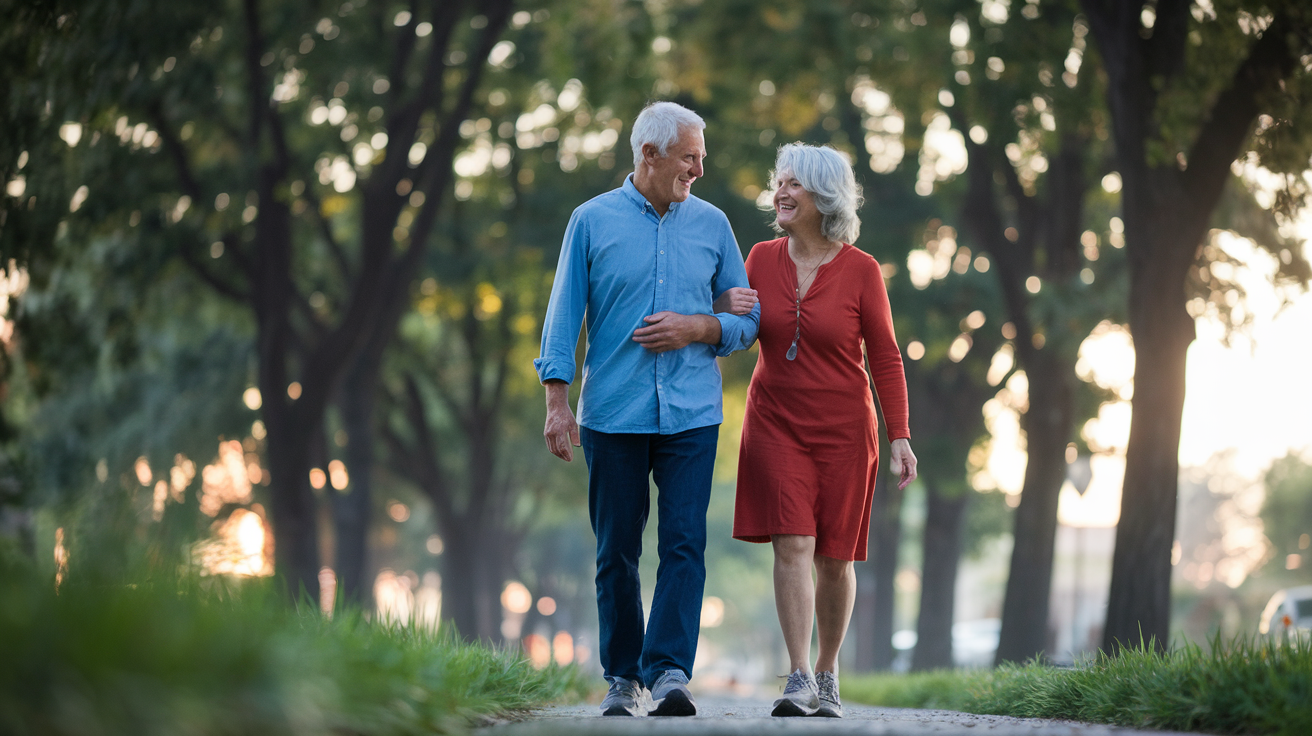
Walking is the most accessible form of exercise on the planet, and it remains one of the most studied. A 2023 study in JAMA Internal Medicine found that adults over 65 who walked at least 7,000 steps per day had a 50–70% lower mortality risk than those walking fewer than 4,000 steps.
But here’s what the research misses that I see in the clinic: walking with a friend or a group delivers benefits that walking alone does not. Social walking adds accountability, cognitive stimulation (navigating conversation while moving is dual-task training for your brain), and emotional connection.
How to build a walking habit that sticks
- Start where you are—even 10 minutes twice a day counts
- Add 500 steps per week until you reach 7,000–8,000 daily
- Vary terrain: sidewalks, parks, gentle trails (uneven surfaces challenge balance in a good way)
- Recruit a walking partner or join a local walking group through your community center, church, or YMCA
If you’re planning to stay in your home long-term, making sure your environment supports safe daily movement is critical. You can find practical modifications in this guide to aging in place with home modifications that keep you safe.
4. Eat More Protein Than You Think You Need
This is the nutrition conversation I have most frequently with patients over 60, and it surprises almost everyone. The current RDA for protein (0.36 grams per pound of body weight) was established to prevent deficiency—not to optimize muscle preservation, immune function, or bone health in aging adults.
The Mayo Clinic and multiple geriatric nutrition researchers now recommend 0.5–0.7 grams of protein per pound of body weight for adults over 65. For a 160-pound person, that’s 80–112 grams per day—nearly double what many older adults actually consume.
Practical protein strategies
- Include a protein source at every meal and at least one snack: eggs, Greek yogurt, chicken, fish, beans, tofu
- Front-load protein at breakfast—most Americans eat the majority of their protein at dinner, which is less efficient for muscle synthesis
- Consider a high-quality protein supplement (whey or plant-based) if you struggle to meet targets through food alone
- Pair protein intake with your strength training days for maximum muscle-building effect
I’ve seen patients gain measurable grip strength and walking speed within eight weeks simply by increasing daily protein to 80+ grams while doing basic resistance exercises. It’s one of the most cost-effective interventions in geriatric health.
5. Guard Your Social Connections Like Your Health Depends on It—Because It Does
Loneliness is not just an emotional problem. The CDC reports that social isolation increases the risk of premature death by 26%, dementia by approximately 50%, and heart disease by 29%. Those numbers rival the health risks of smoking 15 cigarettes a day.
In my practice, I’ve watched patients who lose a spouse or retire from a long career decline physically within months—not because their bodies suddenly failed, but because the structure, purpose, and human contact that kept them engaged disappeared overnight.
Building and maintaining connection after 60
- Schedule social activities like medical appointments—they’re that important
- Volunteer: the Corporation for National and Community Service found that volunteers over 60 report better physical health, fewer depressive symptoms, and greater life satisfaction
- Learn something new in a group setting—community college courses, art classes, book clubs
- Use video calls strategically if mobility or distance limits in-person visits, but don’t let screens replace face-to-face contact entirely
Resources for older adults living alone are expanding rapidly across the U.S., including cooperative care models and community-based programs. If you’re navigating retirement finances while trying to maintain an active social life, understanding how to protect your retirement savings from inflation in 2026 can reduce the financial stress that often forces seniors to cut back on the activities that keep them healthy.

6. Take Your Mental Health as Seriously as Your Blood Pressure
Depression affects approximately 7 million American adults over 65, yet less than half receive treatment, according to the National Institute on Aging. I see the downstream effects constantly: patients who stop exercising, stop eating well, stop socializing, and then present with falls, weight loss, and functional decline that looks like “aging” but is actually untreated depression.
Anxiety is equally underdiagnosed. Many older adults dismiss chronic worry, sleep disruption, and irritability as normal parts of getting older. They are not.
Mental health habits that make a measurable difference
- Screen yourself annually: the PHQ-9 (for depression) and GAD-7 (for anxiety) are free, validated tools your doctor can administer in minutes
- Physical exercise is a first-line treatment—a 2024 Cochrane review confirmed that regular exercise is as effective as medication for mild to moderate depression in older adults
- Cognitive behavioral therapy (CBT) is highly effective for seniors and widely available via telehealth
- Mindfulness meditation, even 10 minutes daily, has been shown to reduce cortisol levels and improve sleep quality in adults over 60
If your physician dismisses emotional concerns with “that’s just part of getting older,” seek a second opinion. Mental health treatment is healthcare, full stop.
7. Stay Proactive With Preventive Screenings and Medication Reviews
The final habit is the one that ties everything together: staying ahead of problems instead of reacting to them. What I see most often in patients who age poorly is not a single catastrophic event—it’s a slow accumulation of missed screenings, outdated prescriptions, and unaddressed symptoms that compound over years.
After age 65, the average American takes five or more prescription medications. Polypharmacy (taking multiple medications simultaneously) increases the risk of drug interactions, falls, cognitive impairment, and hospitalizations. A 2024 report from the American Geriatrics Society found that inappropriate prescribing in older adults contributes to roughly 7,000 deaths per year in the U.S.
Your proactive health checklist
- Request a comprehensive medication review with your pharmacist or physician at least once a year—ask specifically: “Is every medication on this list still necessary?”
- Stay current on recommended screenings: colonoscopy, bone density (DEXA), blood pressure, A1C, cholesterol, vision, hearing, and cognitive assessments
- Get vaccinated: updated COVID boosters, annual flu shots, shingles vaccine (Shingrix), pneumococcal vaccine, and RSV vaccine (approved 2023 for adults 60+)
- Bring a written list of questions to every medical appointment—studies show patients remember only 40–50% of what their doctor tells them during a visit
Prevention is not glamorous. It doesn’t make headlines. But in my career, it has been the single greatest predictor of who thrives in their 70s, 80s, and beyond versus who struggles.
The Bottom Line on Healthy Habits for Aging Well
These seven habits aren’t revolutionary. They don’t require expensive equipment, exotic supplements, or radical life overhauls. What they require is consistency—and the belief, backed by a growing body of evidence, that your best years are not necessarily behind you.
I’ve worked with an 87-year-old triathlete and a 62-year-old who couldn’t stand from a chair without help. The difference wasn’t age. It was the daily decisions each person made for decades before they walked through my door.
Start with one habit from this list. Master it. Then add another. In six months, you won’t just feel different—your lab work, your balance scores, and your energy levels will prove it. For more science-backed strategies, explore these five habits of super agers who thrive after 65.
Aging well isn’t luck. It’s a practice. And it’s never too late to begin.
Frequently Asked Questions
What is the best exercise for adults over 65 who are just starting out?
Resistance training using body weight or light dumbbells is the most impactful starting point. Begin with exercises like chair squats, wall push-ups, and standing rows two to three times per week. A physical therapist can design a safe, progressive program tailored to your current fitness level and any existing conditions.
How much protein should seniors eat per day to prevent muscle loss?
Current geriatric nutrition research recommends 0.5 to 0.7 grams of protein per pound of body weight for adults over 65, significantly higher than the standard RDA. For a 150-pound person, that means roughly 75 to 105 grams daily, distributed across all meals rather than concentrated at dinner.
Is napping bad for older adults?
Short naps of 20 to 30 minutes before 2:00 p.m. can be beneficial for alertness and mood. However, recent studies link naps exceeding 60 minutes with higher risks of cardiovascular disease and cognitive decline. If you find yourself needing long or frequent naps, speak with your doctor—it may signal an underlying condition like sleep apnea, thyroid dysfunction, or medication side effects.
About Michael Torres, DPT, Board-Certified Geriatric Specialist
Michael Torres is a Doctor of Physical Therapy and board-certified geriatric clinical specialist with 18 years of experience working with older adults. He has treated thousands of seniors recovering from hip replacements, managing arthritis, rebuilding strength after hospitalizations, and preventing dangerous falls. At Daily Trends Now, Michael writes practical guides on exercises, mobility, pain management, and the physical strategies that help seniors stay strong and independent.