

A Surprising Gap Between Desire and Reality
Here is a number that should stop every American over 50 in their tracks: according to AARP, roughly 77 percent of adults aged 50 and older say they want to remain in their own homes as they age. Yet fewer than 10 percent of the U.S. housing stock has the three universal-design features—no-step entry, single-floor living, and accessible bathrooms—needed to make that goal realistic. The aspiration is nearly universal. The preparation is not.
Aging in place is not a single event. It is a progression that unfolds across three distinct decades, each bringing different physical realities, financial pressures, and home-modification needs. Planning for the version of yourself at 65 is not the same as planning for the version at 82. This guide breaks down what the research actually shows about each stage—and what concrete steps you can take right now so the home you love continues to work for you.
Your 60s: The Strategic Window You Cannot Afford to Waste
Physical Changes Are Subtle but Measurable
For most people in their early-to-mid 60s, daily life feels largely unchanged. But the data tell a quieter story. The National Institute on Aging reports that adults begin losing roughly 3 to 5 percent of muscle mass per decade after age 30, with the rate accelerating after 60. Bone density, especially in postmenopausal women, has already been declining for years. Balance and reaction time are measurably slower than they were at 45, even if you feel fine.
None of this means limitations are imminent. It means the 60s are the single best decade to invest in prevention—both in your body and your home—while energy levels, income, and credit access are still favorable.
Home Modifications to Prioritize Now
Modifications made during your 60s are typically the least expensive and the most impactful because you are planning ahead rather than reacting to a crisis. Priority upgrades include:
- Lever-style door handles and rocker light switches to replace round knobs, which become difficult with arthritis.
- Improved exterior lighting and pathway surfaces to reduce fall risk on driveways and walkways.
- A first-floor bedroom and full bath configuration, even if you do not plan to use it yet.
- Non-slip flooring in bathrooms and kitchens—Better Homes & Gardens notes that luxury vinyl plank and textured porcelain tile both score high for slip resistance without looking institutional.
- A home safety audit, available free through many Area Agencies on Aging, to flag hazards you may be too familiar with to notice.
A pending Senate bill would create a $10,000 tax credit specifically for senior home modifications, a development worth monitoring. Even without that credit, most of the changes listed above cost under $2,000 combined—a fraction of one month in assisted living.
Financial and Insurance Groundwork
Your 60s are also the decade to lock in several financial benefits that directly support aging in place. At 60, surviving spouses become eligible for Social Security survivor benefits. At 62, early retirement benefits open up (though claiming them reduces your monthly amount permanently). At 65, Medicare eligibility begins—and understanding the landscape of plan options matters enormously. For a breakdown of recent shifts, see our coverage of Medicare Advantage Enrollment Trends 2026: What Seniors Must Know.
Consider also whether a long-term-care insurance policy still makes sense. Premiums rise sharply after 60, but so does the statistical probability of needing care. The National Council on Aging estimates that about 56 percent of Americans turning 65 today will need some form of long-term services and supports during their remaining years. That is not a scare statistic—it is a planning baseline.

Your 70s: When the House Must Start Working Harder
The Mobility and Sensory Shift
The 70s bring changes that are harder to ignore. Vision contrast sensitivity declines, making it tougher to see edges, stairs, and tripping hazards in low light. Hearing loss, present in roughly two-thirds of adults over 70 according to the National Institute on Aging, affects everything from smoke-alarm detection to doorbell awareness. Grip strength, critical for opening jars, turning faucets, and catching yourself in a stumble, drops meaningfully.
“Falls are the leading cause of injury-related death among adults 65 and older, and three-quarters of those falls happen in or around the home.” — National Council on Aging
That statistic makes the 70s the decade when bathroom grab bars move from “nice to have” to medically urgent. A fall at 72 that results in a hip fracture can permanently alter independence. Research from the NIA shows that roughly 20 percent of older adults who fracture a hip never return to independent living.
Modifications That Matter Most Now
By the mid-70s, modifications should shift from cosmetic prevention to functional necessity:
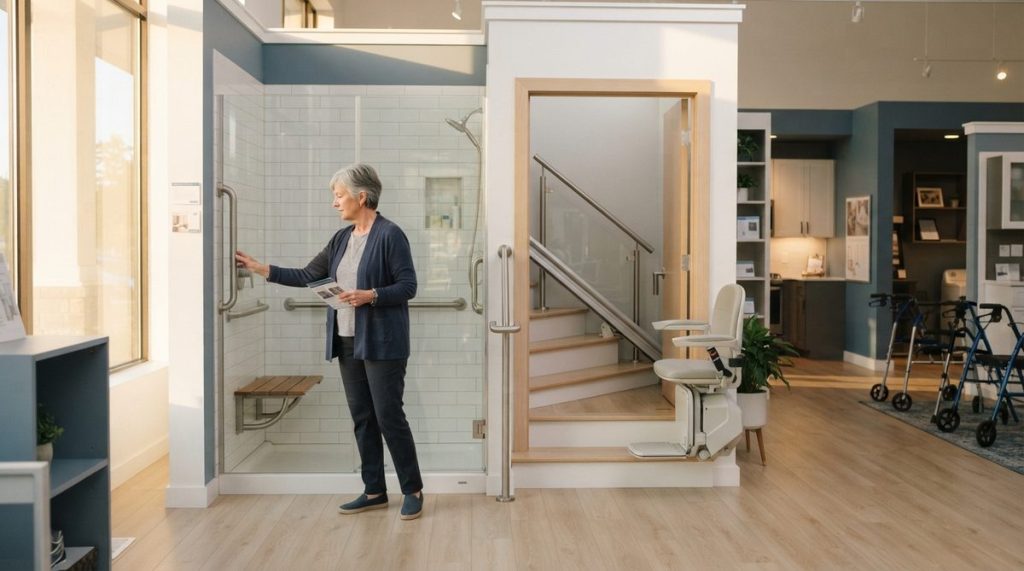
- Grab bars in every bathroom—beside the toilet, inside the shower, and at the tub entry. Modern options look like sleek towel bars rather than hospital hardware.
- A walk-in or roll-in shower to replace any remaining step-over tub, which is the single highest-risk fixture in the home.
- Stairlift or elevator installation if a two-story home is non-negotiable. Straight stairlifts start around $3,000 installed; curved models can exceed $10,000.
- Smart-home technology: voice-activated lighting, video doorbells, and medical-alert systems reduce reliance on physical dexterity. As our reporting on Smartphone Use Linked to Lower Cognitive Decline After 50 noted, engaging with technology may offer cognitive benefits as well.
- Kitchen adjustments: pull-out shelving, D-shaped cabinet handles, and induction cooktops (which eliminate open-flame risk) can extend safe independent cooking by years.
The Social Infrastructure Question
Aging in place is not purely a hardware problem. The 70s are when social isolation becomes a genuine health threat. A 2023 advisory from the U.S. Surgeon General classified prolonged loneliness as carrying health risks equivalent to smoking 15 cigarettes a day. If the house works perfectly but no one visits, the plan is still failing.
Community-based solutions—village networks, senior co-ops, adult day programs, and shared-ride services—become as important as grab bars during this decade. Explore our guide to 8 Alternatives to Assisted Living Worth Exploring After 50 for models that keep you home while keeping you connected.
Your 80s: The Decade That Tests Every Plan
Cognitive and Physical Realities
The 80s represent the sharpest inflection point. Roughly one-third of adults over 85 live with some form of cognitive impairment, ranging from mild memory concerns to diagnosed dementia. Even without cognitive decline, the body demands accommodations that would have seemed unthinkable at 62: slower gait speed, higher medication loads with more complex management, and increased susceptibility to dehydration, infections, and temperature sensitivity.
“The question is rarely whether an 85-year-old wants to stay home. It is whether the ecosystem around them—family, technology, home design, and community services—can sustain the goal safely.” — AARP Public Policy Institute
This does not mean aging in place becomes impossible at 80. It means the support structure must be robust, redundant, and honestly evaluated at regular intervals.
Home Environment in the 80s
By this stage, the home environment should be fully adapted. Key elements that matter at 80-plus include:
- Continuous single-floor living with no threshold transitions higher than half an inch.
- Automated medication dispensers with alarms and caregiver alerts for missed doses.
- Remote health monitoring: wearable fall detectors, smart scales, and blood-pressure cuffs that transmit data to a care team.
- Temperature regulation systems: programmable thermostats that prevent dangerous overheating or hypothermia, since thermoregulation declines significantly in the 80s.
- Cognitive-support design: high-contrast color schemes between walls and floors, clearly labeled rooms, night-path lighting that activates automatically, and stove-shutoff devices that disable burners after a set time.
When the Plan Needs to Flex
Honest aging-in-place planning includes identifying the triggers that would make a transition necessary. These are not signs of failure—they are signs of realistic preparation. Common inflection points include:
- Two or more falls within a six-month period, particularly if either results in a fracture or head injury.
- A dementia diagnosis that progresses to the point where leaving the stove on, wandering, or medication mismanagement becomes recurrent.
- Caregiver burnout among family members, which AARP data shows affects an estimated 36 percent of unpaid family caregivers.
- Inability to perform two or more Activities of Daily Living (bathing, dressing, eating, toileting, transferring, continence) without daily hands-on assistance.
Having these conversations before they are urgent—ideally during the 60s and 70s—removes the panic and guilt that often accompany crisis-driven decisions.
The Financial Thread That Runs Through Every Decade
Aging in place is frequently framed as the cheaper alternative to facility-based care, and in many cases that is true. The national median cost of a private room in a nursing home now exceeds $9,700 per month, according to the Genworth Cost of Care Survey. A fully modified home with 20 hours per week of in-home aide support can cost roughly half that amount, depending on the market.
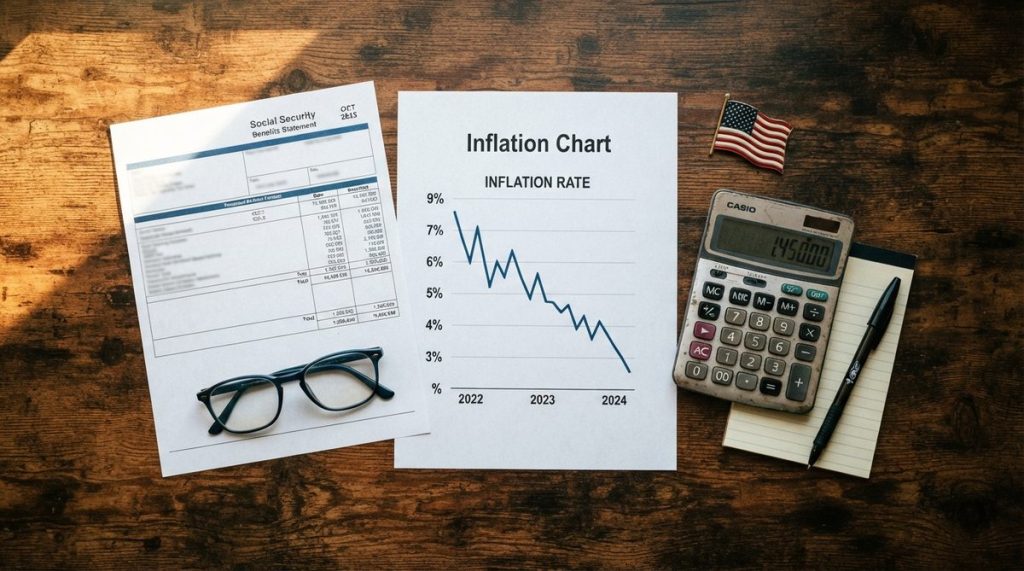
But “cheaper” is not “cheap.” Home modifications, in-home care, property taxes, maintenance, and insurance all compound over time. Social Security cost-of-living adjustments help, but they rarely keep pace with healthcare inflation. For a clear picture of what future adjustments may look like, review our analysis of the Social Security 2027 COLA Estimate: How to Prepare Now.
Financial planning for aging in place should include a dedicated home-modification fund, a realistic projection of in-home care costs starting at age 75, and a contingency for the possibility that plans may need to change entirely. A reverse mortgage, a life-estate arrangement, or even downsizing to a more accessible single-story home are all tools—not admissions of defeat.
A Decade-by-Decade Checklist, Summarized
If the detail above feels dense, here is the compressed version of what to tackle and when:
- Age 60–64: Conduct a home safety audit. Install lever handles and improved lighting. Begin long-term-care insurance research. Build a home-modification savings fund.
- Age 65–69: Enroll in Medicare and review coverage annually. Plan a first-floor living configuration. Address exterior fall risks (walkways, steps, railings).
- Age 70–74: Install grab bars and consider a walk-in shower. Adopt smart-home assistive technology. Establish a village network or community support system.
- Age 75–79: Evaluate in-home care needs. Have family conversations about care preferences and triggers. Update estate and healthcare directives.
- Age 80+: Implement cognitive-support home design. Activate remote health monitoring. Reassess the plan every six months with family or a geriatric care manager.
The Bottom Line: Aging in Place Is a Project, Not a Wish
The 77 percent of older Americans who want to stay home are not wrong to want it. Home is identity, autonomy, and comfort. But wanting it and engineering it are two profoundly different things. The people who succeed at aging in place across all three decades tend to share one trait: they started modifying the house, the finances, and the support network years before any of it felt urgent.
The best time to start was your 50s. The second-best time is today.
Frequently Asked Questions
What is the average cost of home modifications for aging in place?
Costs vary widely, but basic modifications like grab bars, lever handles, and improved lighting can run under $2,000 combined. Major projects such as walk-in showers, stairlifts, or widened doorways can range from $3,000 to $25,000 or more, depending on the scope and local labor costs.
Does Medicare pay for home modifications to help with aging in place?
Standard Original Medicare generally does not cover home modifications. Some Medicare Advantage plans may offer limited supplemental benefits for safety-related upgrades. Medicaid waiver programs in certain states do provide funding for home modifications for qualifying low-income seniors.
At what age should you start making your home accessible for aging in place?
Most aging-in-place experts recommend starting in your early 60s, when modifications are least expensive, energy and income are typically still strong, and changes can be planned proactively rather than made in response to a fall or injury.
How do you know when aging in place is no longer safe?
Key warning signs include recurrent falls (two or more in six months), inability to perform basic daily activities like bathing and dressing without hands-on help, progressive cognitive impairment that creates safety risks such as leaving the stove on, and severe caregiver burnout among family members providing unpaid support.




One Response