
Why the 2027 COLA Matters More Than You Think
Every October, the Social Security Administration announces the Cost-of-Living Adjustment (COLA) that will take effect the following January. For the roughly 73 million Americans who receive Social Security benefits, that single number determines whether monthly checks keep pace with rising prices—or fall behind.
The Social Security Administration bases each COLA on the Consumer Price Index for Urban Wage Earners and Clerical Workers (CPI-W), specifically the third-quarter average compared to the prior year. The 2026 COLA came in at 2.5%, a notable drop from the 3.2% adjustment in 2025 and a far cry from the 8.7% spike retirees saw in 2023. Early projections for the Social Security 2027 COLA suggest the number could land somewhere between 2.0% and 2.6%, depending on how inflation behaves through the summer of 2026.
If you are retired or approaching retirement, understanding what drives the COLA—and building a plan that does not depend entirely on it—can make a meaningful difference in your financial security. This guide walks through what is known so far, what remains uncertain, and concrete steps you can take right now to stay ahead.
How the Social Security COLA Is Calculated
The COLA formula is straightforward, but the timing matters. The SSA compares the average CPI-W for July, August, and September of the current year against the same quarter of the year when the last COLA took effect. If prices rose, beneficiaries get a percentage increase. If prices fell or stayed flat, there is no COLA—and no reduction either.
Here is a quick look at recent COLA adjustments and the inflation context behind them:
| Year COLA Takes Effect | COLA Percentage | Approximate Monthly Increase (Average Benefit) | Inflation Driver |
|---|---|---|---|
| 2023 | 8.7% | ~$146 | Post-pandemic price surge |
| 2024 | 3.2% | ~$59 | Cooling but persistent inflation |
| 2025 | 2.5% | ~$49 | Moderating CPI-W |
| 2026 | 2.5% | ~$50 | Stable consumer prices |
| 2027 (projected) | 2.0%–2.6% | ~$40–$53 (est.) | Uncertain; tariff effects pending |
Keep in mind that the final 2027 number will not be confirmed until October 2026, after all third-quarter CPI-W data is in. Any projection you see before then is an estimate based on current trends.
What We Know About the 2027 COLA So Far
Inflation Trends Are Sending Mixed Signals
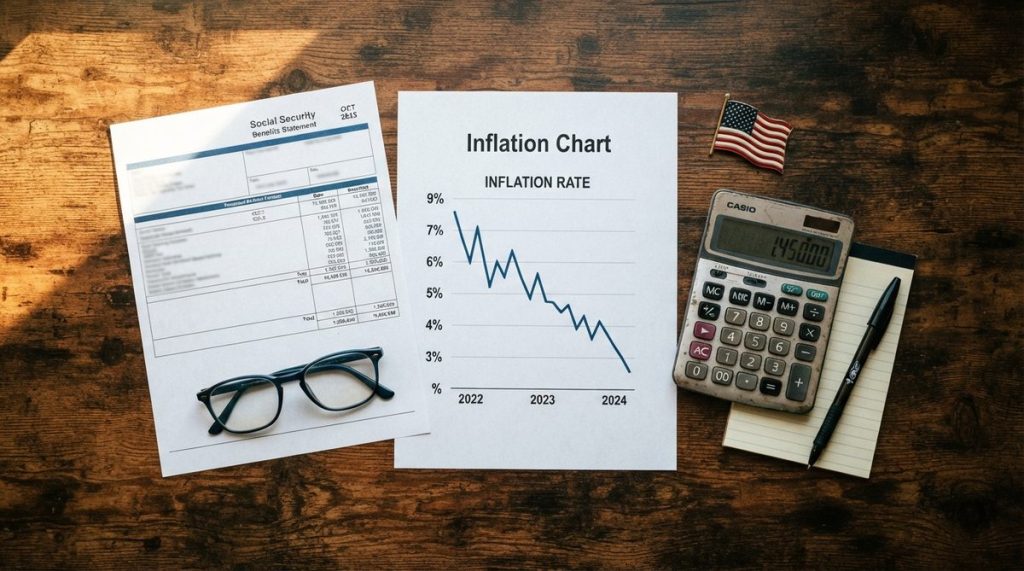
As of mid-2026, overall consumer inflation has continued to moderate from its 2022 peak. The Bureau of Labor Statistics reported that the 12-month CPI-W increase through the first quarter of 2026 hovered around 2.3%. If that trajectory holds through summer, the Social Security 2027 COLA would likely land near the lower end of current estimates.
However, several wildcards could push the number higher. New tariff policies implemented in 2025 and 2026 have increased prices on imported goods, particularly electronics, clothing, and certain food items. Energy prices remain volatile. And housing costs—though not weighted as heavily in the CPI-W as in the broader CPI—still exert upward pressure.
The 2026 Trustees Report Offers Context
The 2026 Social Security Trustees Report, released in the spring, projected that the Old-Age and Survivors Insurance (OASI) trust fund will be able to pay full scheduled benefits through 2034. After that point, incoming payroll tax revenue would cover approximately 79% of promised benefits. This timeline has shifted slightly from earlier projections, and it underscores why every COLA matters: a smaller annual increase compounds over decades, widening the gap between what retirees need and what they receive.
For a deeper look at recent benefit changes already affecting your check, see 4 Big Social Security Changes Still Affecting Retirees in 2026.

Why a “Small” COLA Can Hit Retirees Hard
Medicare Premium Increases Can Erase the Gain
Here is the frustrating math many retirees face each January: the COLA adds a few dollars to Social Security, but Medicare Part B premiums—which are typically deducted directly from benefits—also go up. In 2026, the standard Part B premium is $185.00 per month. If the 2027 premium rises by even $10, that could wipe out a significant portion of the COLA increase for lower-income beneficiaries.
The “hold harmless” provision protects most retirees from a net reduction in their Social Security check due to Part B increases, but it does not prevent the COLA from being effectively neutralized. To understand additional Medicare costs headed your way, review Medicare Changes 2026: 3 Hidden Costs Retirees Must Prepare For.
The CPI-W Does Not Reflect Senior Spending
A persistent criticism from advocacy groups like the Senior Citizens League is that the CPI-W tracks spending patterns of urban wage earners, not retirees. Seniors typically spend a larger share of their budgets on healthcare and housing—categories that have consistently outpaced overall inflation. The Bureau of Labor Statistics does publish an experimental CPI-E (elderly), which has historically run 0.2 to 0.3 percentage points higher than the CPI-W annually. Congress has not adopted it for COLA calculations.
The practical result: even when the COLA technically matches inflation, your actual cost of living as a retiree may rise faster than your benefits.
Concrete Steps to Prepare for a Modest 2027 COLA
Audit Your Current Monthly Budget
Before you can plan, you need an honest snapshot of where your money goes. Pull three months of bank and credit card statements and sort spending into fixed costs (housing, insurance, prescriptions) and variable costs (dining, travel, subscriptions). Many retirees discover recurring charges—streaming services, memberships, or auto-renewed subscriptions—that add up to $100 or more per month without delivering much value.
- Flag every auto-payment and ask whether you still use the service.
- Compare your Medicare Supplement or Medicare Advantage premiums against other available plans during Open Enrollment (October 15–December 7).
- Check whether your prescription costs could drop by switching to generics, using the Medicare Plan Finder tool at Medicare.gov, or exploring the newly expanded Part D cap.
Recalculate Your Tax Exposure
A common surprise in retirement: Social Security benefits can be taxable. According to the IRS, if your combined income (adjusted gross income + nontaxable interest + half of Social Security) exceeds $25,000 for single filers or $32,000 for married filing jointly, up to 50% of benefits may be taxed. Above $34,000 (single) or $44,000 (joint), up to 85% of benefits become taxable.
A COLA increase, even a small one, can nudge you into a higher taxation tier. Consider whether strategic Roth conversions, timing of IRA withdrawals, or charitable distributions from an IRA (Qualified Charitable Distributions) could reduce your overall tax bill.
Build a Dedicated Buffer Fund
Rather than relying on the COLA to cover unexpected expenses, aim to keep three to six months of essential living costs in a high-yield savings account or money market fund. As of mid-2026, several online banks are offering annual percentage yields above 4.5%, which means even modest deposits are generating meaningful interest.
This buffer serves two purposes: it covers emergencies like a broken furnace or dental procedure without forcing you to sell investments at a bad time, and it gives you breathing room in January if the COLA disappoints. For strategies on protecting purchasing power beyond cash savings, take a look at TIPS Ladder for Retirees: A Safer Way to Protect Income.

Review Your Withdrawal Strategy
If you are drawing from a 401(k), traditional IRA, or other retirement accounts alongside Social Security, the size of the COLA should inform—but not dictate—your withdrawal rate. A widely cited guideline is the “4% rule,” which suggests withdrawing 4% of your portfolio in year one and adjusting for inflation each subsequent year. However, that rule was designed for a 30-year retirement and does not account for sequence-of-returns risk in volatile markets.
Consider a more flexible approach:
- Guardrails strategy: Set upper and lower withdrawal limits (e.g., 3.5% to 5.5%) and adjust annually based on portfolio performance.
- Bucket strategy: Divide assets into short-term (1–2 years of cash), medium-term (3–7 years in bonds), and long-term (8+ years in equities), drawing from each bucket in sequence.
- Required Minimum Distributions (RMDs): If you are 73 or older, the IRS mandates minimum withdrawals from traditional retirement accounts. Factor these into your income plan so you are not caught off guard at tax time.
Lock In Income Where You Can
When COLAs are modest, guaranteed income streams become more valuable. Consider whether any of these options fit your situation:
- Single Premium Immediate Annuity (SPIA): A lump-sum purchase that provides fixed monthly income for life. Rates have improved significantly since 2022 due to higher interest rates. According to Investopedia, a 70-year-old purchasing a $100,000 SPIA in mid-2026 could expect roughly $650–$720 per month, depending on the insurer and payout structure.
- Treasury I Bonds: These adjust for inflation every six months. The annual purchase limit is $10,000 per person (plus $5,000 via tax refund). They will not replace Social Security, but they add an inflation-sensitive layer to a portfolio.
- Delaying Social Security: If you have not yet filed, every year you wait past full retirement age (up to 70) adds 8% in delayed retirement credits. That is a guaranteed raise no COLA can match.
What to Watch Between Now and October 2026
The Social Security 2027 COLA will be shaped by economic data released over the next several months. Here are the key indicators worth following:
- Monthly CPI-W reports (Bureau of Labor Statistics): These are released around the second week of each month and will directly feed the COLA calculation.
- Federal Reserve interest rate decisions: Rate cuts could stimulate spending and push prices higher; rate holds signal the Fed believes inflation is under control.
- Energy prices: Gasoline and home heating costs are volatile and can swing the CPI-W in either direction during the critical July–September measurement window.
- Tariff developments: Ongoing trade policy changes may raise prices on consumer goods, adding upward pressure to the index.
The Bigger Picture: Planning Beyond One Year’s COLA
It is tempting to fixate on whether the Social Security 2027 COLA will be 2.0% or 2.6%, but the difference on an average monthly benefit of roughly $1,975 is about $12 per month. That matters—every dollar counts—but it should not be the foundation of your financial plan.
The more productive focus is building a retirement income strategy that treats Social Security as one pillar among several. Diversified income sources, a realistic budget, tax-efficient withdrawals, and an emergency reserve create a structure that holds up whether the COLA is generous or disappointing.
Imagine a retiree who receives $2,000 per month from Social Security, draws $800 from a traditional IRA, earns $150 in interest from a high-yield savings account, and has a small SPIA paying $400 per month. Even if the COLA comes in at just 2.0%—adding $40 per month to the Social Security check—this person has multiple levers to adjust. Cutting one unnecessary subscription, switching to a lower-cost Medicare Advantage plan, or delaying a discretionary purchase by a quarter can more than compensate.
The retirees who weather inflation most comfortably are not the ones who get the highest COLA. They are the ones who planned before the number was announced.
Frequently Asked Questions
When will the official Social Security 2027 COLA be announced?
The Social Security Administration typically announces the COLA in the second week of October. For 2027 benefits, expect the announcement in October 2026, with the adjustment appearing in January 2027 checks.
Can the COLA ever be zero or negative?
The COLA can be zero if the CPI-W does not increase, as happened in 2010, 2011, and 2016. However, benefits can never decrease due to a negative COLA—the law prevents downward adjustments.
Will a higher 2027 COLA increase my Medicare Part B premium?
Possibly. Medicare Part B premiums often rise alongside COLA increases. The "hold harmless" provision prevents most beneficiaries from seeing a net decrease in their Social Security check due to Part B hikes, but the COLA gain can be partially or fully offset.
How can I check my projected Social Security benefit amount?
Create or log in to your my Social Security account at ssa.gov. The portal shows estimated benefits at ages 62, 67, and 70 based on your actual earnings record, updated annually.