
Key Takeaways
- The average retired couple today receives significantly more in Social Security benefits than they contributed in payroll taxes over their working lives.
- This benefit-to-contribution gap is a key driver of the projected Social Security trust fund shortfall, which could trigger automatic benefit cuts by the mid-2030s.
- Understanding how much Social Security actually pays relative to contributions helps retirees set realistic expectations and plan supplemental income accordingly.
- Simple steps like reviewing your Social Security statement annually, optimizing your claiming age, and building diversified income streams can protect your retirement from potential benefit reductions.
A Retirement Check That Outpaces a Lifetime of Contributions
Imagine you retired last year at 66 after a solid 40-year career earning a median income. Over those decades, you and your employers collectively paid roughly $600,000 into the Social Security system through payroll taxes. Now picture opening your mailbox each month and collecting a benefit check that, if you live to average life expectancy, will total well over $900,000—possibly more. That’s not a math error. It’s how Social Security actually works for most retirees today.
This gap between what workers pay in and what retirees collect is generating fresh headlines and serious policy debate in 2026. A recent analysis highlighted by multiple outlets confirms that Social Security retirees receive far more than they paid in over their working lives. For many seniors, this sounds like wonderful news. But the story has a second chapter—one involving a trust fund under pressure, potential benefit cuts, and the urgent need for a clear-eyed retirement plan.
This article breaks down exactly how this benefit surplus works, what it means for the long-term health of Social Security, and—most importantly—what you can do right now to protect your retirement income regardless of what Congress decides.
How Social Security Benefits Exceed Contributions
The Numbers Behind the Surplus
The Social Security Administration (SSA) uses a progressive benefit formula designed to replace a larger percentage of income for lower earners. The formula calculates your Primary Insurance Amount (PIA) based on your highest 35 years of inflation-adjusted earnings, but it intentionally tilts the math in favor of retirees.
Here’s why the payout exceeds contributions for most people. First, Social Security benefits are adjusted annually for inflation through Cost-of-Living Adjustments (COLAs). Second, benefits are paid for as long as you live—there’s no cap. Third, spousal and survivor benefits can effectively multiply the household return on a single worker’s contributions. According to analyses based on SSA data, a two-earner couple who both earned average wages and retired in 2025 can expect to receive roughly $200,000 to $400,000 more in lifetime benefits than the total payroll taxes they and their employers paid in, even after adjusting for inflation.
“The average retiring couple today will receive Social Security benefits worth substantially more than their lifetime payroll tax contributions—a gap that has widened as life expectancies have increased and benefit formulas have grown more generous relative to contributions.”
That surplus is even more dramatic for single-earner couples who qualify for spousal benefits, since one partner collects up to 50% of the worker’s benefit without having paid into the system separately.
Why This Happens by Design
Social Security was never structured as a personal savings account. It operates as a social insurance program where today’s workers fund today’s retirees. When the program launched in 1935, the ratio of workers to retirees was roughly 42 to 1. By 2025, that ratio had fallen to approximately 2.7 to 1, according to SSA trustees’ reports. Fewer workers supporting more retirees—who are living longer—means each retiree draws more from the system than they individually deposited.
This isn’t a flaw that snuck in. The progressive benefit formula was designed to provide a safety net, especially for lower-income retirees. But the scale of the gap has grown as demographics shifted. Baby boomers retiring in record numbers, combined with longer life expectancies (the average 65-year-old today can expect to live past 84), have stretched the math to its limits.

The Trust Fund Problem This Creates
The 2033–2035 Cliff
If retirees consistently receive more than they contributed, where does the extra money come from? For decades, the answer was the Old-Age and Survivors Insurance (OASI) Trust Fund, which accumulated surpluses during years when baby boomers were working and paying taxes but not yet collecting benefits. That surplus peaked at roughly $2.8 trillion.
Now, that reserve is being drawn down. The SSA’s 2025 Trustees Report projects that the combined Social Security trust funds will be depleted by approximately 2033 to 2035. If Congress takes no action before then, benefits would not disappear entirely—incoming payroll taxes would still cover an estimated 75% to 80% of scheduled benefits. But that still represents a potential 20% to 25% cut for every retiree.
For someone collecting $2,000 per month, a 20% reduction would mean losing $400 monthly—$4,800 per year. For a couple both collecting benefits, the annual shortfall could exceed $8,000. That’s real money, especially for households relying on Social Security as their primary income source, which describes roughly 40% of Americans aged 65 and older.
What Congress Might (or Might Not) Do
Legislative proposals to shore up Social Security generally fall into three categories: raising the payroll tax cap (currently $168,600 in 2025), increasing the payroll tax rate (currently 6.2% for employees), or modifying the benefit formula for future retirees. Some proposals combine all three. None have passed as of mid-2026, and the political landscape remains deeply divided.
The key takeaway for anyone within 10 years of retirement—or already retired—is this: hoping Congress will fix Social Security in time is not a retirement strategy. You need a backup plan, and building one is entirely within your control.
For a deeper look at how annual adjustments affect your check, see our coverage of the Social Security 2027 COLA Estimate: How to Prepare Now.
What This Means for Your Retirement Right Now
Don’t Assume Your Current Benefit Is Guaranteed Forever
Consider a hypothetical retiree named Helen, age 68, living in Ohio on $2,200 per month from Social Security plus a small pension. Helen assumes her benefit is locked in because she already claimed. But if the trust fund is depleted without a legislative fix, even current retirees could see reduced payments. The SSA has no legal authority to borrow or deficit-spend to cover shortfalls—benefits would automatically be reduced to match incoming revenue.
This doesn’t mean panic is warranted. It means awareness and preparation are essential.
Social Security Was Never Meant to Be Your Only Income
The SSA itself states that Social Security was designed to replace about 40% of pre-retirement income for an average earner. Yet survey data consistently shows that roughly half of retirees depend on it for the majority of their income. If you fall into that category, the benefit-to-contribution surplus you’re currently enjoying makes diversification even more urgent—because that surplus is exactly what’s under fiscal pressure.
“Social Security benefits were designed to replace approximately 40% of an average worker’s pre-retirement earnings—not to serve as a retiree’s sole income source.” — Social Security Administration
A 7-Step Action Plan to Protect Your Retirement Income
Whether you’re already collecting Social Security or still a few years away, these concrete steps can help insulate your finances from potential benefit changes.
- Review your Social Security statement annually. Create or log into your account at ssa.gov to verify your earnings record and projected benefits. Errors in your record—even from decades ago—can reduce your benefit permanently if not corrected.
- Optimize your claiming age. Every year you delay claiming beyond your full retirement age (up to age 70) increases your benefit by approximately 8% per year. For someone with a full retirement age of 67, waiting until 70 boosts the monthly check by 24%. If you’re healthy and have other income sources to bridge the gap, delayed claiming is one of the most powerful financial moves available.
- Build at least one non-Social-Security income stream. This could be a part-time job, rental income, dividends from a brokerage account, or systematic withdrawals from a traditional or Roth IRA. Diversification protects you if benefits are reduced. For inflation-protected options, explore strategies like the TIPS Ladder for Retirees.
- Understand how taxes affect your Social Security. Up to 85% of Social Security benefits can be subject to federal income tax depending on your combined income. The IRS uses a formula combining your adjusted gross income, nontaxable interest, and half your Social Security benefits to determine taxability. Strategic Roth conversions before or during early retirement can reduce this tax bite significantly.
- Coordinate Social Security with Medicare costs. Medicare Part B and Part D premiums are deducted directly from Social Security checks for most retirees. Higher-income retirees pay surcharges called IRMAA (Income-Related Monthly Adjustment Amounts) that can eat substantially into benefits. Review your Medicare plan annually during Open Enrollment to ensure you’re not overpaying. Our guide to Medicare Changes 2026: 3 Hidden Costs Retirees Must Prepare For covers these surcharges in detail.
- Pressure-test your budget against a 20% benefit cut. Run the math: if your Social Security check dropped by 20%, could you cover essentials? If the answer is no, that’s your signal to start building reserves now—even modest monthly savings into a high-yield savings account or short-term Treasury bills adds a meaningful cushion over several years.
- Stay informed about legislative changes. Follow updates from the SSA and reputable financial sources. As Investopedia regularly notes, proposed reforms could change eligibility ages, benefit formulas, or tax treatment with relatively short notice. Being caught off guard is avoidable.

The Inflation Factor: Why Your Surplus May Feel Smaller Than It Is
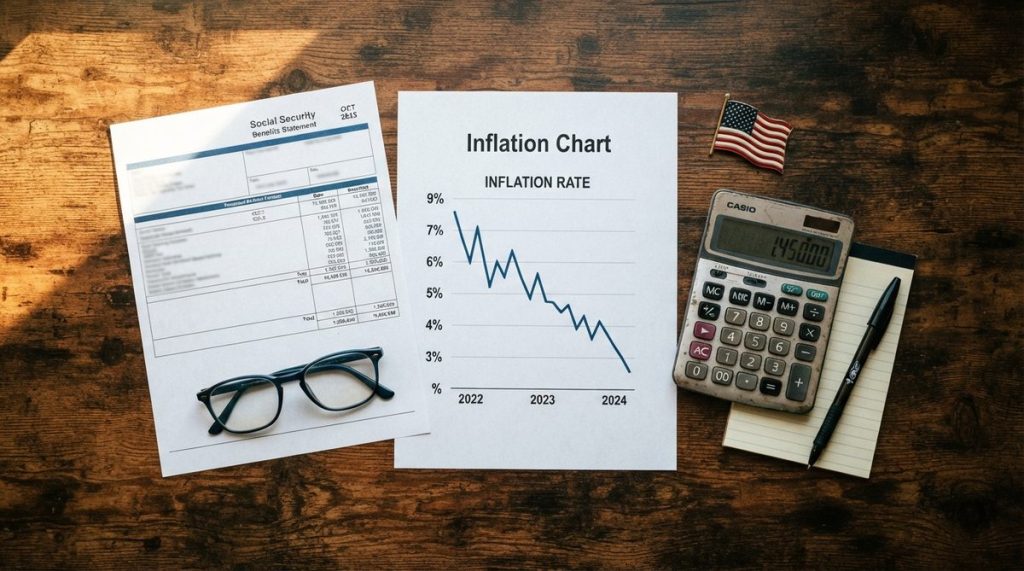
Even though retirees technically receive more than they paid into Social Security, inflation can erode the purchasing power of those benefits in real time. The annual COLA is supposed to keep pace with rising prices, but many retirees report that the adjustment doesn’t match their actual spending patterns. That’s because the COLA is calculated using the Consumer Price Index for Urban Wage Earners (CPI-W), which doesn’t fully reflect the spending patterns of older adults—particularly the outsized impact of healthcare and housing costs.
In 2025, the COLA was 2.5%, following a 3.2% adjustment in 2024 and a historic 8.7% in 2023. While the 2023 bump was welcomed, it was a response to the severe inflation of 2022, which had already eaten into retirees’ savings. The net effect for many was treading water, not gaining ground.
This is why the “you get more than you paid in” framing, while mathematically accurate, can feel misleading to a 75-year-old watching grocery bills and prescription costs climb. The surplus is real in nominal dollars, but the lived experience of retirement spending often tells a tighter story.
Spousal and Survivor Benefits: Where the Surplus Gets Even Larger
One area where Social Security’s payout-to-contribution ratio becomes especially generous is spousal and survivor benefits. A spouse who never worked—or who earned significantly less—can receive up to 50% of the higher-earning spouse’s PIA. A surviving spouse can receive up to 100% of the deceased spouse’s benefit.
Imagine a hypothetical couple: Tom worked for 38 years and receives $2,800 per month at full retirement age. His wife, Linda, worked part-time and qualifies for only $700 on her own record. Under spousal benefit rules, Linda can instead receive $1,400 (50% of Tom’s benefit), effectively doubling her individual payout. If Tom passes away, Linda can step up to his full $2,800.
These provisions are among the most valuable—and most overlooked—features of Social Security. They also contribute significantly to the overall surplus retirees collect, and they’re worth understanding fully before making any claiming decisions.
The Bottom Line: Gratitude and Preparation Aren’t Mutually Exclusive
The fact that Social Security pays retirees more than they contributed is simultaneously a testament to the program’s generosity and a warning about its fiscal sustainability. Both things are true. You can appreciate the benefit surplus you’re receiving today while also recognizing that the system sustaining it faces a real funding challenge within the next decade.
The worst response is complacency. The best response is informed action: verifying your benefits, optimizing your claiming strategy, diversifying your income, and stress-testing your budget against possible cuts. None of these steps require wealth or financial sophistication—just attention and follow-through.
Social Security remains the most important retirement program in American history. Protecting your share of it starts with understanding exactly how it works—and what could change.
Frequently Asked Questions
Do all Social Security retirees receive more than they paid in?
Most do, particularly those with average or below-average lifetime earnings, married couples with spousal benefits, and retirees who live past average life expectancy. However, very high earners who hit the payroll tax cap for many years and die relatively early may not recoup their full contributions.
Will Social Security benefits actually be cut if Congress doesn't act?
If the trust fund is depleted—projected around 2033 to 2035—the SSA would only be able to pay benefits from incoming payroll tax revenue, which would cover an estimated 75% to 80% of scheduled benefits. This would effectively mean an automatic reduction, not a complete elimination of benefits.
Can I check how much I've paid into Social Security over my lifetime?
Yes. You can create or access your personal my Social Security account at ssa.gov to view your complete earnings history and estimated benefits. Review it annually to catch any errors that could reduce your future payments.
Does delaying Social Security past full retirement age still make sense given the trust fund concerns?
For many retirees in good health, delaying until age 70 remains one of the most effective strategies because the 8% annual increase in benefits is guaranteed regardless of trust fund status. Even if benefits were reduced across the board, a higher base benefit would still result in a larger monthly check than an early-claimed one.