

The Real Price of Staying Home — And Why Most People Get It Wrong
Nearly 90% of adults over 65 say they want to remain in their own homes as they age, according to AARP. That desire is perfectly reasonable. What isn’t reasonable is the set of assumptions most people carry about what aging in place actually costs — assumptions that can derail retirement budgets and delay critical safety modifications until after a fall or medical emergency forces the issue.
In my 14 years as a Certified Aging-in-Place Specialist, I’ve walked through hundreds of homes with retirees who believed they were financially prepared to stay put. Most weren’t — not because they lacked resources, but because they were operating on outdated or flat-out wrong information about aging in place costs.
Let me walk you through the five myths I encounter most often, the evidence that disproves each one, and the practical steps you can take right now to budget with clarity instead of guesswork.
Myth #1: “A Few Grab Bars Are All I Really Need”
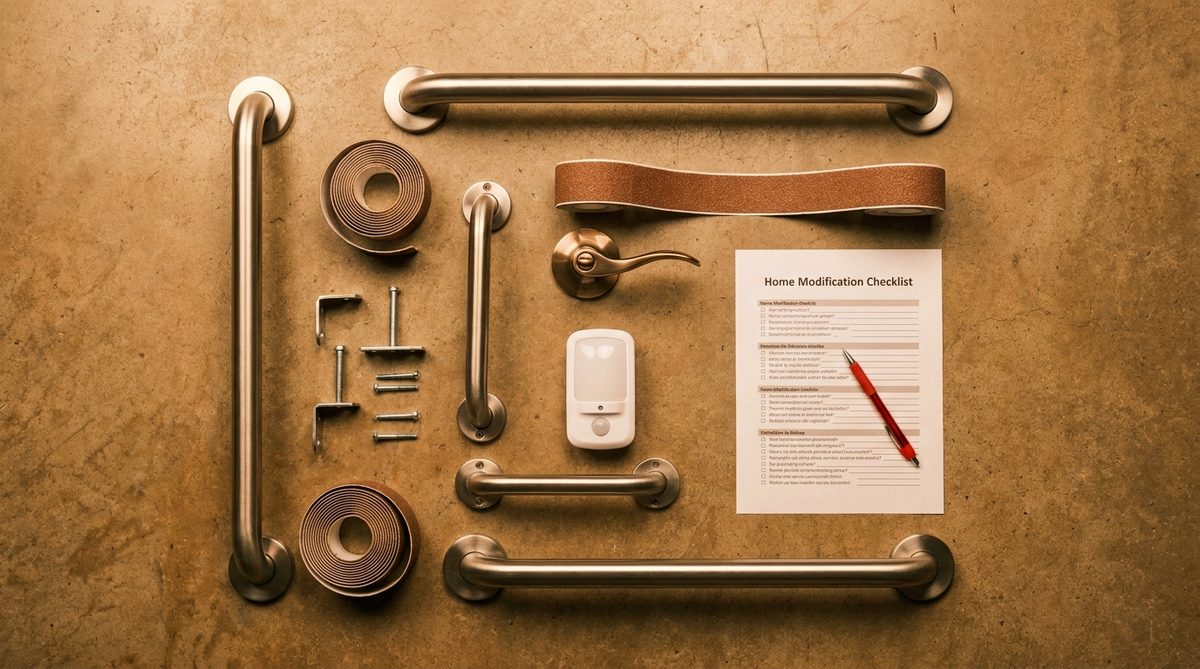
This is the myth I hear more than any other. People picture aging in place as screwing a couple of grab bars beside the toilet and calling it done. The reality? Grab bars are one line item on a list that typically runs 15 to 30 modifications deep for a home that wasn’t built with universal design in mind.
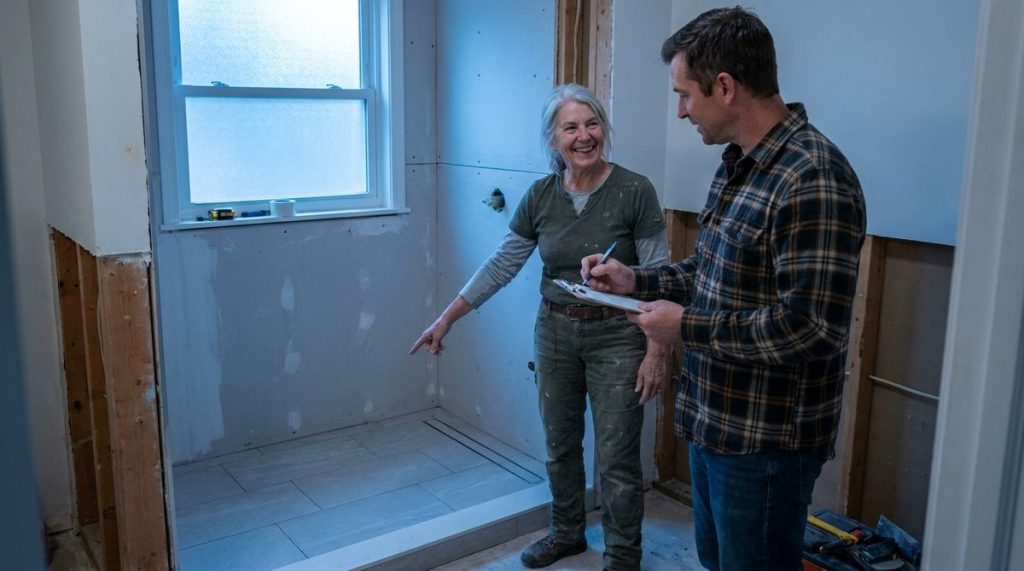
A 2024 study by the National Council on Aging found that the average homeowner over 65 needs roughly $10,000 to $30,000 in modifications to age safely in a standard single-family home — and that figure climbs steeply for two-story houses or homes built before 1980. Grab bars might cost $150 to $300 installed. A curbless shower conversion runs $4,000 to $9,000. Widening doorways for walker or wheelchair access costs $800 to $2,500 per doorway.
What I see most often is a kind of modification trickle: people do one thing, feel good, then get blindsided six months later when a new need arises. The smarter approach is a comprehensive home assessment — ideally conducted before any health crisis — that maps out every probable modification across a 10- to 15-year horizon.
The Truth
Aging in place is a system of coordinated changes, not a single purchase. Budget for the system, not the band-aid.
Myth #2: “Aging in Place Is Always Cheaper Than Assisted Living”
This one surprises people. The blanket statement that staying home is cheaper sounds logical — you already own the house, after all. But when you stack up the real numbers, the math gets complicated fast.
The 2024 Genworth Cost of Care Survey pegs the national median cost of assisted living at approximately $5,511 per month ($66,132 annually). Meanwhile, a retiree aging in place faces property taxes, homeowner’s insurance, maintenance, utilities, home modifications, and — here’s the budget-buster — in-home care if health declines. The national median for a home health aide is $33.99 per hour. At just 30 hours per week, that’s roughly $4,419 per month, or $53,028 per year — before you add any of the housing costs you’re already paying.
| Expense Category | Aging in Place | Assisted Living |
|---|---|---|
| Housing (taxes, insurance, maintenance, utilities) | $12,000 – $18,000 | Included |
| Home Modifications (amortized over 10 years) | $1,000 – $3,000/yr | N/A |
| In-Home Care (30 hrs/week) | $53,028 | Included |
| Meals & Nutrition | $4,800 – $7,200 | Included |
| Transportation | $3,000 – $6,000 | Often included |
| Estimated Annual Total | $73,828 – $87,228 | $66,132 |
Does this mean assisted living is always the better deal? Absolutely not. If you’re healthy, independent, and need minimal help, aging in place can cost a fraction of facility living. The myth isn’t that staying home can be affordable — it’s the assumption that it’s automatically affordable at every stage of aging. You need to plan for the full continuum, and as I discuss with clients regularly, that means understanding how aging in place costs more than expected when care needs escalate.
The Truth
Aging in place is cheaper only when care needs remain low. Once you need 20+ hours per week of in-home help, the cost equation can flip. Plan for both scenarios.
Myth #3: “Medicare or My Insurance Will Cover Home Modifications”
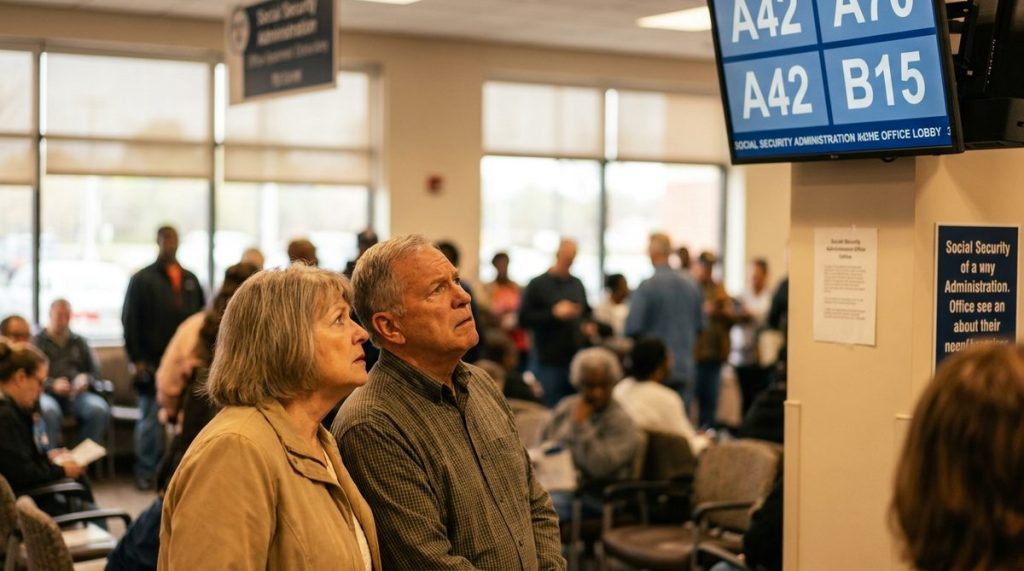
I often tell my clients to sit down before I deliver this news: traditional Medicare does not pay for home modifications. Not grab bars, not ramp installations, not stairlifts. Medicare Part B covers durable medical equipment like hospital beds and wheelchairs under specific conditions, but structural changes to your home fall outside its scope entirely.
Some Medicare Advantage plans (Part C) have started offering limited home modification benefits — typically $1,000 to $2,500 per year — but these vary wildly by plan and region. Medicaid waiver programs in certain states provide home modification assistance for low-income seniors, but waitlists can stretch 12 to 24 months. The VA offers the Specially Adapted Housing (SAH) grant for eligible veterans, worth up to $109,986 in 2024, and the Home Improvements and Structural Alterations (HISA) grant up to $6,800.
Standard homeowner’s insurance? It doesn’t cover elective modifications either. This leaves most retirees funding these changes entirely out of pocket — at a time when retirement savings are already being depleted faster due to inflation.
The Truth
Assume you’re self-funding unless you’ve confirmed otherwise in writing from your specific plan. Check Medicare Advantage benefits annually during open enrollment (October 15 – December 7) and explore state Medicaid waiver programs through your local Area Agency on Aging.
Myth #4: “I Can Wait Until I Actually Need the Modifications”
This is the myth that costs people the most — not just in dollars, but in health outcomes. Waiting until after a fall to install a walk-in shower or stair railing is like waiting until after a car accident to put on your seatbelt.
The National Institute on Aging reports that one in four Americans aged 65 and older falls each year, and falls are the leading cause of injury-related death in that age group. What the data also shows is that post-fall modifications are dramatically more expensive than proactive ones. Why? Because after a fall, you’re often making decisions under duress — hiring contractors on emergency timelines, paying rush premiums, and sometimes choosing temporary solutions that have to be redone later.
In my experience, proactive modifications completed on a planned timeline cost 20% to 40% less than the same work done reactively. You can shop multiple contractors, wait for seasonal pricing dips (late fall and winter are typically slower for remodelers), and stage the work over months or years to spread out costs.
A Proactive Modification Timeline
- Ages 50–55: Get a professional home assessment. Identify every modification you’d likely need over the next 20 years. Estimated cost: $300–$500 for the assessment.
- Ages 55–60: Address the low-cost, high-impact items first — lever door handles, improved lighting, non-slip flooring in bathrooms, a main-floor bedroom option. Budget: $2,000–$5,000.
- Ages 60–65: Tackle the mid-range projects — curbless shower, reinforced toilet area for grab bars, stair railings on both sides. Budget: $5,000–$15,000.
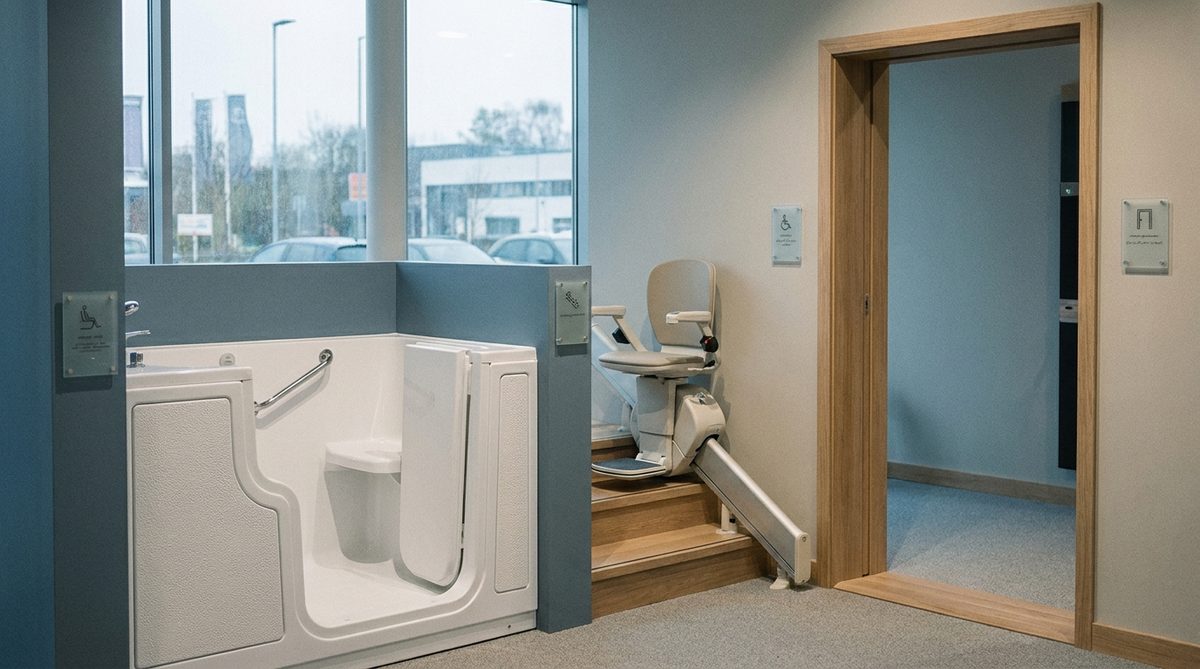
- Ages 65–70: Complete major infrastructure if needed — stairlift or elevator, doorway widening, ramp construction, smart home monitoring systems. Budget: $8,000–$25,000+.
- Ages 70+: Annual reassessment and incremental updates as needs evolve. Budget: $500–$2,000/year.
Starting early also lets you integrate modifications into other home projects. Replacing a bathroom? That’s the time to install a curbless shower — not five years later when you have to tear out the one you just put in. If you’re also focusing on broader wellness, maintaining healthy habits for aging well can actually delay or reduce the number of modifications you’ll need.
The Truth
The best time to modify your home is before you need the modifications. The second-best time is today.
Myth #5: “Smart Home Technology Is Too Complicated for Older Adults”
This myth frustrates me more than any other because it’s both condescending and dangerously outdated. Today’s aging-in-place technology is designed with simplicity as a core feature — voice-activated systems, automated lighting, medical alert devices that don’t require smartphone expertise, and sensor-based monitoring that runs in the background without any user interaction at all.
A motion sensor that turns on hallway lights at 2 a.m. doesn’t require you to understand how it works. A smart thermostat that maintains safe temperatures regardless of whether you remember to adjust it is literally set-and-forget. Automatic stove shut-off devices prevent kitchen fires without any input from the user.
The real barrier isn’t complexity — it’s awareness. Most retirees I work with don’t know these products exist, and their adult children don’t think to research them. The technology market for aging in place is projected to reach $30 billion by 2027, according to industry analysts, yet adoption among the 65+ demographic hovers around 30% for even basic smart home devices.
What’s more, the cost has plummeted. A basic smart home safety package — motion-sensor lights, a video doorbell, a medical alert pendant, and a smart speaker for voice-activated calls and reminders — can be assembled for under $500. Five years ago, that same setup would have cost $1,500 or more. For a deeper dive into the technology misconceptions holding people back, I’d recommend reading about the myths about aging-in-place technology that persist despite the evidence.
The Truth
Modern aging-in-place tech is simpler, cheaper, and more effective than most people realize. The biggest risk isn’t the learning curve — it’s never learning these solutions exist.
How to Build a Realistic Aging-in-Place Budget
Now that we’ve cleared the myths, here’s how to move forward with a plan rooted in reality rather than wishful thinking.
Step 1: Audit Your Home Honestly
Walk every room with a critical eye. Where are the trip hazards? Can you reach light switches from a seated position? Is there a full bathroom on the main floor? A CAPS-certified professional can do this with you for a few hundred dollars and produce a prioritized list.
Step 2: Price It Out in Tiers
Separate your list into three tiers: immediate safety needs (under $1,000), near-term improvements ($1,000–$10,000), and long-term infrastructure ($10,000+). This prevents sticker shock and lets you plan cash flow over time.
Step 3: Explore Every Funding Avenue
Check your Medicare Advantage plan’s supplemental benefits. Contact your state’s Medicaid office about Home and Community-Based Services waivers. If you’re a veteran, call the VA. Look into USDA Rural Development grants if you’re in an eligible area. Some state and local programs offer low-interest loans or grants specifically for senior home modifications.
Step 4: Build an Annual Home Maintenance Reserve
Financial planners generally recommend setting aside 1% to 2% of your home’s value annually for maintenance. For aging-in-place needs, I suggest adding another 0.5% to 1% as a dedicated modification fund. On a $300,000 home, that’s $1,500 to $3,000 per year earmarked for safety upgrades.
Step 5: Reassess Annually
Your needs at 68 won’t be your needs at 78. Schedule a yearly walkthrough — even an informal one with a family member — to identify emerging risks and opportunities before they become emergencies.
The Bottom Line: Knowledge Is the Real Safety Net
Aging in place costs don’t have to catch you off guard. The retirees who manage this transition most successfully aren’t the ones with the biggest budgets — they’re the ones who started planning early, questioned their assumptions, and treated their home as a long-term investment in independence rather than a static backdrop to retirement.
Every myth I’ve outlined above has a common thread: it delays action. And in my line of work, delay is the single most expensive mistake a homeowner can make. Your future self will thank you for the grab bar you install this month, the shower you convert next year, and the budget you build today.
Start where you are. Use what you have. Plan for what’s coming.
Frequently Asked Questions
What is the average cost to modify a home for aging in place?
The average cost ranges from $10,000 to $30,000 for a standard single-family home, depending on the home's age, layout, and the homeowner's specific health needs. Simple modifications like grab bars and lighting upgrades may cost under $2,000, while major renovations like curbless showers and stairlifts can exceed $20,000.
Does Medicare pay for aging-in-place home modifications?
Traditional Medicare (Parts A and B) does not cover home modifications such as grab bars, ramps, or stairlifts. However, some Medicare Advantage (Part C) plans offer limited home modification benefits ranging from $1,000 to $2,500 annually. Check your specific plan's supplemental benefits during open enrollment.
At what age should I start modifying my home for aging in place?
Experts recommend getting a professional home assessment between ages 50 and 55 and beginning low-cost modifications like improved lighting, lever door handles, and non-slip flooring by age 60. Starting early allows you to spread costs over time and avoid emergency renovations after a fall or health event.
Is aging in place always cheaper than moving to assisted living?
Not always. When care needs are minimal, aging in place is typically less expensive. However, once a person requires 20 or more hours per week of in-home care, total costs — including housing expenses, modifications, and caregiver wages — can exceed the $66,132 annual median cost of assisted living.
What smart home technology helps with aging in place?
Helpful and affordable options include motion-sensor lights for fall prevention, medical alert pendants, smart speakers for voice-activated calls and reminders, video doorbells, automatic stove shut-off devices, and smart thermostats. A basic safety package can be assembled for under $500.
About Marcus Bell, Certified Aging-in-Place Specialist (CAPS)
Marcus Bell is a Certified Aging-in-Place Specialist (CAPS) with 14 years of experience helping American seniors create safer, more comfortable living environments. He has consulted on hundreds of home modifications — from bathroom safety upgrades to smart home installations — and writes extensively about the products, services, and strategies that help older adults live independently for longer. At Daily Trends Now, Marcus covers home improvement, aging-in-place solutions, gardening, and practical lifestyle tips for seniors.