

The Dream of Staying Home Comes With a Price Tag Most People Don’t See
Nearly 90% of adults over 65 say they want to remain in their own home as they age, according to AARP. I hear this in virtually every consultation I do. People love their homes — the memories, the neighborhood, the sense of independence. But in my 14 years as a Certified Aging-in-Place Specialist, what I see most often is a dangerous gap between the desire to stay home and the financial reality of making that home safe and functional for the long haul.
Recent data confirms what I’ve been telling clients for years: aging in place costs older Americans significantly more than they anticipate. A 2024 survey by the National Council on Aging found that the average homeowner over 65 underestimates the total cost of aging-in-place modifications by 40% to 60%. That’s not a small miscalculation — it’s the kind of gap that derails retirement budgets and forces emergency decisions no one wants to make.
This guide is my attempt to walk you through the real numbers, the smartest strategies, and the specific steps that will help you budget for aging in place without draining your savings. Think of it as the conversation I wish I could have with every person turning 55 this year.
Why Aging in Place Costs Catch People Off Guard
The “I’ll Deal With It Later” Trap
Most people don’t think about home modifications until something forces them to — a fall, a surgery, a new diagnosis. By that point, they’re making urgent decisions under stress, which almost always costs more. Emergency bathroom renovations run 25% to 50% higher than planned ones because you’re paying rush fees, accepting the first available contractor, and skipping the comparison shopping that saves real money.
I often tell my clients: the best time to plan for aging in place is before you need it. The second-best time is today.
Hidden Costs Nobody Mentions
When people think about aging in place costs, they usually picture grab bars and maybe a stair lift. But the real expense picture is much broader. Here’s what tends to surprise my clients the most:
- Ongoing maintenance escalation: As you age, you’ll likely hire out tasks you once did yourself — gutter cleaning, lawn care, snow removal, minor repairs. These recurring costs add $3,000 to $7,000 annually for most homeowners over 70.
- Property tax increases: Your home’s value doesn’t freeze when you retire. In many U.S. markets, property taxes have risen 20% to 30% over the past five years alone.
- Utility inefficiency: Older homes cost more to heat and cool. If your HVAC system is over 15 years old, you could be spending $500 to $1,200 more per year than necessary.
- Insurance gaps: Standard homeowner’s insurance rarely covers the full cost of accessibility modifications after a medical event. Most policies exclude “elective” upgrades entirely.
- Technology subscriptions: Medical alert systems, smart home monitoring, automated medication dispensers — these run $30 to $150 per month and add up year after year.
These ongoing expenses are why the total cost of aging in place over a 20-year period can exceed $100,000 for a typical homeowner, even without major renovations. If you’re already watching your retirement budget carefully, you’ll want to read about how seniors are depleting retirement savings faster due to inflation — it provides important context for why planning early matters so much.
The Real Numbers: What Common Modifications Actually Cost in 2025
Let me give you the figures I use in my own assessments. These are national averages as of early 2025, though prices vary significantly by region. West Coast and Northeast metro areas typically run 15% to 30% higher.
Bathroom Modifications
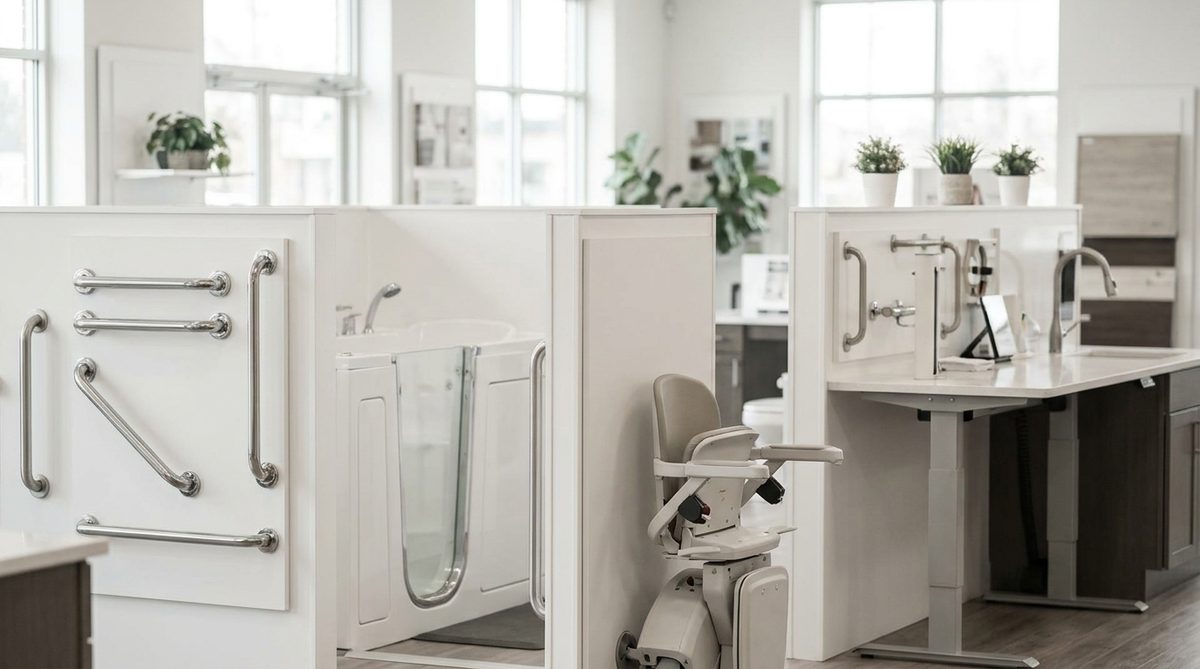
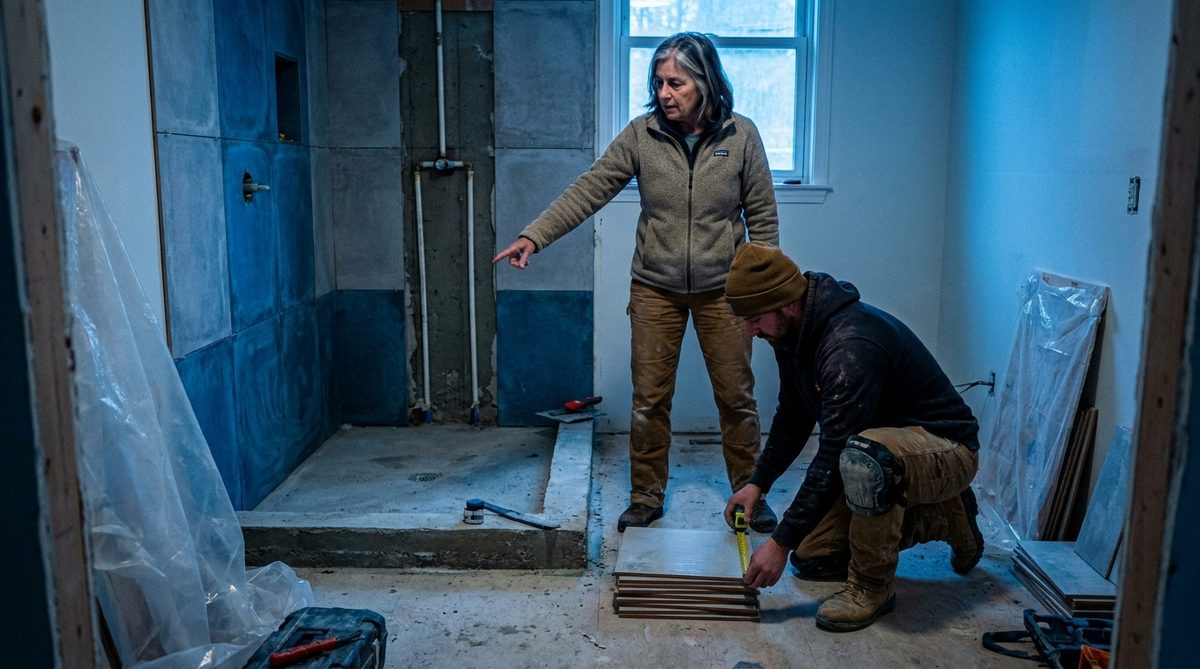
The bathroom is the most dangerous room in the house for older adults — and the most expensive to modify. A full accessible bathroom remodel with a curbless shower, comfort-height toilet, grab bars, and non-slip flooring runs between $8,000 and $25,000 depending on your existing layout and plumbing.
Individual components break down roughly like this: professional grab bar installation costs $150 to $350 per bar (including blocking behind drywall). A walk-in tub ranges from $3,000 to $12,000 installed. A curbless or roll-in shower conversion starts around $4,500 and can reach $15,000 for custom work.
Kitchen Accessibility
Lowering countertops, installing pull-out shelving, adding lever-handle faucets, and improving lighting typically costs $5,000 to $15,000. If you’re also replacing appliances with front-control models (critical for wheelchair users or anyone with limited reach), add another $2,000 to $6,000.
Entrance and Mobility
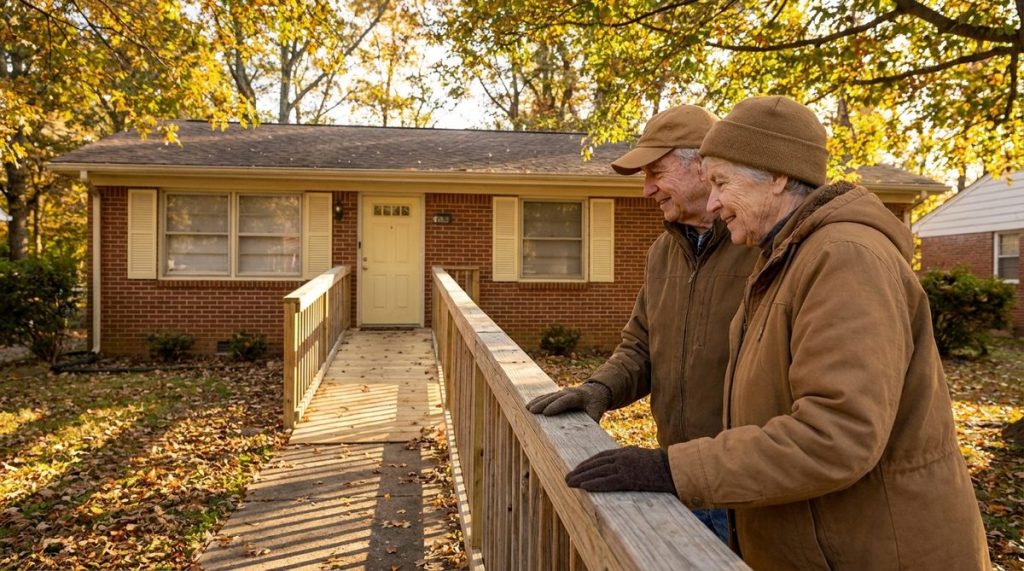
A basic wheelchair ramp costs $1,000 to $8,000 depending on length and materials. Widening interior doorways runs $300 to $1,500 per door. A stair lift for a straight staircase averages $3,000 to $5,000 installed, while curved staircase models can hit $10,000 to $15,000. A home elevator — which more clients ask about than you’d expect — starts around $20,000.
Flooring
Replacing carpet with non-slip, low-transition flooring throughout a typical 1,500-square-foot home costs $6,000 to $14,000. This is one of the modifications people resist because it feels cosmetic, but falls caused by carpet edges and slippery surfaces account for over 800,000 hospitalizations annually among older Americans, according to the National Council on Aging.
Smart Home and Safety Technology
A comprehensive smart home setup — including a medical alert system, smart locks, automated lighting, video doorbell, and voice-activated controls — runs $1,500 to $5,000 upfront plus $50 to $150 monthly for monitoring services. If you’ve been hesitant about these technologies, I’d encourage you to check out 6 myths about aging-in-place technology that hold you back — many of the objections I hear are based on outdated information.
A Step-by-Step Budgeting Framework That Actually Works
After assessing hundreds of homes, I’ve developed a budgeting approach I call the “Three Horizon” method. It breaks aging in place costs into manageable planning windows so you’re not trying to fund everything at once.
Horizon One: Immediate Safety (Now to 6 Months)
Start with a professional home safety assessment. Many Certified Aging-in-Place Specialists offer these for $200 to $500, and some Area Agencies on Aging provide free basic evaluations. This assessment identifies fall hazards, accessibility barriers, and urgent repairs.
Your immediate-action budget should cover:
- Removing tripping hazards (loose rugs, raised thresholds, cluttered pathways)
- Installing basic grab bars in the primary bathroom
- Adding motion-activated lighting in hallways, stairs, and bathrooms
- Securing handrails on all staircases
- Checking smoke detectors, carbon monoxide alarms, and ensuring a fire extinguisher is accessible
Expected cost: $500 to $3,000. This is the highest-impact, lowest-cost phase — and the one most people skip entirely.
Horizon Two: Strategic Upgrades (6 Months to 3 Years)
This is where you tackle the bigger modifications based on your specific health trajectory and mobility needs. Work with your primary care physician and your CAPS specialist to prioritize. If you have arthritis progressing in your hands, lever handles and touchless faucets move up the list. If balance is your primary concern, the bathroom renovation takes priority.
Budget $10,000 to $40,000 for this phase, depending on your home’s current condition and your specific needs. I recommend opening a dedicated savings account or setting aside a portion of your home equity specifically for these modifications.
Horizon Three: Long-Term Sustainability (3 to 10+ Years)
This horizon covers major systems — roof replacement, HVAC upgrades, potential additions like a first-floor bedroom suite or a home elevator. It also includes the ongoing cost of home maintenance services as your ability to handle physical tasks changes.
Budget $20,000 to $60,000 over this period. Yes, that number is large, but spread over a decade and planned proactively, it’s far more manageable than the alternative: a crisis-driven move to assisted living that costs $4,500 to $6,000 per month in most U.S. markets.
Smart Ways to Reduce Aging in Place Costs Without Cutting Corners
Tap Into Programs You’re Already Paying For
Federal, state, and local programs exist specifically to help older homeowners fund modifications, but they’re chronically underutilized. Here are the ones I point clients to most often:
- USDA Rural Development Grants: If you live in a qualifying rural area and are over 62 with income below your county’s limit, you may qualify for grants up to $10,000 for home repairs and accessibility modifications.
- HUD Section 504 Home Repair Program: Offers loans and grants for very-low-income homeowners over 62.
- State-level Medicaid waivers: Many states cover home modifications under Home and Community-Based Services waivers. Eligibility varies significantly — check with your state’s Medicaid office.
- Veterans Affairs (VA) grants: The Specially Adapted Housing (SAH) and Special Housing Adaptation (SHA) grants provide up to $109,986 (2025 figure) for eligible veterans with service-connected disabilities.
- Nonprofit programs: Organizations like Rebuilding Together and local Habitat for Humanity affiliates provide free or low-cost home modifications for qualifying seniors.
Time Your Projects Strategically
Contractor rates follow seasonal patterns. In most U.S. regions, you’ll get better pricing — and more attentive work — if you schedule interior renovations between November and February, when demand drops 15% to 25%. Exterior projects like ramp installation are best scheduled for early spring or late fall.
I also recommend bundling projects. Hiring a contractor for a bathroom renovation, doorway widening, and flooring replacement all at once typically costs 10% to 20% less than doing each project separately, because you’re sharing mobilization costs and giving the contractor a larger, more efficient job.
Choose Modifications That Do Double Duty
The smartest aging-in-place investments are the ones that improve your home’s value while also improving your safety. A curbless shower, for example, is a high-end design feature that buyers love — it’s not just an “accessibility modification.” The same goes for lever-handle doors, wider hallways, and first-floor master suites. According to Better Homes & Gardens, universal design features can increase a home’s resale appeal across all buyer demographics, not just older adults.
This mindset shift matters, especially if you’re concerned about overcapitalizing. You’re not just spending money on medical equipment — you’re investing in a home that works better for everyone who uses it.
The Biggest Mistake I See: Ignoring the Health-Home Connection
Your home and your health are not separate budget categories. They’re deeply interconnected. A home that’s difficult to navigate discourages movement, which accelerates physical decline. Poor lighting contributes to falls. An inaccessible kitchen leads to worse nutrition. Isolation in a multi-story home with stairs you’re afraid to use can contribute to depression.
The National Institute on Aging emphasizes that the home environment is one of the strongest predictors of health outcomes for older adults. When I assess a home, I’m not just looking at grab bars and ramp angles — I’m evaluating whether this environment supports the whole person. Can you get outside easily? Can you prepare healthy meals? Can you maintain social connections?
Building healthy routines matters just as much as installing the right hardware. For a holistic perspective on this, I recommend reading about 7 healthy habits for aging well in your 60s, 70s, and beyond — it covers the behavioral side of what I see as a two-part equation.
When Aging in Place Isn’t the Right Financial Decision
I believe strongly in helping people stay home safely. It’s my career and my passion. But I’d be doing you a disservice if I didn’t address this honestly: aging in place is not always the most cost-effective choice, and it’s not always the safest one.
If your home requires $80,000 or more in modifications, if it’s in a location far from medical facilities and family support, or if your care needs are escalating beyond what in-home services can manage, then relocating to a more suitable home — or a well-run continuing care retirement community — may actually be the smarter financial move.
Run the numbers honestly. Compare the total 10-year cost of modifying and maintaining your current home (including property taxes, insurance, utilities, maintenance, and in-home care) against the cost of alternative housing. Sometimes the math surprises people in both directions.
Your Action Plan Starting This Week
I want to leave you with something concrete you can do right now, not someday. Here’s what I’d suggest for this week:
- Walk through your home with fresh eyes. Pretend you’re using a walker or wheelchair. Where are the bottlenecks? Which doors are too narrow? Where would you grab for support and find nothing?
- Request a home assessment. Contact the National Association of Home Builders at nahb.org to find a CAPS-certified professional near you. Many offer initial consultations for under $300.
- Open a dedicated “home aging” savings account. Even $200 a month adds up to $7,200 in three years — enough to cover most Horizon One modifications and start on Horizon Two.
- Check your eligibility for assistance programs. Call your local Area Agency on Aging (find yours at eldercare.acl.gov or call 1-800-677-1116). They can screen you for programs you might not know exist.
- Talk to your family. Aging in place works best when the people who care about you understand the plan. Share your budget, your priorities, and your timeline. These conversations are easier before a crisis than during one.
The Bottom Line on Aging in Place Costs
Aging in place costs more than most people expect — but it doesn’t have to catch you off guard. With proactive planning, smart budgeting, and a clear-eyed assessment of both your home and your health, staying in the home you love is achievable for millions of older Americans. The key is starting early, spending strategically, and refusing to let urgency drive decisions that should be made thoughtfully.
In my experience, the people who age in place most successfully aren’t the ones with the biggest budgets. They’re the ones who planned ahead, asked for help when they needed it, and treated their home as an evolving space that should grow with them — not a museum that stays frozen in time.
Your home kept you safe when your kids were small. With the right modifications and a realistic budget, it can keep you safe for decades to come.
Frequently Asked Questions
How much does it cost to make a home safe for aging in place?
The total cost varies widely based on your home's current condition and your needs. Basic safety upgrades like grab bars and improved lighting run $500 to $3,000, while comprehensive modifications including bathroom renovations, flooring, and accessibility features typically range from $30,000 to $100,000 over time. Planning early and phasing projects over several years helps manage costs significantly.
Does Medicare cover aging-in-place home modifications?
Traditional Medicare does not cover home modifications like grab bars, ramps, or bathroom renovations. However, some Medicare Advantage plans offer limited home safety benefits. Medicaid may cover modifications through Home and Community-Based Services waivers in many states. Veterans may qualify for VA Specially Adapted Housing grants worth up to $109,986 in 2025.
What is the most important home modification for aging in place?
Bathroom accessibility is consistently the highest-priority modification. The bathroom is where the majority of in-home falls occur among older adults. Installing grab bars, converting to a curbless or walk-in shower, adding non-slip flooring, and ensuring adequate lighting can dramatically reduce fall risk and are the modifications most aging-in-place specialists recommend first.
Is aging in place cheaper than moving to assisted living?
In many cases, yes — but not always. Assisted living averages $4,500 to $6,000 per month nationally, which amounts to $54,000 to $72,000 per year. Aging in place can cost significantly less if your home needs only moderate modifications and you don't require extensive in-home care. However, if your home requires major renovations or your care needs are high, the costs can become comparable or even exceed assisted living over time.
About Marcus Bell, Certified Aging-in-Place Specialist (CAPS)
Marcus Bell is a Certified Aging-in-Place Specialist (CAPS) with 14 years of experience helping American seniors create safer, more comfortable living environments. He has consulted on hundreds of home modifications — from bathroom safety upgrades to smart home installations — and writes extensively about the products, services, and strategies that help older adults live independently for longer. At Daily Trends Now, Marcus covers home improvement, aging-in-place solutions, gardening, and practical lifestyle tips for seniors.