

Key Takeaways
- Most aging in place modifications don't require a massive budget — strategic, phased upgrades can start for under $2,000.
- The biggest myth is that aging in place means never needing help; smart planning actually integrates support services early.
- Waiting until after a fall or health crisis to modify your home costs 3 to 5 times more than proactive planning.
- Technology and community resources have dramatically changed since many of these myths took root, making aging in place more accessible than ever.
Why So Many Retirees Get Aging in Place Wrong
Every week, I sit across from homeowners who’ve been scared into inaction by something they read online or heard from a well-meaning neighbor. They tell me aging in place costs six figures, that it only works if you’re perfectly healthy, or that their 1970s ranch house is simply “too old” to modify. In my 14 years as a Certified Aging-in-Place Specialist, I’ve watched these aging in place myths drain bank accounts, delay critical safety upgrades, and push people toward assisted living facilities they never actually needed.
The truth is more encouraging — and more nuanced — than the headlines suggest. Yes, aging in place can cost more than expected if you approach it without a plan. But the myths I’m about to bust are the real reason people overspend, underprepare, or give up entirely.
Let’s set the record straight on seven of the most persistent misconceptions — and what the evidence actually shows.
Myth 1: Aging in Place Requires a $50,000+ Renovation
This is the myth I encounter most often, and it’s the one that does the most damage. A 2024 survey from the AARP found that 77% of adults over 50 want to remain in their current home as they age, yet nearly half haven’t made a single modification because they believe it’s prohibitively expensive.
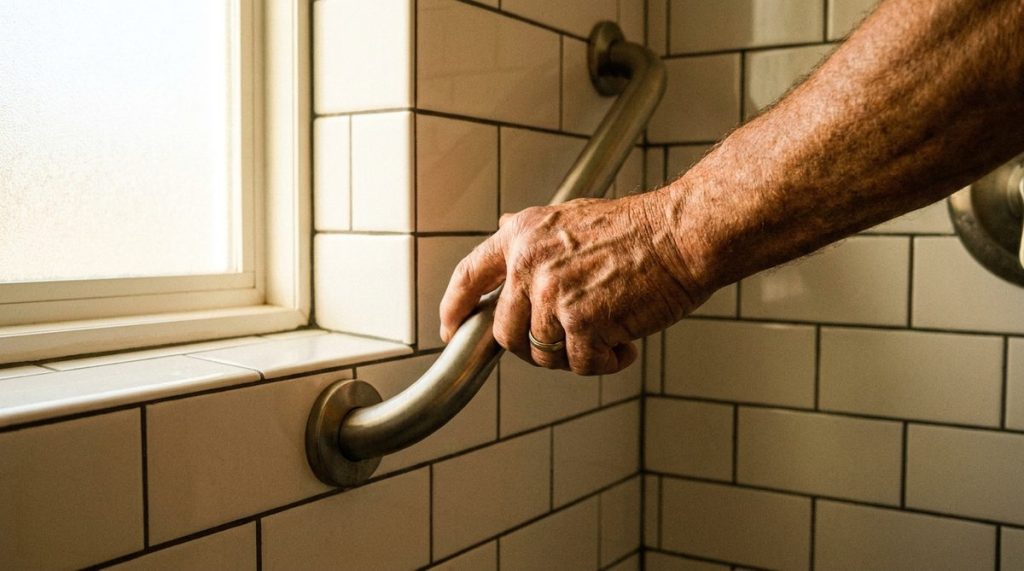
Here’s what I tell my clients: the average cost of essential first-phase aging-in-place modifications — grab bars, lever door handles, improved lighting, non-slip flooring in the bathroom — runs between $1,200 and $2,500. That’s not a typo. The projects that prevent the most common injury (bathroom falls) are also among the cheapest.
The $50,000-plus figures you see in headlines usually refer to comprehensive whole-home renovations: widening every doorway, adding a first-floor bedroom suite, or installing an elevator. Those are real projects, but they’re not where most people need to start. A phased approach — tackling the highest-risk areas first, then budgeting for larger projects over two to five years — is how experienced specialists actually plan these modifications.
What a Smart $1,500 Budget Actually Covers
- Bathroom grab bars (3–4 locations): $200–$400 installed, covering the shower, tub entry, and beside the toilet.
- Non-slip flooring treatment or adhesive strips in the bathroom and kitchen: $100–$200.
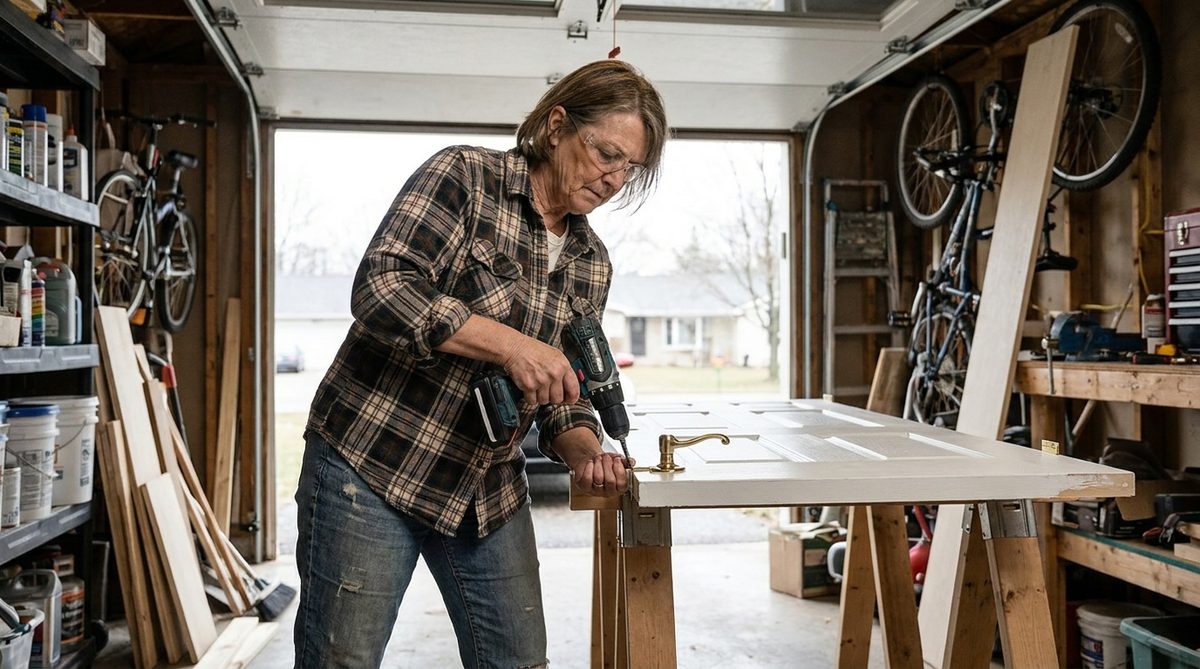
- Lever-style door handles to replace round knobs on 6–8 interior doors: $150–$250.
- Motion-activated LED lighting along the hallway and stairways: $80–$150.
- Handheld showerhead with a slide bar: $75–$120 installed.
- Threshold ramps for 1–2 interior doorways: $50–$100.
- Smart doorbell with camera so you can see visitors without rushing to the door: $100–$250.
Total: roughly $755 to $1,470. That leaves room for a professional home safety assessment, which typically runs $200–$400 and is worth every cent.
Myth 2: You Should Wait Until You “Need” Modifications
This is the myth that breaks my heart. I can’t count the number of times I’ve been called in after a fall, a hip fracture, or a hospital discharge — when the homeowner is now under time pressure, emotionally overwhelmed, and facing rush-order contractor fees.
The National Council on Aging reports that one in four Americans aged 65 and older falls each year, and falls are the leading cause of both fatal and nonfatal injuries in that age group. Reactive modifications — done urgently after an incident — cost three to five times more than the same work planned proactively, according to data from the National Association of Home Builders’ aging-in-place program.
The ideal time to start modifying your home is in your mid-50s to early 60s, when you can spread costs, make thoughtful design choices, and integrate changes that actually improve your daily quality of life right now. Lever handles are easier for everyone. Better lighting makes cooking and reading more pleasant. A curbless shower feels like a spa upgrade, not a medical device.
Myth 3: Aging in Place Means Going It Completely Alone
There’s a persistent, almost romantic notion that aging in place means total self-sufficiency — no help, no services, just you and your home against the world. What I see most often is that this myth leads people to refuse support until they’re in crisis.
Successful aging in place almost always involves a layered support system. That might include a weekly housekeeper, a grocery delivery service, a part-time home health aide for specific tasks, or a neighborhood check-in network. The National Institute on Aging emphasizes that social connection and community support are as critical to aging well as physical safety modifications.
I often tell my clients that the strongest aging-in-place plan has three legs: home modifications, technology, and human support. Remove any one of those legs, and the whole thing becomes unstable. If you’re focused on building a comprehensive approach to healthy aging, it helps to understand all the factors involved — physical, social, nutritional, and more. The 6 Pillars of Healthy Aging After 50 That Actually Work is a solid framework for that bigger picture.
Myth 4: Your Home Is “Too Old” to Modify
I’ve worked in homes built in the 1920s, postwar Levittown-style ranches from the 1950s, and split-levels from the 1980s. Every single one of them was modifiable. The question was never “can we?” but “what’s the smartest sequence?”
Older homes actually have some advantages. Pre-1970s construction often features wider hallways, single-story layouts, and solid wood framing that supports grab bar installation without special reinforcement. The challenges — narrow bathroom doorways, raised thresholds, outdated electrical systems — are all solvable with standard contractor skills.
Common “Old Home” Problems and Their Real Costs
Narrow bathroom door (24 inches): Widening to 32–36 inches typically costs $300–$800, depending on whether load-bearing walls are involved. Offset hinges, which add 2 inches of clearance without any construction, cost $25–$40 per door.
Bathtub-only bathroom: Converting to a walk-in or roll-in shower runs $2,500–$6,000 for a basic but well-done installation. This is a bigger investment, but it’s also the single modification most likely to prevent a serious injury.
No first-floor bedroom: If stairs become impassable, a stairlift ($2,000–$5,000 installed) is far cheaper than adding a room. And many homes have a first-floor den or dining room that converts to a bedroom for under $1,000.
Myth 5: Technology Is Too Complicated for Older Adults
This myth is both outdated and mildly insulting. The 65-plus demographic is the fastest-growing segment of smartphone users in the U.S., and the age-tech industry has exploded with products specifically designed for simplicity.
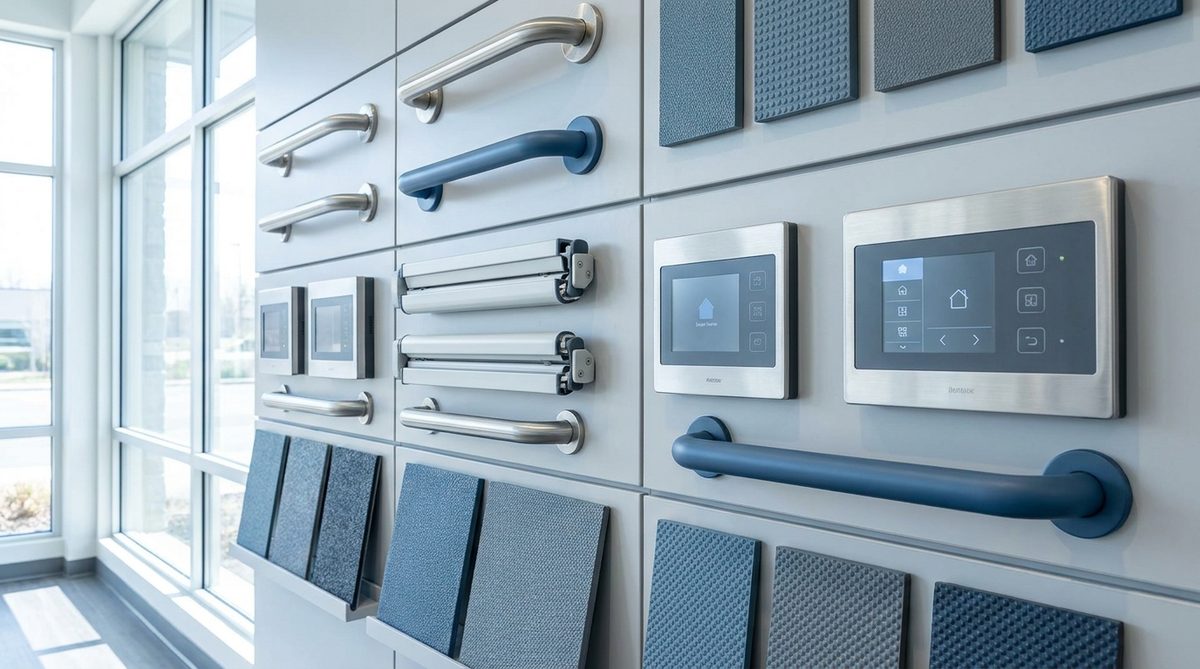
Today’s age tech devices that help seniors age in place safely include voice-activated smart speakers that control lights, locks, and thermostats; medical alert systems with automatic fall detection; smart medication dispensers with phone alerts; and video doorbells that let you speak with visitors from anywhere in the house.
The key isn’t buying every gadget on the market — it’s choosing three to five devices that address your specific risks. Someone with low vision needs different technology than someone with mobility issues. A good aging-in-place specialist (or an occupational therapist who does home assessments) can help you build a tech stack that’s genuinely useful rather than overwhelming.
Myth 6: Medicare or Insurance Covers Home Modifications
I wish this one were true. Traditional Medicare does not cover home modifications like grab bars, ramp installations, or bathroom renovations. It covers some durable medical equipment (hospital beds, wheelchairs) and short-term home health services after a qualifying hospital stay, but the structural changes that make your home safer? Those come out of pocket.
However, there are funding sources most people don’t know about:
- Medicaid Home and Community-Based Services (HCBS) waivers: Available in most states for qualifying low-income seniors, these can cover significant home modifications.
- VA Specially Adapted Housing grants: Veterans with service-connected disabilities may qualify for grants up to $109,986 (2024 figure) for home modifications.
- USDA Rural Development loans and grants: Available to low-income homeowners in rural areas for home repairs, including accessibility upgrades. Grants of up to $10,000 are available for those 62 and older.
- State and local Area Agency on Aging programs: Many offer small grants ($500–$3,000) for safety modifications. Call your local AAA — the resource is underused.
- Medicare Advantage plans: Some MA plans have started covering limited home safety modifications as a supplemental benefit. Check your specific plan’s 2025 benefits summary.
Don’t assume you’re ineligible without checking. And be cautious about contractors who claim they can “get Medicare to pay for it” — that’s a red flag. If you want to protect yourself from misleading offers, understanding common scam tactics targeting older adults is essential.
Myth 7: Assisted Living Is Always Safer Than Staying Home
This is the myth that generates the most emotional conversations with families. The assumption is that a professionally staffed facility must be inherently safer than a private home. The data tells a more complicated story.
A 2023 study published in the Journal of the American Geriatrics Society found that older adults who aged in place with appropriate modifications and community support had comparable health outcomes to those in assisted living facilities — and reported significantly higher satisfaction with their daily lives. Fall rates in assisted living facilities, while monitored, are not dramatically lower than in well-modified private homes.
The average cost of assisted living in the United States was $64,200 per year in 2024, according to Genworth’s Cost of Care Survey. Even a comprehensive $30,000 home modification — which is on the high end — pays for itself in under six months compared to facility-based care. Add in a part-time home health aide at $15–$20 per hour for 20 hours a week, and you’re still looking at roughly $30,000–$40,000 annually — a significant savings.
This isn’t to say assisted living is never the right choice. For individuals with advanced dementia, complex medical needs requiring 24-hour nursing, or profound social isolation, a good facility can be lifesaving. But for the majority of adults in their 60s and 70s planning ahead? A well-modified home is a genuinely competitive option.
How to Start: A Practical 5-Step Aging in Place Plan
If you’ve read this far and you’re ready to move past the myths, here’s the framework I use with every client:
- Get a professional home safety assessment. Look for a Certified Aging-in-Place Specialist (CAPS) through the National Association of Home Builders directory, or request an occupational therapy home evaluation through your doctor. Cost: $200–$400.
- Prioritize by risk. Address the bathroom first (it’s where 80% of in-home falls occur), then stairways, then the kitchen, then entryways.
- Set a phased budget. Year one: $1,500–$2,500 for essential safety upgrades. Years two through five: budget $1,000–$3,000 annually for larger projects like shower conversions or improved lighting systems.
- Build your support network now. Identify a reliable handyperson, research local meal delivery and transportation services, and talk to your neighbors about a mutual check-in system.
- Review and update annually. Your needs at 62 won’t be your needs at 75. Schedule a yearly walk-through of your home with fresh eyes — or invite a friend to spot hazards you’ve become blind to.
The Bottom Line on Aging in Place Myths
The biggest risk isn’t that aging in place is too expensive or too complicated. The biggest risk is that these persistent aging in place myths convince you to do nothing. Every month of inaction is a month of unnecessary risk — and potentially a month closer to an emergency that forces expensive, rushed decisions.
In my experience, the people who age in place most successfully aren’t the wealthiest or the healthiest. They’re the ones who started planning early, stayed honest about their changing needs, and refused to let myths make their decisions for them.
Your home has been taking care of you for decades. With the right modifications, a realistic budget, and a willingness to ask for help when you need it, there’s a very good chance it can keep taking care of you for decades more.
About Marcus Bell, Certified Aging-in-Place Specialist (CAPS)
Marcus Bell is a Certified Aging-in-Place Specialist (CAPS) with 14 years of experience helping American seniors create safer, more comfortable living environments. He has consulted on hundreds of home modifications — from bathroom safety upgrades to smart home installations — and writes extensively about the products, services, and strategies that help older adults live independently for longer. At Daily Trends Now, Marcus covers home improvement, aging-in-place solutions, gardening, and practical lifestyle tips for seniors.