
Key Takeaways
- Healthy aging after 50 depends on six interconnected pillars, not just one magic bullet like diet or exercise alone.
- Strength training just twice a week can reduce fall risk by up to 40% and preserve independence for years longer.
- Social connection is as critical to longevity as quitting smoking, yet over 25% of adults 65+ experience social isolation.
- Proactive health screening and financial planning work together to remove the biggest barriers to aging well at home.
Why “Healthy Aging” Isn’t Just a Buzzword — It’s a Blueprint
In my 18 years as a board-certified geriatric physical therapist, I’ve watched the conversation around aging shift dramatically. We used to talk about managing decline. Now, in 2025 and heading into 2026, the science is clear: how you age is largely within your control, and the strategies that matter most aren’t complicated — they’re consistent.
A 2024 study funded by the National Institute on Aging found that adults who adopted at least four of six core health behaviors after age 50 lived an average of 12.2 years longer free of chronic disability compared to those who adopted none. Twelve years. That’s not a marginal gain — that’s a different life.
What I see most often in my clinic is people who focus on one thing — usually exercise or diet — while ignoring the pillars that quietly erode their independence. So let’s break down all six pillars of healthy aging after 50 that the research and my clinical experience say actually move the needle.
1. Strength and Balance Training: The Non-Negotiable Foundation
I’ll be direct: if you’re over 50 and not doing some form of resistance training, you’re accelerating muscle loss at a rate of 3–8% per decade. After 60, that rate increases. The clinical term is sarcopenia, and it’s the single biggest predictor of falls, fractures, and loss of independence I encounter in my practice.
The CDC reports that one in four Americans aged 65 and older falls each year, and falls are the leading cause of injury-related death in that age group. But here’s the encouraging part: structured strength and balance programs reduce fall risk by 23–40%, depending on the study.
What Actually Works
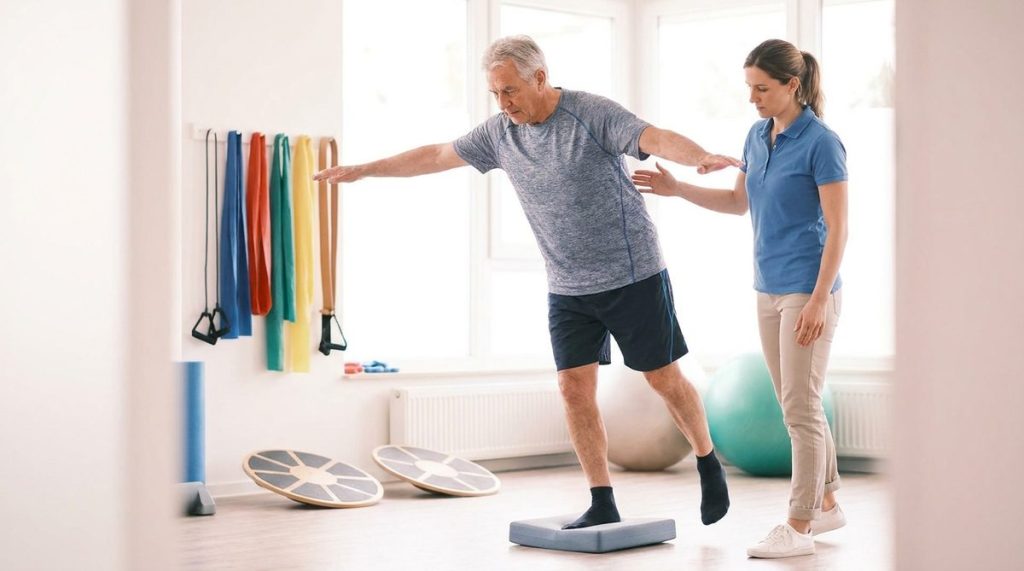
You don’t need a gym membership or heavy barbells. In my clinic, we get remarkable results with bodyweight exercises, resistance bands, and targeted balance drills. The key is progressive overload — gradually increasing the challenge so your muscles and nervous system keep adapting.
- Start with two sessions per week of 20–30 minutes focusing on squats (even to a chair), wall push-ups, and standing hip abduction.
- Add single-leg balance holds for 30 seconds each side, progressing to eyes-closed or on a foam pad.
- Include functional movements like step-ups, farmer’s carries (holding weighted bags while walking), and sit-to-stands without using your hands.
- Track your progress monthly — can you stand from a chair faster? Hold balance longer? These metrics matter more than the number on a scale.
- Consult a physical therapist for a baseline assessment, especially if you have arthritis, osteoporosis, or a history of joint replacement.
I often tell my patients that the best exercise program is the one you’ll actually do consistently. Twice a week is the minimum effective dose. Three times is optimal.

2. Nutrition That Fights Inflammation and Preserves Muscle
Diet advice for seniors is everywhere, and most of it is frustratingly vague. So let me be specific about what the evidence shows matters most after 50: protein intake, anti-inflammatory foods, and hydration.
The current research suggests adults over 50 need 1.0–1.2 grams of protein per kilogram of body weight daily — significantly more than the outdated RDA of 0.8 grams. For a 160-pound person, that’s roughly 73–87 grams of protein per day. Most of the patients I assess are getting less than half of that.
The Inflammation Connection
Chronic low-grade inflammation — sometimes called “inflammaging” — drives nearly every age-related disease, from heart disease to Alzheimer’s to arthritis. A Mediterranean-style eating pattern rich in fatty fish, olive oil, leafy greens, nuts, and berries has been shown to reduce inflammatory markers like C-reactive protein by up to 20% in clinical trials.
If you want to go deeper on how dietary changes can actually shift your biological clock, I’d recommend reading about 7 diet changes that can reverse biological age after 50 — the science there is genuinely compelling.
3. Sleep: The Recovery Engine Most Seniors Ignore
Here’s a statistic that should concern anyone over 60: approximately 50% of older adults report chronic sleep difficulties, according to the Mayo Clinic. And poor sleep isn’t just about feeling tired. It’s linked to accelerated cognitive decline, increased fall risk (due to impaired reaction time), weakened immune function, and higher rates of depression.
What I see most often is patients who have accepted poor sleep as “just part of getting older.” It isn’t. Or at least, it doesn’t have to be.
Evidence-Based Sleep Strategies for Older Adults
Cognitive behavioral therapy for insomnia (CBT-I) is now considered the first-line treatment for chronic insomnia in older adults — ahead of medications. It has a 70–80% success rate and zero side effects. Many programs are available online or through your primary care provider.
Other high-impact changes include maintaining a consistent wake time (even on weekends), limiting caffeine after noon, keeping the bedroom at 65–68°F, and addressing sleep apnea — which affects roughly 56% of adults over 65 but remains undiagnosed in the majority of cases.
4. Social Connection: The Longevity Factor That Surprises Everyone
If I could prescribe one thing that rivals exercise in its impact on healthy aging, it would be meaningful social connection. A landmark meta-analysis published in PLOS Medicine found that social isolation increases mortality risk by 26% — comparable to smoking 15 cigarettes a day.
Yet more than one in four Americans aged 65 and older lives alone, and the Surgeon General’s 2023 advisory on loneliness identified social disconnection as a public health crisis. This isn’t soft science. Loneliness raises cortisol levels, impairs immune function, accelerates cognitive decline, and increases the risk of dementia by 50%.
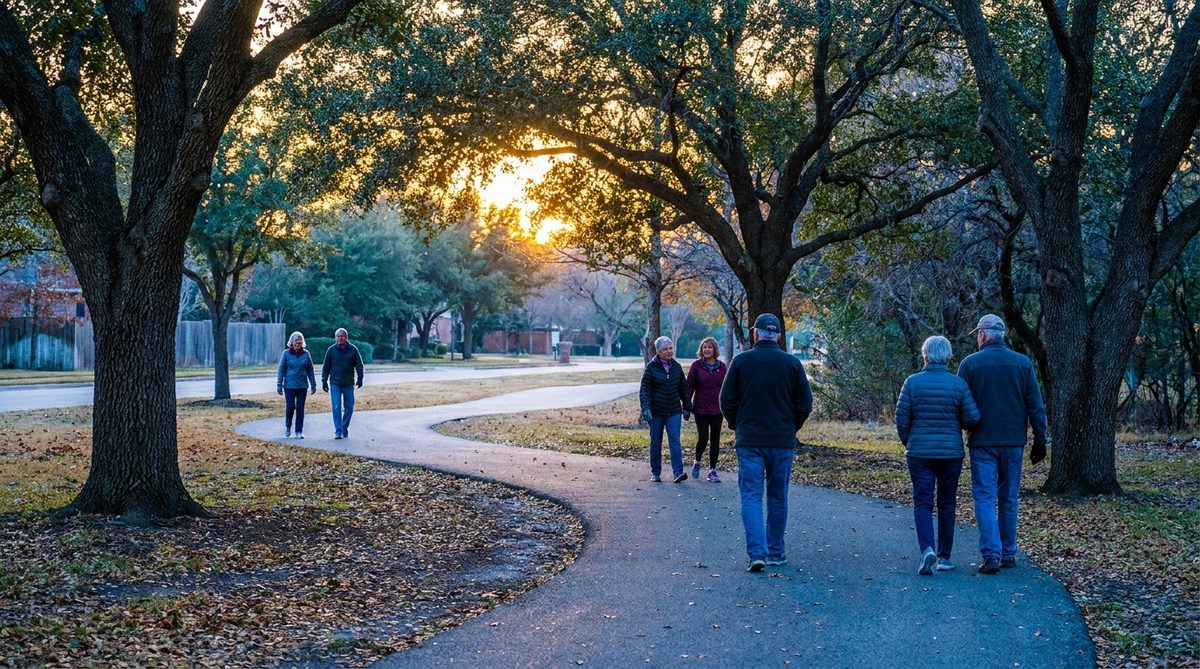
Practical Ways to Stay Connected
I recommend patients treat social engagement like a health appointment — schedule it. Join a walking group, volunteer at a local school, take a class at the community center, or simply commit to one phone call a day with a friend or family member. The format matters less than the consistency.
For those who plan to age at home — and 90% of adults over 65 say they do — social infrastructure is just as important as physical modifications. If you’re thinking about long-term planning, this smart guide on aging-in-place costs covers dimensions most people overlook, including how isolation factors into the equation.
5. Proactive Screening and Chronic Disease Management
Healthy aging after 50 requires a shift from reactive medicine to proactive health management. That means staying current on screenings, understanding your numbers, and building a relationship with providers who specialize in age-related care.
Here are the screenings that matter most and are frequently missed or delayed:
- Bone density (DEXA scan): Recommended for all women at 65 and men at 70, or earlier with risk factors. Osteoporosis affects 10 million Americans, and another 44 million have low bone density.
- Colorectal cancer screening: The U.S. Preventive Services Task Force recommends screening from age 45 to 75.
- Cognitive screening: The Medicare Annual Wellness Visit includes a cognitive assessment, but only about 50% of eligible adults take advantage of it.
- Blood pressure and A1C monitoring: Hypertension and type 2 diabetes are the two most common chronic conditions in adults over 60 and are profoundly modifiable.
- Fall-risk assessment: Ask your doctor or physical therapist for a Timed Up and Go (TUG) test. It takes 10 seconds and is remarkably predictive.
Managing What You Already Have
Roughly 80% of adults over 65 have at least one chronic condition, and 68% have two or more. Managing these conditions effectively — through medication adherence, lifestyle modification, and regular follow-up — is a pillar of healthy aging that doesn’t get enough attention compared to the more glamorous topics like longevity supplements.
Recent research has explored whether it’s truly possible to slow biological aging at the cellular level. A federally funded study worth up to $22 million is now investigating treatments that may do exactly that. For context on what the current science shows, researchers have already demonstrated measurable reversal of biological age in controlled trials.
6. Mental Health and Cognitive Fitness: The Pillar Nobody Talks About Enough
Depression affects approximately 7 million American adults over 65, yet fewer than half receive treatment. Anxiety disorders are nearly as common. And cognitive decline — which is distinct from dementia — affects an estimated 12–18% of adults over 60.
In my clinical practice, I see the downstream effects of untreated mental health conditions every single day. Patients who are depressed move less, eat poorly, skip medications, withdraw socially, and fall more often. It’s a cascade, and mental health is frequently the upstream trigger.
What You Can Do Right Now
First, normalize the conversation. Mental health care is medical care, full stop. If you’ve noticed persistent sadness, loss of interest, excessive worry, or memory changes lasting more than two weeks, bring it up with your primary care provider.
For cognitive fitness specifically, the evidence supports a combination approach:
- Aerobic exercise (150 minutes per week of moderate intensity) is the single most evidence-backed intervention for preserving cognitive function.
- Novel learning — picking up a musical instrument, studying a language, or learning a new skill — builds cognitive reserve more effectively than passive brain games.
- Stress management through mindfulness meditation, which has been shown in randomized controlled trials to reduce cortisol and improve attention in older adults.
- Hearing correction: A 2023 study in The Lancet found that hearing aid use in at-risk adults reduced cognitive decline by 48% over three years. If you’re avoiding hearing aids, please reconsider.
Bringing the 6 Pillars Together: Your Personal Action Plan
The mistake I see most people make is trying to overhaul everything at once, burning out within three weeks, and going back to old habits. Healthy aging after 50 is a practice, not a project.
Here’s what I recommend to patients starting from scratch:
- Week 1–2: Pick one pillar that feels most urgent or achievable. For most people, that’s movement — start with two 20-minute strength sessions per week.
- Week 3–4: Add a second pillar. Increase your daily protein intake to at least 60 grams and reduce processed sugar.
- Month 2: Address sleep. If you’re sleeping fewer than 6 hours or waking unrefreshed, explore CBT-I or talk to your doctor about a sleep study.
- Month 3: Schedule overdue screenings and build in one consistent social activity per week.
- Ongoing: Assess your mental health honestly every month. Journaling, therapy, or even a structured check-in with a trusted friend can make this sustainable.
The Bottom Line on Aging Well
Healthy aging after 50 isn’t about chasing perfection or reversing the clock through expensive interventions. It’s about building a foundation across these six pillars — movement, nutrition, sleep, social connection, proactive medical care, and mental health — that keeps you functional, independent, and engaged in the life you want to live.
In my 18 years of working with older adults, the patients who age best aren’t necessarily the ones with the best genetics or the most money. They’re the ones who take consistent, informed action across multiple dimensions of health. And it’s never too late to start. I’ve seen 78-year-olds rebuild strength they hadn’t had in a decade. I’ve seen isolated widowers transform their health by joining a community walking group. The body and mind remain remarkably adaptable — if you give them the right inputs.
Start with one pillar this week. Build from there. Your future self will thank you.
Frequently Asked Questions
What is the most important pillar of healthy aging after 50?
While all six pillars work together, strength and balance training consistently shows the greatest impact on maintaining independence. Falls are the leading cause of injury-related death in adults over 65, and resistance training twice per week can reduce fall risk by up to 40%. That said, neglecting any single pillar — especially mental health or social connection — can undermine progress in the others.
How much exercise do seniors really need each week?
The CDC recommends at least 150 minutes of moderate-intensity aerobic activity per week plus two sessions of muscle-strengthening exercises for adults over 65. However, any amount of movement above a sedentary baseline provides meaningful benefits. Even 10-minute walks after meals improve blood sugar regulation and cardiovascular health.
Can you actually reverse biological aging after 50?
Emerging research suggests that certain lifestyle interventions — particularly dietary changes, exercise, sleep optimization, and stress management — can measurably slow and even partially reverse biological aging markers like DNA methylation. A federally funded $22 million study is currently investigating pharmaceutical approaches to slowing human aging as well. The science is promising but still evolving.
Is it too late to start strength training at 70 or 80?
Absolutely not. Research published in the Journal of the American Geriatrics Society demonstrates that adults in their 80s and even 90s can gain significant muscle mass and strength through progressive resistance training. I have personally worked with patients in their late 70s who doubled their leg strength within 12 weeks of starting a structured program.
How does social isolation affect physical health in older adults?
Social isolation increases mortality risk by approximately 26%, comparable to smoking 15 cigarettes per day. It elevates stress hormones like cortisol, weakens immune response, raises blood pressure, and increases the risk of dementia by 50%. The U.S. Surgeon General has classified loneliness as a public health epidemic, particularly among older Americans living alone.
About Michael Torres, DPT, Board-Certified Geriatric Specialist
Michael Torres is a Doctor of Physical Therapy and board-certified geriatric clinical specialist with 18 years of experience working with older adults. He has treated thousands of seniors recovering from hip replacements, managing arthritis, rebuilding strength after hospitalizations, and preventing dangerous falls. At Daily Trends Now, Michael writes practical guides on exercises, mobility, pain management, and the physical strategies that help seniors stay strong and independent.