

Key Takeaways
- Older adults lost over $4.8 billion to scams in 2024, a 43% increase from the previous year, according to the FBI.
- The belief that only "gullible" people fall for scams is a dangerous myth — sophisticated fraud tactics exploit trust, not ignorance.
- Technology tools like call-screening apps, credit freezes, and two-factor authentication are powerful defenses once you understand how to use them.
- Talking openly about scam attempts with family and friends is one of the most effective prevention strategies available.
The Scam Crisis Hiding in Plain Sight
When the FBI released its 2024 Internet Crime Report, the numbers stopped me cold. Americans over 60 reported losses exceeding $4.8 billion to fraud — a staggering 43% jump from the year before. And that figure almost certainly undercounts the real damage, because shame and embarrassment keep countless victims silent.
In my 14 years working in cybersecurity and digital privacy research, I’ve watched scams targeting older adults evolve from clumsy Nigerian prince emails into sophisticated, multi-layered operations that can fool anyone. The criminals have gotten smarter. Our assumptions about who falls for scams have not kept up.
What concerns me most isn’t the scams themselves — it’s the myths surrounding them. These false beliefs create a sense of security that doesn’t exist, and they discourage people from taking the straightforward steps that actually work. Let me walk you through the five most dangerous myths I encounter, explain why each one is wrong, and show you what the evidence says you should do instead.
Myth #1: “I’m Too Smart to Fall for a Scam”
This is the myth that does the most damage, and I hear it constantly. The underlying assumption is that scam victims are naive, uneducated, or cognitively impaired. The data tells a completely different story.
A 2023 AARP study found that people who rated themselves as highly knowledgeable about fraud were actually more likely to have lost money to a scam. Why? Overconfidence leads to lower vigilance. When you believe you’re immune, you stop looking for warning signs.
How Modern Scams Actually Work
Today’s scams targeting older adults don’t rely on you being foolish. They rely on triggering emotional responses — fear, urgency, trust, or compassion — that temporarily override rational thinking. A spoofed call from what appears to be your bank’s real phone number, telling you your account has been compromised, activates your fight-or-flight response. In that state, even a PhD in computer science (trust me, I’ve studied this) can make a snap decision they’d never make calmly.
Criminals now use AI-generated voice cloning to impersonate family members in distress. They scrape social media profiles to reference real names, real locations, and real life events. This isn’t about intelligence. It’s about psychological manipulation executed with military precision.
- Grandparent scams use cloned voices of actual grandchildren, sometimes pulled from a single TikTok or Facebook video
- Tech support scams display convincing pop-ups that mimic real Microsoft or Apple warnings
- Romance scams build genuine emotional relationships over weeks or months before requesting money
- Government impersonation scams spoof real agency phone numbers and reference actual case numbers
The truth: Acknowledging that you could be targeted is the single most protective mindset shift you can make.
Myth #2: “Scammers Only Contact You by Email”
If you’ve trained yourself to be cautious with email, that’s genuinely excellent. But believing email is the primary attack vector in 2025 leaves you exposed on every other front. The FTC’s most recent consumer data shows that phone calls remain the number one contact method for fraud targeting adults over 60, followed by text messages, social media, and even physical mail.
The Phone Is the Biggest Threat
Robocall technology has made it trivially cheap for criminals to place millions of calls per day. Call spoofing means the number on your caller ID can be made to look like your local bank, your doctor’s office, or the Social Security Administration. According to CISA, spoofed government phone numbers are now involved in an estimated 40% of reported impersonation scams.
I often tell my readers: if someone calls you claiming to be from a government agency or financial institution, hang up and call the official number printed on your card or statement. No legitimate organization will penalize you for verifying their identity. Ever.
Text Message Scams Are Surging
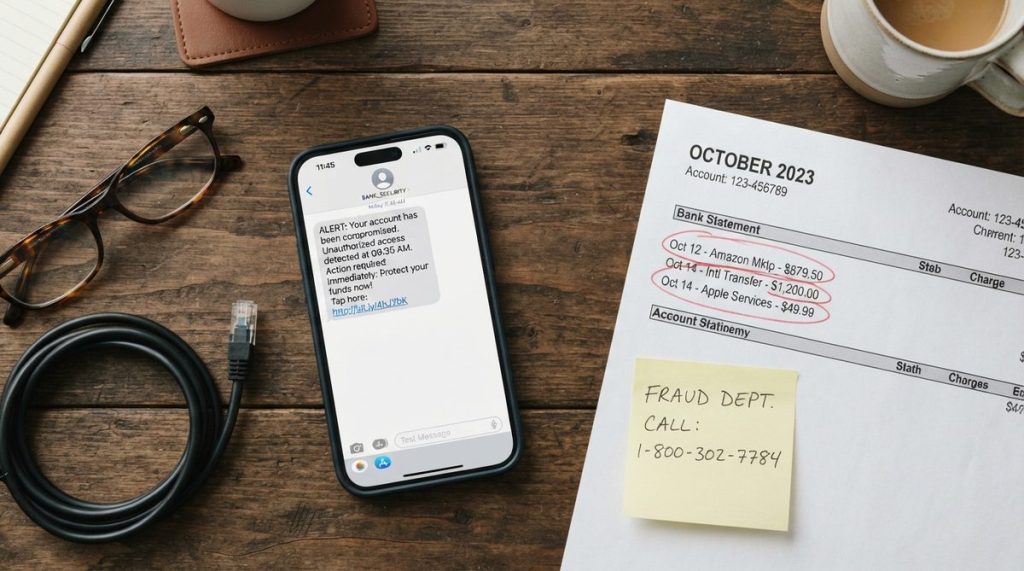
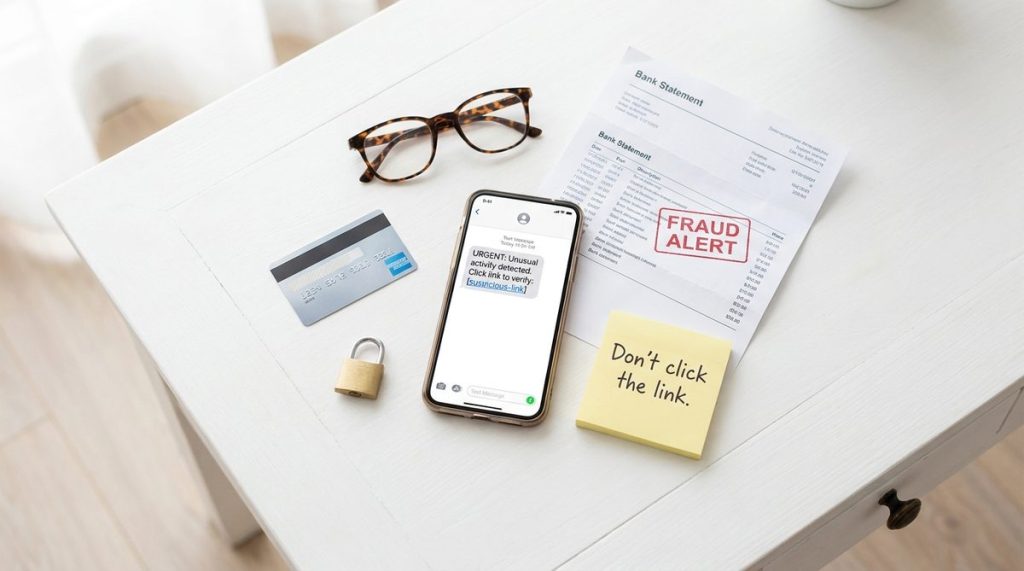
“Smishing” — phishing via SMS — increased by 300% between 2022 and 2024. These texts often look like shipping notifications, bank alerts, or toll payment reminders. They contain links that either harvest your login credentials or install malware on your phone. The rule is simple: never tap a link in an unexpected text message, even if it appears to come from a company you use.
If you’re exploring ways to make your phone work better for you — including built-in scam call screening — that ties directly into the broader conversation about age tech devices that help seniors age in place safely. The same technology that supports independent living can also protect you from fraud.
Myth #3: “My Bank Will Catch Fraud Before I Lose Money”
Banks have gotten significantly better at detecting unauthorized transactions — credit card fraud, for example, is often flagged within minutes. But here’s what most people don’t understand: the majority of elder fraud losses don’t involve someone stealing your money. They involve someone convincing you to send it willingly.
When you wire money, purchase gift cards, or transfer cryptocurrency at a scammer’s instruction, your bank sees a legitimate transaction initiated by the authorized account holder. There’s no fraud algorithm to catch because, technically, you authorized the payment.
The Gift Card Trap
In 2024, the FTC reported that gift cards were used as a payment method in roughly $217 million in reported fraud. Scammers demand gift cards because they’re essentially untraceable cash. Once you read those numbers off the back of the card, the money is gone within minutes, often laundered through international networks.
Let me be absolutely clear: no government agency, no utility company, no legitimate business will ever ask you to pay with gift cards. If someone makes this request, it is a scam. Full stop.
Wire Transfers and Cryptocurrency
Wire transfers are equally dangerous because they’re nearly impossible to reverse once completed. Cryptocurrency scams targeting older adults increased by 71% in 2024 according to the FBI. Scammers often walk victims through setting up crypto accounts at Bitcoin ATMs, coaching them through every step in a process designed to feel legitimate.
The financial devastation from these scams can be catastrophic, especially for retirees on fixed incomes who may already be navigating challenges like the biggest financial concerns facing retirees in 2026. Losing $50,000 or $100,000 to fraud at 70 is fundamentally different from losing it at 40 — there’s far less time and fewer opportunities to recover.
Myth #4: “I’ll Know a Scam When I See One”
This myth is a cousin of Myth #1, but it focuses specifically on the belief that scams are obvious — riddled with typos, absurdly unrealistic, easy to spot. That was largely true fifteen years ago. It is absolutely not true now.
AI Has Changed Everything
What I see most often in my research now are scam emails and messages that are grammatically flawless, professionally designed, and personalized with real details about the recipient. Generative AI tools allow criminals with minimal English skills to produce communications that read like they were written by a corporate marketing team. The days of spotting a scam by its bad grammar are over.
Deepfake video technology has also entered the fraud toolkit. In early 2025, the FBI issued a specific advisory about AI-generated video calls used in investment scams, where victims believed they were speaking face-to-face with a real financial advisor.
The “Long Con” Is Thriving
Some of the most devastating scams targeting older adults unfold over months. Romance scams on platforms like Facebook, dating apps, and even Words With Friends start with genuine-seeming conversation and emotional connection. Investment scams — sometimes called “pig butchering” — begin with small, profitable investments that build trust before the criminal encourages larger and larger deposits into fake platforms.
The Bermuda Dunes case that made national headlines in 2025 illustrates a particularly cruel variation: after an elderly couple lost their savings to an initial scam, a fake lawyer contacted them offering to recover the money — and stole even more. These “recovery scams” specifically target known victims, because the criminals know they’re both financially desperate and psychologically primed to trust someone offering help.
- Legitimate investments never guarantee returns or pressure you to act immediately
- Real attorneys don’t cold-call scam victims offering recovery services
- Genuine romantic partners never ask for money before meeting you in person
- Actual government agents never threaten arrest over the phone and demand immediate payment

Myth #5: “There’s Nothing I Can Really Do to Protect Myself”
This is perhaps the most heartbreaking myth, because it leads to resignation. After hearing story after story about billion-dollar fraud losses, it’s natural to feel helpless. But the evidence strongly supports that a handful of practical measures dramatically reduce your risk.
Freeze Your Credit — It’s Free and Powerful
A credit freeze prevents anyone from opening new accounts in your name. It’s free at all three major bureaus (Equifax, Experian, and TransUnion), takes about ten minutes to set up, and you can temporarily lift it whenever you need to apply for credit. The Consumer Reports security team has called credit freezes the single most underused fraud prevention tool available to consumers.
I recommend every adult over 50 freeze their credit proactively, not in response to a breach. The vast majority of identity theft relies on opening new accounts, and a credit freeze makes that nearly impossible.
Enable Two-Factor Authentication Everywhere
Two-factor authentication (2FA) adds a second verification step — usually a code sent to your phone — when logging into accounts. Even if a criminal obtains your password, they can’t get in without that second factor. Enable it on your email first, then your bank, then your social media accounts.
If the idea of setting up 2FA feels intimidating, ask a trusted family member to walk you through it. The process typically takes less than five minutes per account, and it blocks an estimated 99.9% of automated account attacks according to Microsoft’s security research.
Use a Password Manager
Using the same password across multiple sites is like using the same key for your house, car, office, and safe deposit box. If one site is breached — and breaches happen constantly — criminals try that password everywhere else. A password manager stores unique, complex passwords for every site and fills them in automatically. You only need to remember one master password.
Reputable options include Bitwarden (free), 1Password, and the built-in password managers in Apple and Google devices. AARP’s technology resources offer step-by-step guides specifically designed for older adults getting started with password managers.
Set Up a Trusted Contact on Financial Accounts
FINRA (the Financial Industry Regulatory Authority) now allows you to designate a trusted contact person on your investment accounts. This isn’t someone who can access your money — it’s someone your financial institution can call if they notice concerning activity, like unusual large withdrawals or signs of cognitive decline. It’s a safety net that respects your independence while adding a layer of protection.
The Conversation That Could Save Everything
In my experience, the single most effective anti-scam measure isn’t technological at all. It’s communication. Families that talk openly about scam attempts — without shame, without judgment — create an environment where a potential victim feels comfortable saying, “Something weird happened today. Can you take a look at this?”
Scammers rely on isolation and secrecy. They instruct victims not to tell anyone about the transaction. They create urgency that discourages consultation. They exploit the embarrassment that keeps people quiet even after they suspect something is wrong.
How to Start the Conversation
If you’re an adult child concerned about a parent, approach the topic with respect. Don’t frame it as “you need protection.” Frame it as “we all need to be careful — I almost fell for one of these myself.” Share a recent scam attempt you received. Make it a two-way conversation, not a lecture.
If you’re the one who has been targeted — whether you lost money or not — telling someone is an act of courage, not a confession of weakness. Reporting the scam to the FTC at consumer.ftc.gov also helps protect others by feeding data into national fraud tracking systems.
Aging in place — which many Americans prefer to assisted living — requires not just physical safety but financial security. As the costs of independent living continue to rise, as explored in this look at why aging in place costs more than expected, protecting your savings from fraud becomes even more critical to maintaining independence.
What Real Protection Looks Like
Let me summarize what actually works, based on the research and what I’ve seen over nearly a decade and a half in this field. Protection isn’t about being smarter than the criminals. It’s about building systems that work even when you’re tired, distracted, or emotionally triggered — because that’s exactly when scammers strike.
- Freeze your credit at all three bureaus today
- Turn on two-factor authentication on your email, banking, and social media accounts
- Use a password manager so every account has a unique, strong password
- Screen your calls — let unknown numbers go to voicemail, then verify independently
- Designate a trusted contact on your financial and investment accounts
- Talk about scams openly with family and friends — normalize the conversation
- Verify before you act — when in doubt, hang up, close the browser, and contact the organization directly using a number you trust
Scams targeting older adults are a crisis, but it’s not an unsolvable one. Every myth we dismantle, every conversation we have, every security measure we enable closes one more door that criminals depend on being open. You don’t need to become a cybersecurity expert. You just need to stop believing you’re either immune or helpless — because neither is true.
Frequently Asked Questions
What should I do immediately if I think I've been scammed?
Contact your bank or credit card company right away to freeze or reverse transactions if possible. Then report the scam to the FTC at consumer.ftc.gov and file a complaint with the FBI's Internet Crime Complaint Center (IC3). Acting within the first 24-48 hours significantly increases the chance of recovering lost funds, especially for wire transfers.
Are scams targeting older adults really increasing, or is reporting just going up?
Both factors are at play, but the growth in actual losses is unmistakable. The FBI reported $4.8 billion in losses for adults over 60 in 2024, a 43% increase from 2023, and experts believe actual losses are substantially higher since many victims never report. New technologies like AI voice cloning and deepfakes have genuinely expanded the criminals' toolkit.
Is it safe to use online banking, or should I stick to visiting my bank in person?
Online banking with proper security measures — a strong unique password, two-factor authentication enabled, and a credit freeze in place — is actually very safe and in some ways more secure than paper statements that can be stolen from a mailbox. The key is setting up those protections before you start, and never accessing financial accounts on public Wi-Fi networks.
About Dr. Priya Sharma, PhD in Computer Science, CISSP
Dr. Priya Sharma is a cybersecurity expert with a PhD in Computer Science and a Certified Information Systems Security Professional (CISSP) credential. She has spent 14 years researching digital privacy, online fraud, and data protection — with a particular focus on the risks facing older internet users. At Daily Trends Now, Dr. Sharma writes about online scams, password security, smartphone privacy, and the practical steps readers can take to stay safe in an increasingly connected world.