

Key Takeaways
- Most aging in place modifications don't require a full renovation — strategic, low-cost changes often deliver the biggest safety gains.
- The average cost of assisted living ($64,200/year) dwarfs even aggressive home modifications, making aging in place far more affordable long-term.
- Technology like medical alert systems, smart home devices, and smartphone apps can replace many expensive structural changes when budgets are tight.
- Starting modifications early — ideally between ages 50 and 65 — costs significantly less than making emergency changes after a fall or health crisis.
The Aging in Place Conversation Is Full of Bad Advice
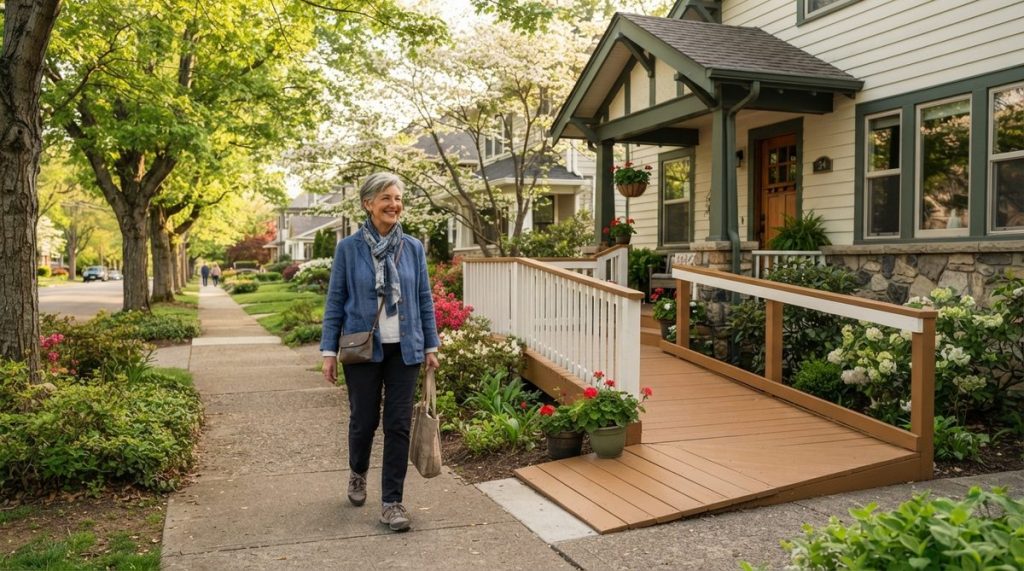
Nearly 90% of adults over 65 say they want to stay in their current home as they age, according to AARP. That number has held steady for over a decade. But what I see most often as a Certified Aging-in-Place Specialist is that the conversation around this goal is riddled with outdated assumptions, misleading cost estimates, and outright myths that push people toward bad decisions.
Some of these myths make aging in place sound impossibly expensive. Others make it sound effortless. Both extremes are dangerous. In my 14 years of experience consulting with homeowners, I’ve watched families waste tens of thousands of dollars on modifications they didn’t need — and skip $200 fixes that could have prevented a broken hip.
Let’s dismantle the seven most persistent aging in place myths one by one, using real numbers and evidence from 2025.
Myth #1: Aging in Place Requires a Major Home Renovation
This is the myth I fight hardest. Somewhere along the way, “aging in place” became synonymous with ripping out your entire bathroom, installing an elevator, and widening every doorway in the house. For a small percentage of people with significant mobility challenges, yes, structural changes are necessary. But for the vast majority of adults between 55 and 75? Strategic, targeted modifications make far more difference.
I often tell my clients to think in terms of “layers.” The first layer — grab bars, non-slip flooring, lever door handles, better lighting — can be completed for under $2,000 in most homes. The second layer — a walk-in shower conversion, a stairlift, or a main-floor bedroom setup — typically runs $5,000 to $15,000. Full-scale renovations are the third layer, and most people never need them.
“The biggest safety gains come from the cheapest modifications. A $35 grab bar installed next to the toilet prevents more injuries than a $40,000 bathroom remodel.”
If you’re curious about what specific modifications actually cost in today’s market, this detailed breakdown of aging in place costs and what home modifications really cost in 2025 lays it out clearly.
Myth #2: It’s Cheaper to Just Move to Assisted Living
This one shocks me every time I hear it, because the math doesn’t even come close. According to the National Council on Aging, the national median cost of assisted living in 2024 was approximately $5,350 per month — that’s $64,200 per year. A private room in a nursing home? Over $108,000 annually.
Now compare that to aging in place. Even if you spend $25,000 on home modifications, hire a part-time home aide for 20 hours a week at $30/hour ($31,200/year), and add a medical alert system ($35/month), your first-year total is roughly $57,620. By year two, it drops to about $32,620 because the modifications are already done.
| Living Option | Year 1 Cost | Year 2 Cost | 5-Year Total |
|---|---|---|---|
| Aging in Place (with mods + part-time aide) | $57,620 | $32,620 | $188,100 |
| Assisted Living (national median) | $64,200 | $64,200 | $321,000 |
| Nursing Home (private room) | $108,405 | $108,405 | $542,025 |
| Aging in Place (minimal mods, no aide) | $2,420 | $420 | $3,680 |
The five-year difference between aging in place and assisted living is over $130,000. That’s not pocket change — especially when inflation is already draining retirement savings for millions of seniors.
Myth #3: You Should Wait Until You Actually Need Modifications
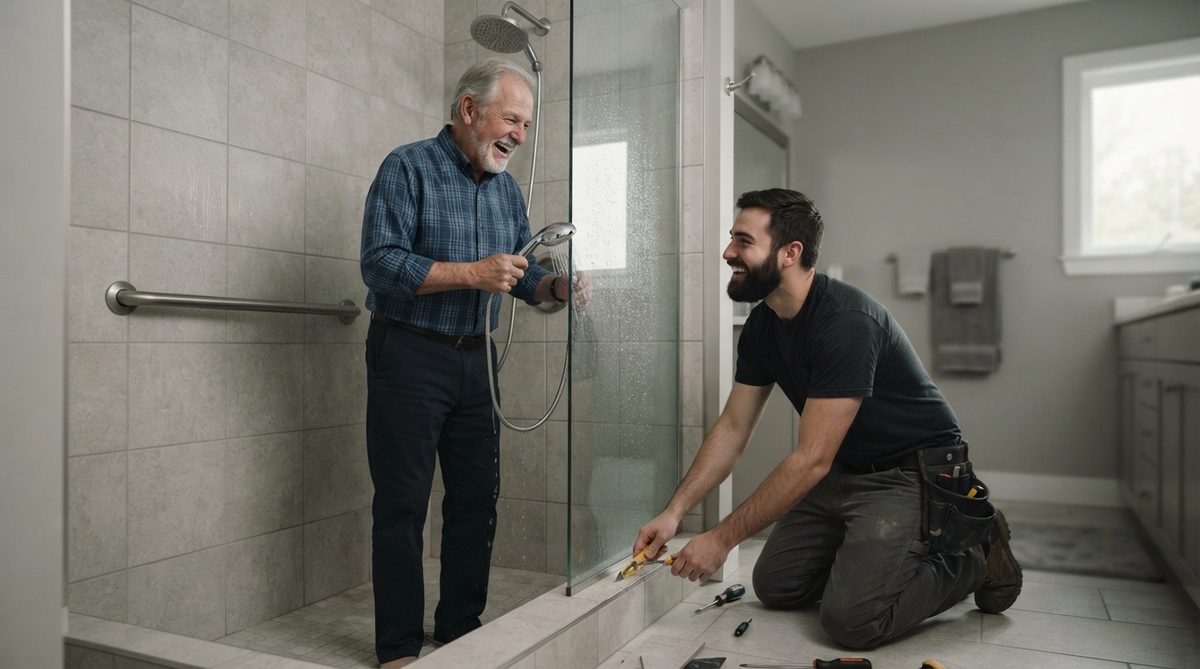
This is the myth that causes the most real-world harm. I’ve consulted with dozens of families who called me after a fall — after a hospital stay, after a surgery — desperate to make their home safe in a matter of days. Emergency modifications cost more. Contractors charge rush fees. You have less time to compare options, and you make decisions from a place of fear rather than strategy.
The National Institute on Aging reports that one in four Americans aged 65 and older falls each year, and falls are the leading cause of injury-related death in that age group. The smartest time to install grab bars isn’t after a fall. It’s five years before one.
The Sweet Spot: Ages 50 to 65
I recommend starting an aging-in-place assessment between ages 50 and 65. At this stage, you’re likely still physically capable of managing a project yourself, your budget has more flexibility, and you can spread costs over years rather than absorbing them all at once during a crisis.
Think of it like retirement savings — starting early and contributing gradually always beats a last-minute scramble. And speaking of retirement finances, make sure you’re not losing money to common Social Security myths that cost seniors real money in 2025.
Myth #4: Smart Home Technology Is Too Complicated for Older Adults
I hear this constantly from adult children, rarely from their parents. The assumption that people over 65 can’t manage a smart thermostat, a voice-activated assistant, or a video doorbell doesn’t hold up against the data. AARP’s 2024 Tech and the 50+ survey found that 72% of adults 50 and older own a smartphone, and 46% use smart home devices regularly.
What I see most often is a confidence gap, not a capability gap. Once someone is walked through setup — usually a 20-minute process — they adapt quickly. And the safety payoff is enormous.
High-Impact Tech for Aging in Place
- Medical alert systems: Modern devices like Medical Guardian or Bay Alarm Medical offer fall detection, GPS tracking, and 24/7 monitoring for $25–$50/month. No landline needed.
- Smart lighting: Motion-activated lights in hallways, bathrooms, and stairways eliminate fumbling for switches at night. Philips Hue or Wyze bulbs cost $8–$15 each.
- Voice assistants: Amazon Echo or Google Nest devices allow hands-free calling, medication reminders, and emergency contact. An Echo Dot runs about $30.
- Smart locks: Keypad or phone-operated locks eliminate the struggle with small keys and let family members grant access remotely. Expect $150–$250 for quality models like Schlage Encode.
- Video doorbells: A Ring or Google Nest doorbell lets you see and speak with visitors without walking to the door. Prices start around $100.
For a deeper look at how smartphones alone can support independence, check out this guide on 7 ways smartphones help older adults stay independent.
Myth #5: Medicare Pays for Home Modifications
This is one of the most damaging misconceptions I encounter. Traditional Medicare (Parts A and B) does not cover home modifications like grab bars, ramp installations, walk-in tubs, or stairlifts. Period. Some people confuse durable medical equipment coverage — which can include hospital beds or wheelchairs under specific conditions — with home renovation coverage. They’re not the same thing.
There are, however, legitimate funding sources most people overlook:
- Medicaid Home and Community-Based Services (HCBS) Waivers: Available in most states, these can cover some modifications for qualifying low-income seniors.
- VA Specially Adapted Housing Grants: Veterans with service-connected disabilities may qualify for grants up to $109,986 (2025 limit) for home modifications.
- USDA Rural Development Loans: Low-interest loans and grants for rural homeowners 62+ to remove health and safety hazards.
- Area Agency on Aging (AAA) programs: Local AAAs often administer small-grant programs for accessibility modifications. Contact your local office to check availability.
- Some Medicare Advantage plans: A growing number of MA plans now offer supplemental benefits that include home safety modifications. Check your plan’s Summary of Benefits carefully.
The funding is out there, but it requires proactive research. Waiting for Medicare to cover it means waiting forever.
Myth #6: Single-Story Homes Are the Only Safe Option
I’ve had clients list their beloved two-story colonial and buy a ranch house they didn’t even like because someone told them stairs are inherently dangerous for older adults. While I understand the logic, it’s overly simplistic. Stairs are a risk factor, but they’re a manageable one — and for many people, daily stair use actually helps maintain leg strength and cardiovascular health.
The real question isn’t “Do you have stairs?” It’s “Can you create a complete living zone on one floor if you ever need to?” If your main floor has — or can accommodate — a bedroom, a full bathroom, a kitchen, and a laundry setup, your two-story home is a perfectly viable aging-in-place candidate. A stairlift ($2,500–$5,000 installed) provides access to the upper floor for storage, guest rooms, or a home office without making it a daily necessity.
“Don’t sell the home you love because of a staircase. Solve the staircase. A main-floor living plan plus a stairlift costs a fraction of the financial and emotional price of an unnecessary move.”
Myth #7: Aging in Place Means Aging Alone
This might be the most harmful myth of all, because it discourages people from even trying. There’s a pervasive idea that choosing to stay home means choosing isolation — that the only way to have a social life and a support network is to move into a community setting. That’s simply not true in 2025.
Aging in place and staying connected are not mutually exclusive. What I recommend to every client is building what I call a “support ecosystem” — a combination of people, services, and technology that keeps you safe and socially engaged.
Building Your Support Ecosystem
- Identify your inner circle: Two to three people (family, friends, neighbors) who check in regularly and have emergency access to your home.
- Schedule structured social activities: Join a walking group, a faith community, a quilting circle, a book club, or a volunteer organization. Consistency matters more than frequency.
- Use technology for daily connection: Video calls, group chats, and social media keep relationships alive between in-person visits. A daily FaceTime with a grandchild counts.
- Hire strategically: A part-time home aide provides both practical help and human interaction. Even eight hours a week changes the dynamic.
- Engage community services: Meals on Wheels, senior center programming, parish nursing, and adult day programs all provide socialization alongside practical support.
Research from the National Institute on Aging consistently shows that social isolation increases the risk of dementia, heart disease, and depression. But the solution isn’t necessarily moving somewhere — it’s intentionally building connection into your daily life, wherever you live.
What Actually Matters for Aging in Place Successfully
After 14 years and hundreds of home assessments, I can tell you that successful aging in place comes down to three things: planning early, spending strategically, and staying connected. The people who do it best aren’t the ones with the biggest renovation budgets. They’re the ones who installed grab bars at 60 instead of 80, who learned to use a smartphone before they desperately needed one, and who maintained friendships and community ties through every stage of life.
Don’t let myths — especially the expensive ones — scare you out of a goal that’s both achievable and overwhelmingly preferred by people your age. The evidence is on your side. The tools exist. And the cost of doing it right is almost always less than the alternatives.
Start with a single room. Start with the bathroom. Start today.
Frequently Asked Questions
What is the most important aging in place modification to make first?
The bathroom is the highest-priority room. Installing grab bars near the toilet and in the shower, adding non-slip mats or flooring, and ensuring adequate lighting can be done for under $500 and addresses the most common location for in-home falls among older adults.
Does homeowner's insurance cover aging in place modifications?
No, standard homeowner's insurance does not cover elective home modifications for accessibility. However, if modifications are made after an insured event (like structural damage from a covered incident), some costs may overlap. Always check with your insurer for specifics.
How do I find a qualified aging in place contractor?
Look for contractors with a CAPS (Certified Aging-in-Place Specialist) designation from the National Association of Home Builders. You can search the NAHB directory online or ask your local Area Agency on Aging for referrals to vetted professionals in your area.
Can I make my rental apartment safer for aging in place?
Yes, many modifications are renter-friendly. Removable grab bars (suction-cup or tension-mounted), non-slip bath mats, plug-in motion-sensor nightlights, and portable ramps require no permanent changes. Always discuss any permanent installations with your landlord first, as many are willing to accommodate medical necessity.
At what point should someone consider moving instead of modifying their home?
If your home requires more than $50,000 in modifications, has structural barriers that can't be reasonably addressed (like narrow hallways that can't accommodate a wheelchair), or is in a location without access to medical care and social support, moving may be the smarter financial and safety decision. A CAPS-certified specialist can help you make that assessment objectively.
About Marcus Bell, Certified Aging-in-Place Specialist (CAPS)
Marcus Bell is a Certified Aging-in-Place Specialist (CAPS) with 14 years of experience helping American seniors create safer, more comfortable living environments. He has consulted on hundreds of home modifications — from bathroom safety upgrades to smart home installations — and writes extensively about the products, services, and strategies that help older adults live independently for longer. At Daily Trends Now, Marcus covers home improvement, aging-in-place solutions, gardening, and practical lifestyle tips for seniors.