

Key Takeaways
- Nearly 90% of adults over 65 want to age in place, but fewer than 10% of U.S. homes are currently equipped for it.
- Strategic aging in place modifications can start at $1,500, but the national average for a comprehensive retrofit runs between $9,500 and $30,000.
- Bathroom modifications—especially walk-in showers and grab bars—deliver the highest safety return per dollar spent.
- Delaying modifications until after a fall or health crisis typically costs 3 to 5 times more than proactive planning.
The Startling Gap Between Where Seniors Want to Live and Where They Actually Can
Here’s a number that should stop every homeowner over 50 in their tracks: according to a 2024 joint study by AARP and the Harvard Joint Center for Housing Studies, 88% of adults 65 and older say they want to remain in their current home as they age. But fewer than 10% of America’s 140 million housing units have the three basic accessibility features—a no-step entry, single-floor living, and an accessible bathroom—needed to make that possible.
That’s a gap of roughly 126 million homes. And in my 14 years as a Certified Aging-in-Place Specialist, I can tell you that gap is where confusion, overspending, and preventable injuries live. I’ve walked through hundreds of homes with clients who assumed their house was “fine” until a fall, a hip replacement, or a spouse’s diagnosis forced an emergency renovation that cost three to five times what planned modifications would have.
This article isn’t a generic checklist. It’s a deep-dive cost analysis—real numbers from real projects—so you can make informed decisions about aging in place modifications before a crisis makes those decisions for you.
Why the Aging in Place Trend Is Accelerating in 2025
Three forces are converging to make aging in place the dominant housing strategy for American retirees right now.
The Assisted Living Price Shock
The median cost of an assisted living facility in the U.S. hit $5,511 per month in 2024, according to Genworth’s Cost of Care Survey—that’s $66,132 annually. A private room in a nursing home? $9,733 per month, or $116,796 per year. When I sit down with clients and compare those figures to even a $30,000 home modification budget, the math becomes overwhelming. A comprehensive home retrofit can pay for itself in under six months versus assisted living.
The Demographic Tsunami
Every single day, approximately 10,000 Americans turn 65. The U.S. Census Bureau projects that by 2030, all Baby Boomers will be 65 or older, creating the largest-ever cohort of aging homeowners simultaneously. The demand for contractors who specialize in accessibility work has already driven wait times in many metro areas to 8–14 weeks.
The Equity Advantage
Many homeowners over 60 are sitting on significant home equity—the average for those 65+ exceeded $300,000 in early 2025. But with inflation draining retirement savings, tapping that equity smartly—through targeted modifications rather than selling and relocating—makes increasing financial sense.
The Real Cost Spectrum: $1,500 to $100,000+
One of the most frustrating things I encounter as a specialist is the wildly inconsistent cost information floating around. Some articles promise you can age-proof your home for pocket change. Others make it sound like you need a second mortgage. The truth, as usual, is more nuanced.
I break aging in place modifications into three tiers based on scope, urgency, and budget. Here’s what each tier actually costs in 2025, based on national averages from HomeAdvisor, Angi, and my own project records.
| Modification Tier | Typical Cost Range | What’s Included | Best For |
|---|---|---|---|
| Tier 1: Essential Safety | $1,500 – $5,000 | Grab bars, lever handles, non-slip flooring, improved lighting, handheld showerheads, toilet risers | Active adults 50–65 starting early; budget-conscious planning |
| Tier 2: Functional Retrofit | $5,000 – $30,000 | Walk-in shower conversion, stairlift, widened doorways, ramp entry, kitchen counter/cabinet adjustments | Adults 65–75 with early mobility concerns or post-surgery recovery |
| Tier 3: Comprehensive Overhaul | $30,000 – $100,000+ | Full bathroom gut renovation, home elevator, first-floor bedroom addition, smart home integration, HVAC and electrical upgrades | Adults 75+ with significant mobility limitations; multi-generational households |
What I see most often is clients who need Tier 2 work but delay it until they need Tier 3—and pay dearly for the procrastination. The sweet spot for most people I advise is starting Tier 1 modifications at age 55–60 and phasing in Tier 2 work over the next decade.
If you’re working with a very tight budget, I’ve outlined a practical approach in how to set up your home to age in place for $1,500—it’s absolutely doable if you prioritize correctly.
Where Every Dollar Matters Most: The Bathroom
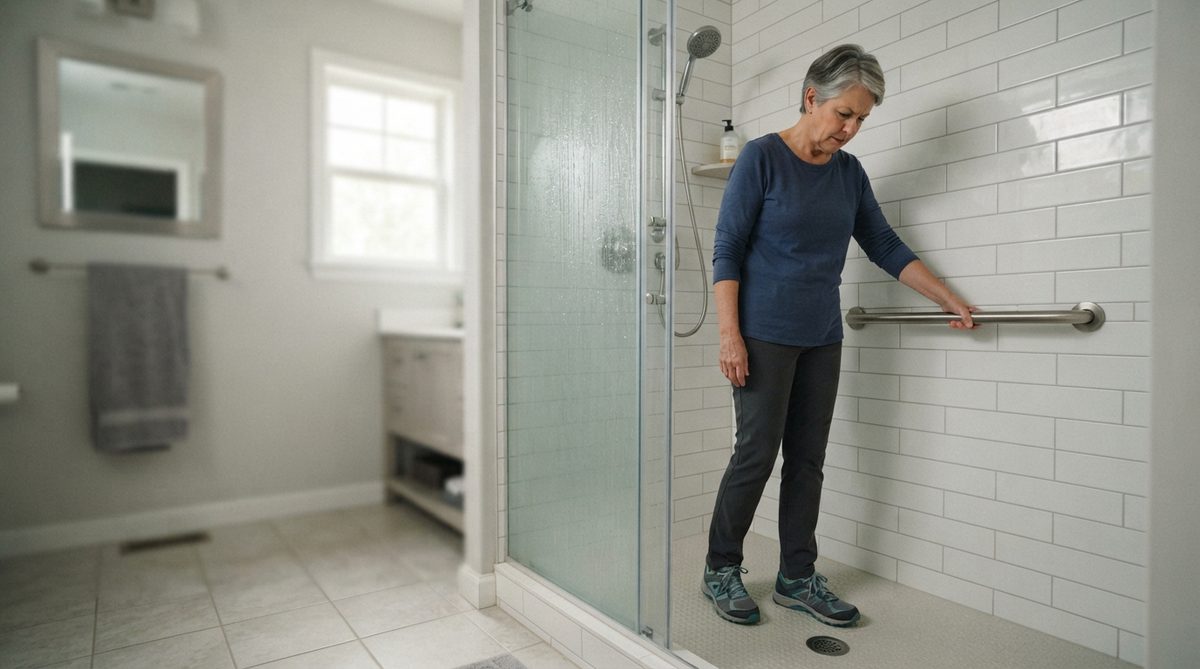
If a client tells me they have $5,000 and one room to modify, my answer is always the same: the bathroom. The data backs this up emphatically. The National Council on Aging reports that one in four Americans aged 65 and older falls each year, and the CDC’s WISQARS data shows that bathrooms are the single most dangerous room in the home for fall-related injuries among older adults.
Bathroom Modification Costs Broken Down
Grab bars: $50–$150 per bar installed (professionally anchored into studs). I recommend a minimum of three—one in the shower, one by the toilet, one at the tub entry. Total: $150–$450.
Walk-in shower conversion: Removing a tub-shower combo and replacing it with a curbless or low-threshold walk-in shower runs $3,500–$8,000 depending on your region and tile choices. This is the single most impactful modification I recommend.
Comfort-height toilet: $250–$600 installed, including the unit. Standard toilets sit at 15 inches; ADA-compliant models are 17–19 inches, dramatically reducing knee and hip strain.
Non-slip flooring: $800–$2,500 for a full bathroom, depending on material. Textured vinyl plank and matte-finish porcelain tile are my go-to recommendations—they’re slip-resistant, water-friendly, and affordable.
Handheld showerhead with slide bar: $75–$200 installed. This is one of those modifications that costs almost nothing and changes daily life significantly for someone with limited shoulder mobility.
The Mistake That Costs Thousands
I often tell my clients: never install a walk-in bathtub without trying one first. Walk-in tubs cost $3,000–$12,000 installed, and I’ve seen more regret over this purchase than any other. The fill-and-drain cycle takes 10–15 minutes, during which you’re sitting in an empty tub getting cold. Many clients who bought them end up converting to a walk-in shower within two years—doubling their expense.
Beyond the Bathroom: High-Impact Modifications Room by Room
Entryways and Thresholds
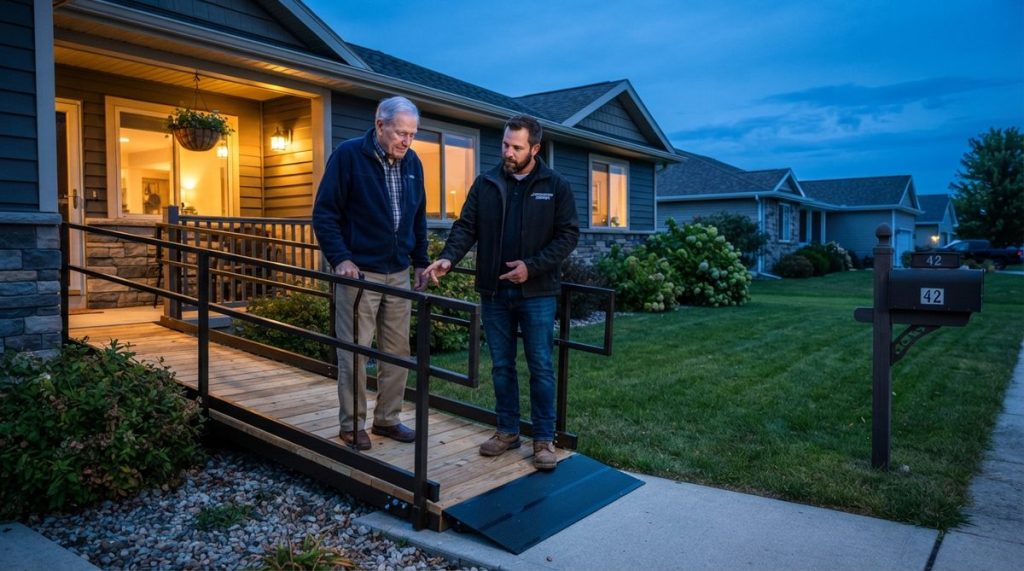
A no-step entry is the second most critical modification after the bathroom. Options include:
- Concrete ramp: $1,500–$4,000 depending on length and grade
- Modular aluminum ramp: $1,000–$3,500 (removable, which preserves resale value)
- Threshold ramps (small rubber wedges): $30–$100 each for interior transitions
What surprises many homeowners is that even a 1-inch threshold—common at sliding glass doors—can become a serious trip hazard. I carry a bag of $40 rubber threshold ramps in my truck because they solve a problem that causes thousands of ER visits per year.
Kitchen Adaptations
Full kitchen renovations for accessibility can run $15,000–$50,000, but targeted changes yield outsized results:
- Pull-down cabinet shelving systems: $200–$500 per cabinet
- Lever-style faucets: $150–$400 installed
- Under-cabinet task lighting: $300–$800 for a full kitchen (LED strip or puck lights)
- D-shaped cabinet pulls (replacing knobs): $3–$8 per pull, DIY-friendly
Lighting Throughout the Home
This is the most underestimated category. The National Institute on Aging notes that a 60-year-old needs roughly three times more light than a 20-year-old to see the same detail. Motion-activated lighting in hallways, staircases, and bathrooms costs $15–$40 per fixture and can be installed without an electrician. Budget $200–$600 to properly light an entire home’s high-risk areas.
Smart Home Technology: The New Frontier of Aging in Place
In the past three years, I’ve seen smart home technology transform from a luxury add-on to a legitimate aging in place tool. The costs have dropped dramatically, and the functionality has matured.
Voice-controlled systems (Amazon Echo, Google Nest): $30–$100 per device. These allow hands-free control of lights, thermostats, locks, and emergency calls. For clients with arthritis or limited mobility, this is transformative.
Video doorbells: $100–$250 installed. These reduce the need to rush to the door—a common fall scenario—and add a security layer that protects against scams targeting seniors at home.
Medical alert systems: $25–$50 per month. Modern systems include fall detection, GPS tracking, and two-way communication. I consider these non-negotiable for anyone living alone over 75.
Smart water leak and stove sensors: $30–$80 each. Water damage and kitchen fires are two of the top reasons families move a parent out of their home. These sensors provide early warning and can send alerts to family members’ phones.
The 10-Step Action Plan: Phased Aging in Place Modifications
Based on my experience with hundreds of clients, here’s the sequence I recommend. Starting early and phasing the work over years is the most financially efficient approach.
- Conduct a professional home assessment. Many Area Agencies on Aging offer free assessments, or hire a CAPS-certified specialist ($150–$400). This identifies your specific risks.
- Install grab bars in all bathrooms. Do this immediately regardless of current mobility. Cost: $150–$450 total.
- Improve lighting in hallways, stairs, and bathrooms. Add motion-sensor night lights and upgrade to brighter LED bulbs. Cost: $200–$600.
- Replace round doorknobs with lever handles. This is a weekend DIY project. Cost: $15–$30 per handle.
- Remove or secure all trip hazards. Loose rugs, raised thresholds, extension cords across walkways. Cost: $50–$200.
- Add a handheld showerhead and non-slip bath mat or strips. Cost: $75–$200.
- Convert at least one entry to no-step access. This can be as simple as a $1,000 modular ramp. Cost: $1,000–$4,000.
- Renovate the primary bathroom with a walk-in shower and comfort-height toilet. This is usually the largest single investment. Cost: $4,000–$9,000.
- Widen critical doorways to 36 inches (bedroom, bathroom, main entry). Cost: $300–$1,000 per doorway.
- Install a stairlift or plan for single-floor living. Straight stairlifts run $3,000–$5,000; curved models $10,000–$15,000. If your bedroom is upstairs, this becomes essential. Cost: $3,000–$15,000.
Following this sequence, you could complete Steps 1–6 for under $1,500 total, then budget for Steps 7–10 over the following years as needed and affordable.
Funding Aging in Place: Grants, Tax Breaks, and Programs Most People Miss
Cost is the number one barrier I hear about, but many homeowners don’t realize there’s financial assistance available.
Federal and State Programs
HUD Section 504 Home Repair Program: Provides loans up to $40,000 and grants up to $10,000 for very-low-income homeowners 62 and older specifically for accessibility modifications.
VA Specially Adapted Housing (SAH) Grant: Veterans may qualify for up to $109,986 (2025 figure) for home modifications related to service-connected disabilities.
Medicaid Home and Community-Based Services (HCBS) Waivers: Available in all 50 states, these can cover certain home modifications. Eligibility and coverage vary significantly by state.
Tax Deductions
If a physician documents that modifications are medically necessary, they may be deductible as medical expenses on your federal tax return (subject to the 7.5% AGI threshold). I always recommend clients get a doctor’s letter before starting work—it costs nothing and can save thousands at tax time.
Nonprofit and Community Resources
Rebuilding Together, a national nonprofit, provides free home modifications to low-income seniors. Habitat for Humanity’s Aging in Place program operates in select markets. Your local Area Agency on Aging (find yours at the National Council on Aging’s BenefitsCheckUp tool) can connect you with additional resources.
The Hidden Cost of Waiting: Emergency Modifications vs. Planned Ones
I want to close with the statistic that motivates me most in this work. A 2023 study published in the Journal of the American Geriatrics Society found that adults over 65 who suffered a fall-related hip fracture had a 30% mortality rate within one year. That’s not a typo—nearly one in three died within 12 months.
When I talk about aging in place modifications, I’m not talking about convenience or aesthetics. I’m talking about survival and independence. The financial case is clear: $1,500–$5,000 in proactive modifications today versus $50,000+ in reactive renovations, or $66,000+ per year in assisted living, or—worst of all—a fall that changes everything permanently.
What I see most often is that people know they should do this work but assume they’ll “deal with it later.” Later usually arrives as a phone call from the emergency room. With Social Security benefits losing purchasing power year after year, the earlier you invest in your home’s accessibility, the more financial runway you preserve for the rest of retirement.
The home you’ve spent decades building should be a place that supports you for decades more. Start with the grab bars this weekend. Your future self will thank you.
Frequently Asked Questions
What is the average cost of aging in place home modifications?
The average cost ranges widely depending on scope. Basic safety modifications (grab bars, lighting, non-slip surfaces) cost $1,500–$5,000, while a comprehensive retrofit including bathroom renovation, ramp installation, and doorway widening averages $9,500–$30,000. Full overhauls with elevators or room additions can exceed $100,000.
Does Medicare cover aging in place home modifications?
Original Medicare (Parts A and B) generally does not cover home modifications. However, some Medicare Advantage plans offer supplemental benefits that may include limited home safety modifications. Medicaid's Home and Community-Based Services waivers in many states do cover certain modifications for qualifying individuals.
What is the most important home modification for aging in place?
Bathroom modifications—specifically installing grab bars and converting to a walk-in shower—are consistently the highest-priority changes recommended by aging-in-place specialists. Bathrooms are the most common location for fall-related injuries among older adults, making them the area where modifications deliver the greatest safety return.
At what age should I start making aging in place modifications?
Certified Aging-in-Place Specialists generally recommend beginning basic modifications (grab bars, improved lighting, lever door handles, trip hazard removal) between ages 55 and 60, well before mobility limitations develop. This phased approach is significantly less expensive than emergency renovations after a fall or health event.
About Marcus Bell, Certified Aging-in-Place Specialist (CAPS)
Marcus Bell is a Certified Aging-in-Place Specialist (CAPS) with 14 years of experience helping American seniors create safer, more comfortable living environments. He has consulted on hundreds of home modifications — from bathroom safety upgrades to smart home installations — and writes extensively about the products, services, and strategies that help older adults live independently for longer. At Daily Trends Now, Marcus covers home improvement, aging-in-place solutions, gardening, and practical lifestyle tips for seniors.