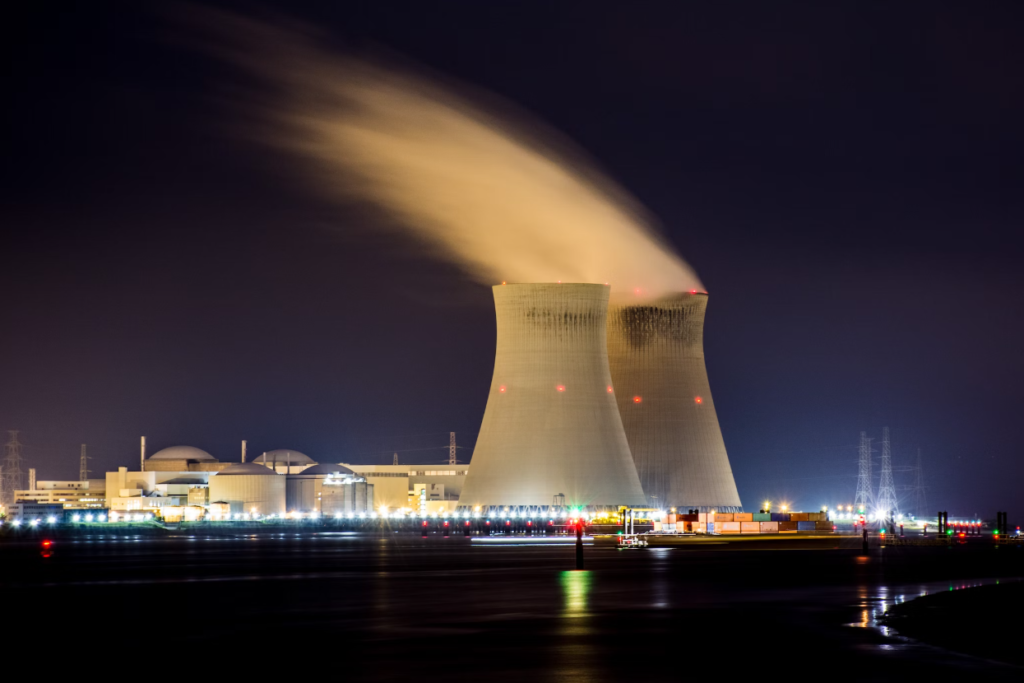

A dense cluster of cranes, conspicuous from afar, signifies the location where the UK’s inaugural nuclear plant in a generation is currently under construction, situated at Hinkley Point in Somerset.
Upon completion, it is anticipated to generate a sufficient amount of electricity to supply approximately six million homes for the next six decades.
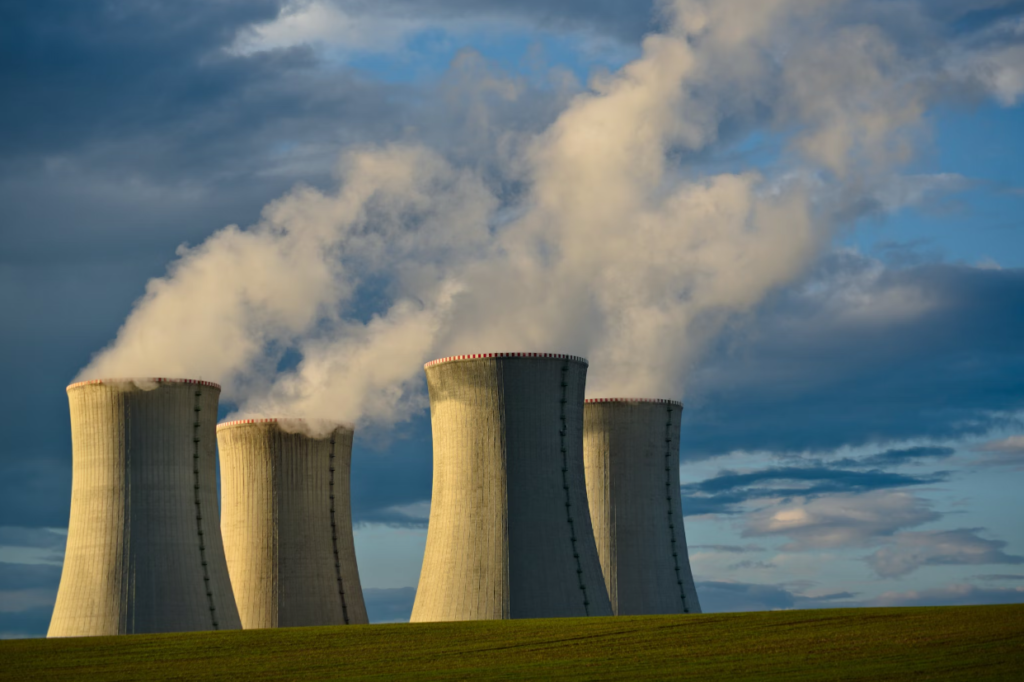
However, merely a few hundred yards away, two prominent reminders stand, underscoring that the legacy of nuclear power stations persists long after they cease power production.
The first of these reminders is an expansive, angular structure towering over the Bristol Channel, known as Hinkley Point B. When inaugurated in 1976, its two advanced gas-cooled reactors (AGRs) represented state-of-the-art technology.
Yet, spanning nearly five decades of operation, the graphite cores of these reactors developed cracks, posing potential safety risks, ultimately leading to their permanent closure last year.
Nevertheless, within the expansive main hall, there is an appearance of continuity. Recently painted machinery shines brightly under intense illumination, with teams of workers in blue boiler suits hustling around above the reactors.
The primary focus currently revolves around defueling: extracting numerous fuel assemblies from the depths of the reactor cores, dismantling them, and dispatching the resulting waste to be stored at Sellafield.
Observing the scene, a substantial steel tower is being maneuvered over the reactor. This is the charging machine, resembling an old-fashioned helter-skelter but, in reality, serving as a heavily-shielded crane.
Given the extended period of time the fuel assemblies spent in the reactor, they are highly radioactive and demand meticulous handling.
“The machine is hoisting the highly irradiated fuel assembly, which is essentially lethal in terms of exposure,” clarifies Shaheed Mungur, the performance improvement manager at the site owned by EDF.
“However, that’s precisely why there is extensive shielding around it, and why we rely on this machine to handle the fuel safely.”
Once extracted from the reactor, the fuel assemblies find their place in a steel-lined cell for disassembly, where the used fuel is separated from its casings.
The task is executed remotely by operators situated in a confined control room. To carry out their duties, they must peer through a 2-meter thick window filled with a brownish radiation-absorbing fluid.
The fuel elements are subsequently left in deep, transparent ponds for cooling before being encased in robust 45-tonne containers for transportation to Sellafield, where they will undergo interim storage.
During active operation, each of the two reactors at Hinkley Point B contained 308 fuel assemblies. The complete removal of these assemblies is estimated to take up to four years, incurring a cost of approximately £1 billion.
“Ceasing generation does not mark the end of the station’s life,” asserts Director Mike Davies.
“For years, we have been entrusted to operate this plant safely, which naturally included handling the nuclear fuel. That’s precisely what we are doing now—removing the nuclear fuel without introducing new fuel.”
Following the completion of the defueling process, EDF will transfer the site to the Nuclear Decommissioning Authority (NDA).
To comprehend the subsequent steps, one can turn their attention to the neighboring power station, Hinkley Point A.
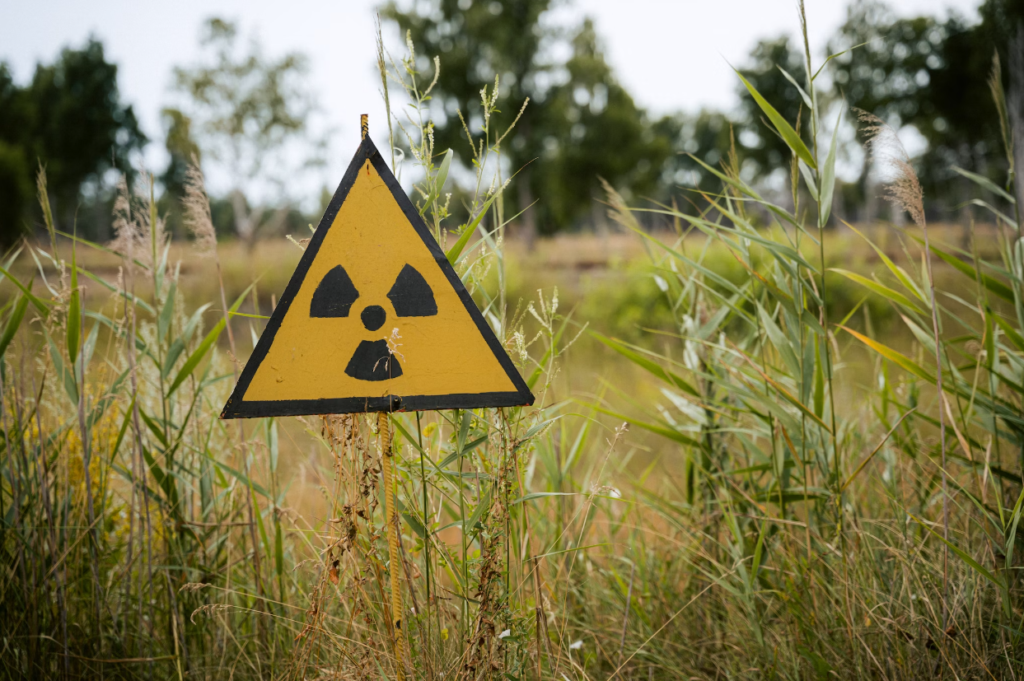
As one of the UK’s first-generation nuclear facilities, its two reactors commenced operations in 1965 and were permanently shut down in 2000. Nearly twenty-five years later, the two box-shaped reactor structures still tower over the horizon. However, other structures, including the expansive turbine hall, have been dismantled, leaving behind a deep, overgrown excavation site.
The old fuel storage ponds have been emptied, cleansed, and coated to mitigate radiation risks, though cautionary advice is given against lingering in their vicinity. In contrast, a water-filled vault elsewhere on the premises still holds radioactive scrap, which is being meticulously extracted.
A newly constructed, thick-walled concrete vault has been erected on the premises to accommodate intermediate-level radioactive wastes.
However, one of the foremost challenges involves addressing an entirely different industrial hazard. Inside one of the aging boiler houses, teams of laborers equipped with respirators are meticulously cleaning extensive networks of intricate pipework by hand to eliminate asbestos residues.
During the plant’s construction, substantial quantities of asbestos were utilized as insulation, and thousands of tonnes have already been extracted.
As per the current plans, the majority of the decommissioning efforts are expected to conclude by 2039. Nevertheless, the reactor buildings themselves will remain intact, securely sealed against the elements, for an additional 20-40 years.
Site Director Kirandeep Basra-Steele assures, “The site will be safe and secure. The waste and hazards will be contained and securely stored.”
This phase is referred to as “care and maintenance.” Due to the natural decay of radioactivity over time, the Nuclear Decommissioning Authority (NDA) believes it will be safer to defer the dismantling of the reactor buildings.
The final phase of decommissioning, anticipated to span approximately a decade, implies that the site will not be entirely cleared until the earliest in the 2070s—70 years after ceasing power generation. Concurrently, the most perilous waste products generated by both Hinkley A and B during their operational lifetimes will necessitate meticulous handling, potentially extending across generations.
Despite the commercial operation of nuclear plants in the UK since 1956, there is still no permanent repository for high or intermediate-level wastes—some of which will remain hazardous for thousands of years. The government intends to construct a geological disposal facility (GDF) deep underground, but this solution is not anticipated to be ready for several decades.
Critics of the nuclear industry argue that the challenges associated with decommissioning old plants and the absence of a permanent waste solution make it inappropriate to build new ones. Doug Parr, Chief Scientist at Greenpeace UK, asserts, “The significant lesson we should derive from the current difficulty in handling nuclear waste is that we shouldn’t be generating any more of it.”
Nonetheless, the construction of the new power station at Hinkley Point—Hinkley Point C—is progressing. Generation is slated to commence in four years. However, like its predecessors, it will eventually need to close, and a funded decommissioning plan, now a legal requirement, has already been formulated. If all unfolds as planned, the decommissioning process will span approximately 20 years, meaning the complete removal of the plant will not occur until well into the 22nd century.