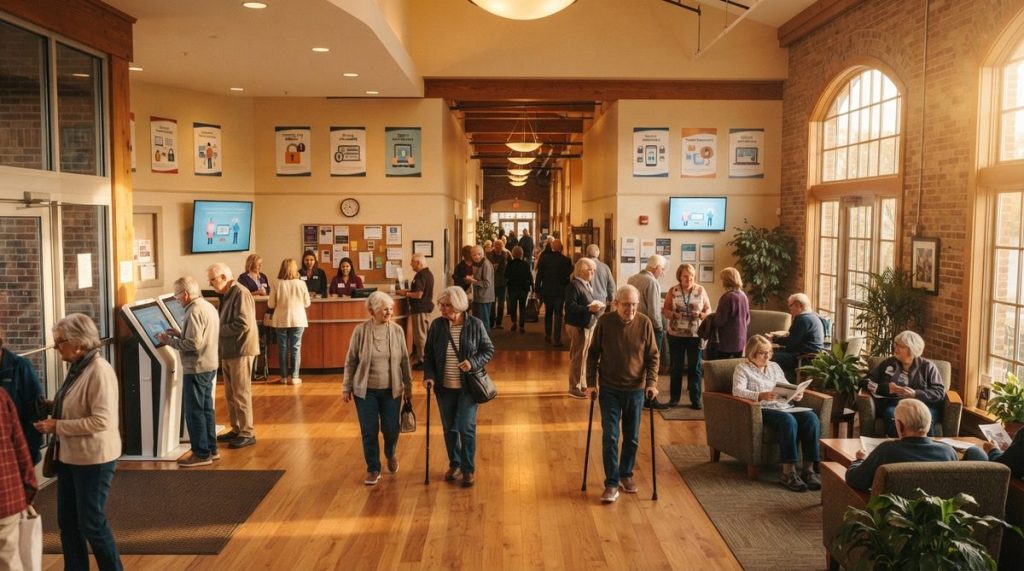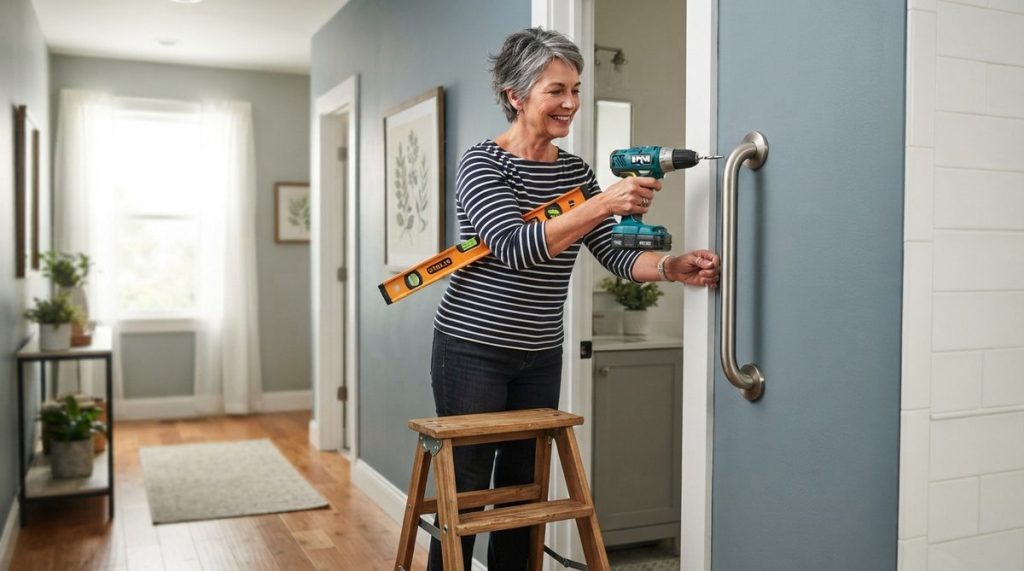


The Gap Between Wanting to Age in Place and Actually Doing It
Here’s a statistic that keeps me up at night: according to AARP, roughly 77% of adults 50 and older say they want to age in place — to stay in their own homes as they grow older. Yet fewer than 10% of American homes have the three basic accessibility features needed to support that goal: a no-step entry, single-floor living, and an accessible bathroom.
That’s an enormous disconnect. In my 14 years as a Certified Aging-in-Place Specialist, I’ve seen the consequences of that gap play out in emergency rooms, in forced relocations to assisted living, and in families torn apart by decisions made too late. The truth is, everyone supports aging in place. But very few people actually prepare for it.
This isn’t about slapping a grab bar next to the toilet and calling it done. Real aging-in-place planning touches your home’s structure, your finances, your social connections, and your long-term health strategy. Below are seven concrete steps — drawn from real projects, real clients, and real data — that separate people who successfully age in place from those who just hope for the best.
1. Conduct a Brutally Honest Home Assessment
Most people look at their home through the lens of who they are right now. What I tell my clients is this: walk through your house as the person you’ll be in 15 years. Can you navigate every room with a walker? Can you reach the breaker box? Could a paramedic get a stretcher through your hallway?
A proper aging-in-place assessment evaluates more than just grab bars. It covers:
- Doorway widths (32 inches minimum, 36 inches preferred for wheelchair access)
- Threshold heights between rooms and at exterior doors
- Stair count and railing condition on every level
- Lighting levels in hallways, stairwells, and bathrooms
- Flooring transitions that create trip hazards
- Kitchen counter and cabinet reach zones
- Bathroom layout — tub-only showers are the single biggest fall risk I encounter
You can start with a DIY checklist from the National Council on Aging, which offers free fall-prevention resources. But I strongly recommend bringing in a CAPS-certified professional for a full walkthrough. The assessment typically costs $150–$400, and it produces a prioritized modification plan that can save you tens of thousands in reactive emergency renovations later.
The “One Weekend” Quick Wins
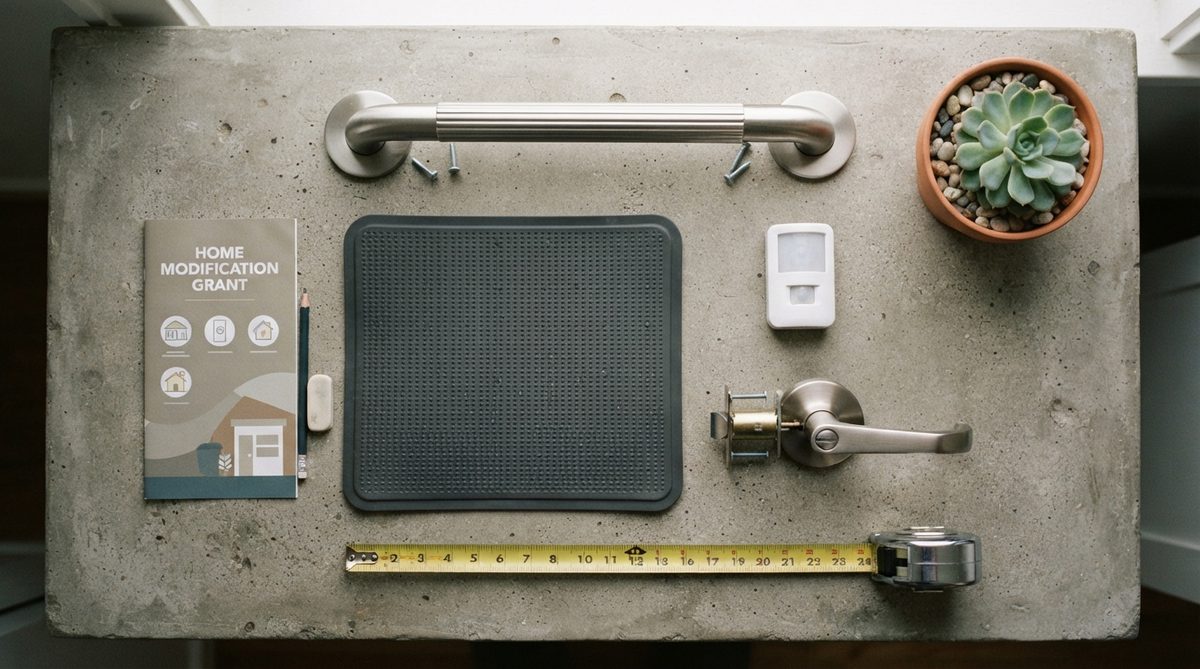
Not everything requires a contractor. In a single weekend, you can swap out round doorknobs for lever handles, install motion-sensor nightlights along the path from bedroom to bathroom, secure area rugs with double-sided carpet tape, and add non-slip strips inside your tub. These four changes alone address the causes of roughly 60% of the in-home falls I see documented in client histories.
2. Prioritize the Bathroom — It’s Where Most Falls Happen
The CDC reports that every year, approximately 3 million older adults are treated in emergency departments for fall injuries. And a disproportionate number of those falls happen in the bathroom. Wet surfaces, awkward stepping heights over tub walls, poor lighting, and a lack of anything to grab onto create a perfect storm.
If you do only one major renovation to age in place, make it the bathroom. Here’s what a proper aging-in-place bathroom conversion typically includes:
- A curbless or low-threshold walk-in shower replacing a traditional tub
- A built-in shower bench or fold-down seat rated for at least 300 pounds
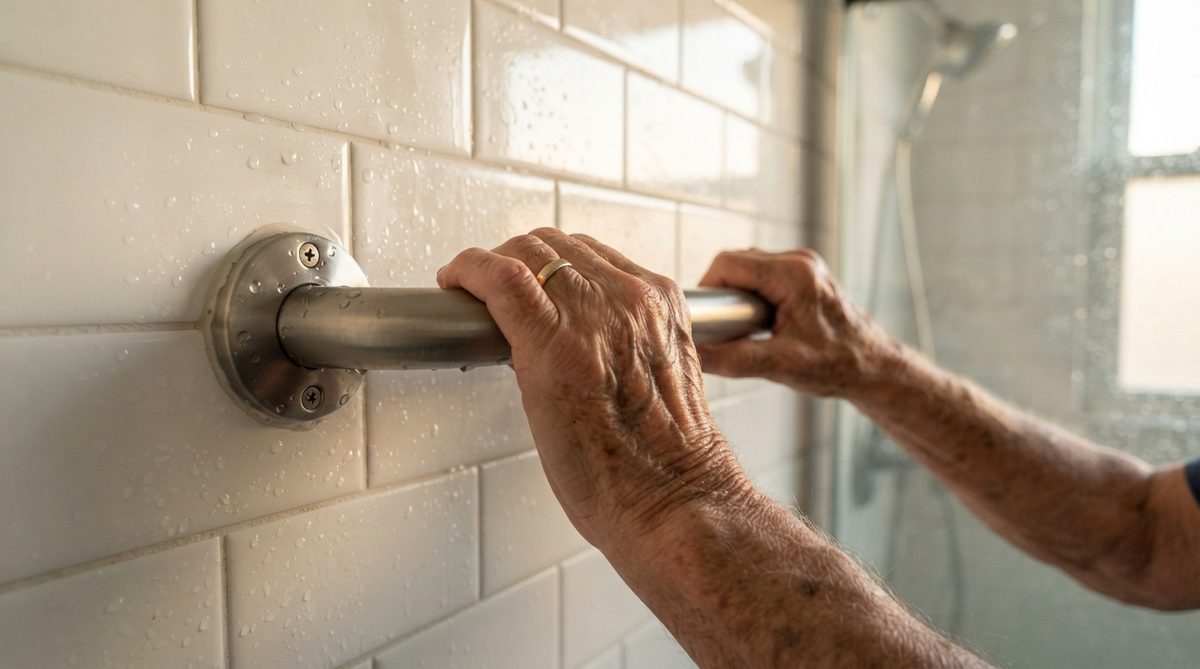
- Grab bars at shower entry, inside the shower, and beside the toilet (installed into wall studs, not just drywall)
- A comfort-height toilet (17–19 inches) replacing a standard 15-inch model
- Anti-scald valves on all water fixtures
- Slip-resistant tile flooring with a coefficient of friction above 0.6
A full bathroom remodel for accessibility runs between $8,000 and $25,000 depending on your market and scope. That sounds like a lot until you compare it to the average cost of a hip fracture — which the National Institute on Aging estimates can exceed $30,000 in medical costs alone, not counting long-term rehabilitation or the potential move to a care facility.
3. Understand the Money Side — Grants, Programs, and Smart Budgeting
One of the biggest myths I encounter is that aging-in-place modifications are entirely out-of-pocket expenses. They don’t have to be. Several federal and state programs exist specifically to help older homeowners fund accessibility improvements.
The HUD Section 504 Home Repair program offers grants up to $10,000 for homeowners 62 and older to remove health and safety hazards. Many states run additional programs — the Older Adults Home Modification Grant Program, for example, provides funding for critical modifications through Area Agencies on Aging. Medicaid waiver programs in 43 states now cover some home modifications for qualifying individuals.
Veterans have access to the VA’s Specially Adapted Housing (SAH) grant, which can provide up to $109,986 (2024 figure) for eligible veterans with service-connected disabilities. The Home Improvements and Structural Alterations (HISA) grant offers smaller but still meaningful amounts.
Tax Deductions Most People Miss
If your modifications are medically prescribed by a physician, the cost that exceeds any increase in your home’s value may qualify as a deductible medical expense. I’ve seen clients deduct $5,000–$12,000 in modification costs this way. Consult a tax professional, but don’t leave that money on the table. For a broader look at managing retirement finances wisely, check out 5 Biggest Financial Concerns for Retirees and How to Fix Them.
4. Think Beyond Physical Modifications — Build a Support Network
A perfectly modified home still won’t work if you’re completely isolated inside it. What I see most often in failed aging-in-place situations isn’t a missing grab bar — it’s a missing support system. Social isolation among older adults is linked to a 50% increased risk of dementia and a 29% increased risk of heart disease, according to the CDC’s research on social determinants of health.
Building your aging-in-place support network means identifying:
- At least two trusted neighbors who have your emergency contact information
- A local family member or friend willing to serve as a healthcare proxy
- A reliable meal delivery or grocery delivery system (not just for emergencies — for the weeks when driving isn’t comfortable)
- A relationship with a home health agency before you need one
- Community connections through a faith organization, club, volunteer group, or hobby circle
I encourage every client to also look into their local Village-to-Village Network — a grassroots model where neighbors help neighbors with transportation, errands, and social connection. There are now over 350 Villages operating across the U.S., and membership typically costs $200–$600 per year.
5. Invest in Smart Home Technology That Actually Helps
The smart home market is overflowing with gadgets, and frankly, most of them are solutions looking for problems. But a handful of technologies have genuinely transformed aging in place over the past five years, and they’re more affordable than ever.
The technologies I recommend most frequently to my clients:
- Smart lighting with voice control: Eliminates fumbling for switches in the dark. A full-home system can be installed for $200–$500 using standard smart bulbs and a voice assistant.
- Video doorbells: Let you see and speak with visitors without walking to (or opening) the door. Critical for reducing elder fraud and scam risks.
- Medical alert systems: The modern versions are far cry from the old “I’ve fallen and I can’t get up” pendants. Today’s devices offer fall detection, GPS tracking, and two-way communication for $25–$50 per month.
- Smart water leak sensors: A $30 sensor under the kitchen sink can prevent a $15,000 water damage disaster. For older homeowners, water damage is both a financial and safety crisis.
- Smart locks with keypad entry: No more fumbling with small keys in arthritic hands. They also let you grant temporary access to caregivers or family remotely.
One word of caution: any connected device is only useful if you’re comfortable operating it. I’ve seen well-meaning adult children install complex systems that their parents never touch. Start with one or two devices, get comfortable, then expand. The goal is independence, not confusion.
6. Plan Your Flooring Strategy — The Overlooked Game-Changer
When people think about aging in place, they think grab bars and ramp entries. Almost nobody thinks about flooring first. But in my experience, flooring is responsible for more preventable injuries than any other single element of a home.
The problems I encounter constantly:
- Thick, plush carpet that catches walker legs and wheelchair wheels
- Polished hardwood that becomes a skating rink with socks or smooth-soled shoes
- Transitions between flooring types — the half-inch lip where tile meets hardwood is a notorious trip point
- Loose area rugs, especially on hard surfaces
- Worn or curling vinyl in kitchens and bathrooms
The gold standard for aging-in-place flooring in 2025 is luxury vinyl plank (LVP) with a textured, slip-resistant surface. It’s waterproof, durable, relatively affordable ($3–$7 per square foot installed), comfortable underfoot, and available in styles that genuinely look like hardwood or stone. I’ve specified it in over 200 client projects, and the feedback is overwhelmingly positive.
The Transition Strip Rule
If you have multiple flooring types throughout your home and aren’t ready for a full replacement, at minimum address every transition point. Beveled transition strips (also called reducer strips) eliminate the vertical lip between surfaces. They cost $5–$15 per strip and take 20 minutes to install. It’s the simplest, cheapest modification that prevents the most falls. For more on avoiding costly mistakes in your aging-in-place plan, I’d recommend reading 7 Aging in Place Myths That Could Cost You Thousands.
7. Create a Written Aging-in-Place Plan — And Share It
This final step is the one most people skip, and it’s arguably the most important. A written aging-in-place plan is a document that captures your intentions, your timeline, your budget, and your contingencies. It’s not a legal document — it’s a communication tool.
What your plan should include:
- Your modification timeline: Which changes you’ll make now (quick wins), which you’ll tackle in the next 1–3 years (bathroom remodel, ramp installation), and which are contingency plans (stairlift, first-floor bedroom conversion)
- Your budget and funding sources: How much you’ve set aside, which grant programs you’ll apply to, and how modifications fit into your overall retirement spending plan
- Your care preferences: What level of in-home care you’re open to, who your preferred caregivers are, and at what point you would consider alternatives to staying in your home
- Your emergency contacts and legal documents: Healthcare proxy, power of attorney, and a list of medications — all in one accessible location
- Your home maintenance schedule: A home you can’t maintain is a home you can’t safely live in. Include HVAC, plumbing, roof, and exterior maintenance cycles
Once you’ve created this plan, share it with your adult children, your healthcare provider, and at least one trusted neighbor or friend. I’ve watched too many families scramble to make decisions during a health crisis that could have been calmly addressed months or years earlier. The plan eliminates that chaos.
The Real Cost of Not Planning to Age in Place
Let me share some numbers that put all of this in perspective. The median annual cost of a private room in a nursing home in the United States is now $108,405, according to Genworth’s most recent Cost of Care Survey. A semi-private room runs $94,900. Assisted living averages $64,200 per year.
Compare that to the cost of a comprehensive aging-in-place home modification program. Even an aggressive overhaul — bathroom remodel, ramp installation, flooring replacement, smart home technology, and widened doorways — typically falls between $25,000 and $60,000 total. That’s roughly one year or less of institutional care costs, for modifications that can support you for a decade or more.
The financial math isn’t even close. But beyond the money, there’s something else at stake: autonomy. Every client I’ve worked with who successfully ages in place tells me the same thing — it’s not about the house. It’s about waking up in your own bed, making your own coffee, walking into your own garden. It’s about living on your own terms.
Start Today, Even If It’s Small
You don’t have to do everything on this list this month, or even this year. But you do need to start. The clients who struggle are the ones who waited until a fall, a diagnosis, or a crisis forced their hand. The clients who thrive are the ones who picked up a lever handle at the hardware store on a Tuesday and thought, “What else can I do?”
Aging in place isn’t a single decision. It’s a series of smart, incremental choices that compound over time — much like the way solid low-risk investments build retirement security year after year. Start with one step from this list today. Your future self — comfortable, safe, and independent in the home you love — will thank you.
Frequently Asked Questions
How much does it cost to modify a home for aging in place?
Costs vary widely depending on scope. Simple modifications like grab bars, lever handles, and improved lighting can be done for $500–$2,000. A comprehensive renovation including a bathroom remodel, flooring replacement, and accessibility upgrades typically ranges from $25,000 to $60,000. Federal and state grants can offset a significant portion of these costs for qualifying homeowners.
What is the most important room to modify for aging in place?
The bathroom is consistently the highest-priority room. It's where the majority of in-home falls occur due to wet surfaces, high tub walls, and a lack of grab supports. Converting to a curbless walk-in shower, installing grab bars in wall studs, and adding a comfort-height toilet are the three modifications that deliver the greatest safety return.
Are there government grants available for aging-in-place home modifications?
Yes. The HUD Section 504 Home Repair program offers grants up to $10,000 for homeowners 62 and older. Many states run additional programs through Area Agencies on Aging, and Medicaid waiver programs in 43 states cover some modifications for eligible individuals. Veterans may qualify for VA Specially Adapted Housing grants up to $109,986.
At what age should I start planning to age in place?
Ideally, start planning in your 50s or early 60s — well before any health crisis forces reactive decisions. Early planning allows you to spread costs over time, take advantage of grant programs before you need them urgently, and make modifications while you're physically able to manage the disruption of renovation work.
About Marcus Bell, Certified Aging-in-Place Specialist (CAPS)
Marcus Bell is a Certified Aging-in-Place Specialist (CAPS) with 14 years of experience helping American seniors create safer, more comfortable living environments. He has consulted on hundreds of home modifications — from bathroom safety upgrades to smart home installations — and writes extensively about the products, services, and strategies that help older adults live independently for longer. At Daily Trends Now, Marcus covers home improvement, aging-in-place solutions, gardening, and practical lifestyle tips for seniors.