

The Phone Call That Changed Everything
Last October, I got a call from a woman named Diane in suburban Atlanta. She was 67, recently widowed, and had just watched her neighbor—a man she’d known for 30 years—get carried out of his house on a stretcher after falling down his own basement stairs. He’d broken his hip. Within three weeks, he was in an assisted living facility. He never moved back home.
“Marcus,” Diane said, her voice tight, “I don’t want that to be me. But I don’t even know where to start.”
In my 14 years as a Certified Aging-in-Place Specialist, I’ve taken hundreds of calls like Diane’s. The fear is always the same: losing independence, losing the home you’ve built your life around. And the confusion is always the same too—because while nearly everyone over 60 says they want to age in place, very few understand what it actually requires.
This isn’t a story about scare tactics. It’s about what I learned working with Diane over six months, and what her experience can teach anyone who wants to stay in their own home as they get older.
Why “I’ll Deal With It Later” Is the Most Dangerous Plan
Here’s what I see most often: people wait. They wait until after the fall. After the diagnosis. After the crisis. By then, the modifications they need are urgent, expensive, and emotionally overwhelming.
Diane was different. She called me before anything went wrong. That single decision saved her roughly $14,000 compared to what a reactive, emergency-driven renovation would have cost.
According to AARP, approximately 77% of adults aged 50 and older want to remain in their homes for the long term. Yet only about 10% of the U.S. housing stock is equipped with even basic accessibility features—things like zero-step entries, first-floor bedrooms, or grab bars in bathrooms. That gap between desire and readiness is where people get hurt.
“Nearly 77% of older Americans want to age in place, but fewer than 1 in 10 homes are actually ready for it. That’s not a preference problem—it’s a preparation problem.”
The National Council on Aging reports that falls are the leading cause of injury-related death among adults 65 and older, with one in four older Americans falling each year. Most of those falls happen at home. The very place that’s supposed to be safest often isn’t.
Walking Through Diane’s House With Fresh Eyes
When I arrived at Diane’s 1990s-era split-level in late October, the house looked perfectly fine. Clean, well-maintained, nice landscaping. Her late husband had been handy. But “fine” and “safe for the next 20 years” are two very different things.
I often tell my clients that the most dangerous features in a home are the ones you’ve stopped noticing. For Diane, those included:
- A sunken living room with a single step down and no railing—the kind of architectural detail that looks elegant until you trip on it at 2 a.m.
- Round doorknobs throughout the house, which become nearly impossible to grip with arthritic hands.
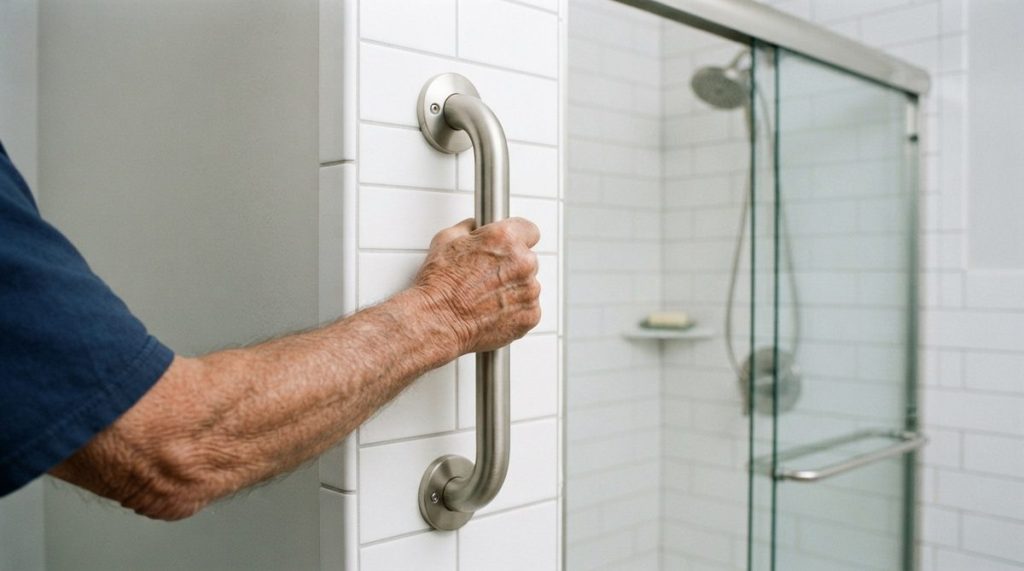
- A master bathroom with a standard tub-shower combo and no grab bars anywhere.
- A laundry room in the basement, accessible only by a steep, carpeted staircase.
- Three-inch thresholds between the garage and the house.
None of these were problems for Diane today. But aging in place isn’t about today. It’s about designing your home for the person you’ll be in five, ten, or fifteen years.
The “Future Self” Exercise
I walked Diane through something I call the Future Self Exercise. I asked her to walk through her house imagining she had a sprained ankle and one arm in a sling. Could she get from her bedroom to the kitchen? Could she use the bathroom safely? Could she get the mail?
She made it about four minutes before she understood the problem.
“I couldn’t even get into my own shower,” she said.
What Aging in Place Actually Costs (And Where to Save)
Let me be honest about money, because this is where a lot of people either get discouraged or get taken advantage of. The costs of aging in place vary enormously depending on your home, your health, and your timeline. But I can share what Diane’s project looked like as a realistic benchmark.
Her total investment over six months came to approximately $23,500. That covered bathroom modifications, door hardware replacements, improved lighting, a main-floor laundry conversion, threshold ramps, and exterior handrails. It did not include any smart home technology, which we addressed separately on a smaller budget.
For context, the median annual cost of assisted living in the U.S. is now over $64,000, according to the Genworth Cost of Care Survey. A private room in a nursing home exceeds $108,000 per year. Diane’s entire home modification cost less than five months in assisted living.
If the financial side of aging in place concerns you—and it should—I’d recommend reading Aging in Place Costs More Than You Think: A Deep Dive, which breaks down the numbers in more detail than I can here. The bottom line is that staying home is almost always cheaper than moving to a facility, but only if you plan ahead.
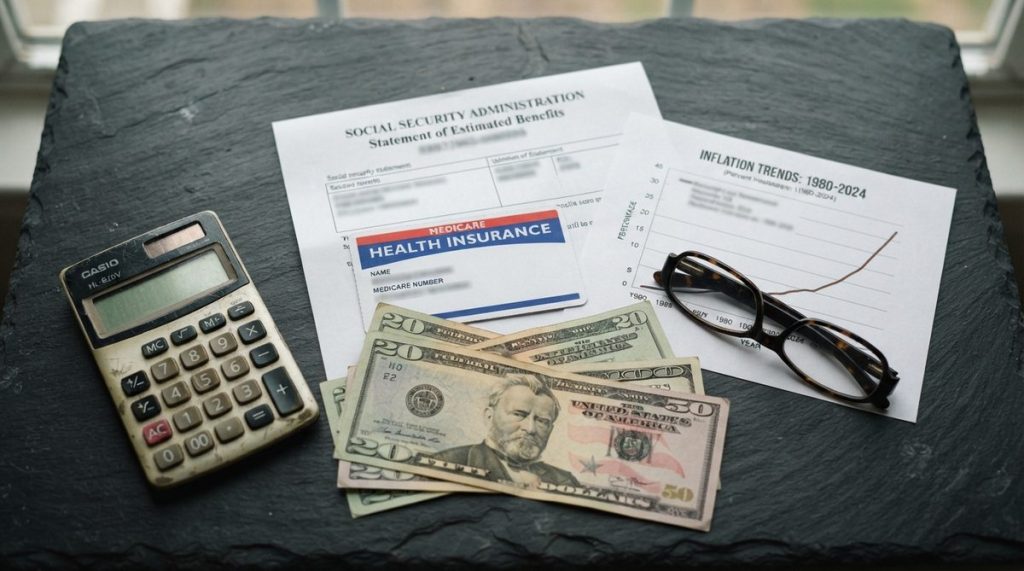
And planning ahead means protecting the savings you have. Inflation has been quietly eroding purchasing power for retirees, making every dollar of home modification budget matter more. If you haven’t looked at how rising costs affect your retirement funds lately, this guide on stopping inflation from depleting retirement savings is worth your time.
The 8-Step Aging-in-Place Action Plan
Based on what I did with Diane—and what I recommend to every client—here’s a practical, prioritized approach to making your home safer and more livable for the decades ahead.
- Do a room-by-room safety audit now, not later. Walk through every room with the Future Self Exercise. Write down every obstacle, every narrow doorway, every slippery surface. Be ruthless.
- Prioritize the bathroom first. This is where the majority of in-home falls occur. Install grab bars (not towel bars—they’re not rated for body weight), add a curbless or low-threshold shower entry, and put in a handheld showerhead. Budget roughly $3,000–$8,000 for a meaningful bathroom renovation.
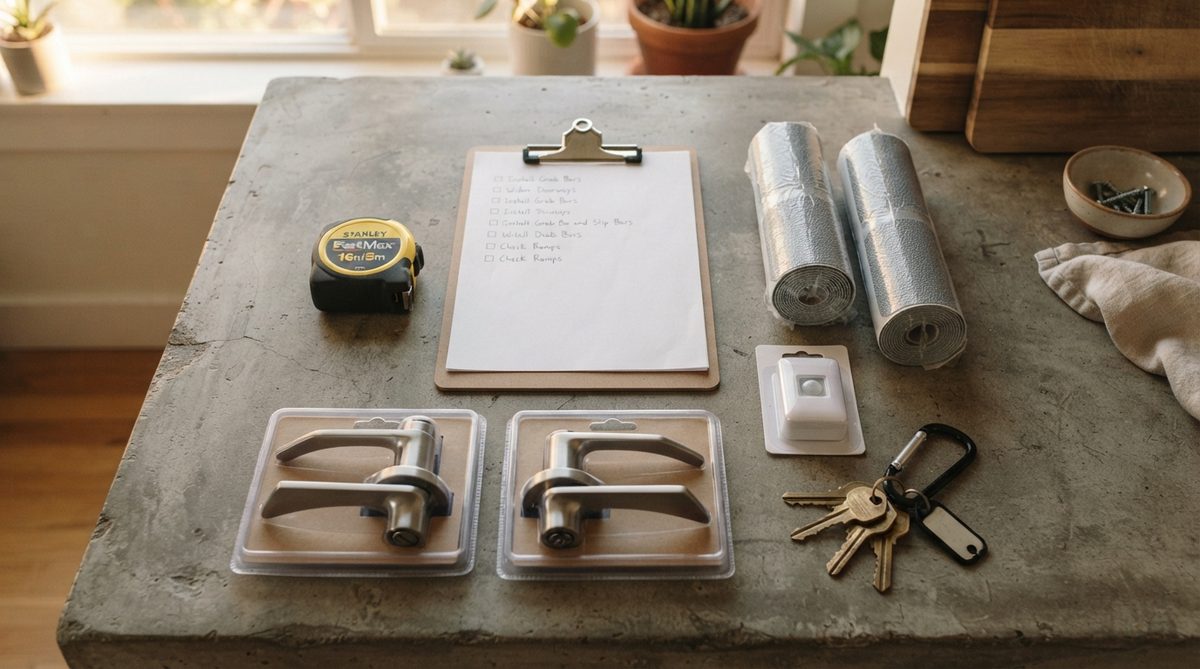
- Replace round doorknobs with lever handles. This is one of the cheapest and most impactful changes you can make. A full house conversion typically costs $200–$500 in hardware, and most handy homeowners can do it themselves.
- Improve lighting everywhere. The National Institute on Aging emphasizes that poor lighting significantly increases fall risk. Add motion-sensor lights in hallways, bathrooms, and stairways. Replace dim bulbs with brighter LED options. Budget $300–$800.
- Eliminate or manage level changes. If your home has steps between rooms, add solid handrails on both sides. Consider threshold ramps for doorways. If you have a multi-story home, plan for how you’ll live primarily on one floor if stairs become difficult.
- Move essential functions to the main floor. If your laundry, bedroom, or full bathroom is on a different level, start planning a main-floor alternative now. Diane’s laundry relocation cost about $4,200 and was the modification she says she uses—and appreciates—every single day.
- Address the exterior. Cracked walkways, uneven pavers, steep porch steps without railings—these are fall risks that people overlook constantly. Add handrails, repair surfaces, and ensure exterior lighting covers your path from the car to the front door.
- Build a maintenance and technology plan. Aging in place isn’t a one-time project. Budget for ongoing home maintenance, and consider smart home devices like video doorbells, voice-activated assistants, and medical alert systems that support independence without sacrificing safety.
What Diane Didn’t Expect: The Emotional Side
About three months into her project, Diane called me again. This time she wasn’t worried about grab bars or doorknobs. She was struggling with something I hear constantly but rarely see discussed in articles about aging in place: the emotional weight of it all.
“It feels like I’m admitting I’m getting old,” she told me. “Every time the contractor drills another bracket into my wall, it’s like a reminder.”
I get it. And I never dismiss that feeling when clients share it with me. Modifying your home for aging can feel like surrender, like you’re conceding something to time. But I’ve come to see it differently after working with hundreds of homeowners.
What Diane was actually doing was taking control. She was making a deliberate, strategic decision about her future instead of leaving it to chance. Her neighbor didn’t get to choose. Diane did.
“Modifying your home for aging isn’t admitting defeat. It’s the most powerful declaration of independence you can make after 60.”
By January, Diane’s perspective had shifted completely. She hosted her book club in her newly reorganized living room. She did laundry without going near the basement. She told me the motion-sensor lights in her hallway made her feel “like I’m living in a smart house.” She was proud of her home again—not despite the changes, but because of them.
The Biggest Mistakes I See People Make
After 14 years in this field, I can predict the missteps before they happen. Here are the ones that cost people the most—in money, safety, or both.
Hiring the Wrong Contractor
Not every contractor understands aging-in-place design. I’ve seen grab bars installed into drywall with no backing—they’ll rip right out of the wall when someone puts weight on them. Look for contractors with CAPS certification or specific experience in accessibility modifications. Ask for references from clients over 60.
Over-Investing in Technology, Under-Investing in Structure
Smart home gadgets are appealing, and some are genuinely useful. But I’ve met clients who spent $3,000 on a voice-controlled home system and hadn’t installed a single grab bar. Technology can’t catch you when you slip on a wet bathroom floor. Get the structural basics right first. And be cautious about which tech you adopt—scams targeting older adults through connected devices are a growing concern.
Ignoring the Kitchen
People focus on bathrooms and stairs, which makes sense. But the kitchen is where you spend significant daily time, and it’s full of hazards: high shelves that require step stools, heavy pots stored at floor level, poor lighting over countertops. Pull-down shelving, under-cabinet LED lighting, and lever-style faucet handles are relatively affordable upgrades that make a real difference.
Not Having the Conversation With Family
Aging in place isn’t a solo project. Your adult children, your close friends, your neighbors—they’re part of the ecosystem that makes staying home viable. Have the conversation early. Share your plan. Let people know what you’re doing and why. It reduces anxiety for everyone involved.
Can We Actually Deliver on the Promise of Aging in Place?
Recent headlines have asked a pointed question: everyone supports aging in place, but can we actually deliver it? As someone who does this work every day, my answer is nuanced.
Yes, most people can age in place—but not by accident. It requires planning, investment, and a willingness to adapt your home before you need to. It requires honest conversations about health, finances, and what daily life might look like in ten or twenty years. And it requires a housing industry that takes accessibility seriously, not as an afterthought or a niche market, but as a standard.
We’re not there yet. But individual homeowners don’t have to wait for the industry to catch up. You can start now, the way Diane did—with a phone call, a walk-through, and the courage to plan for a future you can’t perfectly predict.
Where Diane Is Now
I checked in with Diane last month. She’s 68 now, healthy, active, and firmly rooted in the home she’s lived in for 26 years. She told me she recently helped her next-door neighbor—a 72-year-old retired teacher—start her own aging-in-place assessment.
“I just told her what you told me,” Diane said. “Don’t wait for the fall.”
That’s the message I’d leave you with, too. Don’t wait for the crisis. Don’t wait for the phone call. The best time to make your home work for your future was five years ago. The second best time is right now.
About Marcus Bell, Certified Aging-in-Place Specialist (CAPS)
Marcus Bell is a Certified Aging-in-Place Specialist (CAPS) with 14 years of experience helping American seniors create safer, more comfortable living environments. He has consulted on hundreds of home modifications — from bathroom safety upgrades to smart home installations — and writes extensively about the products, services, and strategies that help older adults live independently for longer. At Daily Trends Now, Marcus covers home improvement, aging-in-place solutions, gardening, and practical lifestyle tips for seniors.