

Key Takeaways
- Older Americans lost over $3.4 billion to online fraud in 2023, and AI-powered scams are making 2026 even more dangerous.
- Romance scams, tech support fraud, and cryptocurrency schemes are the top three financial threats facing adults over 50 right now.
- Simple actions like enabling two-factor authentication, freezing your credit, and verifying caller identity can block the vast majority of attacks.
- Knowing the emotional triggers scammers exploit — urgency, fear, loneliness, and authority — is your single best defense.
Why Online Scams Targeting Older Adults Are Surging in 2026
In my 14 years working in cybersecurity and digital privacy research, I’ve never seen a threat landscape shift as fast as it has in the past 18 months. The FBI’s Internet Crime Complaint Center (IC3) reported that Americans over 60 lost more than $3.4 billion to online fraud in 2023 alone — a 11% jump from the year before. And those are only the cases that were actually reported. The real number is likely two to three times higher.
What’s driving the acceleration? Generative AI. Scammers now use AI voice-cloning tools to impersonate grandchildren, AI-generated photos to build fake dating profiles, and large language models to craft phishing emails that are virtually indistinguishable from legitimate correspondence. The old advice — “look for typos and bad grammar” — simply doesn’t cut it anymore.
Below, I’m breaking down the seven most dangerous online scams targeting older adults right now, along with concrete steps you can take today to protect yourself and your finances. If you’ve already reviewed general fraud-prevention strategies, consider this your advanced, up-to-the-minute playbook. For foundational tips, you can also check out 7 Ways Older Adults Can Stay Safe From Scams in 2025.
1. The AI-Powered Grandparent Scam
How It Works
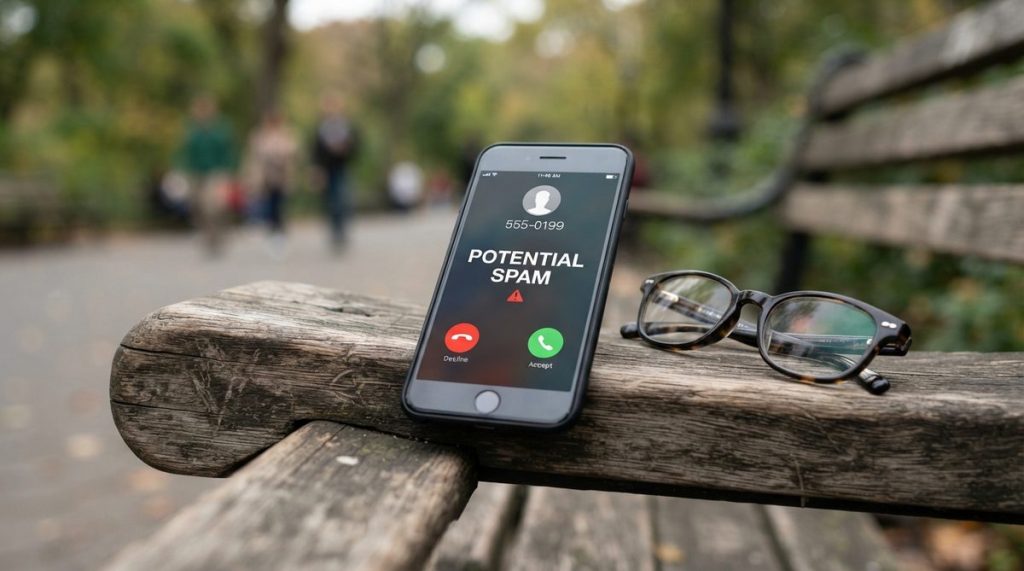
A frantic phone call comes in: “Grandma, I’ve been in an accident — please don’t tell Mom and Dad!” The voice sounds exactly like your grandchild. That’s because scammers now clone voices from as little as three seconds of audio scraped from social media videos or voicemail greetings.
The caller insists you wire money, send gift cards, or even hand cash to a “courier” who shows up at your door. The emotional pressure is intense and deliberate.
How to Stop It
- Establish a family code word. Pick a word or phrase that only your immediate family knows. If the caller can’t provide it, hang up.
- Hang up and call back. Use the phone number you already have saved for your grandchild — never the number displayed on your caller ID.
- Never send gift cards as payment. No legitimate entity — not a hospital, not a bail bondsman, not the IRS — accepts payment in Google Play or Apple gift cards.
2. Romance Scams on Dating Sites and Social Media
How It Works
The FTC reported that romance scams cost Americans $1.14 billion in 2023, with the median individual loss for victims over 60 reaching $9,000. Scammers create convincing profiles — often using AI-generated photos now — on dating platforms, Facebook, and even Words With Friends.
They build emotional intimacy over weeks or months before introducing a “crisis”: a medical emergency abroad, a frozen bank account, a business deal that just needs a small investment. What I see most often in my research is that victims aren’t naive — they’re intelligent people who were expertly manipulated during a period of loneliness or transition.
How to Stop It
Reverse-image-search any profile photo using Google Lens or TinEye. If someone you’ve never met in person asks for money — for any reason — that’s a scam. Period. AARP’s technology resource center maintains an updated list of red flags specific to online dating fraud.

3. Tech Support Fraud
How It Works
A pop-up window suddenly fills your screen: “YOUR COMPUTER HAS BEEN COMPROMISED. CALL MICROSOFT SUPPORT IMMEDIATELY.” Or you receive a phone call from someone claiming to be from Apple, Amazon, or your internet provider, saying they’ve “detected suspicious activity.”
The scammer convinces you to grant remote access to your computer, then either installs malware, steals banking credentials, or charges hundreds of dollars for “repairs” you never needed. In 2023, tech support scams accounted for over $924 million in losses reported to the IC3, with adults over 60 representing the largest victim group.
How to Stop It
Microsoft, Apple, and Google will never call you unsolicited or display pop-ups with phone numbers. If you see a scary warning, close the browser entirely (press Ctrl+Alt+Delete on Windows or force-quit on a Mac). If you can’t close it, simply restart your computer. The pop-up will be gone.
4. Cryptocurrency and Investment Scams
How It Works
This is the fastest-growing category of elder fraud. The FBI’s 2023 report showed crypto-related investment scams cost older Americans over $1.24 billion — a staggering 78% increase from 2022. The scam often starts on social media or via an unsolicited text, leading to a fake investment platform that shows your “portfolio” growing rapidly.
Victims are encouraged to invest more. When they try to withdraw funds, they’re told to pay “taxes” or “fees” first. The platform, the returns, and the customer support agents are all fabricated.
How to Stop It
Any investment guaranteeing specific returns — especially in crypto — is a scam. Verify any investment platform through the SEC’s EDGAR database or FINRA BrokerCheck before sending a single dollar. If your retirement savings are already under pressure from market volatility, scammers may find you especially receptive — understanding the biggest financial concerns facing retirees can help you spot emotional manipulation.
5. Government Impersonation Scams
How It Works
You receive a call, email, or text claiming to be from the Social Security Administration, the IRS, or Medicare. The message warns that your benefits will be suspended, your Social Security number has been “compromised,” or you owe back taxes that must be paid immediately.
I often tell my readers: urgency is the scammer’s greatest weapon. The moment someone tells you that you must act right now or face arrest, account suspension, or benefit loss — that’s your red flag. Real government agencies communicate primarily by mail, and they never demand immediate payment by wire transfer, gift card, or cryptocurrency.
How to Stop It
Hang up. Then call the agency directly using the number on their official website (ssa.gov, irs.gov, medicare.gov). If you’re worried about changes to your Social Security benefits, get your information straight from the source — and read up on the latest 2026 Social Security updates so you know what’s real.
6. Phishing Emails and Smishing Texts
How It Works
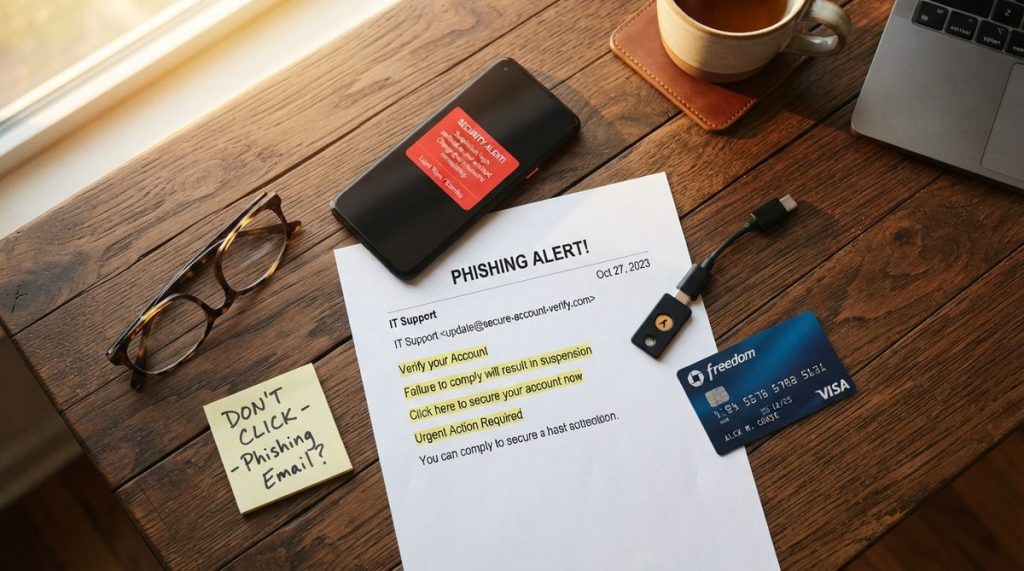
Phishing has evolved far beyond the Nigerian prince email. In 2026, phishing messages arrive as perfectly formatted Amazon order confirmations, UPS delivery notifications, bank security alerts, and Medicare enrollment reminders. “Smishing” — phishing via SMS text — has exploded, with CISA warning of a sharp increase in fake toll-payment and package-delivery texts throughout 2025 and into 2026.
Clicking the link takes you to a convincing replica of a real website where you’re asked to enter your login credentials, credit card number, or Social Security number.
How to Stop It
- Never click links in unexpected texts or emails. Instead, open your browser and go directly to the company’s website.
- Check the sender’s actual email address — not just the display name. “Amazon Support” coming from xj7k@randomdomain.net is not Amazon.
- Enable two-factor authentication (2FA) on every account that offers it. Even if a scammer steals your password, 2FA blocks them from logging in.
- Use a password manager like Bitwarden (free) or 1Password ($2.99/month) to generate and store unique passwords for every site.
7. The Fake Online Marketplace Scam
How It Works
Whether it’s Facebook Marketplace, Craigslist, or a too-good-to-be-true deal on a website you found through a social media ad, fake marketplace listings are surging. Scammers post products at below-market prices — popular targets include power tools, furniture, electronics, and even puppies — collect payment via Zelle, Venmo, or wire transfer, and disappear.
A related variant involves fake rental listings. Scammers copy legitimate real estate photos and create fraudulent listings for apartments or vacation homes, collecting deposits and first-month rent from multiple victims simultaneously.
How to Stop It
Use a credit card (not debit, not Zelle, not wire transfer) whenever possible — credit cards offer chargeback protections that other payment methods don’t. If a deal seems 40-50% cheaper than everywhere else, it’s almost certainly a scam. Consumer Reports recommends verifying any unfamiliar online retailer through the Better Business Bureau’s Scam Tracker before purchasing.
Comparing the 7 Scams: What’s at Stake
| Scam Type | Median Loss (Age 60+) | Primary Contact Method | Payment Method Demanded | Difficulty to Recover Funds |
|---|---|---|---|---|
| AI Grandparent Scam | $7,500 | Phone call | Wire transfer / gift cards | Very Hard |
| Romance Scam | $9,000 | Dating sites / social media | Wire transfer / crypto | Very Hard |
| Tech Support Fraud | $1,000 | Pop-up / phone call | Credit card / gift cards | Moderate |
| Crypto Investment Scam | $35,000+ | Social media / text | Cryptocurrency | Nearly Impossible |
| Government Impersonation | $3,000 | Phone / email / text | Gift cards / wire transfer | Hard |
| Phishing / Smishing | $500–$2,000 | Email / text message | Credential theft | Moderate |
| Fake Marketplace Listing | $500–$1,500 | Social media / websites | Zelle / Venmo / wire | Hard |
Sources: FBI IC3 2023 Elder Fraud Report, FTC Consumer Sentinel Network, AARP Fraud Watch Network. Median loss figures are approximate and represent reported cases.
Your 5-Minute Security Checklist
I know this is a lot to absorb. So here’s what I recommend you do today — right now, before you close this tab. These five actions take about five minutes each and will dramatically reduce your risk.
- Freeze your credit at all three bureaus (Equifax, Experian, TransUnion). It’s free, it takes minutes online, and it prevents anyone from opening new accounts in your name. You can temporarily “thaw” it anytime you need to apply for credit.
- Turn on two-factor authentication for your email, bank, and social media accounts. Your email is the master key — if a scammer gets into it, they can reset passwords for everything else.
- Set up a family code word. Share it in person (not via text or email) with your children and grandchildren. Agree that no one will ever ask for money without using it first.
- Register your phone number on the National Do Not Call Registry (donotcall.gov) and enable your phone’s built-in spam-call filtering (both iPhone and Android have this feature in Settings).
- Bookmark this page or print it. Having a reference guide on hand when a suspicious call or email arrives helps you respond from logic, not panic.
What to Do If You’ve Already Been Scammed
There’s no shame in falling victim. These are professional criminals running sophisticated operations, and they target smart, trusting people deliberately. Here’s what to do immediately:
- Contact your bank or credit card company right away to freeze accounts and dispute charges.
- File a report with the FBI’s IC3 at ic3.gov — this is the single most important step for helping law enforcement track and shut down scam networks.
- Report to the FTC at reportfraud.ftc.gov.
- Call the AARP Fraud Watch Network Helpline at 877-908-3360 for free support and guidance from trained fraud counselors.
- Change your passwords immediately for any compromised accounts, starting with your email.
If you’ve lost a significant amount and are concerned about the impact on your retirement finances, it’s worth consulting both a fiduciary financial advisor and reviewing strategies for protecting your retirement savings.
The Bottom Line: Skepticism Is Your Superpower
In my years of studying how online scams targeting older adults evolve, one truth remains constant: the scammers’ real target isn’t your computer — it’s your emotions. Fear, urgency, loneliness, trust in authority — these are the entry points. Technology just provides the delivery mechanism.
The single most powerful defense you have is the willingness to pause. Before you click, before you call back, before you send money — stop. Take a breath. Verify. Call a trusted family member or friend. Real emergencies can wait five minutes; scams can’t.
You don’t need to be a cybersecurity expert to stay safe online. You just need to be a little bit skeptical, a little bit prepared, and willing to hang up the phone. That alone puts you ahead of most people — at any age.
About Dr. Priya Sharma, PhD in Computer Science, CISSP
Dr. Priya Sharma is a cybersecurity expert with a PhD in Computer Science and a Certified Information Systems Security Professional (CISSP) credential. She has spent 14 years researching digital privacy, online fraud, and data protection — with a particular focus on the risks facing older internet users. At Daily Trends Now, Dr. Sharma writes about online scams, password security, smartphone privacy, and the practical steps readers can take to stay safe in an increasingly connected world.