

Why Healthy Aging Demands a Different Playbook After 50
The 2026 America’s Health Rankings Senior Report delivered a complicated message: preventive care visits among older Americans are climbing, yet food insecurity and drug-related deaths in the 65-plus population are climbing right alongside them. That paradox tells me something I’ve observed across 15 years of clinical nutrition practice—knowing you should take care of yourself and actually building the daily habits to do it are two very different things.
Healthy habits for aging well aren’t about dramatic overhauls. They’re about consistent, evidence-based adjustments that compound over years and decades. The seniors I work with who thrive in their 70s, 80s, and even 90s share a surprisingly common set of behaviors—and none of them involve miracle supplements or extreme diets.
Below are seven habits I recommend most often, drawn from peer-reviewed research, national guidelines, and what I’ve seen work in real people’s lives. If you’re in your 60s or 70s, you can start any of these today.
1. Prioritize Protein at Every Single Meal
This is the habit I correct most frequently in my practice. After age 50, your body becomes less efficient at using dietary protein to build and repair muscle—a phenomenon researchers call “anabolic resistance.” The result? You need more protein than you did at 30, not less.
The current recommended dietary allowance (RDA) of 0.8 grams per kilogram of body weight was established for generally healthy adults, but mounting evidence—including a 2023 position paper from the Mayo Clinic—suggests that older adults benefit from 1.0 to 1.2 grams per kilogram daily, and even more if managing a chronic illness or recovering from surgery.
What This Looks Like on Your Plate
- Aim for 25–30 grams of protein per meal rather than loading it all at dinner.
- Breakfast swaps matter: two eggs plus Greek yogurt outperforms a bagel with jam by roughly 20 grams of protein.
- Keep canned wild salmon, cottage cheese, and rotisserie chicken on hand for quick options.
- If chewing is a concern, smoothies with whey protein or soft-cooked lentils can close the gap.
I often tell my clients that protein is the single most under-consumed macronutrient in the senior diet—and fixing it pays dividends in muscle preservation, immune function, and wound healing.
2. Move for 150 Minutes a Week—But Make Strength Non-Negotiable
The CDC recommends at least 150 minutes of moderate-intensity aerobic activity per week for adults 65 and older, plus muscle-strengthening activities on two or more days. Yet only 27% of older Americans meet both benchmarks, according to 2025 BRFSS data.
Walking is excellent. But if walking is your only form of exercise, you’re leaving critical benefits on the table. Sarcopenia—the age-related loss of muscle mass—accelerates after 60 and is directly linked to falls, fractures, loss of independence, and higher mortality.
Building a Balanced Routine
- Resistance training two to three times per week: bodyweight squats, wall push-ups, resistance bands, or light dumbbells all count.
- Balance work daily: single-leg stands while brushing your teeth, heel-to-toe walking, or tai chi.
- Aerobic activity most days: brisk walking, swimming, cycling, or even vigorous gardening.
For a detailed guide on staying active and safe at home, check out 7 Ways to Age in Place Safely After 60 (From a PT)—it pairs perfectly with these nutrition strategies.
3. Get Proactive About Food Security and Meal Planning
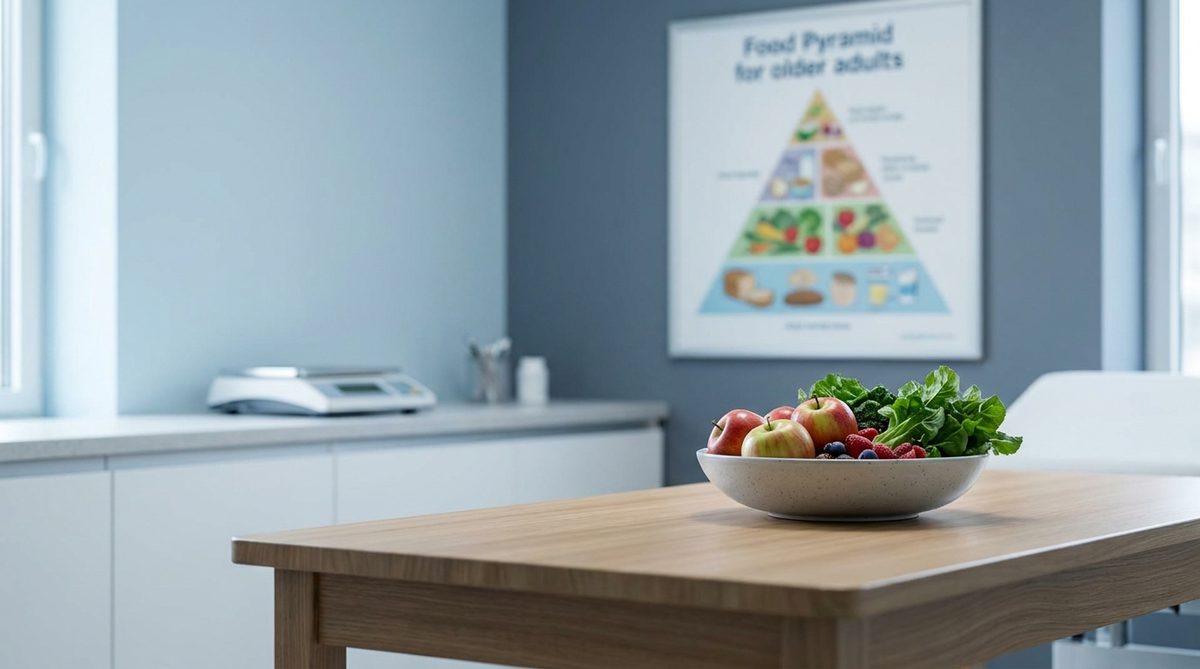
The America’s Health Rankings report flagged a 15% increase in food insecurity among seniors between 2022 and 2025. This isn’t only a rural or low-income issue. I’ve worked with retired professionals who simply stop cooking balanced meals after a spouse passes away or mobility declines.
“Nearly 1 in 10 Americans over 60 now faces food insecurity—and the nutritional fallout accelerates every chronic condition I manage in my practice, from diabetes to osteoporosis.”
Practical Steps to Protect Your Nutrition
- Apply for SNAP benefits if eligible—income limits were adjusted upward in 2025, qualifying more seniors than ever.
- Use grocery delivery services (many offer senior discounts) to maintain access when driving becomes difficult.
- Batch-cook and freeze: preparing four portions of soup, stew, or casserole at once reduces both cost and effort.
- Contact your local Area Agency on Aging for home-delivered meal programs like Meals on Wheels.
Aging well in your 60s, 70s, and beyond is nearly impossible if the raw materials—quality food—aren’t consistently available. If finances are part of the challenge, the guide on Retirees Depleting Savings Faster: A CFP’s 2026 Survival Guide offers solid financial strategies that free up room in the budget for better nutrition.
4. Manage Chronic Conditions as a Team, Not Solo
About 80% of adults 65 and older live with at least one chronic condition; 68% have two or more, according to the National Institute on Aging. What I see most often is patients trying to manage hypertension, type 2 diabetes, or heart disease with a single annual check-up and a prescription refill. That’s not a management plan—it’s a prayer.
Building Your Care Team
- Primary care physician for overall coordination and medication reviews (request a comprehensive med reconciliation at least annually).
- Registered dietitian for individualized nutrition therapy—Medicare Part B covers Medical Nutrition Therapy for diabetes and kidney disease.
- Pharmacist for drug interaction screening, especially if you take five or more medications (polypharmacy).
- Physical therapist or certified personal trainer experienced with older adults for safe exercise programming.
The preventive care increases noted in the 2026 Senior Report are encouraging, but screening alone doesn’t manage disease. Active, coordinated follow-up does. And as research from this recent study on aging and decline shows, having chronic conditions doesn’t predetermine a downward trajectory—how you manage them does.
5. Hydrate Strategically (Your Thirst Signal Is Lying to You)
One of the sneakiest changes that happens with aging is a blunted thirst mechanism. By the time you feel thirsty at 70, you may already be mildly dehydrated. Chronic low-grade dehydration in older adults contributes to urinary tract infections, kidney stones, constipation, confusion, and even increased fall risk.
A 2024 analysis published in the Journal of the American Geriatrics Society found that up to 40% of community-dwelling seniors are chronically under-hydrated. And many avoid fluids intentionally because of incontinence concerns or frequent nighttime trips to the bathroom.
Smart Hydration Strategies
- Aim for six to eight cups of fluid daily—water, herbal tea, broth, and water-rich fruits (watermelon, oranges, cucumbers) all count.
- Front-load your intake: drink the majority of fluids before 4 p.m. to reduce nighttime disruptions.
- Keep a visible, refillable water bottle in the room where you spend the most time.
- If you take diuretics for blood pressure, ask your physician about electrolyte monitoring.
I counsel my patients that hydration is the cheapest, most underrated intervention in the healthy aging toolkit. It costs nothing and improves almost everything.

6. Guard Your Sleep Like It’s Medicine—Because It Is
Sleep architecture changes as we age: deep slow-wave sleep decreases, nighttime awakenings increase, and circadian rhythms shift earlier. But “normal aging changes” should not be confused with “acceptable sleep deprivation.” Adults over 65 still need seven to eight hours, according to the National Sleep Foundation’s 2025 guidelines.
“Poor sleep in older adults is independently associated with a 30–40% higher risk of developing dementia over 10 years, according to data tracked by the National Institute on Aging. That statistic alone should make sleep hygiene a top-tier health habit.”
Improving Sleep Without Adding More Pills
- Maintain a consistent wake time—even on weekends. This anchors your circadian clock more effectively than any supplement.
- Get bright light exposure within the first hour of waking. Morning sunlight helps regulate melatonin production naturally.
- Limit caffeine after noon. Caffeine’s half-life extends as liver metabolism slows with age.
- Discuss sleep apnea screening with your doctor if you snore, wake unrefreshed, or experience daytime sleepiness. Undiagnosed obstructive sleep apnea affects an estimated 56% of adults over 65.
- If you’re using over-the-counter sleep aids like diphenhydramine (Benadryl), talk to your physician—the American Geriatrics Society’s Beers Criteria lists it as potentially inappropriate for older adults due to cognitive and fall risks.
Healthy habits for aging well always circle back to sleep. When sleep quality improves, blood sugar control, blood pressure, mood, and even appetite regulation tend to follow.
7. Stay Socially Connected—It’s a Biological Necessity, Not a Luxury
The U.S. Surgeon General’s 2023 advisory on loneliness quantified what many of us already sensed: chronic social isolation carries health risks equivalent to smoking 15 cigarettes a day. For seniors specifically, isolation is associated with a 50% increased risk of dementia and a 29% increased risk of coronary heart disease.
In my 15 years of experience, I’ve watched nutrition plans fail not because the science was wrong, but because the person eating alone every night lost motivation to cook, shop, or care. Social connection fuels the discipline that healthy habits demand.
Concrete Ways to Stay Engaged
- Join a walking group, faith community, or senior center activity—structured, recurring events create accountability.
- Volunteer. Data from the Corporation for National and Community Service shows that seniors who volunteer regularly report better physical and mental health outcomes.
- Use technology intentionally: video calls with grandchildren, online book clubs, or even technology tools designed to help older adults stay independent can bridge the gap when in-person contact is limited.
- Share meals. Cooking for or with someone else transforms nutrition from a chore into a social ritual.
National Senior Health and Fitness Day—observed every year on the last Wednesday of May—is built around exactly this principle: movement and community together. If you missed the 2027 event on May 26, find a local program and mark the calendar for next year.
Putting It All Together: Your Weekly Checklist
Healthy aging doesn’t require perfection. It requires consistency on the fundamentals. Here’s how I suggest my patients self-audit each week:
- Did I include a protein source at every meal most days?
- Did I hit at least 150 minutes of movement, including two strength sessions?
- Did I eat adequate fruits, vegetables, and whole grains—and is my pantry stocked for next week?
- Did I attend or schedule upcoming medical appointments and take medications as directed?
- Did I drink fluids consistently throughout the day?
- Did I average seven or more hours of sleep most nights?
- Did I have meaningful social interaction at least three times?
Checking most of those boxes most weeks puts you ahead of the vast majority of your peers—not because the bar is high, but because consistency is rare.
The Bottom Line on Aging Well
The latest national data confirms what I counsel every day: the seniors who do best aren’t the ones with the fewest diagnoses. They’re the ones with the strongest daily habits. Healthy habits for aging well are cumulative. Every protein-rich breakfast, every walk, every glass of water, every good night’s sleep adds a brick to a foundation that supports you through whatever comes next.
If you found these strategies useful, you might also appreciate the deeper dive in 5 Healthy Habits for Aging Well in Your 60s, 70s, and Beyond, which covers complementary ground from a slightly different angle. Combine both, and you’ll have a comprehensive blueprint.
Start with one habit this week. Master it. Then add the next. That’s how lasting healthy aging actually works.
Frequently Asked Questions
What is the most important healthy habit for aging well after 60?
While all seven habits work synergistically, adequate protein intake and consistent strength training have the strongest evidence for preserving independence and reducing fall risk in adults over 60. These two habits directly combat sarcopenia, which is a primary driver of disability in older age.
How much protein should a senior eat per day?
Most nutrition researchers now recommend 1.0 to 1.2 grams of protein per kilogram of body weight daily for adults over 65—significantly more than the general RDA of 0.8 g/kg. For a 160-pound senior, that translates to roughly 73–87 grams of protein spread across three meals.
Can you start healthy aging habits in your 70s and still see benefits?
Absolutely. Research from the National Institute on Aging confirms that muscle-strengthening exercise, improved nutrition, and better sleep hygiene produce measurable benefits even in adults in their 80s and 90s. It is never too late to begin, though starting earlier amplifies long-term results.
Does Medicare cover visits to a registered dietitian?
Yes, Medicare Part B covers Medical Nutrition Therapy (MNT) provided by a registered dietitian for beneficiaries diagnosed with diabetes, kidney disease (pre-dialysis), or those who have received a kidney transplant within the past 36 months. A physician referral is required, and there is no copay if your dietitian accepts Medicare assignment.
About Dr. Linda Park, PhD, RD (Registered Dietitian)
Dr. Linda Park is a Registered Dietitian with a PhD in Nutritional Science and 15 years of clinical and research experience focused on older adults. She has published peer-reviewed research on the role of nutrition in managing diabetes, cardiovascular health, and cognitive decline in seniors. At Daily Trends Now, Dr. Park writes evidence-based articles on senior nutrition, supplement safety, meal planning, and the foods that truly make a difference for aging well.