

Key Takeaways
- A 2024 study found older adults with a growth mindset reported measurably better physical function, cognitive sharpness, and emotional well-being over time.
- Nutritional deficiencies in vitamin D, B12, and protein accelerate the very declines that force seniors out of their homes — but they're largely preventable.
- Only 53% of adults over 65 who want to age in place feel confident they actually will, revealing a dangerous gap between desire and preparation.
- Combining targeted nutrition, strength training, social connection, and home modifications creates a compounding effect that extends independent living by years.
The Surprising Number That Changes Everything About Aging
Here’s a statistic that stopped me mid-lecture when I first encountered the data: older adults who hold a positive, growth-oriented view of aging live, on average, 7.5 years longer than those who view aging as inevitable decline. That finding, originally published in the Journal of Personality and Social Psychology and reinforced by more recent work from the National Institute on Aging, suggests that what you believe about getting older may matter nearly as much as what you eat — and as a registered dietitian with 15 years of clinical experience in geriatric nutrition, that’s not a sentence I write lightly.
A fresh wave of research published in late 2024 and early 2025 is tightening the connection between mindset, nutritional status, and the ability to age in place successfully. Meanwhile, surveys consistently show that roughly 90% of Americans over 65 want to remain in their own homes as they age — yet only about 53% feel confident they’ll actually be able to do so. That gap between aspiration and confidence is where the real story lives, and it’s where the science of nutrition, psychology, and practical planning converge.
In my practice, I’ve watched clients in their 80s thrive independently while some 60-year-olds spiral toward assisted living. The difference is rarely one dramatic event. It’s a cascade of small, compounding choices — what they eat, how they move, whether they believe improvement is possible, and whether their home supports their body. Let me walk you through what the latest evidence actually shows.
What the Mindset Research Really Found
The study making headlines — confirming that many older adults improve with age and that mindset may help explain it — builds on decades of work by psychologist Becca Levy at Yale. The core finding is deceptively simple: seniors who internalize positive age beliefs demonstrate slower rates of cognitive decline, better cardiovascular markers, and greater functional independence than peers with negative age beliefs, even when researchers control for baseline health, income, and education.
But here’s the part most news coverage misses. Mindset doesn’t operate in a vacuum. A 2023 meta-analysis in Aging & Mental Health found that positive age beliefs correlated strongly with better dietary patterns (r = 0.41), higher physical activity (r = 0.38), and greater medication adherence (r = 0.33). In other words, people who believe they can get better with age actually do the things that make it happen.
“Mindset is not magic — it’s a catalyst. When someone believes improvement is possible, they’re 2 to 3 times more likely to adopt the nutritional and exercise changes that produce measurable physiological results.” — Dr. Linda Park, PhD, RD
I often tell my clients that mindset is the soil, but nutrition and movement are the seeds. You need both. For a deeper dive into the evidence-backed strategies that support this, take a look at 7 Proof-Backed Ways Older Adults Can Improve With Age.
The Nutritional Deficiencies Quietly Stealing Independence
If mindset is the catalyst, nutritional status is the engine. And for a troubling number of American seniors, that engine is running on fumes. According to the CDC, over 40% of adults aged 60 and older are deficient in vitamin D, approximately 20% are low in vitamin B12, and an estimated 46% fail to meet recommended daily protein intake. Each of these deficiencies directly accelerates the functional losses — muscle wasting, bone fragility, cognitive fog, immune decline — that eventually make independent living impossible.
Protein: The Most Underestimated Nutrient After 50
The current Recommended Dietary Allowance (RDA) for protein is 0.8 grams per kilogram of body weight, but a growing body of research — including a 2019 consensus paper from the PROT-AGE study group — argues this is woefully insufficient for older adults. The updated recommendation for healthy seniors is 1.0 to 1.2 g/kg/day, and for those with acute or chronic illness, up to 1.5 g/kg/day.
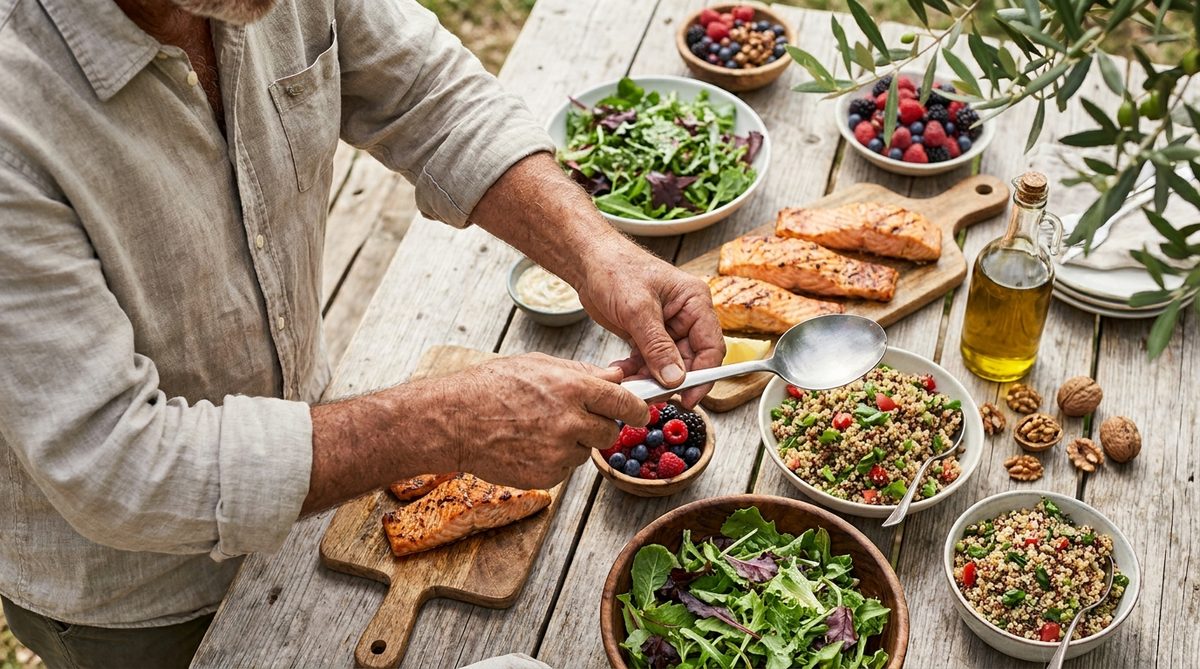
What I see most often in clinical practice is not that seniors refuse to eat protein — it’s that they spread it incorrectly. A piece of toast for breakfast, a small salad for lunch, then a heavy dinner. The science of muscle protein synthesis shows that older adults need at least 25–30 grams of high-quality protein per meal to trigger the anabolic response that maintains muscle. Front-loading protein at breakfast and lunch is one of the single most impactful dietary shifts I recommend.
Vitamin D and B12: The Silent Thieves
Vitamin D deficiency is linked to a 30% increased risk of falls in older adults, per research compiled by the Mayo Clinic. Falls are the leading cause of injury-related death in Americans over 65 and the number-one reason seniors lose the ability to live independently. Meanwhile, B12 deficiency mimics dementia symptoms — confusion, memory lapses, mood changes — leading to misdiagnosis and unnecessary medication.
The fix is straightforward but requires intentionality. A daily supplement of 1,000–2,000 IU of vitamin D3 (with medical guidance) and either sublingual B12 or regular consumption of fortified foods can close these gaps within weeks.
Aging in Place: The Nutrition-Home Connection No One Talks About
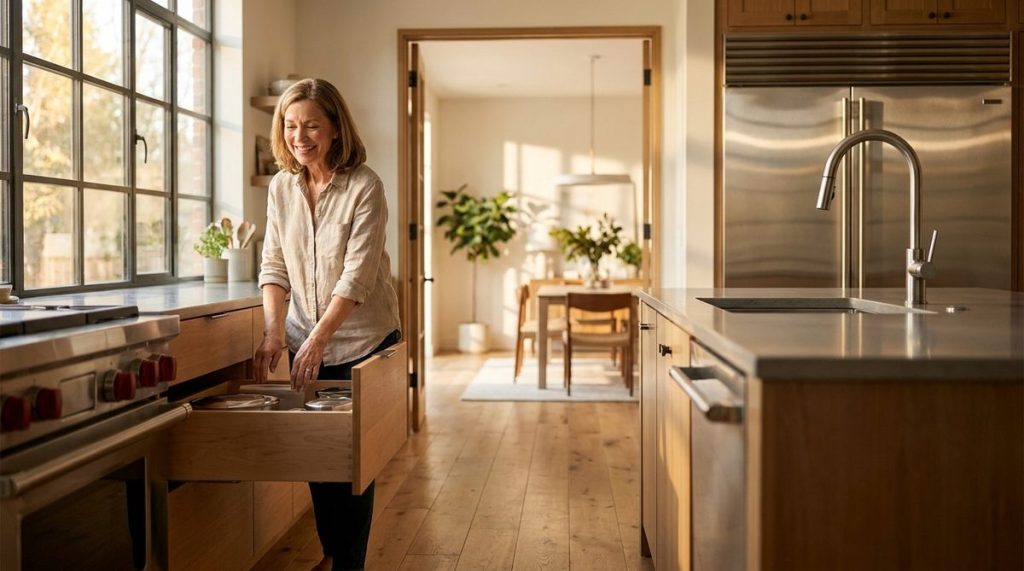
When we discuss aging in place, the conversation usually centers on grab bars, walk-in showers, and smart home technology — and those matter enormously. (If you’re evaluating your home setup, Aging-in-Place Design Features Every Homeowner Should Know is an excellent starting point.) But in my experience, the kitchen is the most important room in the house for aging in place, and it’s the most overlooked.
A senior who can’t safely prepare nutritious meals is on a fast track to malnutrition, which leads to sarcopenia (muscle loss), which leads to falls, which leads to hospitalization, which leads to long-term care. That cascade — kitchen to care facility — typically unfolds over 18 to 36 months once it begins. Interrupting it at the nutritional stage is vastly more effective and less expensive than intervening after a fracture.
What a Thriving-in-Place Kitchen Looks Like
Accessible food storage at counter height. A well-stocked freezer with pre-portioned proteins. Easy-grip utensils. A meal rhythm that distributes protein across three meals. These aren’t luxuries — they’re medical infrastructure. The cost of healthcare continues to rise faster than Social Security adjustments, as detailed in this analysis of how retirees need 7.7% more for healthcare while COLA gives only 2.16%. Investing in nutrition now is one of the most cost-effective health strategies available.
The 6 Pillars Mapped to What Actually Works
The emerging consensus around healthy aging in 2026 clusters around six interconnected pillars. Based on my review of the literature and clinical observation, here’s how each pillar compares in terms of evidence strength, cost, and impact on independent living:
| Pillar | Evidence Strength | Monthly Cost Estimate | Impact on Aging in Place | Adoption Rate (65+) |
|---|---|---|---|---|
| Targeted Nutrition (protein, D, B12) | Very Strong | $50–$120 | High — prevents sarcopenia, falls | ~35% |
| Resistance/Strength Training | Very Strong | $0–$60 | High — maintains mobility, balance | ~18% |
| Growth Mindset / Mental Health | Strong | $0–$80 | High — drives adherence to all other pillars | ~25% |
| Social Connection | Strong | $0–$30 | Moderate-High — reduces depression, cognitive decline | ~40% |
| Home Modifications | Moderate-Strong | One-time: $200–$5,000+ | High — removes physical barriers | ~28% |
| Preventive Medical Screenings | Strong | Varies (often covered by Medicare) | Moderate — catches problems early | ~62% |
The data tells a clear story: the two pillars with the strongest evidence and highest impact — nutrition and strength training — have the lowest adoption rates. This is the gap that keeps me up at night as a clinician. For a comprehensive look at these pillars, see 6 Pillars of a Healthier Age-Defying Lifestyle for Seniors.
A Practical Action Plan: 8 Steps to Thrive in Place After 50
Knowing the science is one thing. Translating it into daily life is another. Here’s the step-by-step framework I use with my own clients, adapted for anyone reading this who wants to close the gap between wanting to age in place and actually being prepared to do it.
- Get your baseline labs. Request vitamin D (25-hydroxyvitamin D), B12, albumin (protein status), and a complete metabolic panel. These four tests reveal roughly 80% of the nutritional risks that threaten independence. Most are covered by Medicare.
- Audit your protein intake for three days. Use a free app like Cronometer or MyFitnessPal. If you’re consistently below 25 grams per meal, restructure. Add eggs at breakfast, Greek yogurt at lunch, and a palm-sized portion of fish or poultry at dinner.
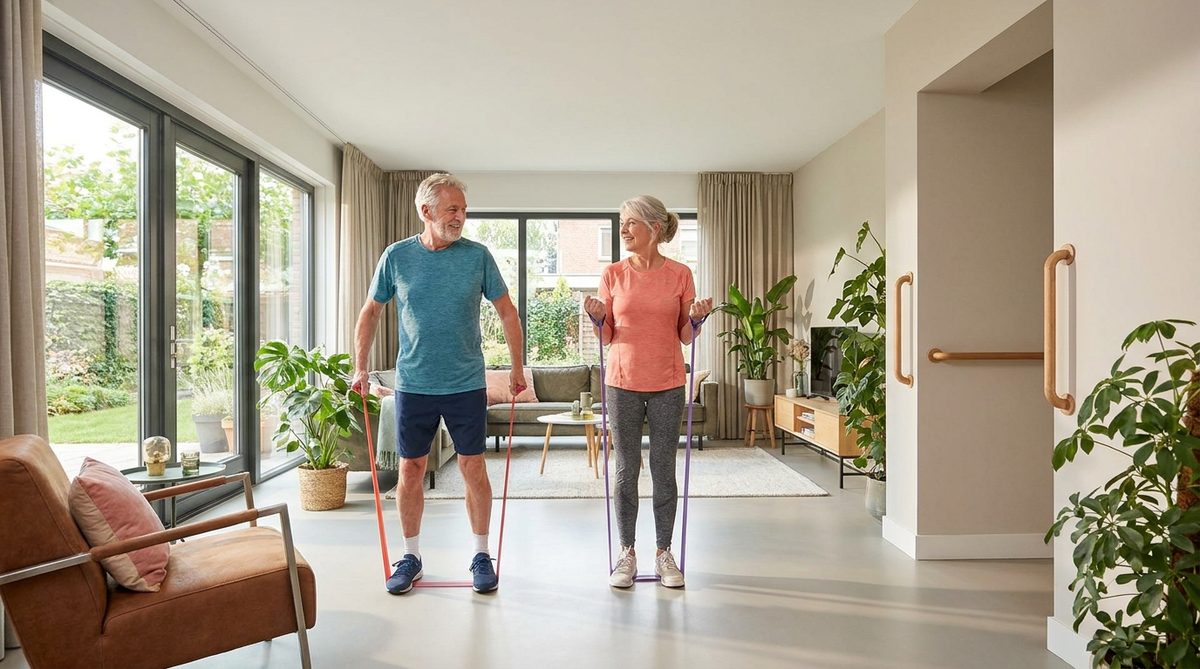
- Start or upgrade resistance training. The National Institute on Aging recommends strength exercises at least twice per week. Begin with body weight or resistance bands. The evidence for fall prevention is overwhelming — a 2022 Cochrane review found resistance training reduced fall risk by 23%.
- Supplement strategically. For most adults over 60: 1,000–2,000 IU vitamin D3 daily, 500–1,000 mcg sublingual B12 if levels are low, and consider 1,200 mg calcium from food plus supplements combined. Always confirm with your physician.
- Reframe one negative aging belief per week. Write it down. “I’m too old to build muscle” becomes “Research shows adults in their 90s gain muscle with training.” This isn’t positive thinking — it’s evidence-based cognitive restructuring.
- Kitchen-proof your home. Move frequently used items to counter or waist height. Stock your freezer with pre-portioned proteins (individually frozen chicken thighs, fish fillets, bean-based soups). Invest in an electric can opener and easy-grip tools.
- Schedule one social meal per week. Eating with others is associated with a 12% increase in dietary quality among older adults, according to a 2021 study in Appetite. Community meals, potlucks, or even a weekly dinner with a neighbor count.
- Review your plan every 90 days. Bodies change. Medications change. Reassess your labs, your protein targets, and your physical function quarterly. Treat your health like a project you’re managing, not a problem you’re avoiding.
“The seniors I work with who successfully age in place share one trait: they treat nutrition and strength as non-negotiable infrastructure — not optional extras. The kitchen and the living room matter more than the medicine cabinet.” — Dr. Linda Park, PhD, RD
The Cost of Doing Nothing
The average annual cost of a semi-private room in a U.S. nursing facility is now approximately $104,000, according to Genworth’s 2024 Cost of Care Survey. Assisted living averages $64,200. Compare that to the combined annual cost of targeted supplementation ($600–$1,400), a gym membership or home equipment ($0–$720), and basic home modifications ($200–$2,000 one-time). The math isn’t subtle.
Every year of independent living you preserve saves tens of thousands of dollars. But more than money, it preserves dignity, autonomy, and the daily rhythms that give life meaning — cooking your own meals, walking your own neighborhood, sleeping in your own bed.
Where the Science Goes From Here
Researchers at Ontario Tech University, recently bolstered by a $1 million gift for healthy aging research, are investigating how personalized nutrition plans — tailored by genetic profile, microbiome composition, and functional status — can extend independent living even further. Meanwhile, wearable technology is beginning to track real-time nutritional biomarkers, potentially alerting seniors and their care teams to deficiencies before symptoms appear.
These advances are promising but still emerging. What’s available right now — protein optimization, vitamin D and B12 supplementation, resistance training, cognitive reframing, and kitchen accessibility — is proven, affordable, and dramatically underutilized.
In my 15 years of working with older adults, the clients who age most successfully are never the ones with the best genes or the most money. They’re the ones who decided — deliberately, with a plan — that decline was not inevitable. The science says they’re right.
Frequently Asked Questions
How much protein should adults over 60 eat per day to maintain muscle?
Current expert consensus recommends 1.0 to 1.2 grams of protein per kilogram of body weight daily for healthy older adults, distributed evenly across meals with at least 25–30 grams per meal to effectively stimulate muscle protein synthesis.
Can mindset really affect how well you age physically?
Yes. Multiple peer-reviewed studies show that older adults with positive age beliefs live an average of 7.5 years longer and experience slower rates of cognitive and physical decline, largely because positive beliefs increase adherence to healthy behaviors like exercise and good nutrition.
What are the most common nutritional deficiencies in seniors that threaten independence?
The three most impactful deficiencies are vitamin D (affecting over 40% of adults 60+), vitamin B12 (affecting roughly 20%), and inadequate protein intake (affecting up to 46%). Each directly contributes to falls, muscle loss, and cognitive decline — the primary drivers of losing the ability to live independently.
How much does aging in place cost compared to assisted living or nursing care?
The proactive costs of aging in place — including targeted supplements, exercise equipment, and home modifications — typically range from $1,000 to $4,000 per year, whereas assisted living averages $64,200 annually and nursing facility care averages approximately $104,000 per year in the United States.
About Dr. Linda Park, PhD, RD (Registered Dietitian)
Dr. Linda Park is a Registered Dietitian with a PhD in Nutritional Science and 15 years of clinical and research experience focused on older adults. She has published peer-reviewed research on the role of nutrition in managing diabetes, cardiovascular health, and cognitive decline in seniors. At Daily Trends Now, Dr. Park writes evidence-based articles on senior nutrition, supplement safety, meal planning, and the foods that truly make a difference for aging well.