

Why Aging in Place Costs Catch So Many People Off Guard
Nearly 90 percent of adults over 65 say they want to stay in their own homes as they age, according to AARP. That desire is completely understandable—your home holds decades of memories, your neighborhood is familiar, and independence matters deeply. But in my 14 years as a Certified Aging-in-Place Specialist, what I see most often is a dangerous gap between the dream of staying home and the financial reality of making it work.
The phrase “aging in place” sounds simple. You just stay put, right? Not exactly. Homes built in the 1970s, ’80s, and ’90s weren’t designed for residents who might one day use a walker, struggle with stairs, or need a caregiver to move through tight doorways. The modifications, maintenance, and services required to stay safely in your home can add up far faster than most people anticipate.
A 2024 study from the National Council on Aging found that retirees who chose to age in place spent an average of $7,000 to $12,000 per year on home-related needs beyond their normal mortgage or property tax—costs many never budgeted for. And that figure doesn’t include major renovations like first-floor bedroom additions, which can run $50,000 or more.
Below, I’m breaking down eight specific aging in place costs that surprise the retirees I work with most. More importantly, I’ll share practical strategies to manage each one so your home can remain your haven without wrecking your retirement budget.
1. Bathroom Modifications Are the Biggest Single Expense
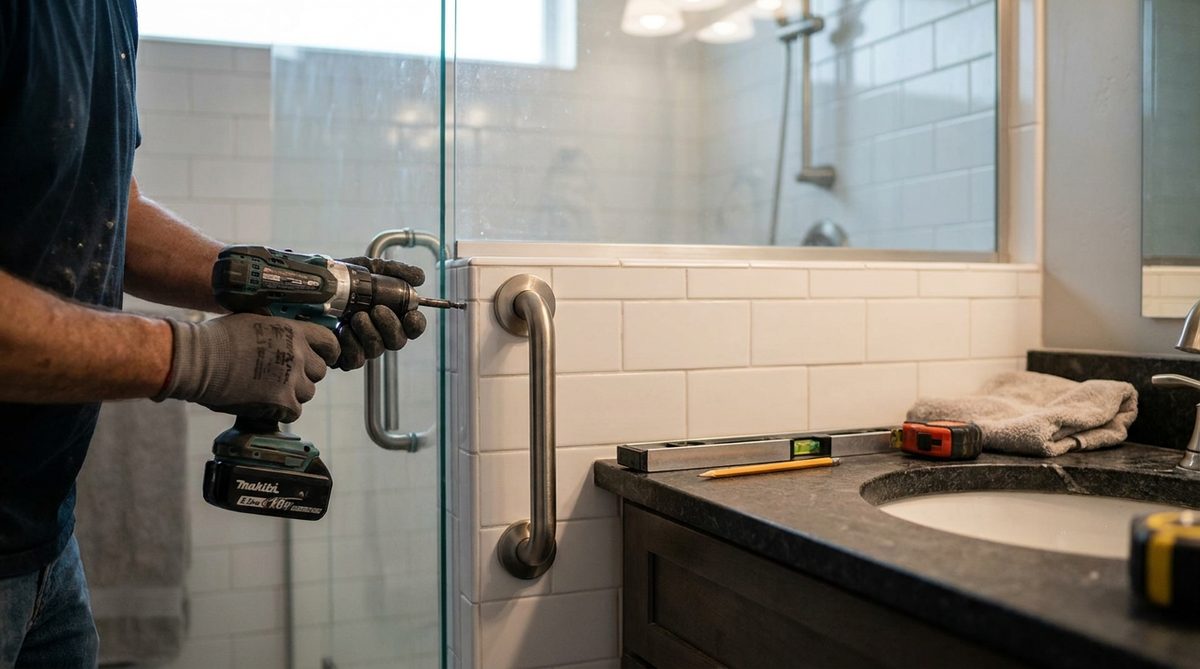
The bathroom is the most dangerous room in the house for older adults. The CDC reports that roughly 235,000 Americans over 15 visit emergency rooms annually due to bathroom injuries, and adults over 65 account for a disproportionate share. Walk-in showers, grab bars, non-slip flooring, comfort-height toilets, and wider doorways aren’t luxuries—they’re necessities.
I often tell my clients that a full bathroom remodel for accessibility runs between $8,000 and $25,000, depending on your market and the scope of work. Even a basic retrofit—grab bars, a handheld showerhead, and a curbless shower conversion—typically costs $3,500 to $7,000 when done professionally.
How to Manage This Cost
- Prioritize grab bars and non-slip surfaces first—they deliver the highest safety return per dollar, often under $500 installed.
- Look into your state’s Medicaid Home and Community-Based Services waiver, which sometimes covers bathroom modifications for qualifying individuals.
- Consider a phased approach: install grab bars and a shower seat now, plan a full remodel in two to three years.
2. Home Maintenance Escalates as You Age
When you were 55, cleaning gutters or patching a roof leak might have been a Saturday project. At 70 or 75, those tasks often require hiring professionals. The annual cost of home maintenance for older homeowners averages $4,500 to $6,000 per year, according to Harvard’s Joint Center for Housing Studies—and deferred maintenance only makes things worse.
What I see most often is a snowball effect. A small roof issue becomes water damage. A neglected HVAC filter leads to a compressor failure. By the time clients call me, they’re facing a $15,000 problem that started as a $300 fix.
How to Manage This Cost
- Set aside at least 1 to 2 percent of your home’s value annually for maintenance.
- Hire a handyperson on a quarterly retainer—many offer senior discounts, and regular visits catch problems early.
- Check with your local Area Agency on Aging for volunteer home repair programs.
For a deeper look at surprise expenses, our guide on 7 aging in place costs that catch older Americans off guard covers additional areas many families overlook.
3. Technology and Medical Alert Systems Add Up Quietly
Medical alert systems, smart home devices, automated lighting, video doorbells, medication management apps, and remote health monitoring tools are increasingly essential for safe aging in place. Individually, each subscription seems modest—$30 to $60 per month for a medical alert service, $15 to $25 per month for a smart home security plan, $10 to $20 per month for a medication reminder system.
But stack them together, and you’re looking at $100 to $150 per month—$1,200 to $1,800 per year—in recurring technology costs that didn’t exist a decade ago. In my experience, most retirees don’t factor these into their aging in place budget until they need them urgently.
“The average retiree who ages in place spends $7,000 to $12,000 per year on home-related expenses beyond their mortgage or property tax—costs most people never see coming until they’re already behind.”
4. Property Taxes and Insurance Keep Climbing
Even if your mortgage is paid off—and congratulations if it is—your home still costs money every single month. Property taxes have risen an average of 4 to 6 percent annually in many U.S. counties since 2020. Homeowner’s insurance premiums have surged even more dramatically, with the national average jumping 21 percent between 2022 and 2024 according to S&P Global data.
For retirees on fixed incomes, these increases erode purchasing power fast. When your Social Security COLA is 2.5 percent but your property tax jumped 5 percent and your insurance climbed 12 percent, you’re losing ground. Understanding how these increases interact with your benefits is critical—our breakdown of Medicare Part B premiums eating your Social Security raise shows just how tight the math gets.
How to Manage This Cost
- Apply for your state’s senior property tax exemption or freeze—most states offer one, but you have to apply.
- Shop your homeowner’s insurance every two years and bundle with auto for discounts.
- Raise your deductible if you have an emergency fund to cover it; this alone can save $300 to $600 per year.
5. Accessibility Renovations Go Far Beyond the Bathroom
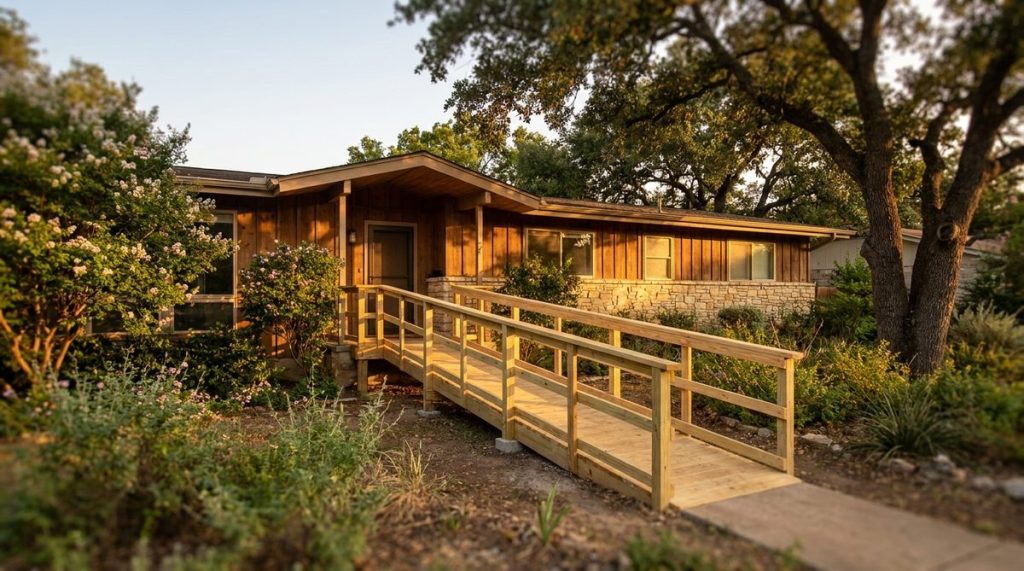
Grab bars and walk-in showers get most of the attention, but a truly accessible home involves changes throughout the entire structure. Wider doorways (a standard 32-inch door won’t accommodate most wheelchairs—you need 36 inches minimum), lever-style door handles, first-floor laundry, better lighting, stair lifts or elevators, and ramp access all carry significant price tags.
Here’s a realistic cost comparison for common aging in place modifications I recommend to my clients:
| Modification | Average Cost Range | DIY Possible? | Priority Level |
|---|---|---|---|
| Grab bars (per bar, installed) | $100 – $250 | Yes, with proper blocking | High |
| Walk-in shower conversion | $4,000 – $12,000 | No | High |
| Stair lift (single story) | $3,000 – $8,000 | No | Medium-High |
| Door widening (per doorway) | $500 – $1,500 | Sometimes | Medium |
| Wheelchair ramp (exterior) | $1,500 – $8,000 | Sometimes | As needed |
| First-floor bedroom addition | $30,000 – $80,000 | No | Situational |
| Lever door handles (whole home) | $200 – $600 | Yes | Medium |
| Improved lighting throughout | $500 – $2,500 | Partially | High |
These numbers reflect 2024–2025 national averages. In high-cost markets like the San Francisco Bay Area or the Northeast corridor, expect 20 to 40 percent more. In lower-cost Sunbelt or Midwest markets, you may pay somewhat less.
6. In-Home Care Is the Expense Nobody Wants to Discuss
This is the one that genuinely alarms people when I lay out the numbers. According to the Genworth 2024 Cost of Care Survey, the national median cost for a home health aide is $33 per hour. If you need just 20 hours per week of in-home assistance—help with bathing, meal prep, light housekeeping, and medication reminders—that’s $34,320 per year. At 40 hours a week, you’re approaching $68,640 annually.
Most people assume Medicare covers this. It doesn’t—at least not for long-term custodial care. Medicare may cover short-term skilled nursing or therapy after a qualifying hospital stay, but the ongoing daily help that makes aging in place possible comes out of pocket unless you have long-term care insurance, Medicaid eligibility, or Veterans Affairs benefits.
“At a national median of $33 per hour, even 20 hours a week of in-home care runs $34,320 per year. Medicare doesn’t cover it. This single expense is the number-one reason aging in place budgets collapse.”
How to Manage This Cost
- Investigate long-term care insurance if you’re under 65—premiums rise sharply with age and health changes.
- Ask about hybrid life insurance/long-term care policies, which have become more popular and flexible since 2020.
- Explore your state’s Medicaid waiver programs, which can provide in-home care for qualifying low-income seniors.
- Coordinate with family members early—having honest conversations now prevents crises later.
7. Energy Costs Hit Older Homeowners Harder
Older homes tend to be less energy efficient. Drafty windows, aging HVAC systems, poor insulation, and outdated water heaters mean higher utility bills. The U.S. Energy Information Administration reports that households headed by someone 65 or older spend an average of $2,100 to $2,800 per year on home energy—and that figure can spike dramatically in regions with extreme heat or cold.
What compounds this problem is that older adults are more vulnerable to temperature extremes. The National Institute on Aging warns that hypothermia risk increases significantly with age, even at moderately cool indoor temperatures. So turning down the thermostat to save money isn’t just uncomfortable—it can be dangerous.
How to Manage This Cost
- Apply for LIHEAP (Low Income Home Energy Assistance Program), which helps qualifying seniors pay heating and cooling bills.
- Schedule a home energy audit—many utilities offer them free or at low cost for seniors.
- Upgrade to a smart thermostat, which typically saves 10 to 15 percent on heating and cooling costs annually.
- Explore weatherization programs through your local community action agency.
Staying healthy at home involves more than just modifications—it’s about building daily routines that support your wellbeing. Our feature on 6 healthy habits for aging well in your 60s, 70s, and beyond offers practical guidance on that front.
8. The Emotional and Social Cost Nobody Budgets For
This one isn’t on any spreadsheet, but I bring it up with every client I advise. Aging in place can become isolating. When mobility decreases, driving stops, and friends move away or pass on, the home that once felt like a sanctuary can start to feel like a prison. The National Academies of Sciences, Engineering, and Medicine found that social isolation among older adults is associated with a 50 percent increased risk of dementia and a 29 percent increased risk of heart disease.
The “cost” here is both emotional and financial. Transportation to social activities, community center memberships, ride-sharing services, and even technology subscriptions for video calling all carry price tags. A typical retiree might spend $100 to $300 per month maintaining social connections—but the cost of not spending that money is far higher in terms of health outcomes.
How to Manage This Cost
- Investigate your local senior center—most offer free or very low-cost programming, meals, and transportation.
- Look into the Village model (villagemovement.org), a membership-based community network where neighbors help neighbors age in place.
- Budget for social engagement the same way you budget for groceries—it’s just as essential to your health.
How to Build a Realistic Aging in Place Budget
After walking through those eight categories, I know the total can feel overwhelming. But here’s what I tell every client: you don’t have to do everything at once, and early planning dramatically reduces costs. A $200 grab bar installed proactively costs a fraction of the $50,000 hip replacement surgery that follows a fall.
Start With a Professional Assessment
Hire a Certified Aging-in-Place Specialist or request an occupational therapy home evaluation. Most OT assessments cost between $150 and $400 and give you a prioritized list of modifications. Many Medicare Advantage plans now cover home safety evaluations as a supplemental benefit—ask your plan about this specifically.
Phase Your Modifications Over Time
I recommend a three-phase approach to my clients. Phase one (immediately): lighting, grab bars, non-slip surfaces, and lever handles. Phase two (within two years): bathroom renovation, stair solutions, and smart home technology. Phase three (as needed): first-floor living conversion, ramp access, and in-home care planning. This phased strategy turns a $60,000 shock into manageable annual investments of $3,000 to $8,000.
Know What Funding Sources Are Available
- VA Aid and Attendance Benefit: Up to $2,431 per month for qualifying veterans or surviving spouses who need in-home care.
- USDA Rural Development Loans: Low-interest loans and grants for home repairs for rural homeowners over 62.
- State and Local Programs: Many cities offer senior home modification grants ranging from $1,000 to $10,000. Contact your Area Agency on Aging.
- Reverse Mortgages (HECMs): Controversial but legitimate when used carefully, these can fund modifications using your home equity. Consult a HUD-approved counselor first.
The Bottom Line: Plan Now, Pay Less Later
Aging in place costs more than most people expect, but it still costs significantly less than the alternative. The national median for a private room in a nursing facility is $108,405 per year, according to Genworth’s 2024 data. Even assisted living averages $64,200 annually. When you compare those numbers to the $15,000 to $25,000 per year it might cost to make your home safe and livable, the math strongly favors staying put—as long as you plan ahead.
In my 14 years of helping older adults stay safely in their homes, the families who struggle most are the ones who waited until a crisis forced their hand. The ones who thrive are the ones who started making small changes at 60, built a realistic budget, and treated their home like the long-term investment it is.
Your home can be your best place to age—but only if you prepare it, and your finances, for the journey ahead.
Frequently Asked Questions
What is the average cost of aging in place per year?
Beyond mortgage and property taxes, the average retiree spends $7,000 to $12,000 per year on aging in place expenses including home maintenance, modifications, technology, and in-home services. Major renovations like bathroom remodels or first-floor bedroom additions can push first-year costs significantly higher.
Does Medicare cover aging in place home modifications?
Original Medicare generally does not cover home modifications like grab bars, ramps, or walk-in showers. However, some Medicare Advantage plans offer supplemental benefits for home safety assessments and modifications. Medicaid waiver programs in many states do cover certain home modifications for qualifying individuals.
When should I start making aging in place modifications to my home?
Most Certified Aging-in-Place Specialists recommend starting modifications in your late 50s or early 60s, well before they become urgent. Early investments like grab bars, improved lighting, and lever door handles are inexpensive and can prevent costly falls. A phased approach over several years makes the financial burden far more manageable than waiting for a crisis.
About Marcus Bell, Certified Aging-in-Place Specialist (CAPS)
Marcus Bell is a Certified Aging-in-Place Specialist (CAPS) with 14 years of experience helping American seniors create safer, more comfortable living environments. He has consulted on hundreds of home modifications — from bathroom safety upgrades to smart home installations — and writes extensively about the products, services, and strategies that help older adults live independently for longer. At Daily Trends Now, Marcus covers home improvement, aging-in-place solutions, gardening, and practical lifestyle tips for seniors.