

Why More Retirees Are Monetizing What They Love
Here’s a number that stopped me mid-sentence during a recent interview: 27% of Americans 65 and older now earn some form of income outside of traditional retirement benefits, according to the AARP‘s 2024 Work and Jobs survey. That’s not because retirees are desperate. Many of them simply discovered that the hobbies they picked up in retirement are worth money — sometimes serious money.
In my 16 years covering lifestyle trends for adults over 50, I’ve watched this shift accelerate. What used to be “a little side project” has become a genuine economic movement. Retirees are turning hobbies into cash flow not to replace a career, but to fund travel, offset rising costs, and stay mentally sharp in ways that binge-watching Netflix simply cannot match.
The beauty of turning hobbies into steady cash flow is that it sits at the intersection of purpose and practicality. You’re not clocking in for someone else. You’re building something on your own terms. And in 2025, the platforms, marketplaces, and communities that support hobby-based income are more accessible to older adults than ever before.
“The retirees I interview who are happiest aren’t the ones with the biggest nest eggs — they’re the ones who wake up excited about a project that also happens to pay them. Purpose and income aren’t mutually exclusive after 60.”
Let me walk you through seven specific hobbies retirees are converting into reliable income streams right now, with real strategies you can act on this month.
1. Woodworking and Custom Furniture: The $47 Billion Craft Market
The handmade and custom furniture market in the U.S. continues to boom. Etsy reported over $13 billion in gross merchandise sales in 2023, and woodworking remains one of the platform’s top-performing categories for sellers over 55. I spoke with a retired engineer in Asheville, North Carolina, last year who nets $2,800 a month selling cutting boards and live-edge shelving — all from a two-car garage workshop.
What makes woodworking especially suited to retirees is the low startup overhead if you already own basic tools. A quality table saw, a router, and a sander can get you started for under $1,000. Local craft fairs, Facebook Marketplace, and Etsy handle the selling side.
Getting Started Without Overwhelm
- Begin with small, repeatable items — cutting boards, birdhouses, picture frames — where material costs stay under $15 per piece
- Price your work based on comparable Etsy listings, not just material costs; your time and craftsmanship have value
- Photograph your pieces in natural light against clean backgrounds; buyers shop with their eyes first
- Consider offering custom engraving or personalization, which commands a 30-40% price premium
Physical demands are real, though. Woodworking involves sustained standing, lifting, and repetitive motions. If you’re building your fitness foundation, 4 minutes of daily resistance training can transform senior fitness and help you stay strong enough to enjoy the craft for years.
2. Gardening for Profit: From Backyard Plots to Farmers Market Booths
If you’ve been growing tomatoes for decades, you already have a marketable skill. The local food movement has created genuine demand for heirloom vegetables, fresh herbs, cut flowers, and specialty produce that grocery stores can’t reliably stock. According to the USDA, direct-to-consumer farm sales exceeded $9 billion in 2023 — and a significant slice of that comes from small-plot growers, many of them retirees.
I often tell my readers that gardening for profit doesn’t require acreage. A retired teacher in suburban Phoenix told me she earns $600-$800 monthly selling microgreens and specialty herbs from a 200-square-foot greenhouse in her backyard. Her startup cost? About $1,200.

The Most Profitable Backyard Crops
- Microgreens: Harvest in 7-14 days, sell for $25-$50 per pound to restaurants and at farmers markets
- Cut flowers (especially dahlias and zinnias): A 100-square-foot bed can produce $500+ in bouquets per season
- Heirloom tomato starts: Seedlings sell for $3-$6 each in spring; a small greenhouse can produce hundreds
- Culinary herbs: Basil, cilantro, and rosemary bundles move quickly at $3-$5 per bunch
The physical activity involved is itself a health benefit. Gardening burns roughly 200-400 calories per hour and improves grip strength, flexibility, and balance — all critical for healthy aging in your 60s, 70s, and beyond.
3. Photography: Selling Stock Images and Local Services
Digital cameras and smartphones have demolished the barriers to entry, but here’s what younger photographers often lack: decades of life experience that translate into a keen eye for composition, patience, and genuine human connection with portrait subjects. Retirees who pick up photography — or return to it — are finding multiple income streams.
Stock photography platforms like Shutterstock and Adobe Stock pay contributors between $0.25 and $120 per image download, depending on licensing tier. That might sound modest, but prolific contributors with libraries of 500+ images report earning $300-$1,500 monthly in passive income. Local portrait sessions, event photography, and real estate listing photos offer higher per-gig payouts, often $150-$500 per session.
Where the Money Actually Is
- Real estate photography: Agents need listing photos constantly; a single shoot pays $100-$300 and takes under two hours
- Pet photography: Americans spent $147 billion on pets in 2023; dedicated pet portrait sessions are in high demand
- Stock photos of authentic senior life: There’s a documented shortage of genuine, non-stereotypical images of adults 50+; if you can model or photograph real moments, agencies will buy them
One caution: as you sell services online, be mindful of common scams. Fake check schemes and phishing emails target freelance creatives regularly. Familiarize yourself with digital tools designed to protect older adults from scams before accepting online payments from strangers.
4. Teaching and Tutoring: Your Expertise Has a Price Tag
After 30 or 40 years in a profession, you possess knowledge that people will pay for. The online tutoring market hit $8.1 billion in the U.S. in 2024, and platforms like Wyzant, Tutor.com, and Outschool have made it remarkably simple for retirees to teach from home — no classroom required.
What I see most often is retirees undervaluing what they know. A retired accountant can charge $40-$75 per hour tutoring college students in accounting fundamentals. A former Spanish teacher can earn $30-$60 per hour on iTalki teaching conversational Spanish. Music teachers with decades of experience are booking students on Lessonface and TakeLessons at $50-$100 per hour.
Beyond One-on-One Tutoring
The real leverage comes when you package your knowledge into courses. Platforms like Skillshare and Udemy allow you to create a course once and earn royalties indefinitely. A retired carpenter I profiled in 2024 created an eight-module “Beginner Woodworking for Homeowners” course on Udemy that generates $1,100 monthly — and he recorded the entire thing with his iPhone and a $35 lapel microphone.
Community colleges and parks-and-recreation departments also hire part-time instructors for continuing education classes. Pay varies by district but typically ranges from $25-$50 per instructional hour, with minimal prep requirements for experienced professionals.
5. Writing and Blogging: Turning Stories Into Subscription Income
Substack has quietly become a haven for retired professionals who want to write. The platform hosts thousands of newsletters from writers over 50, covering everything from fly-fishing techniques to grandparenting advice to historical deep-dives into Civil War battles. Paid subscriptions typically run $5-$10 per month, and a newsletter with just 200 paying subscribers at $7 monthly generates $1,400 before fees.
Freelance writing for niche publications is another avenue. Trade magazines, regional lifestyle publications, and online content sites pay $0.10-$1.00 per word. A 1,500-word article at $0.25 per word puts $375 in your pocket — and many retirees comfortably produce two to four articles per month.
“According to the National Council on Aging, adults who engage in intellectually stimulating activities like writing show measurably slower cognitive decline. Getting paid to keep your brain sharp? That’s what I call a win-win.”
If you’ve always thought you had a book in you, self-publishing through Amazon’s Kindle Direct Publishing has a remarkably low barrier to entry. The National Council on Aging has highlighted creative pursuits like writing as protective factors for cognitive health — so the benefits extend well beyond the royalty checks.
6. Crafting and Handmade Goods: The Etsy Economy for 50+ Creators
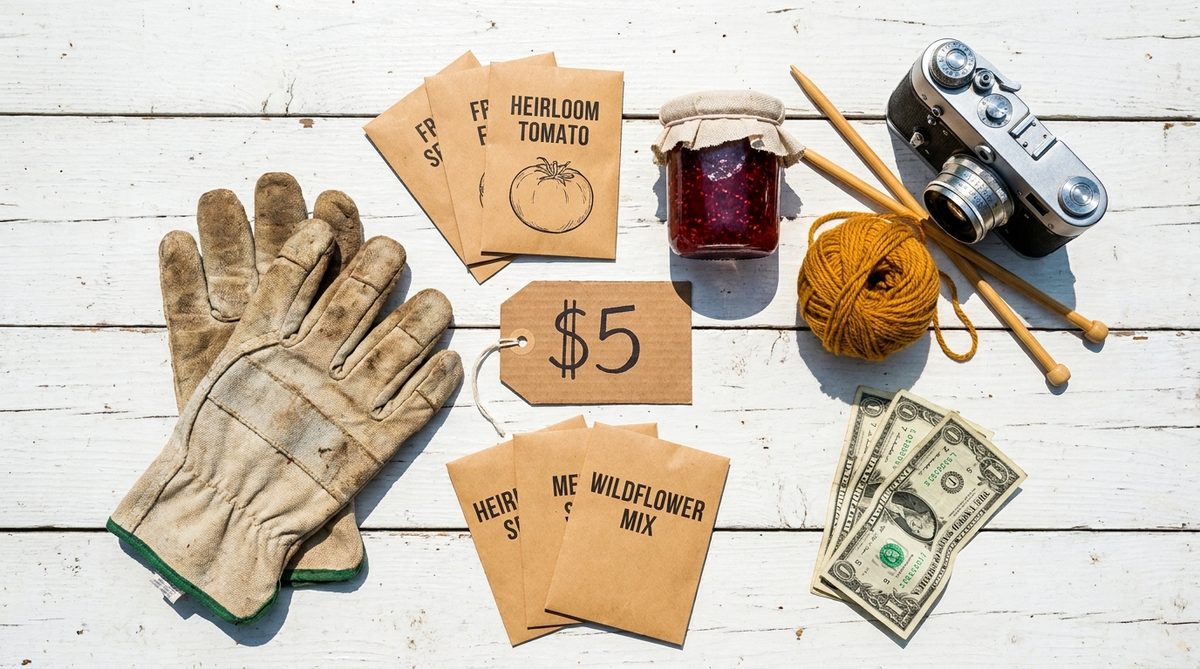
Knitting, quilting, jewelry-making, candle-pouring, soap-crafting — if you make it by hand, someone wants to buy it. Etsy’s 2024 seller census revealed that sellers aged 55 and older represent the platform’s fastest-growing demographic, with average annual earnings of $4,200. Top performers in the handmade category earn substantially more.
The key to turning hobbies into steady cash flow through crafting is niche specialization. Generic scarves compete with factory-made imports. But hand-knitted dog sweaters in breed-specific sizes? Custom-scented soy candles named after national parks? Quilted laptop sleeves made from vintage fabric? Those are products that command premium pricing because no machine replicates them.
Pricing for Profit, Not Just Materials
- Calculate your true cost: materials + time (value your labor at minimum $15/hour) + platform fees (Etsy takes approximately 9-15% after transaction and listing fees) + shipping
- Offer bundles and gift sets, which increase average order value by 25-40%
- Seasonal timing matters enormously — start listing holiday items by September, not November
- Collect email addresses for repeat customers; a simple monthly newsletter drives 20-30% of return sales for top Etsy sellers
One financial consideration worth emphasizing: hobby income is taxable. The IRS requires reporting all self-employment income over $400 annually, and payment platforms like Etsy and PayPal now issue 1099-K forms for earnings exceeding $600. Understanding how this interacts with your Social Security benefits and overall retirement income strategy matters. For broader financial planning context, consider reading up on strategies to shield your savings from inflation.
7. Pet Sitting and Dog Walking: The Lowest-Barrier Cash Flow Hobby
This one surprises people, but hear me out. Americans spent $10.7 billion on pet services (excluding veterinary care) in 2023, according to the American Pet Products Association. Platforms like Rover and Wag connect pet sitters with clients, and retirees are uniquely positioned to dominate this space because they’re home during the day — exactly when pet owners need help.
Rover sitters in metropolitan areas charge $25-$75 per night for overnight stays and $15-$30 per 30-minute dog walk. A retiree who books just three overnight stays per week at $40 each earns nearly $500 monthly. Add a few daily walks, and the numbers climb quickly.
Why This Works Especially Well for Retirees
- Flexible scheduling — accept only the bookings that fit your life
- Built-in exercise; the National Institute on Aging recommends 150 minutes of moderate activity weekly, and regular dog walking easily achieves that
- Social connection with both animals and their owners, combating the isolation that affects nearly 25% of adults over 65
- Minimal startup costs — if you already have a safe, pet-friendly home, you’re essentially ready to begin
The companionship benefit shouldn’t be understated. Research consistently shows that interaction with animals lowers cortisol levels and blood pressure. You’re earning money while actively improving your health.
Making It Work: Practical Considerations Before You Start
Before you launch into any hobby-based income venture, a few practical realities deserve attention.
Tax Implications
As mentioned, the IRS considers hobby income taxable once you’re operating with a profit motive. Keep receipts for supplies, platform fees, and business-related mileage. A simple spreadsheet updated weekly saves enormous headaches during tax season. Many retirees benefit from consulting a tax professional the first year to establish proper record-keeping habits.
Impact on Benefits
If you’re collecting Social Security before your full retirement age (currently 67 for anyone born in 1960 or later), earned income above $22,320 in 2025 triggers a temporary benefit reduction. After full retirement age, there’s no earnings penalty. Understanding these thresholds is critical to avoiding unwelcome surprises.
Physical Sustainability
Choose income hobbies that match your current physical capacity and trajectory. Woodworking at 62 might feel effortless; at 78, the demands shift. Build in variety. Pair a physically demanding hobby like gardening with a sedentary one like writing or teaching to create a balanced portfolio of activity and income.
The Bottom Line: Cash Flow Meets Purpose
The retirees I admire most aren’t sitting still. They’re converting decades of accumulated skill, creativity, and passion into income streams that fund the lives they actually want to live. Whether it’s $200 a month from selling herb bundles at the Saturday market or $2,000 a month from an online woodworking course, turning hobbies into cash flow transforms retirement from an ending into a beginning.
The financial cushion helps, of course. With inflation squeezing fixed incomes and healthcare costs rising, an extra $500-$1,500 monthly changes the math on everything from travel budgets to aging-in-place renovations. But what I hear most from retirees who’ve made this leap isn’t about the money. It’s about waking up with something to build, someone to serve, and a reason to keep getting better at something they love.
That, to me, is what making the most of retirement actually looks like.
About Jennifer Adams, 16 Years in Lifestyle Journalism
Jennifer Adams is a lifestyle journalist with 16 years of experience writing about travel, hobbies, relationships, home life, and the art of aging well. She has contributed to national publications focused on the interests and aspirations of adults over 50 — from budget-friendly travel destinations to rediscovering hobbies in retirement. At Daily Trends Now, Jennifer writes warm, practical articles that celebrate life after 50 and help readers make the most of every chapter.