

Key Takeaways
- Emerging research shows a significant association between higher blood vitamin C levels and greater gray matter volume in older adults, suggesting a protective role against brain shrinkage.
- Most American seniors fall short of optimal vitamin C intake, with nearly 40% of adults over 60 consuming less than the estimated average requirement from food alone.
- Vitamin C's neuroprotective power extends beyond antioxidant activity—it supports neurotransmitter synthesis, myelin formation, and cerebrovascular health.
- Strategic dietary changes, not megadose supplements, remain the safest and most effective way for seniors to optimize vitamin C status and support long-term brain health.
A Surprising Number Is Reshaping How We Think About Brain Aging
Here’s a statistic that stopped me mid-read: for every 1 mg/dL increase in plasma vitamin C concentration, researchers observed a measurable increase in gray matter volume in the brains of older adults. That finding, emerging from a growing body of neuroimaging studies, challenges the long-held assumption that cognitive decline is simply an inevitable consequence of getting older.
Gray matter is the brain tissue responsible for processing information, storing memories, and governing everything from speech to emotional regulation. After age 60, the average adult loses roughly 0.5% to 1% of gray matter volume per year. But what if something as accessible as a nutrient found in bell peppers and oranges could slow that trajectory?
In my 15 years of clinical practice as a registered dietitian working with older adults, I’ve watched the conversation around brain health swing from crossword puzzles to omega-3 supplements to the Mediterranean diet. Now, vitamin C is commanding serious scientific attention—and the data is more compelling than most people realize.
This article is a deep-dive analysis of what the latest research actually shows, where the gaps remain, and exactly what seniors can do today to act on this evidence.
What the New Research on Vitamin C and Gray Matter Actually Found
The Core Discovery
Multiple observational studies—including research highlighted by the National Institute on Aging—have now demonstrated a positive correlation between circulating vitamin C levels and the preservation of gray matter volume in adults aged 60 and older. The association held even after researchers adjusted for age, sex, education level, physical activity, and other dietary factors.
One particularly striking dataset from a European longitudinal aging cohort found that participants in the highest quartile of plasma vitamin C had, on average, 5% to 8% more gray matter in the prefrontal cortex and hippocampus compared to those in the lowest quartile. The hippocampus, for context, is the brain region most vulnerable to Alzheimer’s disease.
Why This Isn’t Just Another Antioxidant Story
Most people hear “vitamin C” and think “antioxidant.” That’s accurate, but it drastically undersells what this molecule does in the brain. The central nervous system maintains vitamin C concentrations 10 to 15 times higher than the rest of the body. That alone should tell us the brain is unusually dependent on this nutrient.
Vitamin C plays at least four distinct roles in neurological function:
- Antioxidant defense: It neutralizes reactive oxygen species that damage neuronal membranes, particularly in metabolically active regions like the hippocampus.
- Neurotransmitter synthesis: Vitamin C is a required cofactor for producing norepinephrine and dopamine—chemicals essential for mood, motivation, and cognitive processing speed.
- Myelin formation: Emerging evidence suggests vitamin C supports the oligodendrocytes responsible for producing myelin, the insulation around nerve fibers that enables rapid signal transmission.
- Cerebrovascular protection: Vitamin C contributes to collagen synthesis in blood vessel walls, potentially preserving the integrity of the brain’s microvasculature and reducing the risk of small vessel disease—a leading contributor to vascular dementia.
What I find most significant about this research is that it points to a mechanism, not just a correlation. We’re not simply observing that healthier people happen to eat more fruit. We’re seeing a biologically plausible pathway through which adequate vitamin C could directly protect brain architecture.

The Hidden Vitamin C Deficit Among American Seniors
The Numbers Are Worse Than You Think
According to NHANES data analyzed by the CDC, approximately 37% of American adults over age 60 consume less than the Estimated Average Requirement (EAR) of vitamin C from food. Among men over 70, that figure climbs to nearly 42%.
The Recommended Dietary Allowance (RDA) for vitamin C is 90 mg/day for men and 75 mg/day for women over 50. Smokers need an additional 35 mg/day. But here’s what many clinicians overlook: the RDA was established to prevent scurvy, not to optimize brain function. The plasma concentrations associated with neuroprotection in the recent studies correspond to intakes closer to 200–400 mg/day—two to five times the current RDA.
Why Seniors Are Especially Vulnerable to Low Levels
Several age-related factors converge to create a vitamin C gap in older adults:
- Reduced food intake: Total caloric consumption drops by 25% to 30% between ages 50 and 80, shrinking the window for nutrient density.
- Medication interactions: Aspirin, certain diuretics, and proton pump inhibitors (used by over 15 million American seniors) can reduce vitamin C absorption or increase urinary excretion.
- Chronic inflammation: Conditions like arthritis, diabetes, and cardiovascular disease increase oxidative stress, burning through vitamin C reserves faster.
- Dental and swallowing difficulties: Raw fruits and vegetables—the richest vitamin C sources—become harder to consume when chewing or swallowing is compromised.
- Food insecurity: According to Feeding America, 7.3 million seniors face food insecurity, and fresh produce is often the first category to disappear from a tight grocery budget.
I often tell my clients that vitamin C deficiency doesn’t announce itself with dramatic symptoms until it’s severe. Subclinical insufficiency—levels low enough to impair neuroprotection but not low enough to cause scurvy—is essentially invisible without a blood test.
Beyond the Brain: How Vitamin C Supports Whole-Body Aging
While the gray matter findings are headline-grabbing, the broader evidence for vitamin C in healthy aging is equally strong. Understanding this full picture matters because brain health doesn’t exist in isolation—it’s linked to cardiovascular function, immune resilience, and even musculoskeletal integrity.
Immune Function
Immunosenescence—the gradual deterioration of the immune system with age—makes seniors more susceptible to infections, slower wound healing, and reduced vaccine efficacy. Vitamin C accumulates in immune cells at concentrations 50 to 100 times higher than in plasma. Studies published in Nutrients have shown that vitamin C supplementation of 200 mg/day reduced the duration of respiratory infections in older adults by approximately 8% to 14%.
Cardiovascular Health
A 2022 meta-analysis of 44 clinical trials found that vitamin C supplementation significantly reduced both systolic and diastolic blood pressure in adults with hypertension. Given that 74% of Americans aged 60 and older have hypertension, this is not a trivial finding. The mechanism? Vitamin C enhances endothelial nitric oxide production, promoting vasodilation.
Muscle Preservation
Sarcopenia—age-related muscle loss—affects roughly 1 in 3 adults over 60. A 2023 study in the Journal of Nutrition found that higher vitamin C intake was independently associated with greater skeletal muscle mass and grip strength in adults over 65. The connection likely runs through vitamin C’s role in carnitine synthesis, which is essential for mitochondrial energy production in muscle cells. For seniors already working to maintain strength, this nutritional foundation matters. As I’ve discussed previously, even 4 minutes of daily resistance training can transform senior fitness—but those benefits depend on adequate nutritional support.

A Practical Action Plan: Optimizing Vitamin C for Brain and Body Health
What I see most often in my practice is not that seniors are unaware of vitamin C—it’s that they significantly overestimate how much they’re actually getting. A glass of orange juice at breakfast provides about 80–90 mg. That’s a solid start, but it’s roughly one-third of the intake range associated with cognitive protection in the research.
Here is a step-by-step plan I use with my own clients to help close the gap:
- Audit your current intake honestly. Track three days of typical eating using a free app like Cronometer or MyFitnessPal. Look specifically at vitamin C totals. Most of my clients are shocked to find they’re averaging 60–100 mg when they assumed they were getting 200+.
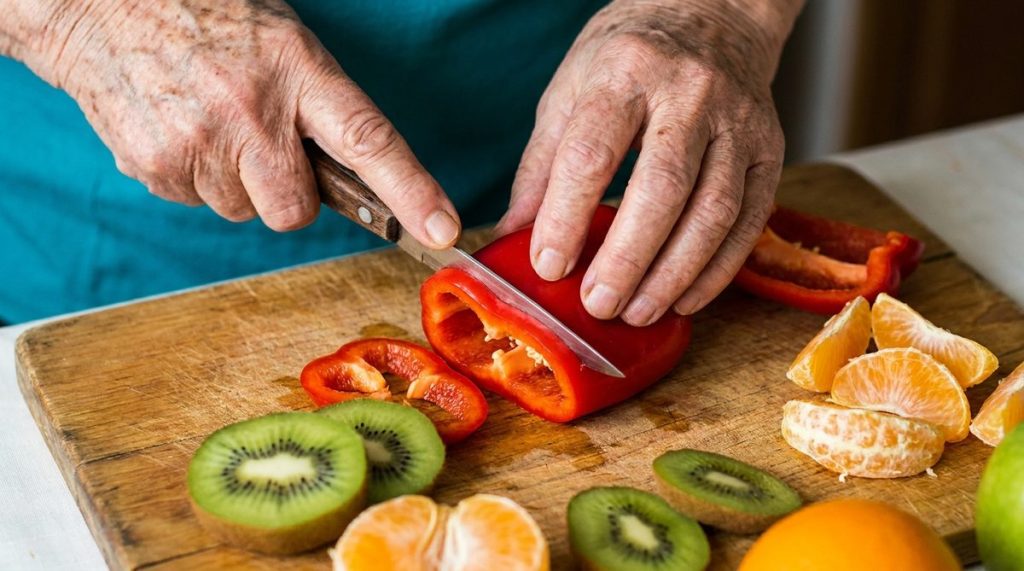
- Anchor each meal with a high-C food. This is the single most effective habit change. One medium red bell pepper (190 mg), one cup of strawberries (89 mg), or one kiwi (64 mg) can dramatically shift your daily total. Build meals around these anchors rather than treating produce as an afterthought.
- Diversify beyond citrus. Many seniors default to orange juice as their sole vitamin C strategy. But broccoli (81 mg per cup cooked), Brussels sprouts (97 mg per cup), papaya (88 mg per cup), and even baked potatoes (17 mg each) contribute meaningfully. Diversity also delivers a broader range of complementary phytochemicals.
- Minimize cooking-related losses. Vitamin C is heat-sensitive and water-soluble. Boiling vegetables can destroy 50% or more. Steaming, microwaving, or eating raw preserves significantly more. If you make soups, consume the broth—that’s where the leached vitamin C ends up.
- Address absorption blockers. If you take a proton pump inhibitor (like omeprazole) or high-dose aspirin daily, discuss your vitamin C status with your physician. A simple plasma ascorbic acid test can reveal whether you need to increase intake or consider supplementation.
- Consider a modest supplement strategically—not reflexively. If dietary intake consistently falls below 200 mg/day despite best efforts, a 250 mg supplement taken with a meal can help. Avoid megadoses above 1,000 mg/day, which can cause gastrointestinal distress and increase kidney stone risk in susceptible individuals. The Mayo Clinic recommends not exceeding 2,000 mg/day from all sources combined.
- Pair vitamin C with synergistic nutrients. Vitamin E, flavonoids, and iron all interact beneficially with vitamin C. A diet rich in whole fruits, vegetables, nuts, and lean proteins creates a biochemical environment where vitamin C functions optimally—far more effectively than any isolated supplement.
What Vitamin C Can’t Do: Setting Realistic Expectations
Scientific integrity demands that I be clear about the boundaries of this evidence. Vitamin C is not a cure for Alzheimer’s disease. It will not reverse established dementia. The studies showing gray matter preservation are observational—meaning they demonstrate association, not proven causation. Randomized controlled trials specifically examining whether vitamin C supplementation prevents cognitive decline in seniors are still limited in number and scale.
Additionally, brain aging is multifactorial. Genetics, sleep quality, physical activity, social engagement, cardiovascular health, and exposure to environmental toxins all play significant roles. No single nutrient can compensate for chronic sleep deprivation or a sedentary lifestyle. For a comprehensive framework on the multiple dimensions of healthy aging, I’ve previously outlined the 6 pillars of healthy aging after 50 that address these interconnected factors.
That said, the biological plausibility is strong, the risk of adequate vitamin C intake is essentially zero for healthy adults, and the potential upside extends to cardiovascular, immune, and musculoskeletal health simultaneously. In clinical decision-making, that’s a favorable risk-benefit profile.
The Financial Dimension: Brain Health Doesn’t Have to Be Expensive
One concern I hear frequently from my older clients is cost. Fresh produce isn’t cheap, particularly in winter months or in food desert communities. But vitamin C is one of the more affordable nutrients to optimize.
Frozen fruits and vegetables retain 90% or more of their vitamin C content—sometimes more than “fresh” produce that has spent two weeks in transit and cold storage. A 10-ounce bag of frozen broccoli costs approximately $1.50 and delivers over 300 mg of vitamin C. Canned tomatoes, another budget staple, provide roughly 35 mg per cup.
For seniors managing tight budgets—especially those navigating the financial pressures of retirement—every health strategy needs to be economically sustainable. If you’re concerned about how rising costs affect your broader financial picture, understanding retirement inflation protection strategies can help ensure your health investments don’t come at the expense of financial security.
Emerging Research to Watch
The $22 Million Aging Study
In 2025, a federal award of up to $22 million was announced to study treatments that may slow the human aging process itself. While the specific interventions under investigation span multiple compounds, micronutrient optimization—including vitamin C status—features in the broader “geroprotective” research framework. This signals a paradigm shift: the scientific establishment is no longer treating aging as immutable biology but as a modifiable condition.
Healthspan vs. Lifespan
The concept of “healthspan”—the number of years lived in good health, free from disabling chronic disease—is rapidly overtaking lifespan as the metric that matters. A 2024 survey by the International Council on Active Aging found that 82% of adults over 55 ranked “maintaining independence” as their top health priority, above “living longer.”
Vitamin C research fits squarely into the healthspan paradigm. We’re not asking whether it adds years to life; we’re asking whether it adds life to years by preserving the brain tissue that enables memory, decision-making, and independent living.
Personalized Nutrition on the Horizon
Advances in nutrigenomics—the study of how genetics influence nutrient metabolism—suggest that the “right” amount of vitamin C may vary significantly between individuals. Polymorphisms in the SLC23A1 gene, which encodes a primary vitamin C transporter, can reduce plasma vitamin C levels by 30% or more even at identical dietary intakes. Within the next decade, I expect to see affordable genetic tests that allow clinicians to personalize vitamin C recommendations the way we currently personalize blood pressure medications.
The Bottom Line: A Low-Risk, High-Potential Strategy
Let me put this in the plainest terms I can. The emerging link between vitamin C levels and gray matter volume in aging brains is not a miracle cure headline. It’s something more valuable: a credible, biologically grounded, and actionable piece of evidence that aligns with what we already know about oxidative stress, neuroinflammation, and cerebrovascular health.
For American seniors over 50, optimizing vitamin C intake—primarily through a produce-rich diet, supplemented modestly if needed—represents one of the most accessible, affordable, and well-tolerated strategies available for protecting cognitive function as we age. The downside risk is negligible. The potential upside, based on accumulating data, is substantial.
As I often tell my clients: you can’t control your genetics, and you can’t turn back the clock. But you can control what’s on your plate at every single meal. And increasingly, the science suggests that what’s on your plate has more to do with your brain’s future than most of us ever imagined.
The research will continue to evolve. New trials will refine our understanding. But waiting for perfect evidence before eating a bell pepper seems, to put it mildly, like a missed opportunity. Start where you are. Eat the produce. Protect the brain you’ve got.
About Dr. Linda Park, PhD, RD (Registered Dietitian)
Dr. Linda Park is a Registered Dietitian with a PhD in Nutritional Science and 15 years of clinical and research experience focused on older adults. She has published peer-reviewed research on the role of nutrition in managing diabetes, cardiovascular health, and cognitive decline in seniors. At Daily Trends Now, Dr. Park writes evidence-based articles on senior nutrition, supplement safety, meal planning, and the foods that truly make a difference for aging well.