

Key Takeaways
- Building an age-defying lifestyle after 50 rests on six evidence-based pillars that work together, not in isolation.
- Nutrition quality—not calorie restriction—is the single most modifiable factor in healthy aging, according to current research.
- Strength training just twice a week can reduce all-cause mortality risk by up to 20% in adults over 60.
- Social connection and cognitive engagement are now considered as critical as diet and exercise for longevity.
Why “Age-Defying” Isn’t About Turning Back the Clock
Let me be direct: no supplement, superfood, or biohack will make you 30 again. But after 15 years of counseling older adults on nutrition and chronic disease management, I can tell you with confidence that how you age is far more within your control than most people believe. The science backs this up—a 2023 study published in The Lancet Public Health estimated that up to 60% of the variation in how we age is driven by modifiable lifestyle factors, not genetics.
So what does a genuinely healthier, age-defying lifestyle look like in 2026? Researchers, clinicians, and public health experts have converged on six foundational pillars. These aren’t trends or fads. They’re evidence-based strategies that, when practiced consistently, reduce disease risk, preserve independence, and dramatically improve quality of life after 50.
As recent research confirms, aging doesn’t mean decline for most seniors—but it does require intentional choices. Here are the six pillars I recommend building your daily life around.
1. Nutrient-Dense Nutrition (Not Dieting)
I often tell my clients that after 50, every bite matters more—not because you should eat less, but because your body’s margin for nutritional error shrinks. Calorie needs may decline slightly with age, but your requirements for protein, calcium, vitamin D, B12, and fiber actually increase or become harder to meet through absorption alone.
What the Evidence Shows
The National Institute on Aging recommends that adults over 50 aim for 1.0 to 1.2 grams of protein per kilogram of body weight daily—significantly higher than the standard 0.8 g/kg recommendation for younger adults. That translates to roughly 68–82 grams of protein per day for a 150-pound person. Yet NHANES data consistently shows that nearly 40% of adults over 70 fall short of even the lower threshold.
The Mediterranean and MIND dietary patterns remain the gold standard for age-related disease prevention. A 2024 meta-analysis of 29 cohort studies found that high adherence to the Mediterranean diet reduced the risk of cognitive decline by 33% and cardiovascular events by 28% in adults over 60.
Practical Steps
- Front-load protein at breakfast—aim for 25–30 grams. Greek yogurt with nuts and seeds, eggs with beans, or a smoothie with whey protein all work.
- Eat at least five servings of colorful vegetables and fruits daily, prioritizing leafy greens and berries for their polyphenol content.
- Ask your doctor about B12 and vitamin D testing annually after age 60. Deficiencies in both are extremely common and easily corrected.
- Reduce ultra-processed food to fewer than 20% of total daily calories. A 2024 BMJ study linked high ultra-processed food intake to a 22% increased risk of all-cause mortality in older adults.
For a deeper dive into nutrition strategies tailored to this life stage, I wrote a comprehensive guide on healthy aging after 50 from a dietitian’s perspective.
2. Strength and Movement—Not Just Cardio
If I could prescribe one single intervention to my clients over 60, it wouldn’t be a medication or a supplement. It would be resistance training. The data is that compelling.
After age 30, we lose approximately 3–8% of muscle mass per decade, a process called sarcopenia that accelerates sharply after 60. Sarcopenia isn’t just cosmetic—it directly increases fall risk, fracture rates, insulin resistance, and loss of independence. The CDC reports that falls are the leading cause of injury-related death among adults 65 and older, causing over 36,000 deaths annually in the United States.
What Works
A landmark 2022 review in the British Journal of Sports Medicine found that adults over 60 who performed resistance training at least twice per week experienced a 10–20% reduction in all-cause mortality risk. Combining resistance work with balance training reduced fall risk by up to 34%.
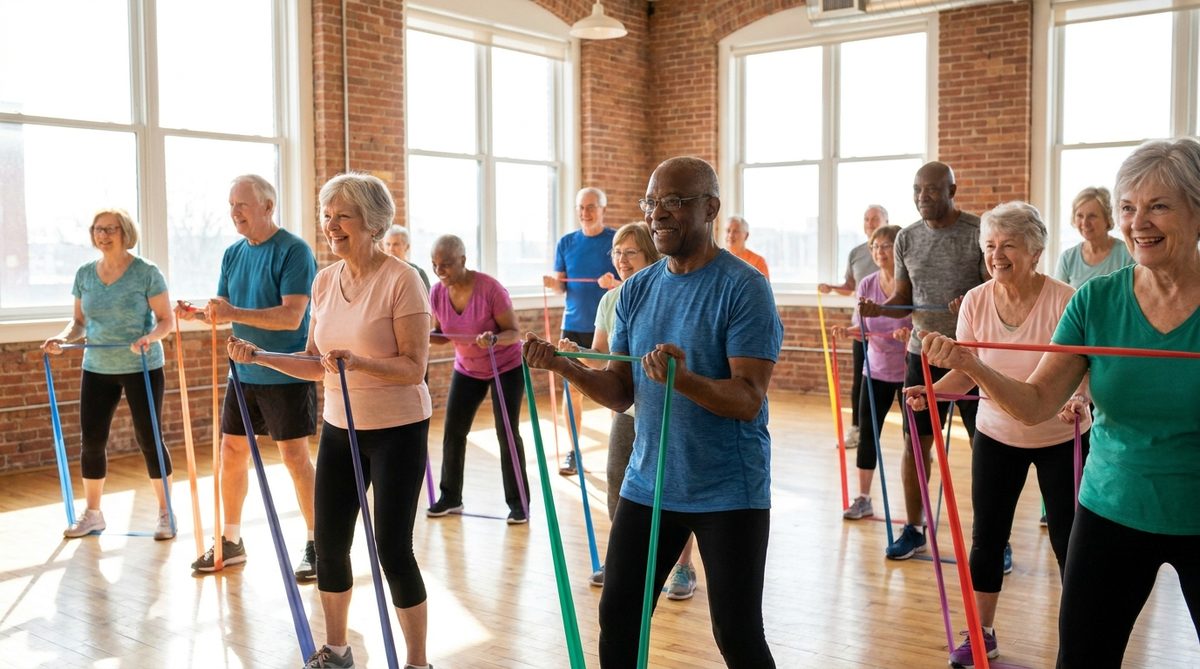
You don’t need a gym membership. Bodyweight exercises, resistance bands, and even water-based resistance classes deliver measurable benefits. What I see most often among my older clients is the mistaken belief that walking alone is enough. Walking is wonderful for cardiovascular health, mood, and metabolic regulation—but it does very little to preserve or rebuild muscle mass.
A Minimum Effective Routine
- Two to three sessions per week of resistance training targeting all major muscle groups (legs, back, chest, arms, core).
- Include balance challenges—single-leg stands, heel-to-toe walking, or tai chi—at least three times per week.
- Aim for 150 minutes of moderate aerobic activity weekly (brisk walking counts).
- Add flexibility work—gentle stretching or yoga—to maintain joint range of motion.
3. Sleep as a Non-Negotiable Health Tool
Sleep quality is the most underestimated pillar of healthy aging. I’ve worked with clients who meticulously tracked their macronutrients and exercised five days a week, yet still struggled with inflammation, weight gain, and cognitive fog—and the culprit was consistently poor sleep.
The Mayo Clinic notes that adults over 65 still need 7–8 hours of sleep, even though sleep architecture changes with age. Deep slow-wave sleep, which is critical for memory consolidation and cellular repair, naturally declines after 50. That doesn’t mean poor sleep is inevitable—it means you have to work harder to protect it.
Evidence-Backed Sleep Strategies for Older Adults
A 2023 study in JAMA Network Open found that adults over 60 who maintained consistent sleep-wake times (within a 30-minute window) had 29% lower rates of cardiovascular events compared to those with irregular sleep patterns. Consistency may matter even more than duration.
- Set a fixed wake time seven days a week—yes, including weekends.
- Get bright natural light exposure within 30 minutes of waking to anchor your circadian rhythm.
- Limit caffeine after noon and alcohol within three hours of bedtime, both of which fragment sleep architecture.
- Keep your bedroom cool (65–68°F), dark, and reserved for sleep only.
- If you take naps, keep them under 20 minutes and before 2 PM.
4. Proactive Medical Management—Without Over-Treatment
Here’s a nuance that gets lost in wellness culture: healthy aging isn’t about avoiding doctors. It’s about partnering with them strategically. At the same time, emerging research suggests that some routine medical interventions may cause more harm than benefit for older adults.
What to Prioritize
Annual wellness visits, blood pressure monitoring, diabetes screening, and cancer screenings appropriate for your age and risk profile remain essential. The U.S. Preventive Services Task Force updated several recommendations in 2024–2025, including narrowing the age window for certain cancer screenings and emphasizing shared decision-making with patients over 75.
What to Question
A growing body of evidence—including guidelines from the American Geriatrics Society—supports deprescribing unnecessary medications in older adults. Polypharmacy (taking five or more medications) affects nearly 40% of adults over 65 and is linked to increased fall risk, cognitive impairment, and hospitalizations. I encourage every client to bring a complete medication list to each doctor visit and ask, “Do I still need this?”
If you’re managing chronic conditions at home, having the right setup matters immensely. Take a look at these practical ideas for aging in place safely with chronic conditions.

5. Cognitive Engagement and Lifelong Learning
The brain is not a static organ. Neuroplasticity—the brain’s ability to form new neural connections—persists well into the 80s and beyond. But it requires stimulation. What I see most often in my practice is that people who retire and disengage from challenging mental activity experience faster cognitive decline, regardless of their diet or exercise habits.
What the Research Says
The ACTIVE trial, one of the largest cognitive training studies ever conducted, followed 2,832 adults (average age 74) for over a decade. Participants who engaged in structured cognitive training showed measurable benefits in processing speed and reasoning up to 10 years later. A 2024 follow-up analysis found that those in the cognitive training groups had a 29% lower risk of developing dementia compared to controls.
Practical Ways to Stay Sharp
Cognitive engagement doesn’t require formal “brain training” programs. Research supports a wide range of activities:
- Learning a new language or musical instrument
- Taking community college or online courses
- Reading challenging material—not just familiar genres
- Playing strategy games like chess, bridge, or complex board games
- Teaching or mentoring others, which demands active recall and communication
- Writing—journaling, memoir, or even blogging
The key ingredient is novelty. Doing the same crossword puzzle format every day loses its neuroplasticity benefit quickly. Your brain needs to struggle—just a little—to grow.
6. Social Connection as Medicine
This is the pillar that surprises people most, but the data is staggering. In 2023, the U.S. Surgeon General declared loneliness and social isolation a public health epidemic, noting that the mortality risk of chronic isolation is equivalent to smoking 15 cigarettes a day. For adults over 65, social isolation increases dementia risk by approximately 50% and heart disease risk by 29%.
Why This Matters More After 60
Retirement, the loss of a spouse or close friends, reduced mobility, and geographic distance from family can all converge to shrink social networks precisely when they matter most. In my experience, many older adults don’t recognize creeping isolation because it happens gradually—a skipped lunch with friends here, a cancelled church service there.
Building and Maintaining Your Social Network
- Schedule at least two in-person social interactions per week as non-negotiable “appointments.”
- Join a group with a shared purpose—volunteer organizations, faith communities, garden clubs, or walking groups.
- Use video calls strategically if mobility or distance is a barrier. A 2024 study found that regular video calls reduced loneliness markers by 24% in homebound seniors.
- Consider intergenerational connections—mentoring programs, grandparent engagement, or community tutoring.
- Be honest with your doctor if you feel lonely. Loneliness screening is now recommended as part of Medicare Annual Wellness Visits.
Putting the Six Pillars Together: A Realistic Weekly Framework
Knowing the pillars is one thing. Living them is another. Here’s what a realistic week might look like for a 67-year-old who wants to put all six into practice without turning life into a full-time wellness project:
- Monday: Morning resistance training (30 min), protein-rich breakfast, evening book club meeting
- Tuesday: Brisk 40-minute walk, language app practice (15 min), early dinner with a friend
- Wednesday: Resistance training, grocery shopping focused on Mediterranean staples, journal before bed
- Thursday: Yoga or tai chi class (social + balance + flexibility), prepare a batch of nutrient-dense soup
- Friday: Walk with a neighbor, volunteer shift at a local food bank, screen-free evening
- Weekend: One active outing (hiking, gardening, farmers market), family video call, meal prep for the week
Notice that no single day is overwhelming. The pillars overlap—a tai chi class covers movement, balance, and social connection simultaneously. A cooking session with a friend addresses nutrition and community. The compounding effect of these small, consistent choices is what creates an age-defying lifestyle, not any one dramatic intervention.
The Bottom Line on Building an Age-Defying Lifestyle
After years of working with older adults managing everything from type 2 diabetes to early cognitive decline, I can tell you that the people who thrive aren’t the ones with perfect genetics or unlimited resources. They’re the ones who treat these six pillars—nutrition, movement, sleep, medical partnership, cognitive engagement, and social connection—as interconnected daily practices rather than occasional goals.
An age-defying lifestyle doesn’t require perfection. It requires consistency, curiosity, and the willingness to adapt as your body and circumstances change. Start with whichever pillar feels most neglected in your own life right now, build momentum, and add layers over time. Your future self will thank you.
Frequently Asked Questions
What is the most important pillar for healthy aging after 60?
No single pillar works in isolation, but nutrition and strength training tend to deliver the fastest measurable improvements. Adequate protein intake (1.0–1.2 g/kg daily) combined with resistance training twice a week can noticeably improve energy, balance, and body composition within 8–12 weeks. However, neglecting sleep or social connection will undermine gains in other areas, so all six pillars matter.
How can I start resistance training safely if I've never lifted weights?
Begin with bodyweight exercises like chair squats, wall push-ups, and standing calf raises, or use light resistance bands. The CDC and the National Institute on Aging both offer free, illustrated exercise programs designed specifically for older beginners. Consider two to three sessions with a certified personal trainer experienced in working with seniors to learn proper form and avoid injury. Always clear new exercise programs with your physician if you have existing heart, joint, or balance conditions.
Is it too late to start building an age-defying lifestyle if I'm already in my 70s or 80s?
Absolutely not. Research consistently shows that meaningful improvements in strength, cognitive function, sleep quality, and social well-being are achievable at any age. A 2023 study in the Journal of the American Geriatrics Society found that adults in their 80s who began structured resistance training gained significant muscle mass and improved walking speed within just 12 weeks. The best time to start was 20 years ago; the second best time is today.
About Dr. Linda Park, PhD, RD (Registered Dietitian)
Dr. Linda Park is a Registered Dietitian with a PhD in Nutritional Science and 15 years of clinical and research experience focused on older adults. She has published peer-reviewed research on the role of nutrition in managing diabetes, cardiovascular health, and cognitive decline in seniors. At Daily Trends Now, Dr. Park writes evidence-based articles on senior nutrition, supplement safety, meal planning, and the foods that truly make a difference for aging well.