

Why These 6 Pillars Matter More Than Any Single Supplement or Trend
Every January, my inbox fills with the same question: “Dr. Park, what’s the one thing I should do this year to feel younger?” After 15 years of clinical nutrition practice and research, my honest answer hasn’t changed—there is no single magic bullet. But there is a framework that works, and the science behind it has never been stronger.
The concept of the 6 pillars of a healthier age-defying lifestyle isn’t a fad. It’s built on decades of longitudinal research, including data from the National Institute on Aging, which consistently shows that adults who address multiple health domains simultaneously—not just one—experience dramatically better outcomes after 50. We’re talking 30–50% reductions in hospitalization risk, stronger cognitive function, and greater independence well into the 80s and beyond.
What I see most often in my practice is people chasing one pillar—maybe exercise, maybe a trendy diet—while neglecting the others. That’s like building a house on three legs instead of six. In 2026, the research is clear: an integrated approach wins. Let me walk you through each pillar with the specifics you actually need.
Pillar 1: Nutrition That Fights Inflammation, Not Just Calories
I often tell my clients that counting calories is a 1990s strategy. For adults over 50, the real enemy is chronic low-grade inflammation—the kind that silently accelerates heart disease, type 2 diabetes, cognitive decline, and joint deterioration. A 2023 meta-analysis in The Lancet Healthy Longevity confirmed that dietary patterns rich in anti-inflammatory compounds reduced all-cause mortality in older adults by 22%.
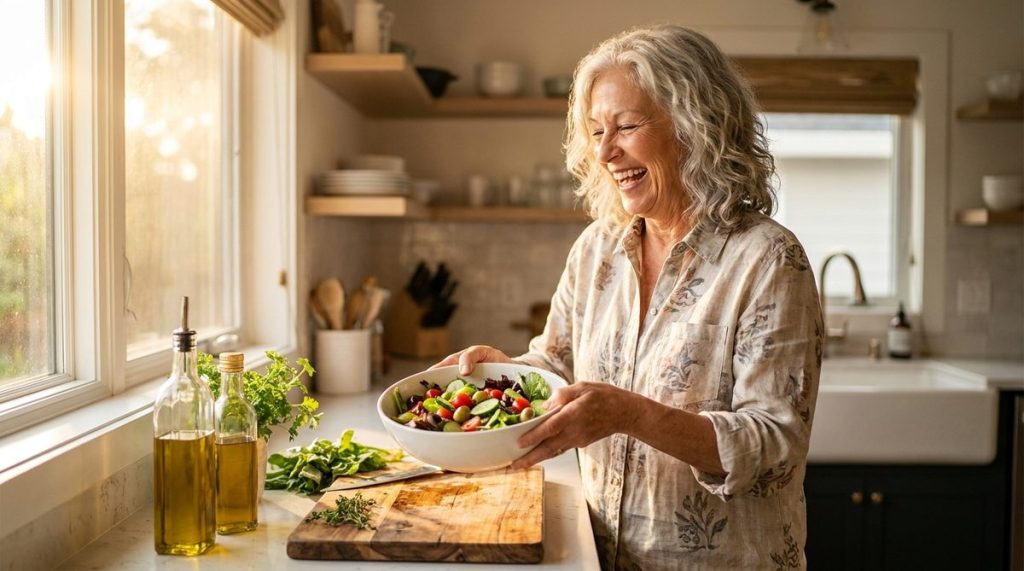
So what does an anti-inflammatory plate look like in practical terms?
- Prioritize omega-3-rich proteins — Wild-caught salmon, sardines, mackerel, or plant-based sources like walnuts and ground flaxseed. Aim for fatty fish at least twice per week.
- Fill half your plate with colorful produce — Deep greens (kale, spinach), bright berries, orange sweet potatoes, and red bell peppers deliver polyphenols and carotenoids that directly combat oxidative stress.
- Choose whole grains over refined — Swap white bread for steel-cut oats, quinoa, or farro. The fiber feeds beneficial gut bacteria, which regulate inflammation systemically.
- Use extra-virgin olive oil as your primary fat — Its oleocanthal compound mimics ibuprofen’s anti-inflammatory action without the GI side effects.
- Limit ultra-processed foods aggressively — The CDC reports that Americans over 60 still derive roughly 55% of daily calories from ultra-processed sources. Cutting that number even by a third can measurably lower C-reactive protein levels within 8 weeks.
Protein: The Nutrient Most Seniors Under-Consume
Here’s a statistic that alarms me: up to 46% of adults over 70 fail to meet the minimum recommended protein intake. And the minimum (0.8 g/kg body weight) is likely too low for older adults anyway. Current geriatric nutrition guidelines suggest 1.0–1.2 g/kg daily—and up to 1.5 g/kg if you’re recovering from illness or actively building muscle.
For a 160-pound adult, that translates to roughly 73–109 grams of protein per day. Spread it across meals: 25–30 grams at breakfast, lunch, and dinner triggers muscle protein synthesis far more effectively than loading it all at dinner, which is the pattern I see most often. As I explain in greater detail in Aging in Place: Why Mindset and Nutrition Decide Who Thrives, what you eat directly determines how independently you live.
Pillar 2: Movement That Builds Resilience, Not Just Endurance
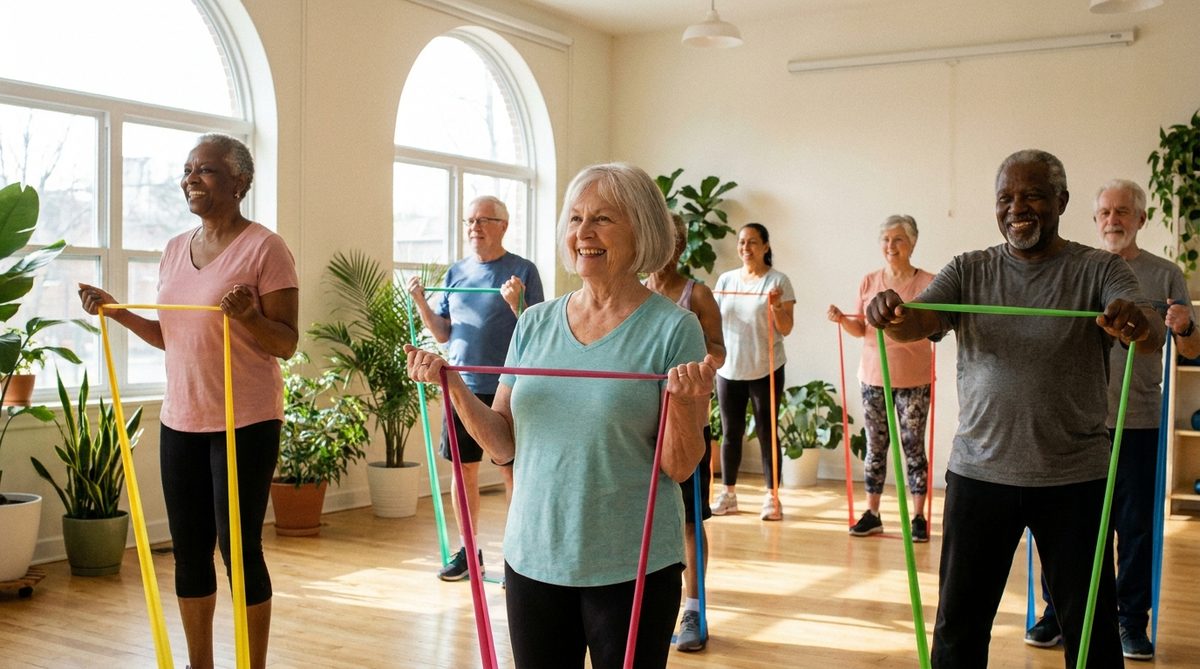
Walking is wonderful. But if walking is your only form of exercise after 50, you’re leaving critical health benefits on the table. The Mayo Clinic now recommends that older adults engage in four distinct types of physical activity: aerobic, strength, balance, and flexibility training.
Why strength training deserves special attention: after age 50, you lose approximately 1–2% of muscle mass per year if you don’t actively resist that decline. This condition—sarcopenia—is now recognized as a primary driver of falls, fractures, disability, and even insulin resistance. A landmark 2024 study in JAMA Internal Medicine found that older adults who performed resistance training just twice per week had a 40% lower risk of hospitalization over a 5-year follow-up compared to those who did aerobic exercise alone.
A Practical Weekly Movement Template
You don’t need a gym membership. Here’s what I recommend to clients who are starting fresh:
- Monday/Thursday: 20–30 minutes of resistance training (bodyweight squats, wall push-ups, resistance bands, or light dumbbells). Focus on legs, core, and upper body.
- Tuesday/Friday: 30 minutes of brisk walking, swimming, or cycling at moderate intensity (you can talk but not sing).
- Wednesday/Saturday: 15 minutes of balance work (single-leg stands, heel-to-toe walking, tai chi) plus 10 minutes of stretching or gentle yoga.
- Sunday: Active rest—a leisurely walk, gardening, or light housework.
The key is consistency over intensity. In my experience, the seniors who thrive at 80 are the ones who moved moderately but never stopped at 55.
Pillar 3: Sleep as a Non-Negotiable Health Intervention
Sleep is the most underrated pillar of healthy aging, and it’s the one my clients over 60 struggle with most. Roughly 50% of older adults report chronic sleep difficulties, according to the National Institute on Aging. But here’s what many people don’t realize: poor sleep isn’t just about fatigue. It accelerates beta-amyloid plaque buildup in the brain (linked to Alzheimer’s), impairs glucose metabolism, raises blood pressure, and weakens immune response.
The goal for most adults over 50 is 7–8 hours of quality sleep. “Quality” means sufficient time in deep (slow-wave) sleep and REM sleep—the phases where cellular repair, memory consolidation, and hormonal regulation occur.
Evidence-Backed Sleep Strategies for Older Adults
Anchor your wake time. I find this more effective than setting a bedtime. Pick a wake-up time and stick to it—even weekends—within a 30-minute window. Your circadian rhythm resets from the morning, not the evening.
Get bright light exposure before 10 a.m. Fifteen to 20 minutes of outdoor morning light suppresses melatonin production at the right time and strengthens your sleep-wake cycle. This is especially critical if you spend most of the day indoors.
Limit fluids after 7 p.m. Nocturia (nighttime urination) is the number-one sleep disruptor my older clients report. Reducing evening fluid intake—while staying well-hydrated earlier in the day—can cut nighttime wake-ups significantly.
Keep the bedroom at 65–68°F. Core body temperature needs to drop for sleep onset. A cool room facilitates this physiological process directly.
Pillar 4: Cognitive Engagement That Goes Beyond Crossword Puzzles
Crosswords and Sudoku are fine, but they exercise a narrow band of cognitive function. The ACTIVE trial—one of the largest cognitive training studies ever conducted—found that the type of mental engagement matters enormously. Speed-of-processing training, for instance, reduced dementia risk by 29% over a 10-year period, while crossword-style exercises showed minimal protective effect.
What actually works for brain longevity?
Learning a new skill. A musical instrument, a new language, a drawing technique—activities that require you to build novel neural pathways. A 2024 University of Edinburgh study showed that adults over 65 who spent 30 minutes daily learning a new language improved executive function scores by 18% in just 12 weeks.
Social learning. Group classes, book clubs, or mentoring programs combine cognitive challenge with social interaction—hitting two pillars at once. I recommend this dual approach whenever possible because adherence rates are dramatically higher when people enjoy the company.
Technology engagement. Contrary to stereotype, older adults who learn to use new technology—video calling platforms, creative software, even simple coding—show measurable improvements in working memory and problem-solving. The novelty and frustration tolerance required is precisely what builds cognitive reserve.

Pillar 5: Social Connection as a Biological Necessity
Loneliness isn’t just an emotional state—it’s a clinical risk factor. The U.S. Surgeon General’s 2023 advisory classified social isolation as a public health crisis, noting that prolonged loneliness carries mortality risk equivalent to smoking 15 cigarettes per day. For adults over 65 living alone, the data is especially stark: a 26% increased risk of all-cause mortality and a 50% increased risk of developing dementia.
In my 15 years of practice, I’ve watched nutrition plans fail not because of the food but because of the isolation. Eating alone reduces meal quality, lowers appetite, and increases reliance on convenience foods. Social connection isn’t a “nice to have”—it’s metabolically relevant.
Practical Ways to Strengthen Social Ties After 50
Schedule social meals. Commit to eating with another person at least three times per week. This single habit improves dietary variety and caloric adequacy in older adults, according to a 2023 Journal of Nutrition study.
Volunteer with purpose. The Corporation for National and Community Service reports that adults over 50 who volunteer regularly have 24% lower mortality rates—but the benefit is strongest when volunteering feels personally meaningful rather than obligatory.
Leverage technology for real connection. Video calls aren’t a substitute for in-person contact, but they’re far better than nothing. A 2024 Stanford study found that older adults who made video calls at least three times weekly reported loneliness scores comparable to those with regular in-person social contact. If you’re planning to age in place, building a robust social network is just as important as installing grab bars.
Pillar 6: Proactive Health Management and Preventive Care
This final pillar is where knowledge becomes power—and where too many older adults fall short. A 2024 AARP survey found that 34% of adults over 60 had skipped or delayed recommended preventive screenings in the previous two years, often due to cost concerns, transportation barriers, or simple unawareness of current guidelines.
Here are the screenings and preventive actions I consider non-negotiable after 50:
- Annual comprehensive metabolic panel and lipid panel — Catches kidney function decline, blood sugar trends, and cardiovascular risk markers early.
- Colonoscopy — The U.S. Preventive Services Task Force recommends screening from age 45–75. If you’ve been putting this off, 2026 is your year.
- Bone density scan (DEXA) — Recommended for all women over 65 and men over 70, or earlier if risk factors exist. Osteoporosis is silent until a fracture happens.
- Blood pressure monitoring — Home monitoring is now considered more accurate than office readings. Check twice weekly and log the numbers for your provider.
- Medication review — At least once a year, sit down with your pharmacist or physician and review every medication—prescription and over-the-counter. Polypharmacy (five or more concurrent medications) affects roughly 40% of adults over 65 and is a leading cause of preventable adverse events.
- Vaccination updates — RSV vaccines, updated COVID-19 boosters, shingles (Shingrix), pneumococcal vaccines, and annual flu shots. The CDC’s adult immunization schedule was updated for 2025–2026 with expanded RSV recommendations for adults over 60.
Don’t Let Cost Be the Barrier
I understand that healthcare costs are a genuine obstacle. With retiree healthcare inflation outpacing general COLA adjustments, many of my clients feel squeezed. If you’re navigating Medicare changes, I’d recommend reading Medicare Advantage Dropping Benefits in 2026: 5 Myths Busted to understand what’s actually changing versus what’s being sensationalized. Preventive screenings are generally covered at no out-of-pocket cost under Original Medicare and most Advantage plans—but you need to confirm coverage before scheduling.
How to Actually Implement All 6 Pillars Without Overwhelm
I know what you’re thinking: six pillars sounds like six full-time jobs. It doesn’t have to be. The secret I share with every client is to stack habits—attach a new behavior to something you already do.
Walk with a friend (movement + social connection). Cook a new anti-inflammatory recipe from a YouTube tutorial (nutrition + cognitive engagement + technology). Keep a sleep journal on your nightstand (sleep + proactive health tracking). These combinations make the 6 pillars of a healthier age-defying lifestyle feel like a natural rhythm rather than a checklist.
Start with the pillar where you’re weakest. For most of my clients over 60, that’s either strength training or sleep. Pick one concrete action from this article, practice it for two weeks, then add another. Research on habit formation in older adults shows that layering one small change at a time leads to 80% adherence at six months—compared to just 12% for people who overhaul everything at once.
The Bigger Picture: Aging as an Active Choice
A fascinating 2024 study from Yale found that older adults with a positive perception of aging lived an average of 7.5 years longer than those with negative views—even after controlling for health status, socioeconomic factors, and baseline fitness. Mindset isn’t fluff. It’s epidemiologically significant. For more on this research, see 7 Proof-Backed Ways Older Adults Can Improve With Age.
The 6 pillars of a healthier age-defying lifestyle aren’t about reversing the clock. They’re about building a body and mind that function well, feel good, and allow you to live on your own terms for as long as possible. In my experience, the adults who embrace this framework don’t just add years to their life—they add life to their years.
And that, ultimately, is the point.
Frequently Asked Questions
What are the 6 pillars of a healthier age-defying lifestyle?
The six pillars are anti-inflammatory nutrition, multi-type physical movement, quality sleep, cognitive engagement, social connection, and proactive preventive healthcare. Research shows addressing all six together produces significantly better outcomes than focusing on any single area.
How much protein do adults over 50 actually need per day?
Current geriatric nutrition guidelines recommend 1.0–1.2 grams of protein per kilogram of body weight daily for healthy older adults, and up to 1.5 g/kg during illness recovery or active muscle-building. For a 160-pound person, that's roughly 73–109 grams spread across three meals.
Can strength training really reduce hospitalization risk for seniors?
Yes. A 2024 JAMA Internal Medicine study found that older adults who performed resistance training twice per week had a 40% lower hospitalization risk over five years compared to those doing aerobic exercise alone. Strength training combats sarcopenia, reduces fall risk, and improves metabolic health.
How does social isolation physically affect older adults' health?
The U.S. Surgeon General's 2023 advisory found that prolonged loneliness carries mortality risk equivalent to smoking 15 cigarettes per day. For adults over 65 living alone, social isolation increases all-cause mortality risk by 26% and dementia risk by 50%.
What is the most important preventive screening for adults over 50?
No single screening is most important—it depends on individual risk factors. However, annual blood work (metabolic and lipid panels), colonoscopy, bone density scans, and regular blood pressure monitoring are all considered essential. Most preventive screenings are covered at no cost under Original Medicare.
About Dr. Linda Park, PhD, RD (Registered Dietitian)
Dr. Linda Park is a Registered Dietitian with a PhD in Nutritional Science and 15 years of clinical and research experience focused on older adults. She has published peer-reviewed research on the role of nutrition in managing diabetes, cardiovascular health, and cognitive decline in seniors. At Daily Trends Now, Dr. Park writes evidence-based articles on senior nutrition, supplement safety, meal planning, and the foods that truly make a difference for aging well.