


Key Takeaways
- Older adults lost over $4.8 billion to fraud in 2024, a 43% increase from the previous year, according to FBI data.
- Scammers increasingly use AI-generated voices, fake texts, and spoofed caller IDs to exploit trust and urgency.
- A simple five-step verification routine can block the vast majority of scam attempts before any money is lost.
- Talking openly about scams with family members isn't embarrassing — it's the single most effective prevention tool available.
The Phone Call That Almost Cost Margaret $47,000
Margaret Chen, a 68-year-old retired schoolteacher in suburban Phoenix, was making her morning coffee when her phone rang. The caller ID said “Social Security Administration.” A professional-sounding man told her that her Social Security number had been linked to criminal activity and that a warrant had been issued for her arrest.
Her heart pounding, Margaret listened as the caller instructed her to withdraw cash from her bank and purchase gift cards to “secure” her accounts while the investigation was resolved. He told her not to tell anyone — not even her family — because the case was “under federal seal.”
Margaret drove to her bank. She was standing in line when a teller named David noticed her hands trembling and asked if everything was okay. Margaret whispered that she couldn’t talk about it. David had seen this before. He gently asked if someone on the phone had told her to buy gift cards. Margaret burst into tears.
David’s intervention saved Margaret’s retirement savings. But for every Margaret, there are thousands who aren’t so fortunate. In my 14 years working in cybersecurity and digital privacy research, I’ve studied hundreds of cases like hers — and the patterns are both heartbreaking and preventable.
Why Scammers Target Older Adults — And Why It’s Getting Worse
Let me be direct about something: the fact that scammers target older adults isn’t a reflection of cognitive decline or technological ignorance. It’s a calculated business decision by criminals. Adults over 60 tend to have larger savings, better credit, home equity, and a cultural disposition toward politeness and trust. Scammers exploit every one of those qualities.
The FBI’s Internet Crime Complaint Center (IC3) reported that Americans over 60 lost more than $4.8 billion to fraud in 2024 — a staggering 43% increase from 2023. That figure likely underestimates the true damage, since the FBI acknowledges that only a fraction of victims report the crime, often due to shame or not realizing they’ve been scammed until months later.
What’s changed recently is the sophistication. The scammer who called Margaret didn’t sound like the stereotypical fraudster with a shaky script. He was polished, patient, and emotionally manipulative. Today’s scam operations run like corporations, some operating out of overseas compounds with hundreds of employees trained in psychological manipulation.
And now, artificial intelligence has handed them new weapons. AI voice-cloning tools can replicate a grandchild’s voice from a 10-second social media clip. AI chatbots can carry on convincing text conversations. Deepfake video calls — once the stuff of science fiction — are now being used in romance scams. If that concerns you, it should. But it shouldn’t paralyze you.
The Five Scams I See Most Often
When I consult with community organizations and senior centers about digital safety, I always start with the specific scams that are draining the most money right now. Understanding the playbook is half the battle. Here are the five fraud types that the FBI, FTC, and my own research consistently flag as the most damaging to older adults.
| Scam Type | How It Works | Average Loss (2024) | Key Red Flag |
|---|---|---|---|
| Tech Support Scams | Pop-up or call claims your computer is infected; scammer gains remote access | $14,000–$25,000 | Unsolicited contact about a “problem” you didn’t notice |
| Government Impersonation | Caller poses as IRS, SSA, or Medicare agent; demands payment or personal data | $8,000–$50,000+ | Threats of arrest or benefit suspension |
| Romance / Companionship Scams | Fake online relationship built over weeks; eventually asks for money | $50,000–$100,000+ | Person avoids video calls, always has emergencies requiring cash |
| Investment / Cryptocurrency Fraud | Promises of guaranteed returns; often begins on social media or messaging apps | $80,000–$150,000+ | “Guaranteed” returns with no risk — this doesn’t exist |
| Grandparent Scam (AI-Enhanced) | AI-cloned voice of relative claims emergency; begs for immediate wire transfer | $5,000–$15,000 | Frantic urgency, “Don’t tell Mom and Dad” |
I often tell my readers that scammers succeed not because their victims are gullible, but because the emotional triggers they use — fear, love, urgency, authority — bypass rational thinking in anyone. Research from the Stanford Center on Longevity has shown that even highly educated professionals fall for these schemes when the emotional pressure is calibrated correctly.
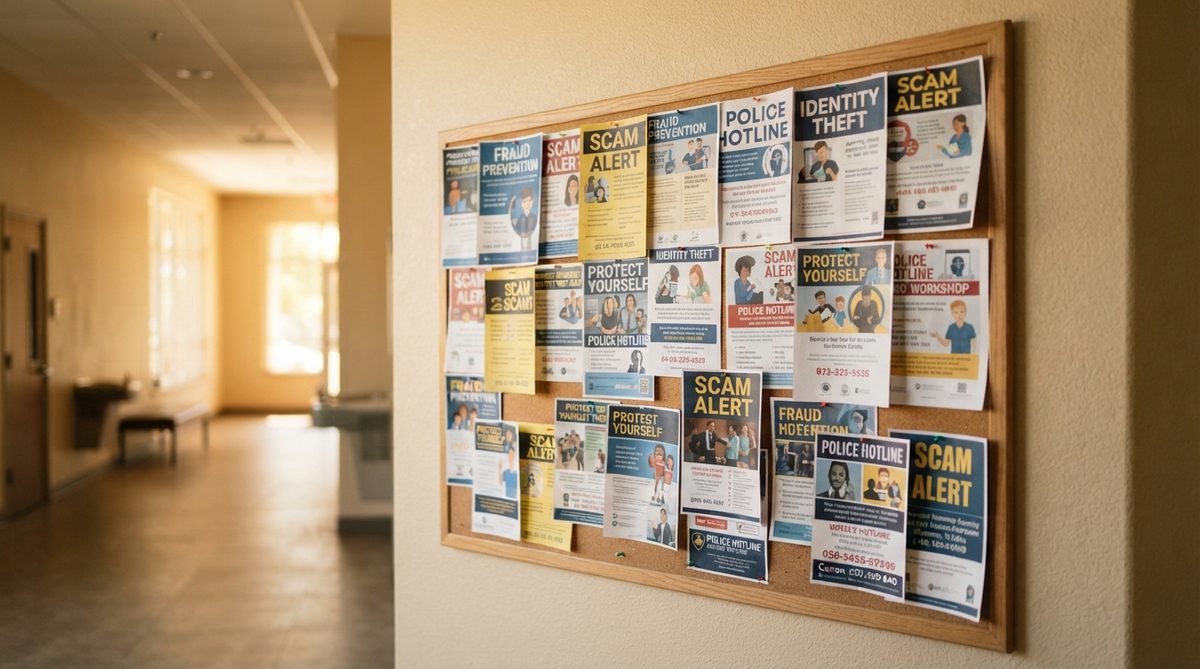
Margaret’s Story Isn’t Unusual — It’s an Epidemic
After Margaret’s near-miss, I spoke with her for a research project I was conducting on scam recovery. What struck me most was something she said: “I knew about scams. I’d read articles. But when it was happening to me, it felt completely real. The fear took over.”
This is exactly what the FTC’s consumer protection division has documented — the gap between awareness and action. Surveys show that over 80% of adults over 60 say they’re aware of common scams. Yet victimization rates keep climbing. Knowledge alone isn’t enough. You need practiced responses — almost like muscle memory — for the moment a scammer makes contact.
The emotional aftermath is significant too. Many victims experience shame, anxiety, and depression that lasts months or years. If someone you love has been affected, understanding the psychological toll matters deeply, and resources like this guide on supporting an aging parent with depression can help families navigate the recovery.
Your Five-Step Scam Shield: A Routine That Actually Works
I developed this framework after analyzing which behaviors most consistently prevented successful scams among the populations I’ve studied. I call it the “Pause-Verify-Discuss” method, and I’ve expanded it into five concrete steps anyone can follow.
- Pause and breathe before acting. Every single scam depends on urgency. The caller says you’ll be arrested in 30 minutes. The email says your account will be closed today. The “grandchild” is sobbing. Your first and most powerful move is to do absolutely nothing for five minutes. Hang up the phone. Close the email. Set a timer. Scammers cannot survive a pause — their entire model depends on preventing you from thinking clearly.
- Verify through a separate channel. If someone claims to be from the Social Security Administration, hang up and call SSA directly at their official number (1-800-772-1213). If a “grandchild” calls in distress, hang up and call that grandchild’s known phone number, or call their parent. Never use a callback number provided by the person who contacted you. Always look up the real number independently.
- Discuss it with someone you trust. Scammers almost always say “Don’t tell anyone.” That instruction is itself the biggest red flag in existence. Any legitimate agency, business, or family member would never ask you to keep a financial transaction secret. Before you send money, move funds, or share personal information, tell one person — a spouse, adult child, trusted friend, or even a bank teller like David.
- Lock down your accounts proactively. Freeze your credit with all three bureaus (Equifax, Experian, TransUnion) — it’s free and takes about 15 minutes total. Set up transaction alerts on your bank accounts so you’re notified of any withdrawal over a threshold you choose. Enable two-factor authentication on your email, since email is the master key to most of your other accounts. CISA’s official guidance provides detailed instructions for each of these steps.
- Report every attempt — even unsuccessful ones. File reports with the FBI’s IC3 (ic3.gov), the FTC (reportfraud.ftc.gov), and your local police. Reporting helps law enforcement identify patterns and shut down operations. It also helps you psychologically — you’re taking an active step instead of feeling like a passive victim.
Print these five steps out. Put them next to your phone. I’m completely serious. In the critical 90 seconds when a scam call is trying to hijack your emotions, having a physical reminder within arm’s reach can be the difference between safety and devastating loss.

The Technology That Protects You (Not Just Threatens You)
Here’s something I want to emphasize, because I think the narrative around older adults and technology is often unfairly one-sided: technology is also your greatest ally against fraud. The same smartphone that a scammer might use to reach you can be configured to block them before they ever get through.
Both iPhone and Android devices now include built-in scam call detection. On iPhone, the “Silence Unknown Callers” feature (Settings → Phone → Silence Unknown Callers) sends unfamiliar numbers straight to voicemail. Android’s Phone app has a similar “Caller ID & spam” filter. Neither is perfect, but both dramatically reduce the volume of scam calls reaching you.
Apps like Truecaller and Nomorobo maintain real-time databases of known scam numbers and can warn you before you pick up. Your phone carrier likely offers free scam-blocking tools as well — T-Mobile’s Scam Shield, AT&T’s ActiveArmor, and Verizon’s Call Filter are all available at no extra cost.
For email, most modern providers (Gmail, Outlook, Yahoo) flag suspected phishing messages automatically. But you should still follow this rule: never click a link in an email that asks you to “verify” your account, “confirm” a purchase you don’t remember, or “update” your payment information. Instead, open your browser, type the company’s real web address yourself, and log in directly.
If you’re still building confidence with your devices, don’t let the myths stop you — there’s solid evidence that common assumptions about seniors and technology are flat-out wrong. Most people over 50 are far more capable with technology than they give themselves credit for.
When a Loved One Has Been Scammed: What to Do Next
If you discover that you or someone you care about has already sent money or shared personal information with a scammer, speed matters. Here’s the immediate action plan:
Within the First 24 Hours
Contact your bank or credit card company immediately. Many institutions have fraud departments that operate around the clock, and some transactions can be reversed if reported quickly — especially wire transfers caught within the first 24–72 hours. If gift cards were purchased, call the gift card company (Apple, Google, Amazon, etc.) with the card numbers; occasionally, funds can be frozen before the scammer redeems them.
Within the First Week
Place a fraud alert or credit freeze with the three credit bureaus. Change passwords on your email, bank, and any accounts that may have been compromised — starting with your email, since it’s typically used for password resets on everything else. File that IC3 report and FTC report. Contact your local Area Agency on Aging, which often has victim advocates who specialize in elder fraud recovery.
The Longer Road
Financial recovery from fraud can take months. For those whose retirement savings have been impacted, rebuilding requires careful planning — and the financial pressures compound when inflation is already straining retirement budgets. Seek guidance from a fee-only financial advisor (not one who earns commissions) and check whether your state has a victim compensation fund.
Emotional recovery matters just as much. Scam victims frequently describe feelings of violation similar to those experienced after a burglary. These feelings are valid. Professional counseling, peer support groups through AARP’s Fraud Watch Network, and honest conversations with family members all contribute to healing.
Building a Culture Where We Talk About Scams
The single most effective scam-prevention tool isn’t software or caller ID. It’s conversation.
In my research, I’ve found that families who regularly discuss scam attempts — sharing the weird text they got, laughing about the absurd “IRS” voicemail, mentioning the phishing email at dinner — create an environment where no one feels embarrassed to ask, “Hey, does this seem legitimate to you?”
Contrast that with families where scams are never discussed, or where older members feel condescended to when the topic comes up. In those households, a victim is far more likely to suffer in silence, sometimes losing money over weeks or months before anyone notices.
If you’re an adult child reading this, approach the conversation with respect. Don’t say, “Mom, you need to be careful — you’re an easy target.” Instead, try: “I almost fell for this scam text last week — can I show you what it looked like?” Making yourself the example removes the power dynamic and opens real dialogue.
And if you’re the one who’s 50, 60, 70, or beyond — own your expertise. You’ve navigated decades of life. You have instincts that younger people haven’t developed yet. What I see most often is that older adults who trust their gut feeling (“something about this didn’t feel right”) and combine it with one verification step catch scams that would fool people half their age.
The Bigger Picture: Staying Connected Without Getting Burned
I don’t want anyone reading this to walk away thinking that technology is the enemy. The same digital world that harbors scammers also lets you video-call grandchildren across the country, manage your health care from home, access physical wellness resources like strength-building routines designed for older adults, and stay informed about the issues that matter to you.
The goal isn’t to retreat from technology. It’s to use it on your terms, with your eyes open.
Margaret, the retired teacher from Phoenix, told me something six months after her near-miss that has stuck with me ever since. She said, “I’m not afraid of my phone anymore. But I’m not naive about it either. It’s a tool. And I decide how it gets used.”
That’s the posture I’d encourage everyone to adopt. Learn the five steps. Set up the protections. Have the conversations. And then go ahead and use your technology to live a fuller, more connected life — because that’s exactly what it’s for.
If you or someone you know has been targeted by a scam, report it to the FTC at consumer.ftc.gov or call the FBI’s IC3 at ic3.gov. For ongoing scam alerts tailored to older adults, the AARP’s technology and fraud resources are updated regularly and available free of charge.
About Dr. Priya Sharma, PhD in Computer Science, CISSP
Dr. Priya Sharma is a cybersecurity expert with a PhD in Computer Science and a Certified Information Systems Security Professional (CISSP) credential. She has spent 14 years researching digital privacy, online fraud, and data protection — with a particular focus on the risks facing older internet users. At Daily Trends Now, Dr. Sharma writes about online scams, password security, smartphone privacy, and the practical steps readers can take to stay safe in an increasingly connected world.