

The Phone Call That Changed Everything for the Hendersons
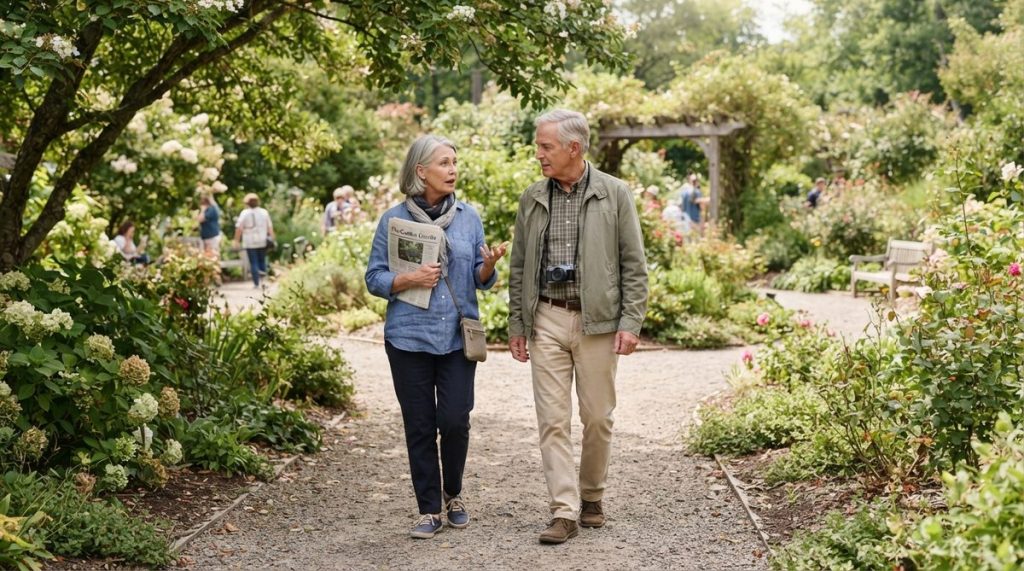
Last October, I got a call from a woman named Diane Henderson in suburban Atlanta. She was 67, recently retired, and her voice was shaking. Her husband Tom, 71, had slipped getting out of their bathtub the night before. He’d caught himself on the towel bar — which promptly ripped out of the drywall — and landed hard on the tile floor. Bruised ribs. A hairline fracture in his wrist. And a terrifying realization: the home they’d lived in for 28 years was quietly working against them.
“We always said we’d stay in this house forever,” Diane told me. “But I’m starting to wonder if it’ll let us.”
In my 14 years as a Certified Aging-in-Place Specialist, I’ve heard some version of this story hundreds of times. The details change — a fall on the stairs, a kitchen that’s become impossible to navigate with arthritis, a doorway too narrow for a walker — but the underlying truth is always the same. The homes we love weren’t built for the people we’re becoming.
The Gap Between Wanting to Stay and Being Able To
Here’s a statistic that should stop every homeowner over 50 in their tracks: according to AARP, roughly 77% of adults aged 50 and older say they want to remain in their current home as they age. Yet the Joint Center for Housing Studies at Harvard estimates that fewer than 10% of the U.S. housing stock has the three basic accessibility features needed for aging in place — a no-step entry, single-floor living, and an accessible bathroom.
That’s a staggering mismatch. Nearly eight out of ten people want to stay home, but barely one in ten homes is ready for them.
And this isn’t some abstract policy problem. Aging in place is reshaping housing demand right now, in 2025, as the youngest baby boomers turn 61 and the oldest approach 80. The question isn’t whether you want to stay in your home. The question is whether your home will be safe enough to let you.
What “Aging in Place” Actually Means (Beyond the Buzzword)
I often tell my clients that aging in place doesn’t mean doing nothing and hoping for the best. It means making deliberate, strategic changes to your home — and your mindset — so that you can live independently, safely, and comfortably for as long as possible.
The National Institute on Aging defines it simply: “the ability to live in one’s own home and community safely, independently, and comfortably, regardless of age, income, or ability level.” But the practical reality is far more nuanced.
When I walked through the Henderson home for the first time, I found 14 distinct safety issues in under an hour. Loose throw rugs on hardwood floors. A steep staircase with no second handrail. Kitchen cabinets that required a step stool to reach. A single bathroom — upstairs — with a high-lip tub and no grab bars. A front porch with three steps and no railing.
None of these were problems when Tom and Diane moved in at 39 and 43. Every single one of them was a problem now. If you’re wondering whether common aging in place myths might be affecting your own planning, you’re not alone — I see misconceptions derail smart people every week.
The Real Cost of Making Your Home Age-Ready
Let’s talk money, because that’s usually the first thing people ask about. And I won’t sugarcoat it: age-proofing a home won’t come cheap, especially if you’re starting from scratch with a two-story house built before 1990.
But here’s what I always put in context. The average cost of assisted living in the United States is now approximately $5,350 per month, according to the National Council on Aging. That’s $64,200 per year. A nursing home? You’re looking at $8,000 to $9,500 per month for a semi-private room. Even with insurance or Medicaid support, the out-of-pocket costs are enormous — and retirees are already depleting savings faster than expected.
Compare that to the cost of strategic home modifications. Here’s what the Hendersons’ project looked like:
| Modification | Estimated Cost | Priority Level | Impact on Safety |
|---|---|---|---|
| Bathroom remodel (walk-in shower, grab bars, non-slip flooring) | $8,500 – $15,000 | Critical | Very High — bathrooms account for 80% of in-home falls |
| First-floor bedroom conversion | $3,000 – $7,000 | High | High — eliminates daily stair use |
| Front entry ramp or zero-step entry | $1,500 – $4,000 | High | High — enables wheelchair/walker access |
| Stair handrails (both sides) | $200 – $600 | Immediate | Moderate — simple but life-saving |
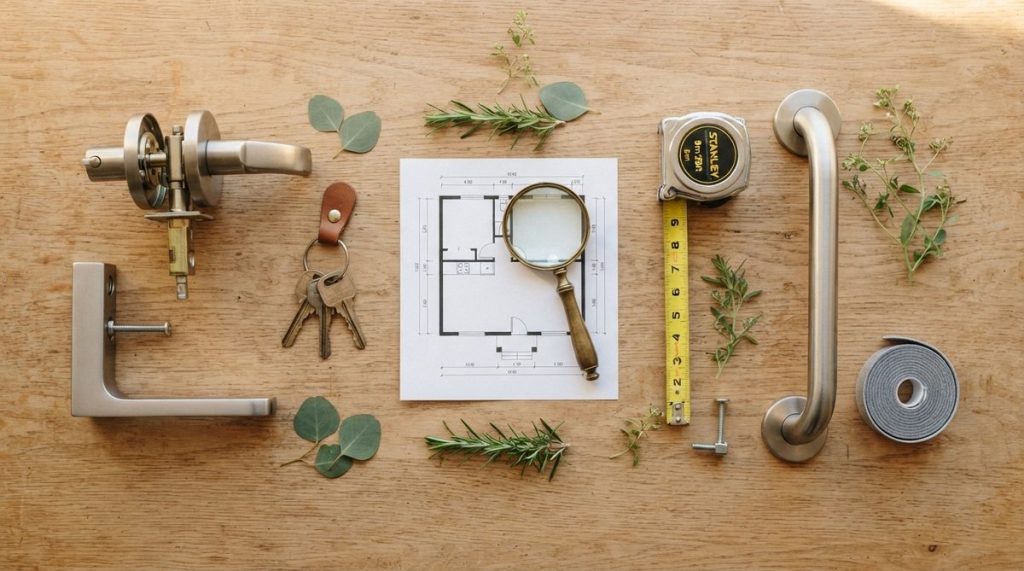
| Lever-style door handles throughout | $300 – $800 | Moderate | Moderate — critical for arthritis |
| Improved lighting (motion-sensor, task lighting) | $500 – $1,500 | Moderate | High — poor lighting is a leading fall cause |
| Kitchen modifications (pull-out shelves, lowered counters) | $2,000 – $6,000 | Moderate | Moderate — reduces strain and reaching |
| Smart home safety tech (medical alert, smart locks, video doorbell) | $300 – $1,200 | Moderate | High — enables emergency response |
The Hendersons spent about $31,000 total on their modifications over six months. That’s roughly six months of assisted living costs — to buy themselves potentially 15 to 20 more years in the home they love. From a purely financial standpoint, it’s one of the best investments a retiree can make.
Where to Start: A Practical Action Plan
What I see most often is paralysis. People know they need to make changes, but the scope feels overwhelming, so they do nothing. Then a fall happens. Then they’re making decisions from a hospital bed instead of from a position of strength.
Don’t wait for the crisis. Here’s the step-by-step process I walk every client through:
- Schedule a professional home assessment. Look for a Certified Aging-in-Place Specialist (CAPS) through the National Association of Home Builders directory. A trained assessor will identify risks you’ve stopped noticing because you see your home every day. Expect to pay $200–$500 for a thorough walkthrough and written report.
- Prioritize by risk, not by cost. Start with the bathroom. Period. The CDC reports that every 11 seconds, an older adult is treated in an emergency room for a fall, and the bathroom is the single most dangerous room in the house. Grab bars, a walk-in shower, and non-slip flooring should be your first project — always.
- Address entry and exit points. Can you get in and out of your home without navigating steps? If not, a ramp or zero-step entry should be your second priority. A broken hip on the front porch can end independent living overnight.
- Create a single-floor living option. Even if you can handle stairs now, plan for a future where you can’t. Convert a first-floor room into a bedroom. Add a half-bath on the main level if one doesn’t exist. Think of it as insurance.
- Upgrade lighting everywhere. Install motion-sensor lights in hallways, bathrooms, and stairways. Replace dim bulbs with brighter LEDs. Ensure light switches are accessible at every doorway. Poor vision combined with poor lighting is a recipe for disaster.
- Invest in smart home technology. Medical alert systems, smart locks, video doorbells, and voice-activated controls aren’t luxuries — they’re safety tools. And if you’ve been hesitant about technology, know that the myths about seniors and technology are mostly wrong.
- Build a support network. Aging in place doesn’t mean aging alone. Connect with local village networks, community programs, and neighbor check-in systems. Programs like the Village Friends model and new aging in place grant initiatives are expanding across the country in 2025.
- Revisit and update annually. Your needs at 65 will differ from your needs at 75 and again at 85. Schedule a yearly walk-through to reassess. Think of it as a wellness checkup for your house.
The Bathroom: Ground Zero for Home Safety
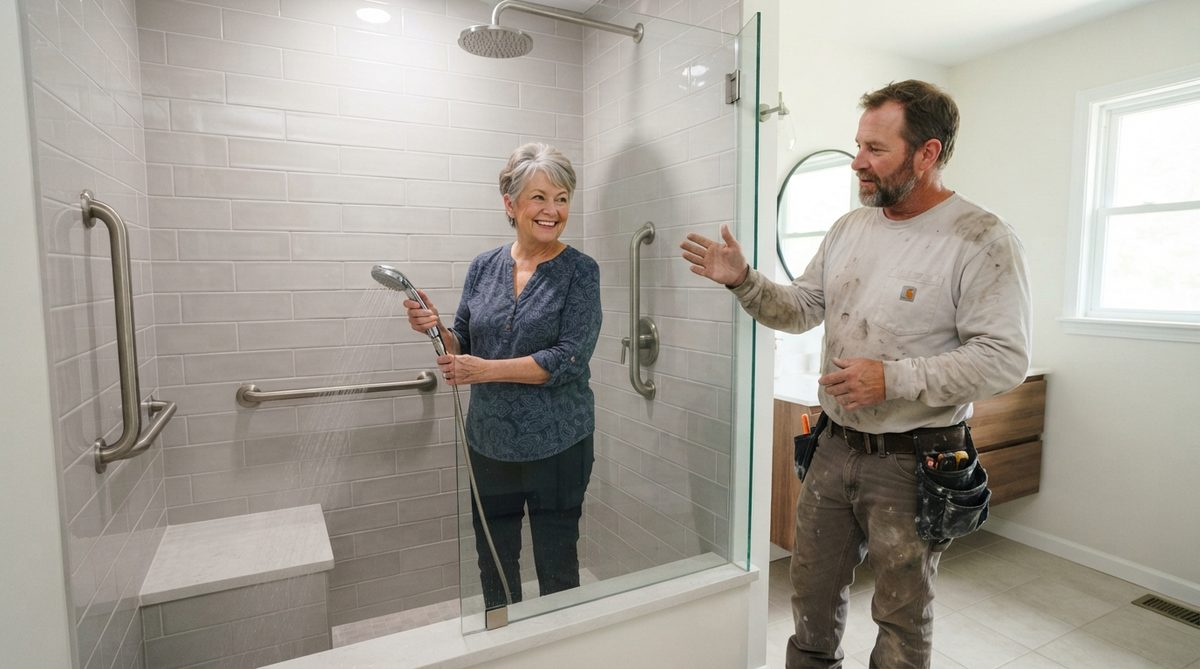
I spend more time talking about bathrooms than any other room, and for good reason. The combination of water, hard surfaces, tight spaces, and the physical demands of bathing makes the bathroom the most hazardous space in any home for someone over 60.
When the Hendersons remodeled their downstairs half-bath into a full bathroom, we made several key changes. We replaced the planned standard shower with a curbless, roll-in shower with a built-in teak bench and a handheld showerhead on a slide bar. We installed three grab bars — strategically placed, not where they “look right” but where biomechanics research says they’ll actually be used. We chose large-format non-slip porcelain tiles rated for wet-surface traction.
Tom told me later that walking into that new shower for the first time was the moment he stopped feeling anxious in his own home. “I didn’t even realize how much stress the old bathtub was causing me until it was gone,” he said.
Grab Bars: The Most Underused Safety Device in America
Let me make a plea for the humble grab bar. They cost $20 to $50 each. Professional installation runs $100 to $200 per bar. And they reduce the risk of bathroom falls by an estimated 30% or more.
Yet most homeowners resist them. They associate grab bars with institutional settings — hospitals, nursing homes. What I tell every client is this: modern grab bars come in brushed nickel, matte black, oil-rubbed bronze, and a dozen other finishes. They can double as towel bars. Guests won’t notice them. But your body will thank you every single day.
The Emotional Side of Aging in Place
This is the part that doesn’t show up in renovation budgets but matters just as much. Staying in your home as you age isn’t just a logistical decision — it’s profoundly emotional. Your home holds decades of memories. It’s where you raised children, hosted holidays, weathered storms both literal and figurative.
Research consistently shows that older adults who remain in familiar surroundings experience lower rates of depression and higher life satisfaction. In fact, science suggests that nearly half of older adults actually improve with age — and a stable, comfortable home environment plays a meaningful role in that trajectory.
But there’s a flip side. A home that feels unsafe becomes a source of constant low-level anxiety. Every trip to the bathroom at 2 a.m. becomes a calculation. Every icy morning on the front steps becomes a negotiation with fear. That kind of chronic stress erodes quality of life in ways that are hard to measure but impossible to ignore.
Making your home safer doesn’t just prevent injuries. It restores confidence. It lets you focus on living instead of worrying.
Funding Your Modifications: Options You Might Not Know About
Cost is a real barrier, and I never dismiss that concern. But there are more funding options than most people realize.
Government and Nonprofit Programs
The HUD Section 504 Home Repair program offers grants of up to $10,000 for homeowners 62 and older to remove health and safety hazards. Many states and municipalities have additional programs — Georgia, where the Hendersons live, offers a property tax exemption for accessibility modifications. The VA offers Specially Adapted Housing grants for veterans.
Nonprofit village networks and community organizations are also stepping up. In 2025, several new aging in place grant programs have launched nationwide, connecting older homeowners with funding for critical modifications. Your local Area Agency on Aging is the best starting point for finding programs in your community.
Tax Considerations
Some home modifications qualify as medical expense deductions if prescribed by a physician. Others may affect your overall retirement tax picture, so it’s worth understanding how large expenses interact with IRMAA brackets and other retirement financial considerations. A tax professional who specializes in retirement planning can help you time major expenses strategically.
What the Hendersons Taught Me
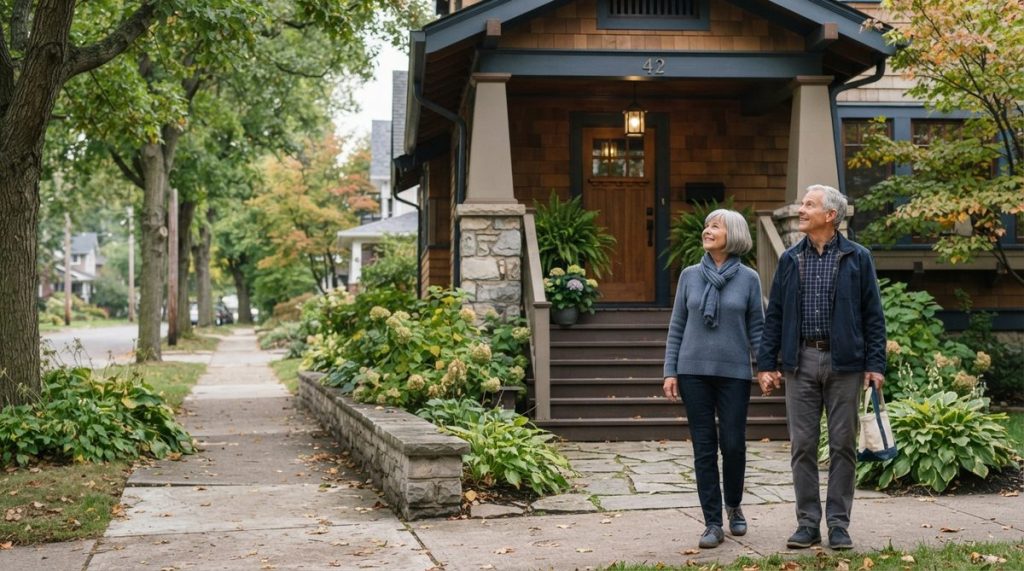
I visited Diane and Tom again this past April, six months after their modifications were complete. The house looked mostly the same from the street — same cheerful yellow siding, same magnolia tree in the front yard. But the new ramp blended seamlessly with the landscaping. Inside, the first-floor bedroom was cozy and personal, filled with the same furniture from upstairs, rearranged to feel fresh.
Tom was cooking dinner when I arrived. He moved through the kitchen easily, pulling out ingredients from new roll-out shelves, setting a pot on the lowered cooktop. His wrist had healed completely. More importantly, so had something else — a kind of ease that had been missing during my first visit.
“We stopped talking about ‘what if,'” Diane told me, pouring coffee. “We just live here now. Like we always did. Except better.”
That’s what aging in place is supposed to feel like. Not clinging to a house that’s slowly becoming dangerous. Not pouring money into a property that fights your body at every turn. But living — actually living — in a home that’s been thoughtfully adapted to support the person you are right now, and the person you’ll be ten years from now.
The Best Time to Start Was Five Years Ago. The Second Best Time Is Today.
If you’re reading this and you’re in your 50s, you have an extraordinary advantage: time. You can make modifications gradually, spread costs over years, and integrate changes into planned renovations. That kitchen remodel you’ve been thinking about? Add pull-out shelves, lever handles, and better lighting. That bathroom refresh? Make it a walk-in shower.
If you’re in your 60s or 70s, urgency matters more, but the good news is that the most impactful changes — grab bars, lighting, removing trip hazards, installing handrails — are also the most affordable. You don’t need a $50,000 renovation to make your home dramatically safer. You might need $2,000 and a free Saturday.
Whatever your age, whatever your budget, the worst choice is to do nothing and assume you’ll figure it out later. I’ve seen what “later” looks like. It usually involves an ambulance, a rehabilitation facility, and a family making decisions under extreme stress.
Your home can be your greatest ally as you age. But only if you help it become one.
About Marcus Bell, Certified Aging-in-Place Specialist (CAPS)
Marcus Bell is a Certified Aging-in-Place Specialist (CAPS) with 14 years of experience helping American seniors create safer, more comfortable living environments. He has consulted on hundreds of home modifications — from bathroom safety upgrades to smart home installations — and writes extensively about the products, services, and strategies that help older adults live independently for longer. At Daily Trends Now, Marcus covers home improvement, aging-in-place solutions, gardening, and practical lifestyle tips for seniors.