
Last week, the Metropolitan Police Department in Washington, D.C., distributed complimentary AirTags and Tile Trackers to select residents as part of an initiative to address the increasing occurrences of carjacking in specific areas throughout the city.
According to data from the MPD, the city has recorded a total of 866 carjacking incidents, with 637 involving the use of firearms. The majority of these thefts have been concentrated in the eastern half of Washington, D.C. As of now, 144 arrests have been executed, and notably, 65 percent of those taken into custody were below the age of 18.
In recent months, Washington, D.C. has witnessed a notable uptick in both vehicle thefts and carjackings, two distinct categories of crime. A carjacking involves the theft of a car in the presence of its owner, typically at gunpoint, while vehicle theft occurs when a car is taken in the absence of the owner.
The surge in vehicle thefts in D.C. is attributed to a discernible cause, aligning with a nationwide pattern. Certain Kias and Hyundais manufactured between 2011 and 2021 have become easy targets due to their lack of a fundamental anti-theft device. This trend, known as the Kia Boys, has been extensively covered by Motherboard, which filed a public records request with the Metropolitan Police Department (MPD) for comprehensive vehicle theft data.
The obtained data revealed that from December 2019 to October 2022, the monthly thefts of Kias and Hyundais did not exceed 32. However, in the subsequent six months, thefts surged significantly, reaching a peak of 368 stolen Kias and Hyundais in D.C. in May 2023 alone. The first three months of 2023 witnessed more thefts of these vehicles than the combined total of the previous two years. Meanwhile, thefts of vehicles from all other car manufacturers remained relatively stable.
The cause behind the surge in carjackings is not as evident. According to MPD data, carjackings in D.C. have risen by 104 percent compared to the previous year.
MPD Sergeant Anthony Walsh informed Motherboard in an email statement that the D.C. government procured AirTags and Tile devices to distribute to community members residing in areas with the highest occurrences of either carjackings or motor vehicle thefts. The distribution was done on a first-come, first-served basis while supplies lasted, with no current plans for upcoming giveaways. The community expressed enthusiasm for the initiative, appreciating the devices as an additional tool to aid in locating their vehicles when needed.
As stated on an informational page on the MPD’s website, residents own the tracking device, and only they have access to the tag’s location data once obtained.
“The device is yours to keep,” the page explains. “In the event of your vehicle being stolen, you can log into your account and show the officer where your device is pinging.”
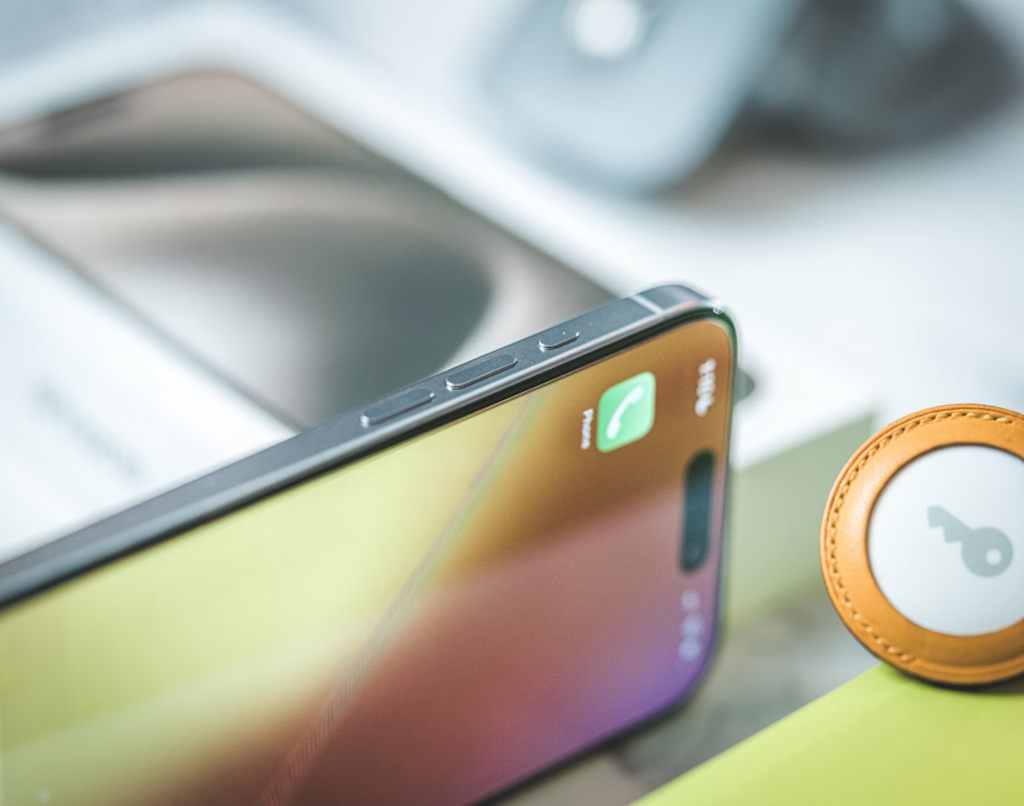
The website also clarifies that the MPD cannot independently access the device’s location data. “The device can only be accessed by the owner of the device,” the page emphasizes. Participating in the program signifies a commitment to sharing tracking data if the vehicle is stolen in the future. In case of theft, residents are instructed to report it, call 911, and inform the dispatcher from the Office of Unified Communications that their vehicle has a tracking device. When responding officers arrive, the real-time location of the device must be provided.
In his emailed statement, Walsh confirmed that the MPD lacks direct access to the tag’s location data. He emphasized, “The device is the property of the owner, and MPD has no capability to track any vehicle without the owner of the device logging into their application and conveying the real-time location information to law enforcement officials.” Walsh clarified that MPD does not access any data, and all information will be provided by the owner of the device.
Matthew Guariglia, a policy analyst at the Electronic Frontier Foundation, which advocates for data privacy rights, remarked, “People have every right to opt into this, but they should be fully informed.” He stressed the importance of asking questions about specific terms, such as the policies of AirTag and Tile regarding the release of user data to law enforcement.
According to Apple’s law enforcement guidelines, the company thoroughly evaluates law enforcement requests for information, specifying that location data, including that generated by the AirTag in conjunction with the Find My app, can be acquired through a subpoena or a “greater legal process” such as a search warrant. On Tile’s website, its parent company, Life360, asserts that law enforcement can exclusively obtain customers’ geolocation data through a search warrant. As of now, representatives for Apple and Tile have not responded to requests for comments.
The initiative by the MPD follows a trend, with the NYPD, for instance, unveiling a similar program in April. New York City Mayor Eric Adams announced a partnership with the NYPD to distribute 500 Apple AirTags to residents in the Bronx, an area experiencing a high rate of car theft.
During a press conference introducing the NYPD’s initiative, Chief Jeffrey Maddrey clarified that the department would not have the ability to track any AirTag distributed. Instead, once the owner realizes their car is missing, they are expected to contact the police, who will then use the owner’s phone to track the vehicle.
Mayor Adams emphasized that the program is not a centralized tracking system where the police take charge of monitoring someone’s car. If owners receive notifications of unauthorized movement, they are to inform the police, who would use the information, with the owner’s consent, to track the stolen vehicle.
As of now, a spokesperson for the NYPD has not responded to a request for comment on the program’s success.