


The Phone Call That Almost Cost Margaret $47,000
Margaret, a 72-year-old retired teacher in Phoenix, was home on a Tuesday afternoon when her phone rang. The caller ID displayed “Social Security Administration.” A calm, professional voice told her that her Social Security number had been linked to a drug trafficking case in Texas, and that a warrant for her arrest had been issued.
Her heart raced. The man on the phone — who identified himself as “Agent Williams” — told her she could resolve the situation by transferring funds to a “secure government account” while the investigation was sorted out. He gave her a case number, a badge number, and even a phone number to call back that connected to what sounded like a government office.
Margaret drove to her bank. She was moments away from wiring $47,000 — nearly a third of her retirement savings — when a bank teller noticed she seemed distressed and asked a few questions. That teller saved Margaret’s financial future.
Consider Margaret’s story—her daughter reached out after the fact, wondering how her sharp, college-educated mother almost fell for something like this. Cybersecurity researchers have documented hundreds of variations of this scenario over the years. And every single time, the victim says the same thing: “I never thought it would happen to me.”
Online scams targeting older adults are not a reflection of intelligence or tech-savviness. They are sophisticated psychological operations designed by criminal organizations that study human behavior for a living. And right now, in 2025, they are more dangerous than ever.
Why Older Adults Are the Primary Targets
Be clear about this: scammers target people over 50 not because they think you’re gullible. They target you because you’ve spent decades building wealth, you tend to have better credit scores, and you’re statistically more likely to answer the phone.
According to the FTC’s Consumer Advice division, Americans over 60 reported losing more than $3.4 billion to fraud in 2023 — a figure that represents only reported cases. The FBI’s Internet Crime Complaint Center estimates that actual losses may be four to five times higher, since shame and embarrassment prevent many victims from coming forward.
There’s another factor that emerges constantly in research: the technology gap. While tech adoption among older adults has surged — Pew Research found that 75% of adults 65 and older now use the internet daily — many didn’t grow up navigating digital threats. The instincts that protect a 30-year-old who’s been dodging phishing emails since college simply haven’t had as many years to develop.
This isn’t about blame. It’s about awareness. And awareness is the single most powerful defense you have.
The Five Scams I See Hitting Hardest Right Now
1. The Government Impersonation Scam
This is what almost got Margaret. Criminals pose as representatives from the Social Security Administration, the IRS, Medicare, or even local law enforcement. They create urgency — arrest warrants, suspended benefits, tax liens — and demand immediate payment via wire transfer, gift cards, or cryptocurrency.
Here’s what you need to know: no legitimate government agency will ever call you and demand immediate payment over the phone. The Social Security Administration will not threaten to arrest you. The IRS initiates contact by mail, not phone calls. If you receive a call like this, hang up. That’s not rude — it’s smart.
2. The Tech Support Scam
You’re browsing the internet when a pop-up suddenly fills your screen: “YOUR COMPUTER HAS BEEN INFECTED. CALL MICROSOFT SUPPORT IMMEDIATELY.” A phone number flashes in red. Maybe an alarm sound plays from your speakers.
Understand this clearly: what you’re seeing is digital theater, nothing more. Microsoft, Apple, and Google will never send you unsolicited pop-ups asking you to call a number. These scammers want remote access to your computer, where they can install actual malware, steal banking credentials, or charge you hundreds of dollars for “repairs” your computer never needed.
If this happens to you, close your browser. If you can’t close it normally, press Ctrl+Alt+Delete on a PC or Command+Q on a Mac to force-quit the application. Your computer is fine.
3. The Romance Scam
This one is particularly cruel. According to the FTC, romance scams cost Americans over 60 more than $390 million in 2023 alone. Scammers create fake profiles on dating sites, social media, or even Words With Friends. They build relationships over weeks or months — sending good-morning texts, sharing fabricated life stories, expressing deep affection.
Then the requests start. A medical emergency overseas. A business deal gone wrong. A plane ticket to finally come visit. The amounts start small and escalate. One documented case involved a woman who had sent over $200,000 over 18 months to someone she had never met in person or video-called.
If someone you’ve met online asks for money, that is the red line. No matter how real the connection feels, stop and talk to someone you trust before sending anything. If you’re embracing new hobbies and social connections in retirement — which is wonderful — just bring the same healthy skepticism online that you would to a stranger knocking on your front door. For more on staying active and connected safely, check out these 7 Myths About Hobbies for Seniors That Hold Retirees Back.
4. The Grandparent Scam (Now Powered by AI)
This is the scam that concerns cybersecurity experts most. A grandparent receives a frantic phone call: “Grandma, it’s me! I’ve been in an accident and I need bail money. Please don’t tell Mom and Dad.”
What’s changed in 2025 is that scammers are now using AI voice-cloning technology. With just a few seconds of audio scraped from a social media video, criminals can generate a synthetic voice that sounds eerily like your actual grandchild. Samples tested in labs have fooled even the family members of the person being impersonated.
The defense here is a family code word — a pre-arranged word or phrase that only your family knows, which you use to verify identity during emergency calls. You’ll find instructions for setting this up in the action steps below. To learn more about how AI is intersecting with the lives of older adults, read How AI Is Checking on Seniors and What It Means for You.
5. The Investment and Cryptocurrency Scam
With inflation pressuring retirement savings, many older adults are looking for ways to make their money work harder. Scammers know this. They promote fake investment opportunities on social media, through unsolicited emails, or even through people you meet in online groups.
The pitch usually involves guaranteed returns of 15%, 20%, or more. Sometimes it involves cryptocurrency, which adds a layer of complexity and makes funds nearly impossible to recover once sent. The Cybersecurity and Infrastructure Security Agency (CISA) has issued multiple advisories about crypto-related fraud schemes targeting retirees.
No legitimate investment guarantees returns. If someone promises you risk-free profit, they are lying. If you’re concerned about protecting your nest egg from both scams and economic pressures, this guide on Inflation Depleting Retirement Savings: How to Protect Yours offers sound strategies.
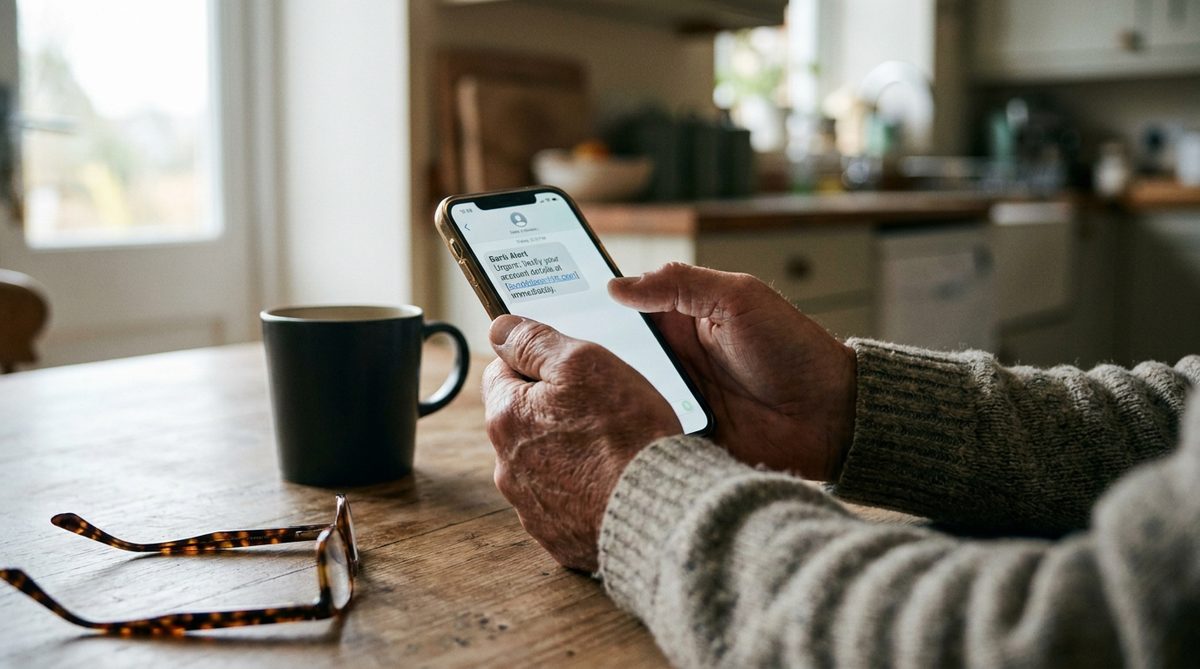
The Psychology Behind Why These Scams Work
After more than a decade of studying cybercrime, researchers find this most important to share: these scams work not because of technical trickery, but because of emotional manipulation. Scammers exploit a small number of psychological triggers, and once you can name them, they lose much of their power.
Fear and Urgency
“Act now or you’ll be arrested.” “Your account will be closed in 24 hours.” “Your grandchild is in danger.” Fear short-circuits critical thinking. It activates your fight-or-flight response, which evolved to help you escape predators — not evaluate whether a phone call is legitimate. Scammers manufacture urgency precisely because they know that if you take even 10 minutes to think, you’ll see through the ruse.
Authority
People raised in an era of institutional trust — when a call from the government or the bank meant something serious — are naturally inclined to comply with authority figures. Scammers exploit this by impersonating agents, officers, and officials with convincing scripts, fake badge numbers, and spoofed caller IDs.
Isolation
Almost every scam script includes some version of “Don’t tell anyone about this.” There’s a reason for that. The moment you tell a friend, family member, or banker what’s happening, the spell breaks. Scammers know their biggest enemy is a second opinion.
What emerges most clearly is that the victims who avoid losses are the ones who pause, breathe, and talk to someone before acting. That single habit — pausing before sending money — prevents more fraud than any software ever could.
Your 10-Step Action Plan to Protect Yourself
This list is based on real cases reviewed by security professionals, conversations with law enforcement, and the latest advisories from federal agencies. Print it out. Stick it on your refrigerator. Share it with everyone you care about.
- Establish a family code word. Choose a word or short phrase that only immediate family members know. If anyone calls claiming to be a relative in crisis, ask for the code word before doing anything else. Rotate the word every six months.
- Never send money based on a phone call or message alone. If someone calls claiming to be from a government agency, a bank, or a utility company, hang up and call the official number on the back of your card or the agency’s website. Do not use any number the caller provides.
- Enable two-factor authentication (2FA) on every account that offers it. This means that even if someone steals your password, they can’t access your account without a second code sent to your phone. Your bank, email, and social media accounts all support this. Ask a trusted family member or visit your local library for help setting it up.
- Freeze your credit with all three bureaus. Contact Equifax, Experian, and TransUnion to place a free credit freeze. This prevents anyone from opening new accounts in your name. You can temporarily lift the freeze when you need to apply for credit.
- Use a password manager. Tools like Bitwarden (free) or 1Password store complex, unique passwords for every site you use. You only need to remember one master password. Consumer Reports has published independent reviews of password managers that can help you choose.
- Be skeptical of unsolicited contact. Whether it’s a phone call, email, text message, or social media message — if you didn’t initiate the conversation and someone is asking for personal information or money, treat it as suspicious until proven otherwise.
- Keep your devices updated. Software updates contain security patches that fix vulnerabilities criminals exploit. Enable automatic updates on your smartphone, computer, and tablet. This is one of the simplest and most effective defenses available.
- Monitor your financial accounts weekly. Set aside 15 minutes each week to review your bank and credit card statements. Look for any charges you don’t recognize, no matter how small. Scammers often test stolen card numbers with tiny purchases before making larger ones.
- Limit what you share on social media. Your birthday, your pet’s name, your grandchildren’s names, your vacation dates — all of this is intelligence that scammers use to personalize their attacks or guess your security questions. Tighten your privacy settings and think twice before posting personal details.
- Report scams immediately. If you’ve been targeted — even if you didn’t lose money — report it to the FTC at consumer.ftc.gov, to your local police, and to the FBI’s IC3 at ic3.gov. Your report helps law enforcement track patterns and protect others.

What to Do If You’ve Already Been Scammed
If you’re reading this and realizing that you may have already fallen victim to a scam, understand this: you are not stupid, and you are not alone. Brilliant, accomplished people get scammed every day. Criminal organizations employ teams of psychologists and scriptwriters. This is not your fault.
But time matters. Here’s what to do right now:
Contact your bank or credit card company immediately and tell them you believe you’ve been the victim of fraud. Many financial institutions have fraud recovery departments that can freeze transactions and begin the dispute process. The sooner you call, the better your chances of recovering funds.
File a report with the FTC and with your local police department. Even if you feel embarrassed, that report creates a paper trail that may help investigators shut down the operation. In 2024, coordinated victim reports led to the takedown of a $75 million international scam ring that had targeted thousands of American retirees.
Change your passwords for any accounts that may have been compromised, especially your email and banking passwords. If you gave a scammer remote access to your computer, take it to a trusted repair professional for a thorough malware scan.
Finally, talk to someone. The emotional toll of being scammed — the shame, anger, and violation of trust — is real and significant. The AARP Fraud Watch Network helpline (877-908-3360) is staffed by trained volunteers, many of whom are fraud survivors themselves. You can also find digital safety resources at AARP’s Technology page.
Building a Scam-Resistant Household
One of the most effective strategies recommended by fraud prevention experts goes beyond individual habits — it involves creating what’s called a “scam-resistant household.” This means building an environment where talking about fraud is normal, not embarrassing.
Have the Conversation with Family
Many adult children avoid bringing up scam awareness with their parents because they worry about seeming condescending. And many older adults avoid mentioning suspicious calls because they don’t want to seem vulnerable. This mutual silence is exactly what scammers count on.
Families benefit from framing it as a shared concern. Scammers target every age group — younger adults lose the most money to online shopping scams and fake job offers, while older adults lose more to impersonation and investment fraud. Making it a family conversation removes the stigma.
Designate a “Verification Buddy”
Choose one person in your life — a spouse, an adult child, a close friend, a neighbor — whom you’ll call before making any financial decision prompted by an unsolicited contact. This doesn’t mean giving up independence. It means having a sounding board, the same way you might get a second opinion before a medical procedure.
Practice Saying No
This sounds simple, but it’s surprisingly hard for many people, especially when confronted with a convincing authority figure. Practice these phrases until they feel natural: “I need to verify this independently.” “I’ll call you back.” “I don’t make decisions under pressure.” Then hang up. You owe a stranger on the phone absolutely nothing.
Technology as an Ally, Not Just a Threat
Don’t let this leave you with the impression that the digital world is only dangerous. Technology, when used with awareness and basic precautions, dramatically improves quality of life for older adults. It keeps you connected with grandchildren across the country. It lets you manage health conditions through telehealth. It enables you to age in place with smart home tools that would have been science fiction 20 years ago.
If you’re exploring how technology can support independent living as you age, the guide on 5 Myths About Age Tech That Stop Seniors From Aging in Place is an excellent starting point for separating fact from fiction.
The goal isn’t to fear technology. The goal is to use it with the same street smarts you’d use walking through an unfamiliar neighborhood after dark — aware of your surroundings, confident in your steps, and knowing exactly whom to call if something feels wrong.
Margaret’s Story, One Year Later
Margaret’s family was checked in with recently. She’s doing well. After her close call, she attended a fraud awareness workshop at her local senior center, set up two-factor authentication on all her accounts, and established a family code word with her children and grandchildren.
She also became something of an evangelist in her community. She tells her story openly at her church group and book club, and she’s convinced at least four friends to freeze their credit. One of those friends later received a scam call and recognized it immediately because of what Margaret had shared.
“I used to feel embarrassed about almost falling for it,” Margaret told her daughter. “Now I feel like catching it and talking about it is the most useful thing I’ve done since I retired.”
She’s right. The most powerful tool against online scams targeting older adults isn’t a fancy antivirus program or a complicated firewall. It’s a conversation. It’s knowledge shared across a kitchen table, a phone call to a friend, a printed list stuck to a refrigerator door.
You’ve just read that conversation. Now pass it on.
Frequently Asked Questions
What is the most common online scam targeting older adults in 2025?
Government impersonation scams remain the most prevalent, where criminals pose as Social Security Administration, IRS, or Medicare representatives. They create urgency by claiming you owe money or face arrest, then demand payment via wire transfers, gift cards, or cryptocurrency. Remember that no legitimate government agency will call and demand immediate payment.
How can I tell if a phone call from a government agency is real or a scam?
Legitimate government agencies like the SSA and IRS almost always initiate contact by postal mail, not phone calls. They will never demand immediate payment, threaten arrest on the spot, or ask for gift cards or cryptocurrency. If you receive a suspicious call, hang up and call the agency directly using the official number from their website.
What should I do immediately if I think I've been scammed online?
Contact your bank or credit card company right away to freeze any affected accounts or transactions. Then file a report with the FTC at consumer.ftc.gov and your local police department. Change passwords on any compromised accounts, and if you granted remote computer access, have a professional scan your device for malware.
What is a family code word and how does it protect against scams?
A family code word is a pre-arranged secret word or phrase shared only among close family members. If someone calls claiming to be a relative in distress — especially relevant now that AI can clone voices from social media clips — you ask for the code word before taking any action. If the caller can't provide it, you know it's a scam. Rotate the word every six months for added security.





One Response