

Why Financial Scams Targeting Older Adults Are Surging — And What You Can Do Right Now
In 2023, Americans over 60 reported losses exceeding $3.4 billion to fraud, according to the FBI’s Internet Crime Complaint Center. That figure represented a 11% increase from the year before — and the real number is almost certainly higher, because most victims never report what happened to them.
In my 14 years working in cybersecurity and digital privacy research, I’ve seen scam tactics evolve from clumsy Nigerian prince emails to sophisticated schemes that can fool even tech-savvy professionals. What I see most often is that the scams succeeding today aren’t just about technology — they exploit trust, urgency, and isolation. The good news? You can stop the vast majority of them with a handful of practical habits.
This guide walks you through the most dangerous financial scams targeting older adults in 2025 and gives you a concrete, step-by-step defense plan. No jargon. No condescension. Just clear actions you can take today to protect yourself from financial scams and keep your money where it belongs.
The 5 Most Dangerous Scams Hitting Older Adults in 2025
Before you can defend yourself, you need to recognize the enemy. These are the five fraud types I encounter most frequently in my research and client consultations.
1. Impersonation Scams (Government, Tech Support, and Utility)
A caller claims to be from the IRS, Social Security Administration, Medicare, or your electric company. They say you owe money, your benefits are being suspended, or your account has been compromised. The caller ID might even display a legitimate-looking number — that’s called “spoofing,” and it’s shockingly easy for criminals to do.
The FTC reports that impersonation scams were the single most-reported fraud category in 2024, with median individual losses of $800. For adults over 60, that median jumps considerably because scammers deliberately target people with retirement savings.
2. Romance and Companionship Scams
These scams exploit loneliness. A new “friend” or romantic interest connects with you on Facebook, a dating app, or even through a church group chat. Over weeks or months, they build genuine-feeling emotional bonds. Then comes a crisis — a medical emergency, a stuck wire transfer, a plane ticket they can’t afford. According to the FTC, romance scam losses hit $1.14 billion in 2023 alone.
3. Investment and Cryptocurrency Fraud
You receive a text, email, or social media message about an “exclusive” investment opportunity — often involving cryptocurrency, precious metals, or AI-powered trading. These pitches frequently reference real market trends to sound credible. If you’re exploring legitimate ways to grow your retirement funds, our guide to 7 High-Return Low-Risk Investments for Retirees in 2025 covers vetted options — not the kind of get-rich-quick schemes scammers push.
4. Phishing Emails and Smishing Texts
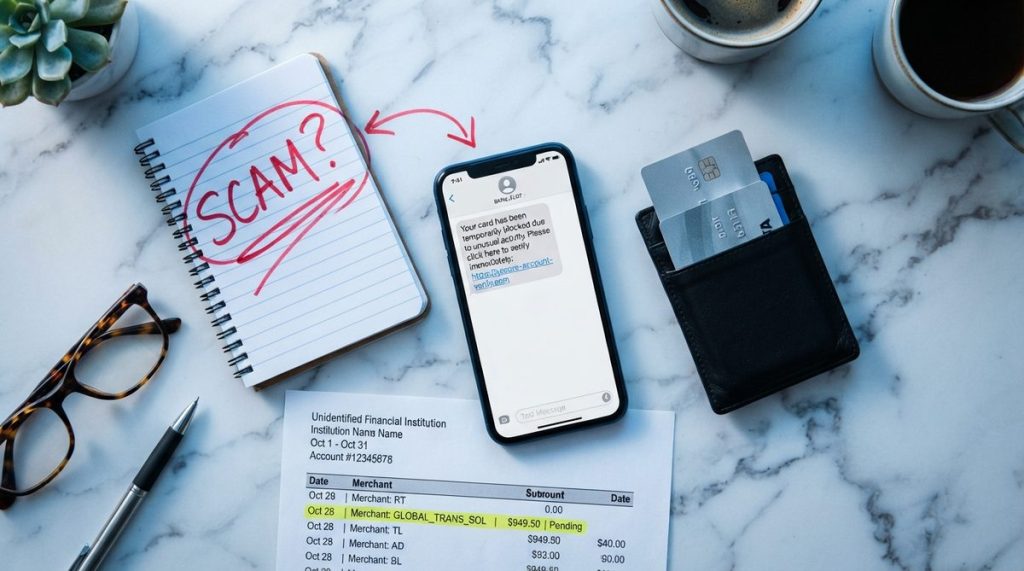
“Your Amazon account has been locked.” “Your package couldn’t be delivered — click here.” “Unusual login detected on your bank account.” These messages look real. They use company logos, professional formatting, and urgent language designed to make you click before you think. That click leads to a fake website that harvests your login credentials or installs malware on your device.
5. Grandparent and Family Emergency Scams
Someone calls claiming to be your grandchild — or a police officer, lawyer, or doctor calling on their behalf. They say your grandchild has been arrested, is in the hospital, or was in a car accident. They beg you not to tell anyone and ask for immediate payment via gift cards or wire transfer. With AI voice-cloning technology now widely available, these calls can sound disturbingly realistic.
“Scammers don’t succeed because their victims aren’t smart. They succeed because they manufacture panic. When your heart is racing and someone you love seems to be in danger, critical thinking takes a back seat. That’s by design.” — Dr. Priya Sharma

Your 8-Step Action Plan to Protect Yourself From Financial Scams
I often tell my clients that scam prevention isn’t about becoming a cybersecurity expert. It’s about building a few strong habits that become second nature. Here’s your plan:
- Adopt a “verify first” rule for every unexpected contact. If someone calls, emails, or texts you claiming to be from a bank, government agency, or company — hang up. Then look up the organization’s official phone number yourself (from their website or your account statement) and call them directly. Never use a phone number or link provided in the suspicious message itself.
- Create a family code word. Pick a specific word or phrase that only your close family members know. If you ever receive a distressed call from a “grandchild” or family member asking for money, ask for the code word. No code word, no money. This single step defeats the grandparent scam almost every time — even when AI voice cloning is involved.
- Freeze your credit with all three bureaus. Contact Equifax, Experian, and TransUnion to place a free credit freeze on your accounts. This prevents anyone — including you — from opening new credit accounts until you temporarily lift the freeze. It takes about 10 minutes per bureau and costs nothing. This is the single most powerful identity theft prevention tool available to you.
- Enable two-factor authentication (2FA) on every financial account. Two-factor authentication means that even if someone steals your password, they still can’t log in without a second verification step — usually a code sent to your phone. Your bank, email provider, and investment accounts all offer this. If you only secure one account, make it your email — because email is the gateway criminals use to reset all your other passwords.
- Never pay anyone who demands gift cards, wire transfers, or cryptocurrency. No legitimate organization — not the IRS, not Medicare, not your utility company, not a bail bondsman — accepts payment in iTunes gift cards, Google Play cards, or Bitcoin. If someone asks you to pay this way, it is a scam. Full stop. The Cybersecurity and Infrastructure Security Agency (CISA) has repeatedly emphasized this as a universal red flag.
- Update your devices and apps regularly. Those update notifications on your phone and computer aren’t just annoying pop-ups. They patch security vulnerabilities that criminals actively exploit. Set your smartphone and computer to auto-update. If you’re unsure which phone works best for easy updates and security, AARP’s technology section regularly reviews senior-friendly models.
- Use a password manager instead of reusing passwords. I know — remembering dozens of passwords feels impossible. That’s exactly why so many people reuse the same password across multiple accounts, which is like using the same key for your house, car, and safe deposit box. A password manager like Bitwarden (free) or 1Password (around $3/month) creates and stores unique, strong passwords for every account. You only remember one master password.
- Talk about scams openly with people you trust. Scammers thrive on secrecy and shame. They specifically instruct victims not to tell family members or friends. Break that pattern. Tell your spouse, adult children, or a trusted friend about any suspicious contact immediately. If you’ve already been learning about how to spot financial scams targeting older adults in 2025, share that knowledge with someone you care about.
How to Recognize a Scam in the Moment: The 4 Universal Warning Signs
Regardless of whether the approach comes by phone, email, text, social media, or even in person, virtually every financial scam shares these four characteristics:
Urgency — “You must act right now”
Scammers create artificial time pressure because they know that if you stop and think — or call someone to check — their scheme falls apart. Any legitimate organization will give you time to verify information and make decisions.
Secrecy — “Don’t tell anyone about this”
A real bank, a real police officer, or a real IRS agent will never tell you to keep your interaction a secret from your family. If someone says “don’t tell anyone,” that’s not a request for confidentiality — it’s a manipulation tactic.
Unusual Payment Methods — “Pay with gift cards or crypto”
As covered in the action plan above, these payment methods are untraceable by design. That’s precisely why criminals prefer them.
Too Good (or Too Scary) to Be True
You won a lottery you never entered. You’re getting a massive tax refund you didn’t expect. A stranger online wants to send you $50,000. On the flip side: you’ll be arrested in 30 minutes, your Social Security number has been “suspended,” your grandchild is in jail. These emotional extremes — euphoria or terror — are deliberate tools to override your judgment.
“According to the FBI’s 2023 Elder Fraud Report, the average older adult scam victim lost over $33,900 — a figure that can represent years of careful saving. Prevention isn’t optional; it’s essential financial planning.”

What to Do If You’ve Already Been Scammed
If you suspect you’ve fallen victim to fraud, please don’t feel ashamed. Scam victims include former CIA officers, financial advisors, and college professors. These criminals are professionals, and being deceived by a professional deceiver doesn’t reflect on your intelligence.
Here’s what to do immediately:
Contact Your Financial Institutions
Call your bank and credit card companies right away. Many fraudulent transactions can be reversed or frozen if reported quickly — sometimes within 24 to 48 hours. Your bank’s fraud department operates around the clock specifically for this reason.
Report the Scam
File a report with the FTC at ReportFraud.ftc.gov. If you’re over 60, also contact the FBI’s Internet Crime Complaint Center (IC3) at ic3.gov. Your report helps law enforcement track patterns and shut down active operations — even if your individual funds can’t be recovered immediately.
Change Your Passwords
If you clicked a suspicious link or gave login credentials to someone, change the password on that account immediately. Then change the passwords on any other accounts where you used the same or similar password. This is where that password manager from Step 7 above really pays for itself.
Place a Fraud Alert on Your Credit
Contact any one of the three credit bureaus (Equifax, Experian, or TransUnion) to place a fraud alert. That bureau is legally required to notify the other two. A fraud alert lasts one year and requires creditors to verify your identity before opening new accounts in your name.
Building Long-Term Digital Resilience
Protecting yourself from financial scams isn’t a one-time project — it’s an ongoing practice, much like maintaining your physical health. Here are habits that compound over time:
Stay Informed Without Getting Overwhelmed
You don’t need to read cybersecurity journals. But checking the FTC’s consumer alerts page once a month or following AARP’s technology coverage will keep you aware of emerging threats. Scam tactics change seasonally — tax scams spike in spring, package delivery scams surge during holidays, and disaster relief scams appear after every major storm.
Invest in Your Digital Skills
Many public libraries offer free technology classes specifically designed for adults over 50. These aren’t patronizing “this is how you turn on a computer” sessions — they cover practical skills like identifying phishing emails, managing privacy settings, and using video calling to stay connected with family. Building these skills also supports cognitive engagement, which research links to better brain health. Our article on 6 Hobbies That Slow Brain Aging for Adults Over 50 explores that connection further.
Protect Your Financial Foundation
Scam losses hit harder when your retirement savings are already under pressure from rising costs. If you’re also navigating inflation concerns alongside digital security, understanding both threats simultaneously puts you in a stronger position. Consider reviewing strategies in our piece on Inflation Depleting Retirement Savings: What Seniors Must Do Now as part of your overall financial defense plan.
Designate a “Scam Check” Person
Choose one trusted person — a spouse, adult child, financial advisor, or close friend — as your go-to sounding board for any suspicious contact. Before you respond to any unexpected request for money or personal information, make it a rule to run it by that person first. In my experience, this simple buddy system prevents more fraud than any software tool on the market.
You’re More Capable Than Scammers Want You to Believe
Here’s something I want to leave you with: the entire scam industry depends on making you feel powerless, confused, or ashamed. But the fact that you’re reading this article means you’re already taking the most important step — educating yourself.
You’ve managed finances, raised families, navigated career changes, and adapted to decades of technological shifts. You have every skill you need to outsmart these criminals. The eight steps above don’t require a computer science degree. They require the same common sense and healthy skepticism that have served you well your entire life.
Start with just one step today. Freeze your credit. Set up a family code word. Turn on two-factor authentication for your email. Each small action closes a door that scammers rely on finding open. Stack enough of those closed doors together, and you become an extraordinarily hard target — which is exactly what you want to be.
About Dr. Priya Sharma, PhD in Computer Science, CISSP
Dr. Priya Sharma is a cybersecurity expert with a PhD in Computer Science and a Certified Information Systems Security Professional (CISSP) credential. She has spent 14 years researching digital privacy, online fraud, and data protection — with a particular focus on the risks facing older internet users. At Daily Trends Now, Dr. Sharma writes about online scams, password security, smartphone privacy, and the practical steps readers can take to stay safe in an increasingly connected world.