

Last spring, I met a 68-year-old retired electrician named Tom at a community center in Tucson, Arizona. He told me something I haven’t been able to shake: “I retired three years ago, and for the first year, I did absolutely nothing. By month eight, I couldn’t remember where I put my keys, my wallet, my glasses—sometimes my own words. My wife said I was disappearing.”
Then Tom picked up a watercolor brush. He’d never painted a thing in his life. Within six months, he told me his focus had sharpened, his mood had lifted, and his wife said she “got her husband back.” His doctor noticed improvements in his cognitive screening scores at his annual physical.
Tom’s story isn’t unusual. In my 16 years covering lifestyle and active aging, I’ve heard dozens of versions of it. And the science backs every single one up. The right hobbies don’t just fill time—they physically reshape your brain, build new neural pathways, and slow the cognitive decline that so many of us fear as we age.
Here are six hobbies that slow brain aging, grounded in research and real stories from people over 50 who are living proof that the second half of life can be the sharpest.
Why Your Brain Needs Hobbies More After 50
Before we dive into the activities themselves, let’s talk about why this matters so much right now. According to the National Institute on Aging, the brain begins losing volume—roughly 5% per decade—after age 40, with the rate accelerating after 70. But here’s what most people don’t realize: that trajectory isn’t fixed.
A landmark 2023 study published in JAMA Neurology followed over 10,000 adults for more than two decades and found that those who regularly engaged in mentally stimulating leisure activities had a 23% lower risk of developing dementia. That’s not a marginal difference. That’s nearly one in four people who might have developed cognitive decline but didn’t—because they stayed engaged.
What I see most often in the readers I hear from is a misconception that “staying sharp” means doing crossword puzzles or Sudoku every day. Those are fine, but they’re not enough. The brain craves novelty, physical movement, social interaction, and creative challenge. The best hobbies that slow brain aging combine multiple types of stimulation at once.
1. Learning a Musical Instrument
The Science Behind the Sound
Playing music is one of the few activities that engages virtually every area of the brain simultaneously—visual, auditory, motor, and emotional centers all fire at once. A 2024 meta-analysis in Frontiers in Aging Neuroscience found that older adults who took up an instrument showed measurable improvements in working memory, processing speed, and executive function within just four months.
You don’t need to master Beethoven. Tom’s neighbor, a 72-year-old grandmother named Linda, started learning ukulele from YouTube tutorials. Four chords and a handful of songs later, she was performing at her granddaughter’s birthday party. “I haven’t memorized anything that fast in twenty years,” she told me.
How to Start
The ukulele, piano, and harmonica are popular entry points for beginners over 50. Many community colleges and senior centers offer free or low-cost group lessons, which adds the social component that amplifies cognitive benefits. If budget is a concern—and for many retirees navigating today’s economy, it certainly is—check out our guide on 7 Ways to Stop Inflation From Depleting Retirement Savings for strategies to free up hobby money without sacrificing essentials.
2. Gardening—More Than Just Digging in the Dirt
A Full-Body, Full-Brain Workout
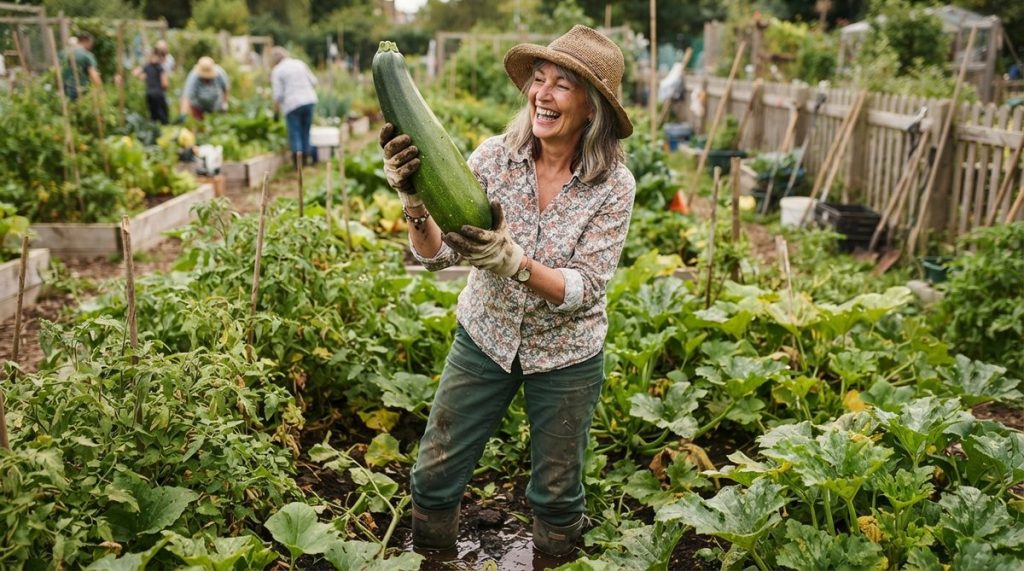
Gardening might seem too simple to qualify as a brain-boosting hobby, but the research disagrees—strongly. A 2022 study out of South Korea published in the International Journal of Environmental Research and Public Health found that regular gardening reduced cortisol levels by an average of 11.4% and improved cognitive test scores in adults over 60 after just 20 sessions.
Think about everything gardening requires: planning layouts, remembering planting schedules, problem-solving when pests arrive, using fine motor skills for pruning and planting, and engaging in moderate physical activity that improves cardiovascular health. It’s a compound exercise for the brain.
The Community Garden Advantage
I often tell my readers that the social dimension of any hobby is where the magic multiplies. Community gardens put you shoulder-to-shoulder with other people, force conversations, and create accountability to show up. The National Council on Aging has highlighted community gardening programs as one of the most effective and affordable wellness interventions for older adults, particularly in combating social isolation—which itself is a major risk factor for cognitive decline.
3. Strategic Games: Chess, Bridge, and Beyond
Why Games Beat Passive Entertainment
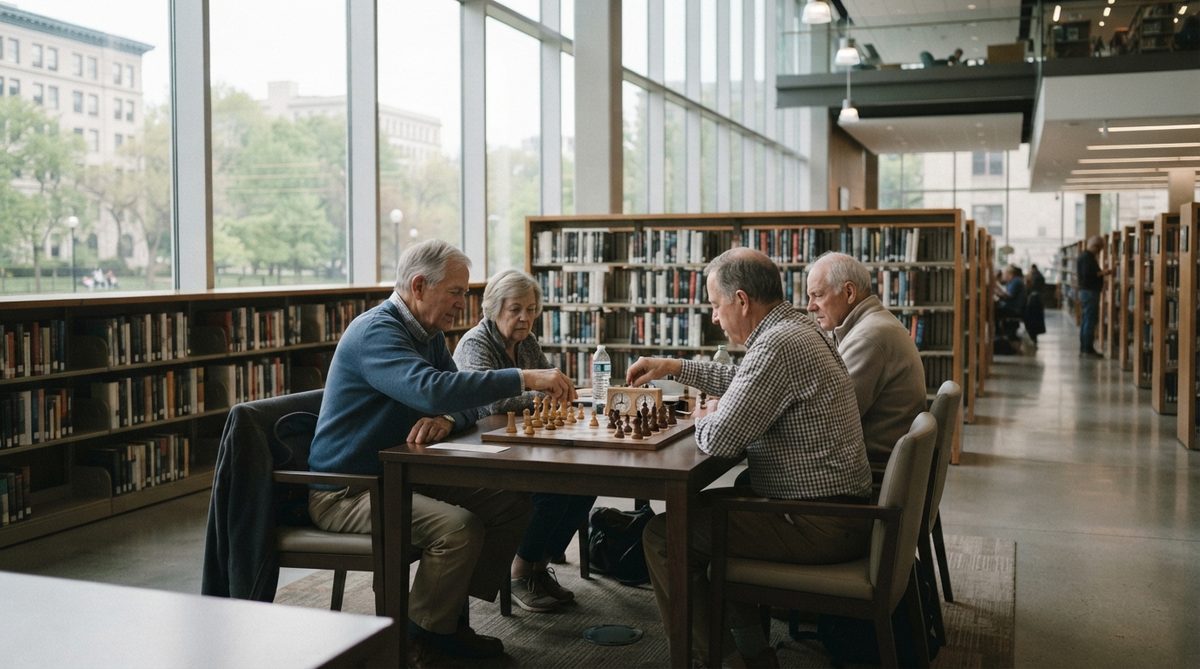
There’s a reason chess clubs at senior centers are booming. A 2023 study from Rush University Medical Center found that older adults who played strategic board games or card games at least twice per week had 47% slower rates of cognitive decline compared to those who didn’t. The key word is strategic—games that require planning, anticipation, and adapting to opponents.
Bridge, in particular, has gotten significant research attention. It demands memory, sequencing, partnership communication, and probability assessment. It’s essentially a cognitive boot camp disguised as a card game.
Digital Options Count Too
If getting to an in-person game group is challenging, online platforms like Chess.com and BridgeBase Online have thriving communities of players over 50. The digital format adds the benefit of tracking your improvement over time, which reinforces motivation. Just be cautious with online platforms in general—our piece on How to Spot Financial Scams Targeting Older Adults in 2025 covers red flags to watch for whenever you’re engaging online.
4. Learning a New Language
The Bilingual Brain Advantage
This one consistently surprises people. You might think learning a language is a “young person’s game,” but research from the University of Edinburgh published in 2024 showed that adults who began studying a second language after age 60 showed increased gray matter density in the hippocampus—the brain region most critical for memory—after just one year of study.
Even more compelling: a widely cited 2013 study in Neurology found that bilingual individuals developed dementia an average of 4.5 years later than monolingual individuals. You don’t need to become fluent. The process of learning itself—the mental wrestling with grammar, vocabulary, and pronunciation—is what rewires the brain.
Practical Starting Points
Apps like Duolingo are free and gamified, making daily practice feel less like homework. But I’ve found that conversational classes—offered at many libraries, churches, and community centers—are far more effective for adults over 50 because they combine language learning with face-to-face social engagement. Spanish is the most popular choice among American retirees, especially those considering retirement abroad or travel to Latin America.
5. Dancing—The Brain’s Favorite Exercise
Movement Plus Memory Equals Cognitive Gold
If I had to pick just one hobby from this list, it would be dancing. The New England Journal of Medicine published a landmark study that found regular dancing reduced the risk of dementia by an astonishing 76%—more than any other physical or cognitive activity studied, including reading, doing crossword puzzles, and swimming.
Why? Dancing demands simultaneous physical coordination, spatial awareness, rhythmic timing, social interaction, and real-time decision-making. Ballroom, salsa, line dancing, swing—the style matters far less than the consistency.
Getting Past the Self-Consciousness
I hear it constantly from readers: “I have two left feet.” Here’s what I’ve learned after covering this topic for over a decade—nobody at a senior dance class cares about your form. Everyone is there for the same reason. Many studios and community centers offer beginner classes specifically for adults over 50, and the AARP maintains a searchable database of local activities, including dance programs, through their community connection tools.
6. Visual Arts: Painting, Drawing, and Photography
Creating New Neural Pathways—Literally
Remember Tom and his watercolors? He’s part of a trend backed by hard data. A 2015 study from the Mayo Clinic found that people who engaged in artistic activities in middle and late life were 73% less likely to develop mild cognitive impairment than those who didn’t. The researchers specifically noted that creating art—not just viewing it—was what made the difference.
Painting and drawing activate the brain’s default mode network, which is associated with self-reflection and memory consolidation. Photography, meanwhile, forces you to observe detail, compose scenes, and make rapid creative decisions—all of which challenge the prefrontal cortex.
Low-Cost Entry Points
A basic watercolor set costs under $15. A smartphone camera is already in your pocket. What I love about visual arts as hobbies that slow brain aging is that they scale to any budget and any ability level. Many libraries now offer free “paint and sip” style events (sometimes minus the sip), and local art leagues welcome beginners warmly.
Comparing the Six Hobbies: Which One Fits Your Life?
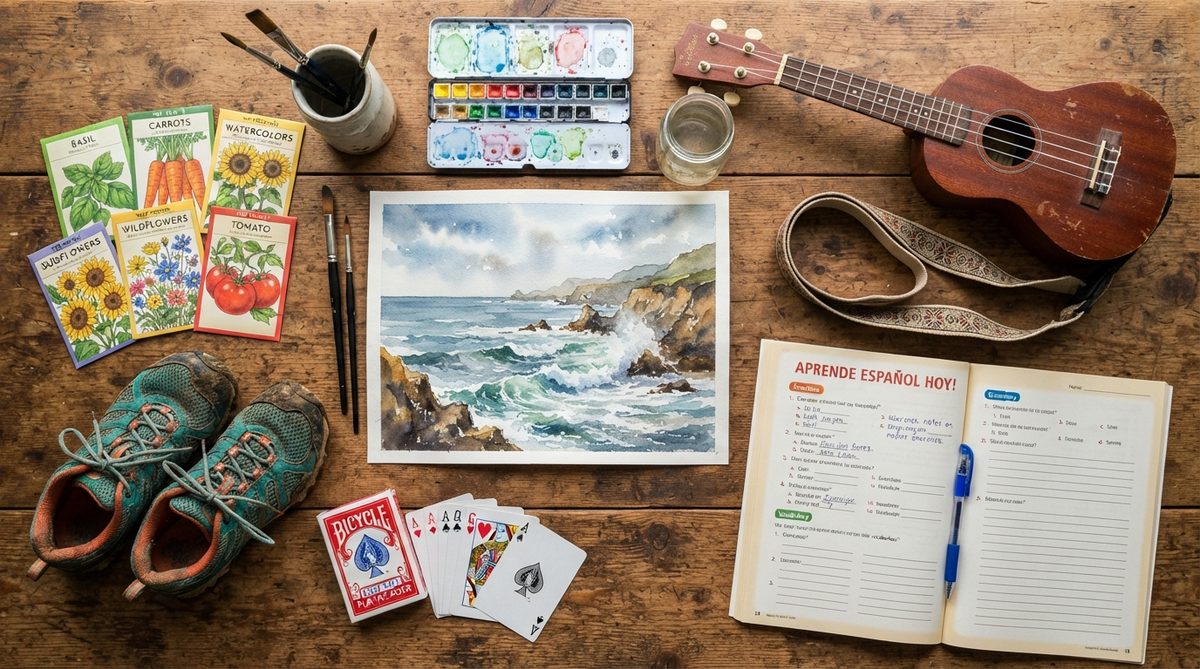
I put together this comparison to help you weigh each activity against your personal situation—your budget, mobility level, social preferences, and the specific cognitive benefits you’re after.
| Hobby | Cognitive Benefit Focus | Physical Demand | Startup Cost | Social Component | Dementia Risk Reduction* |
|---|---|---|---|---|---|
| Musical Instrument | Memory, motor skills, multitasking | Low | $30–$200 | Moderate (group lessons) | Up to 64% |
| Gardening | Planning, problem-solving, stress reduction | Moderate | $20–$75 | High (community gardens) | Up to 36% |
| Strategic Games | Logic, memory, strategic thinking | Low | Free–$25 | High | Up to 47% |
| Language Learning | Memory, executive function, attention | Low | Free–$50/month | High (classes) | Delayed onset by 4.5 years |
| Dancing | Coordination, memory, spatial awareness | Moderate–High | Free–$60/month | Very High | Up to 76% |
| Visual Arts | Creativity, observation, fine motor skills | Low | $15–$100 | Moderate (classes/groups) | Up to 73% |
*Risk reduction figures are drawn from individual published studies and may vary based on frequency, duration, and individual health factors.
How to Actually Build These Habits Into Your Life
Knowing which hobbies that slow brain aging are most effective is one thing. Actually doing them consistently is another. Here’s a practical action plan I’ve refined over years of helping readers make these changes stick:
- Pick just one to start. Don’t try to overhaul your entire routine. Choose the hobby that genuinely excites you—excitement is the brain’s best fertilizer.
- Commit to a minimum of two sessions per week. Most studies showing significant cognitive benefits involved at least twice-weekly engagement over several months.
- Anchor it to a social commitment. Sign up for a class, join a club, or recruit a friend. Social accountability dramatically increases follow-through.
- Track your progress in a simple journal. Note what you did, how long, and how you felt afterward. This creates a positive feedback loop your brain craves.
- Add a second hobby after 8 weeks. Once the first activity feels natural, layer in a second one—ideally one that targets different cognitive areas (e.g., if you started with chess, add dancing).
- Protect the budget for it. Treat hobby spending as a health expense, not a luxury. If retirement savings are tight, strategies like those outlined in Inflation Depleting Retirement Savings: What Seniors Must Do Now can help you reallocate without financial stress.
The Bigger Picture: Hobbies as a Health Strategy
In my 16 years covering this beat, the single biggest shift I’ve seen is the medical community finally treating leisure activities not as optional extras but as legitimate health interventions. The National Institute on Aging now lists “cognitively stimulating activities” alongside exercise and diet as core pillars of brain health in aging.
This isn’t about filling empty hours. It’s about building a life that actively protects the organ you need most. Every brush stroke, every chess move, every stumbling attempt at conjugating a Spanish verb is a deposit in your cognitive reserve—a buffer against the decline that affects roughly 1 in 9 Americans over 65, according to the Alzheimer’s Association’s 2024 report.
“The brain is like a muscle. If you stop challenging it, it atrophies. But if you keep pushing it in new directions, it responds—at any age.” — Dr. Gary Small, Director of the UCLA Longevity Center
Start Today—Literally Today
Tom, the retired electrician from Tucson, told me something during our conversation that I’ve carried with me since: “I wasted a year sitting in a recliner, thinking I’d earned the right to do nothing. Turns out, doing nothing was the most dangerous thing I’d ever done.”
He was right. The research is unambiguous, and the stories I hear from readers across the country confirm it over and over. The hobbies that slow brain aging aren’t exotic or expensive. They’re accessible, enjoyable, and profoundly effective.
Pick one. Start this week. Your brain twenty years from now will thank you for what you do today.
About Jennifer Adams, 16 Years in Lifestyle Journalism
Jennifer Adams is a lifestyle journalist with 16 years of experience writing about travel, hobbies, relationships, home life, and the art of aging well. She has contributed to national publications focused on the interests and aspirations of adults over 50 — from budget-friendly travel destinations to rediscovering hobbies in retirement. At Daily Trends Now, Jennifer writes warm, practical articles that celebrate life after 50 and help readers make the most of every chapter.