

Key Takeaways
- Nearly 90% of adults over 65 want to age in their own homes, but most haven't made the modifications needed to do it safely.
- Bathroom upgrades like grab bars, curbless showers, and non-slip flooring deliver the highest safety return for the lowest cost.
- A proposed federal tax credit of up to $10,000 could soon offset the cost of aging-in-place home modifications for qualifying seniors.
- Smart home technology and professional assessments can dramatically reduce fall risk and help you stay independent longer.
Why Aging in Place Matters More Than Ever
According to AARP, roughly 89% of adults aged 65 and older say they want to remain in their current home as they age. That number has held steady for years — and it makes sense. Your home is where your memories live, where your routines feel natural, and where you feel most like yourself.
But here’s what I see most often in my 14 years as a Certified Aging-in-Place Specialist: the desire to stay home far outpaces the preparation to do it safely. A 2024 AARP survey found that only about 10% of the U.S. housing stock is truly accessibility-ready. That gap between wanting to age in place and being able to do it safely is where preventable injuries — and premature moves to assisted living — happen.
The good news is that making your home safe for aging in place doesn’t require a gut renovation or a six-figure budget. Most of the highest-impact modifications are surprisingly affordable, and a new proposed bill could offer a $10,000 home upgrade tax credit to help offset costs. Let me walk you through exactly what to prioritize, room by room.
Start with a Whole-Home Safety Assessment
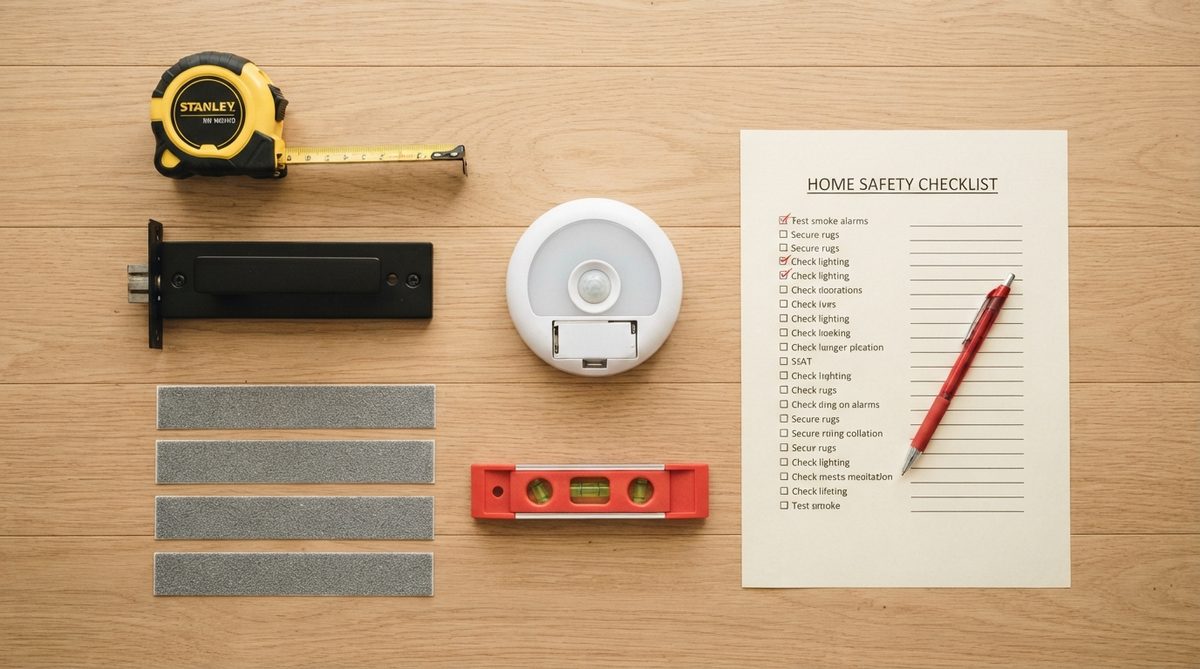
Before you pick up a single tool or call a contractor, I always tell my clients to start with a structured walkthrough. You need to see your home the way a physical therapist or occupational therapist would — through the lens of mobility, vision, and fall prevention.
Here’s what to evaluate during a self-assessment:
- Flooring transitions: Are there raised thresholds, loose rugs, or uneven surfaces between rooms?
- Lighting: Can you navigate from bed to bathroom at 2 a.m. without fumbling for a switch?
- Door widths: Standard interior doors are 28–30 inches wide; a wheelchair or walker typically needs 32–36 inches of clearance.
- Step count: How many stairs must you climb daily, and are there handrails on both sides?
- Reach zones: Can you access kitchen cabinets, closet shelves, and laundry appliances without a step stool?
You can also hire a CAPS-certified professional through the National Association of Home Builders directory. A formal assessment typically runs between $200 and $500 and produces a prioritized report. It’s money well spent — I’ve seen it prevent families from spending thousands on modifications they didn’t actually need.
The Bathroom: Your Single Most Important Room
If you only have the budget or energy to modify one room, make it the bathroom. The National Council on Aging reports that falls are the leading cause of injury among older adults, and the bathroom — with its wet surfaces, tight spaces, and awkward movements — is the number-one location for them.
Grab Bars and Support Rails
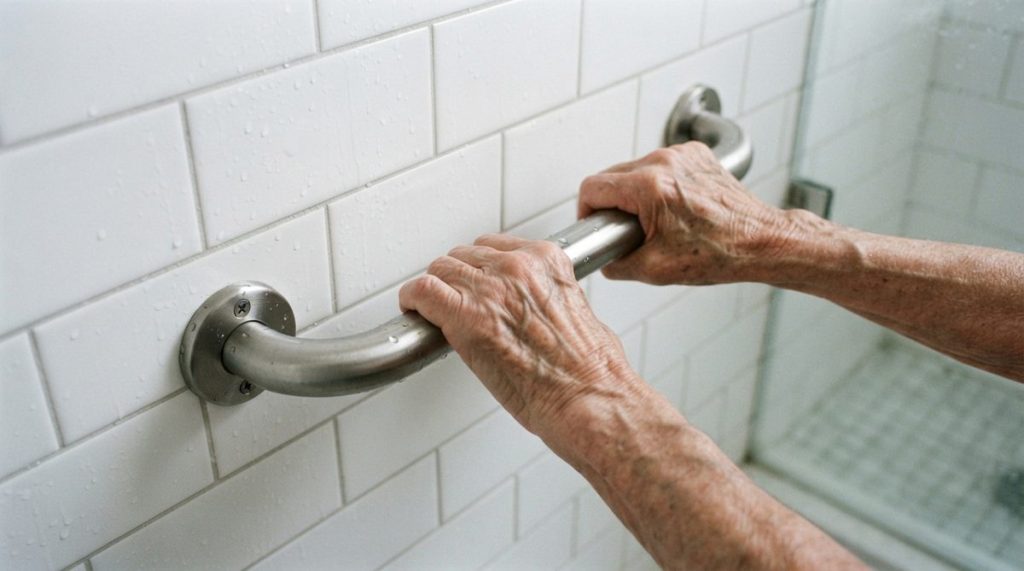
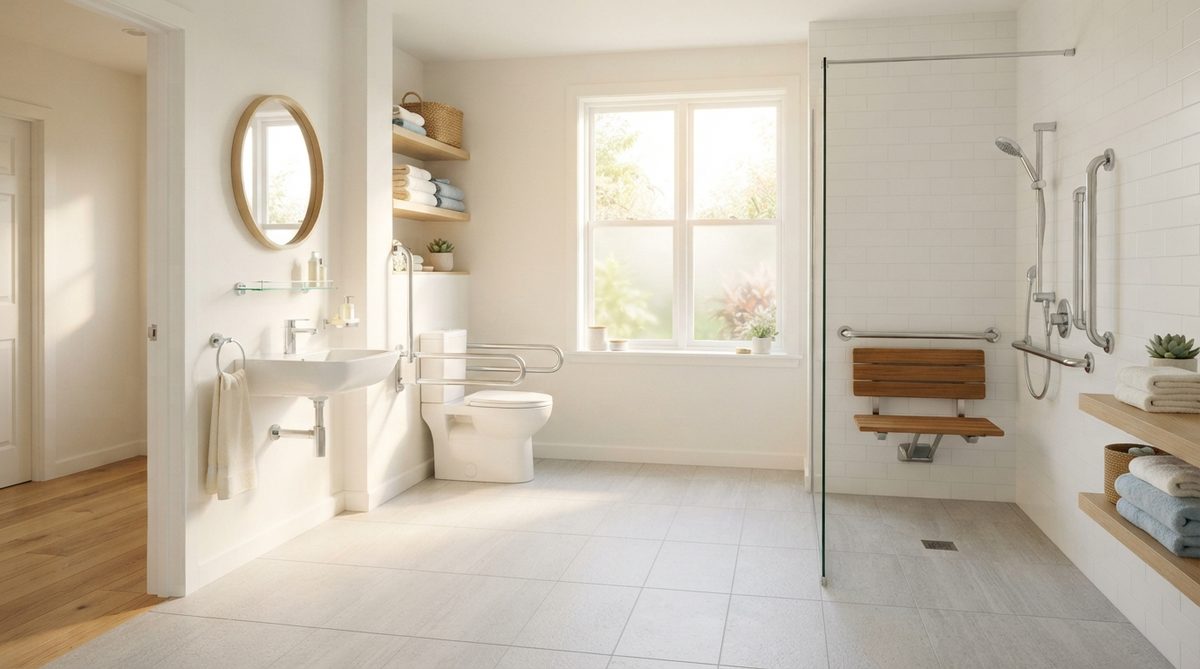
Grab bars are the most cost-effective safety upgrade you can make. A quality stainless steel grab bar costs $20–$60, and professional installation runs about $100–$200 per bar. I recommend placing them in three locations: beside the toilet, inside the shower or tub at chest height, and at the shower entry point.
A common mistake I see is mounting grab bars into drywall alone. They must be anchored into wall studs or backed with plywood blocking to hold 250+ pounds of force. If you’re unsure, hire a handyman — this is not a place to cut corners.
Curbless Showers and Non-Slip Surfaces
A curbless (zero-threshold) shower eliminates the single most dangerous transition in your home: stepping over a bathtub wall. The cost of converting a standard tub to a curbless shower ranges from $2,500 to $7,000 depending on your plumbing and tile choices, but it’s the modification I recommend more than any other.
If a full conversion isn’t in the budget right now, start with adhesive non-slip strips ($10–$25) and a sturdy shower chair with rubber-tipped legs. Add a handheld showerhead on an adjustable slide bar — they run about $30–$80 and let you shower seated safely.
Toilet Height and Comfort
Standard toilets sit about 15 inches high. For anyone with knee or hip issues, a “comfort height” toilet at 17–19 inches makes sitting and standing significantly easier. A raised toilet seat attachment ($25–$50) is the quick fix; replacing the entire toilet with a comfort-height model costs $200–$400 plus installation.
Kitchen Modifications That Prevent Accidents
The kitchen is the second most hazardous room for older adults, largely because of burns, reaching injuries, and slippery spills. Here’s where practical changes make a real difference.
Rethink Your Storage
Move your most-used dishes, pots, and utensils to countertop level or the lowest cabinet shelves. Pull-down shelf systems that bring upper-cabinet contents to counter height cost between $150 and $400 per unit and eliminate the need for step stools entirely.
Lazy Susans and pull-out drawer inserts ($30–$100) make deep cabinets accessible without crouching or reaching blindly. These are small investments that pay off every single day.
Appliance and Surface Upgrades
If you’re still using a traditional coil or gas stove, consider switching to an induction cooktop. Induction burners only heat the pan, not the surface, which virtually eliminates burn risk. Models start around $250 for a portable two-burner unit.
Anti-fatigue floor mats in front of the sink and stove reduce leg strain during meal prep, but make sure they have beveled edges and non-skid backs — a poorly chosen mat becomes a tripping hazard itself.
Lighting: The Most Underrated Safety Upgrade
I cannot overstate how much proper lighting matters. Age-related vision changes — reduced contrast sensitivity, slower pupil adjustment, and increased glare sensitivity — mean that the lighting levels you lived with at 40 are simply not adequate at 65 or 70.
The National Institute on Aging recommends that older adults have lighting levels two to three times brighter than what younger adults need. Here’s how to achieve that without making your home feel like a hospital:
- Layered lighting: Combine overhead fixtures with task lighting (under-cabinet LEDs, adjustable reading lamps) and ambient lighting to eliminate shadows.
- Motion-sensor night lights: Place them in hallways, the bathroom, and near the bed. A $12 plug-in motion sensor can prevent a $40,000 hip fracture.
- Rocker or illuminated light switches: Replace small toggle switches with large rocker-style plates that are easier to find and operate in the dark.
- Consistent color temperature: Use 3000K–4000K LED bulbs throughout the house for clear, comfortable visibility without harsh glare.
Smart lighting systems that respond to voice commands or smartphone controls are another strong option. If you’re curious about how technology can support independent living, check out 7 Ways Older Adults Can Use Tech to Stay Safe and Independent for a deeper dive.
Flooring and Entryways: Eliminate Trip Hazards
Falls don’t always happen because of a dramatic slip. More often, they happen because of a subtle threshold change, a curled rug edge, or a dim entryway step that’s been there for 30 years without ever causing a problem — until it does.
Flooring Choices That Reduce Risk
The safest flooring options for aging in place are luxury vinyl plank (LVP), low-pile carpet, and cork. All three offer some “give” on impact, are slip-resistant, and transition smoothly between rooms. Avoid high-gloss hardwood and polished tile — they look beautiful but become skating rinks when wet.
If you love your area rugs, secure them with double-sided carpet tape or non-slip rug pads. Better yet, remove them from high-traffic pathways entirely.
Exterior Entry Upgrades
Your front door is the gateway to your independence. If your entrance has steps, add a sturdy handrail on both sides. If the steps are steep or you anticipate future wheelchair use, a modular ramp system ($1,000–$3,500) is an investment worth making now rather than in an emergency.
Replace a traditional keyed deadbolt with a keypad or smart lock — fumbling with keys on an icy porch is a fall waiting to happen. Quality smart locks run $150–$300 and most are DIY-installable in under 30 minutes.
Bedroom and Living Area Adjustments
Your bedroom should be on the main floor if at all possible. If your home’s layout has the primary bedroom upstairs, in my experience, now is the time to consider converting a ground-floor den or dining room. This single change eliminates the most dangerous daily activity in a multi-story home: climbing stairs when you’re tired.
- Bed height: The top of your mattress should sit at about knee height so your feet rest flat on the floor when seated on the edge. Adjustable bed frames ($400–$1,200) make this easy to dial in.
- Clutter-free pathways: Maintain 36 inches of clear walking space on both sides of the bed and in hallways.
- Furniture arrangement: Position stable furniture pieces along common walking routes — they serve as informal support points during nighttime trips to the bathroom.
- Electric outlet access: Add USB-equipped power strips at bedside height to eliminate crawling behind furniture to charge devices.
How to Pay for Aging-in-Place Modifications
Cost is the concern I hear most. Let me be direct: aging-in-place modifications are almost always cheaper than assisted living, which averages $4,807 per month nationally in 2024 according to Genworth’s Cost of Care survey. Even a $15,000 bathroom renovation pays for itself in about three months of avoided facility costs.
Here are funding sources worth exploring:
- Proposed $10,000 federal tax credit: A new bill in Congress would provide up to $10,000 in tax credits for qualifying home safety modifications. While not yet passed, bipartisan support suggests it has a real chance — watch for updates in late 2025.
- Medicaid Home and Community-Based Services (HCBS) waivers: In many states, Medicaid will cover grab bars, ramps, and other modifications for qualifying individuals.
- VA grants: Veterans may qualify for Specially Adapted Housing (SAH) grants of up to $109,986 (2024 figure) or Special Home Adaptation (SHA) grants up to $44,299.
- Area Agency on Aging programs: Your local AAA often has small grant or low-interest loan programs specifically for home modifications. Find yours through the Eldercare Locator at 1-800-677-1116.
- Home equity: A Home Equity Line of Credit (HELOC) can fund larger renovations, but proceed carefully — if you’re concerned about retirement finances, read this helpful piece on Retirees Depleting Savings Faster: A Deep-Dive Analysis before borrowing against your home.
Don’t Forget the Social and Mental Side
Making your home safe for aging in place isn’t only about physical modifications. Isolation is a genuine health risk — the U.S. Surgeon General has compared chronic loneliness to smoking 15 cigarettes a day. A perfectly accessible home means little if it becomes a place of solitary confinement.
Build social connection into your plan. Keep a dedicated, comfortable space for visitors. Consider hobbies that get you out of the house regularly — community classes, walking groups, gardening clubs. If you’re not sure where to start, take a look at 6 Myths About Retirement Hobbies That Hold You Back After 50 for motivation.
Video calling setups, medical alert devices, and smart home speakers also bridge the gap between independence and staying connected to family and emergency services.
Your Next Step: Start Small, Start Now
If there’s one thing I want you to take away from this guide, it’s this: don’t wait for a fall or a health scare to make your home safer. The best modifications are the ones you make before you need them.
Pick one room this weekend — ideally the bathroom — and do one thing. Install a grab bar. Add a night light. Remove a throw rug. Each small change compounds, and within a few months you’ll have a home that’s not just safe, but genuinely comfortable for the decades ahead.
Aging in place isn’t a passive wish. It’s an active plan. And with the right modifications, the right resources, and a willingness to adapt your space as your needs evolve, your home can remain exactly what it’s always been: the best place in the world to live your life.
About Marcus Bell, Certified Aging-in-Place Specialist (CAPS)
Marcus Bell is a Certified Aging-in-Place Specialist (CAPS) with 14 years of experience helping American seniors create safer, more comfortable living environments. He has consulted on hundreds of home modifications — from bathroom safety upgrades to smart home installations — and writes extensively about the products, services, and strategies that help older adults live independently for longer. At Daily Trends Now, Marcus covers home improvement, aging-in-place solutions, gardening, and practical lifestyle tips for seniors.