

Key Takeaways
- Nearly 90% of adults over 65 want to age in place, but most homes aren't ready without targeted safety modifications.
- Fall prevention through bathroom upgrades, lighting improvements, and stair modifications should be your first priority.
- A proposed Senate bill could provide a $10,000 tax credit toward senior home upgrades, making 2025 a smart year to plan ahead.
- Aging-in-place modifications don't have to break the bank — many impactful changes cost under $500 and can be done in a weekend.
Why Aging in Place Matters More Than Ever in 2025
Here’s a number that still surprises people when I share it: according to AARP, approximately 89% of adults aged 50 and older say they want to remain in their current home as they age. After 16 years covering lifestyle and active aging stories, I can tell you that desire is only growing stronger. But wanting to stay home and being able to do it safely are two very different things.
The conversation around how to make your home safe for aging in place has shifted dramatically. It’s no longer about slapping a grab bar in the shower and calling it done. Today, it’s about creating a comprehensive, layered approach to home safety that adapts as your needs change — without sacrificing the style and comfort you’ve spent decades building.
What I see most often is people waiting until after a fall or a health scare to start making changes. That’s the most expensive, most stressful way to do it. The smartest approach? Start now, prioritize by risk, and take it one room at a time.
Assess Your Home Honestly Before You Change Anything
Before you spend a dollar, walk through your home with fresh eyes — or better yet, ask a trusted friend or family member to do it with you. What you’ve lived with for 20 years might look very different when you evaluate it through a safety lens.
The Room-by-Room Walkthrough
Start at your front door and work your way through every room. Pay attention to thresholds, flooring transitions, lighting levels, and how far you have to reach for everyday items. The National Council on Aging reports that one in four Americans aged 65 and older falls each year, and the majority of those falls happen at home.
Ask yourself these questions in every room:
- Can I navigate this space safely in dim light or if I’m groggy?
- Are there loose rugs, cords, or clutter in my walking path?
- Do I have to stretch, bend, or climb to reach things I use daily?
- Is there something sturdy to hold onto if I lose my balance?
- Could I get out of this room quickly in an emergency?
Write down every concern, no matter how small. That list becomes your renovation roadmap.
The Bathroom: Your Highest-Priority Room
In my years of reporting on aging in place, I’ve interviewed dozens of occupational therapists and geriatric care managers. They all say the same thing: start with the bathroom. It’s where wet surfaces, hard edges, and awkward movements converge to create the most dangerous room in your home.
Grab Bars Are Non-Negotiable
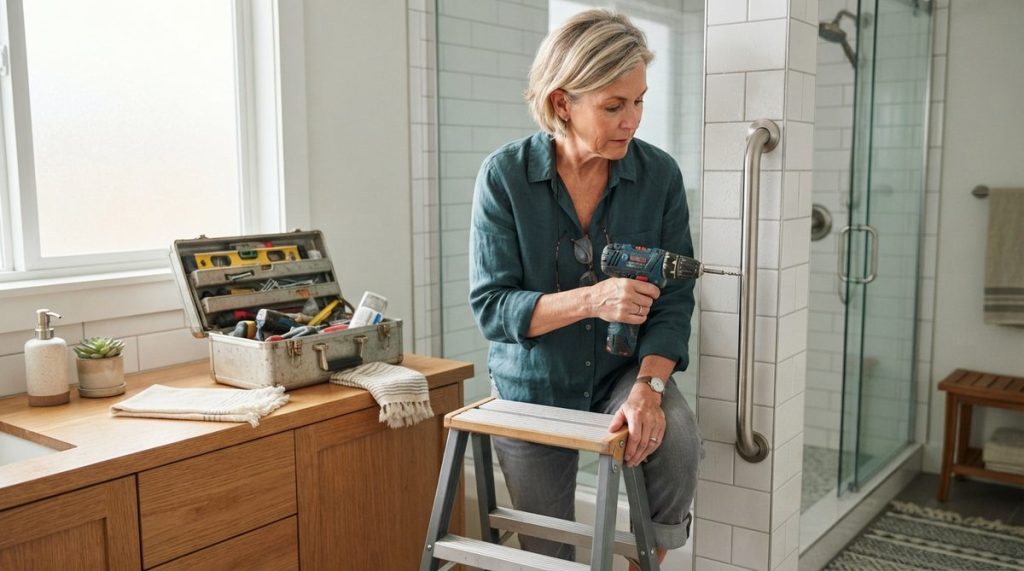
Modern grab bars look nothing like the institutional ones you might picture. Companies like Moen and Delta now make sleek, decorative grab bars that double as towel bars or shelf supports. Install them beside the toilet, inside the shower or tub, and at the bathroom entrance.
Professional installation typically runs $100 to $250 per bar, including hardware. If you’re handy, you can do it yourself — but make sure you’re anchoring into studs or using appropriate wall anchors rated for at least 250 pounds of force.
Rethink Your Shower or Tub
A walk-in shower with a zero-threshold entry is the gold standard for aging-in-place bathrooms. Full tub-to-shower conversions typically cost between $2,500 and $8,000, depending on your market and the materials you choose. If that’s not in your budget right now, a transfer bench ($40 to $100) and a handheld showerhead ($25 to $75) can make your existing tub dramatically safer.
- Add a non-slip mat or adhesive strips to the shower floor
- Install a comfort-height toilet (17 to 19 inches) or add a raised toilet seat
- Place a nightlight near the bathroom entrance for middle-of-the-night trips
- Keep a non-slip bath mat outside the shower or tub
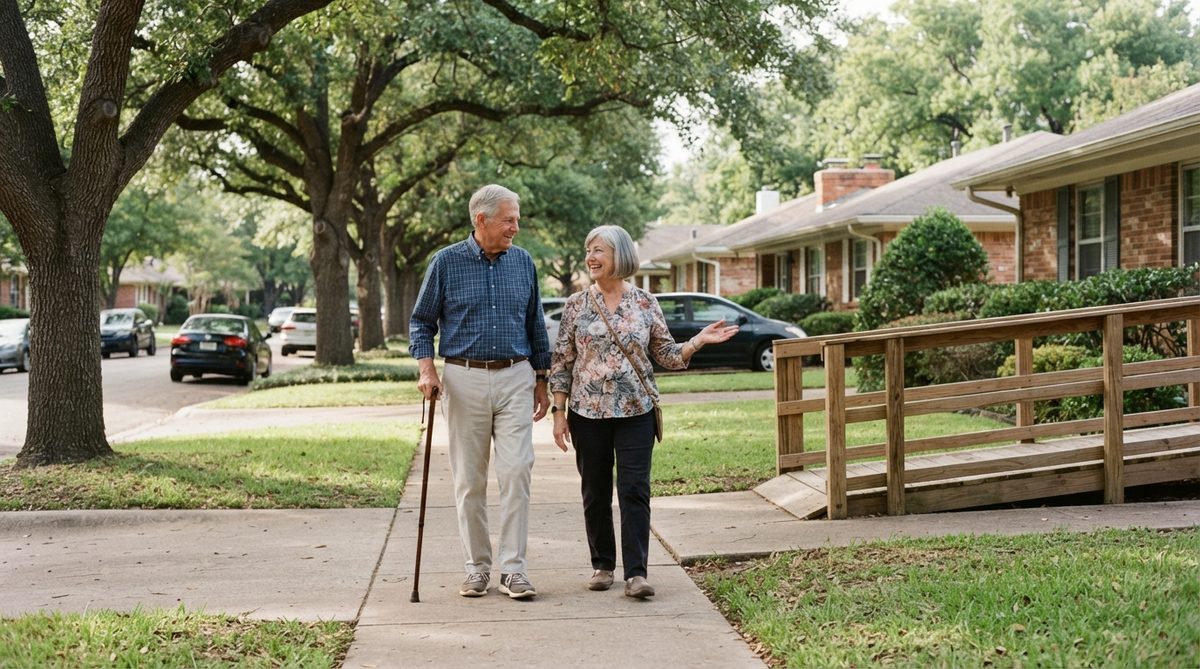
Lighting: The Overlooked Safety Upgrade
I often tell my readers that lighting is the single most underestimated factor in home safety for older adults. The National Institute on Aging notes that age-related vision changes — including reduced contrast sensitivity and slower adaptation to darkness — begin affecting most people by their mid-50s.
Where to Focus Your Lighting Upgrades
Hallways, staircases, and the path between your bedroom and bathroom should be your first targets. Motion-activated LED lights can be installed along baseboards, under cabinet edges, and on stairway treads for under $30 per pack — and they last for years.
Replace any single-switch overhead lights with multi-level or dimmable options. Rocker-style light switches are easier to operate than traditional toggles, especially if arthritis affects your hands. Smart home systems like Alexa or Google Home let you control lights with voice commands, which eliminates fumbling for switches entirely.
- Increase wattage in reading areas, kitchens, and workspaces
- Add under-cabinet lighting in kitchens to illuminate countertops
- Use daylight-spectrum bulbs (5000K) for better visibility
- Ensure exterior walkways and porches have bright, motion-activated lighting
Stairs and Entryways: Reducing Fall Risk Where It’s Highest
If your home has stairs — even just two or three steps at the front entrance — they deserve serious attention. According to the CDC, stairs are involved in more than one million emergency room visits annually among adults 65 and older.
Interior Stair Safety
Handrails should be on both sides of every staircase, secured firmly to the wall, and extending slightly beyond the top and bottom steps. If your current handrails are round and smooth, consider replacing them with a contoured profile that’s easier to grip.
Add contrasting color tape or paint to the edge of each step to improve visibility. This is a $20 fix that can prevent a catastrophic fall. If climbing stairs is becoming genuinely difficult, a stair lift ($3,000 to $5,000 installed) or even relocating your bedroom to the main floor is worth considering.
Exterior Entryways
A well-built ramp can replace front porch steps for $1,000 to $3,500, depending on length and materials. Modular aluminum ramps are removable if you sell the home later. Make sure all exterior walkways are level, free of cracks, and well-lit. Keep them clear of leaves, ice, and garden hoses.
Kitchen Modifications That Make Daily Life Easier
You use your kitchen multiple times a day, which means small inconveniences add up — and small hazards multiply. The goal isn’t to gut your kitchen. It’s to reorganize and adapt it so everything you use regularly is within safe, comfortable reach.
Practical Kitchen Changes
- Move frequently used dishes, glasses, and utensils to lower cabinets or pull-out shelves
- Replace round cabinet knobs with D-shaped pulls that are easier to grip
- Add pull-out drawers inside lower cabinets to eliminate deep bending
- Use a single-lever faucet with anti-scald temperature control
- Keep a fire extinguisher mounted in an accessible spot — not buried behind the broom closet
If you’re planning a larger renovation, consider lowering a section of countertop for seated meal prep. This is especially valuable if a wheelchair or mobility scooter may be part of your future. And don’t overlook flooring — high-gloss tile is a fall risk. Matte-finish vinyl plank or cork flooring offers better traction and is gentler on joints.
Flooring Throughout the Home
Loose rugs are responsible for a staggering number of falls among older adults. I know they’re cozy. I know you love them. But unless they’re secured with industrial-strength double-sided tape or a non-slip pad rated for senior safety, they need to go.
If you’re replacing flooring, look for low-pile carpet, luxury vinyl plank, or cork. Avoid high-gloss hardwood and polished tile. Every transition strip between rooms should be flush — raised thresholds are tripping hazards that are easy and inexpensive to fix.
Technology That Supports Independent Living
Smart home technology has become one of the most powerful tools for aging in place, and prices have dropped significantly in recent years. You don’t need to be tech-savvy to benefit from these systems.
Affordable Tech Worth Considering
- Medical alert systems (from $20/month) that connect you to emergency help with a button press
- Smart doorbells with video so you can see who’s at the door without getting up
- Automatic stove shut-off devices ($100 to $300) that prevent kitchen fires
- Smart locks that eliminate the need to fumble with keys
- Water leak sensors placed near toilets, sinks, and water heaters
These aren’t luxuries. They’re practical safeguards that let you live independently with genuine peace of mind — and they often reassure your adult children, too.
How to Pay for Aging-in-Place Modifications
Cost is the number-one barrier I hear about, and it’s a valid concern. But there are more funding options available than most people realize, and the financial landscape may be improving. A Senate bill introduced in 2025 proposes a $10,000 tax credit specifically for senior home upgrades — covering grab bars, ramps, wider doorways, and other accessibility modifications. While it hasn’t passed yet, it signals growing bipartisan support for aging-in-place infrastructure.
If you’re concerned about how home modifications fit into your broader retirement budget, it’s worth reviewing the 5 biggest financial concerns for retirees and how to fix them — because housing costs and healthcare planning are deeply connected.
Current Funding Sources
- Medicaid Home and Community-Based Services (HCBS) waivers — available in most states for qualifying individuals
- Area Agencies on Aging — many offer free or subsidized home modification programs
- VA Specially Adapted Housing grants — for veterans with service-connected disabilities
- USDA Rural Development loans — for homeowners in eligible rural areas
- Rebuilding Together — a national nonprofit that provides free home repairs for low-income older adults
And if you’re weighing whether to invest in home modifications or redirect those funds elsewhere, understanding how inflation affects retirement savings can help you make a more informed decision about where your dollars do the most good.
Don’t Try to Do Everything at Once
Here’s the advice I give most often: don’t let the scope of the project paralyze you. You don’t need to renovate your entire home this month. Break it into phases based on urgency and budget.
Phase one should focus on fall prevention — bathroom grab bars, lighting improvements, rug removal, and stair handrails. These changes are relatively inexpensive and address the most common injury risks. Phase two can tackle bigger projects like shower conversions, ramp installations, and kitchen reorganization. Phase three might include technology integration and structural changes like widening doorways for wheelchair access.
If you’re also thinking about a more detailed step-by-step approach, we’ve put together a comprehensive guide that walks you through each stage with specific product recommendations and cost breakdowns.
The Bigger Picture: Home Safety Is Independence
After 16 years of writing about how people navigate the second half of life, I’ve come to see aging-in-place modifications not as admissions of decline but as declarations of independence. Every grab bar you install, every threshold you smooth, every light you brighten is a vote for staying in the home you love, on your own terms.
The data supports this, too. AARP research shows that home modifications can reduce fall-related hospitalizations by up to 26% and delay or eliminate the need for assisted living — which averaged $4,995 per month nationally in 2024. A $5,000 investment in your home today could save you $60,000 or more per year down the road.
You’ve spent decades making your house a home. Now it’s time to make that home work for the decades ahead.
Frequently Asked Questions
What is the most important room to modify when aging in place?
The bathroom is consistently ranked as the highest-priority room by occupational therapists and safety experts, because wet surfaces, hard edges, and awkward movements make it the most common location for in-home falls among older adults.
How much does it cost to make a home safe for aging in place?
Costs vary widely depending on the scope of modifications. Basic safety upgrades like grab bars, lighting, and rug removal can be done for under $500, while larger projects such as walk-in shower conversions and ramp installations can range from $2,500 to $10,000 or more.
Are there government programs that help pay for senior home modifications?
Yes. Medicaid HCBS waivers, VA Specially Adapted Housing grants, USDA Rural Development loans, and local Area Agencies on Aging all offer financial assistance for qualifying homeowners. A proposed 2025 Senate bill would also create a $10,000 tax credit for senior home upgrades.
At what age should I start making aging-in-place modifications?
Experts recommend starting in your 50s or early 60s, well before any health event forces urgent changes. Early planning allows you to phase modifications over time, spread out costs, and make thoughtful choices rather than reactive ones.
Do aging-in-place modifications decrease home resale value?
Generally no. Most accessibility features like walk-in showers, improved lighting, lever-style door handles, and main-floor bedrooms are desirable to buyers of all ages and can actually increase a home's appeal and market value.
About Jennifer Adams, 16 Years in Lifestyle Journalism
Jennifer Adams is a lifestyle journalist with 16 years of experience writing about travel, hobbies, relationships, home life, and the art of aging well. She has contributed to national publications focused on the interests and aspirations of adults over 50 — from budget-friendly travel destinations to rediscovering hobbies in retirement. At Daily Trends Now, Jennifer writes warm, practical articles that celebrate life after 50 and help readers make the most of every chapter.