

Key Takeaways
- Engaging in mentally stimulating hobbies after 50 can reduce dementia risk by up to 30%, according to National Institute on Aging research.
- The best brain-boosting hobbies combine novelty, social connection, and physical movement — not just one element in isolation.
- You don't need expensive equipment or classes to start; many of the most effective cognitive hobbies cost little or nothing.
- Consistency matters more than intensity — even 20 minutes a day of a challenging hobby creates measurable neurological benefits over time.
The Retired Engineer Who Couldn’t Remember His Neighbor’s Name
Last spring, I sat across from a man named Gerald at a coffee shop in Tucson, Arizona. He was 71, a retired aerospace engineer, and he was scared. “I spent forty years solving problems that most people couldn’t even understand,” he told me, stirring his coffee absently. “Now I stand in my driveway and can’t remember my neighbor’s name. The one I’ve lived next to for twelve years.”
Gerald’s wife had nudged him to talk to me after reading one of my columns. He didn’t think he had Alzheimer’s — his doctor had reassured him on that front — but the mental fog was real, and it was getting worse. He’d retired three years earlier, sold the workshop in his garage, canceled his engineering journal subscriptions, and settled into a routine of television, light yard work, and occasional dinners out.
His brain, in other words, had gone from running at full throttle to idling in park.
In my 16 years covering lifestyle and active aging, Gerald’s story is one I’ve heard in a hundred different versions. Brilliant people — teachers, executives, nurses, architects — who step away from their careers and slowly feel the sharpness fade. Not because aging made it inevitable, but because they accidentally stopped challenging the organ that needed it most.
What happened next with Gerald is worth telling, because it changed his life. But first, let’s talk about why hobbies that keep your brain sharp after 50 aren’t just nice-to-haves — they’re neurological necessities.
The Science Behind “Use It or Lose It”
That old saying your grandmother repeated turns out to be remarkably accurate, at least when it comes to your brain. The National Institute on Aging has published extensive research showing that cognitive stimulation throughout later life is one of the strongest modifiable factors in reducing dementia risk. One landmark study followed over 2,000 adults aged 65 and older and found that those who regularly engaged in mentally stimulating activities had a 30-47% lower risk of developing Alzheimer’s disease.
The mechanism is something neuroscientists call “cognitive reserve.” Think of it as a savings account for your brain. Every time you learn a new skill, solve a novel problem, or engage in complex thinking, you’re making deposits. The more reserve you build, the better your brain can compensate for age-related changes or even early-stage disease.
What I see most often is people confusing passive entertainment with mental stimulation. Watching a documentary about chess is not the same as playing chess. Reading about watercolor painting is not the same as picking up a brush. The brain needs active engagement — struggle, even — to build new neural pathways.
Why Age 50 Is the Critical Turning Point
Around age 50, the brain begins losing volume at a rate of roughly 0.5% per year, accelerating after 60. Processing speed slows. Working memory — the mental workspace where you hold a phone number while you search for a pen — starts to shrink. These changes are normal, but they’re not irreversible.
Research from Rush University Medical Center, published in 2023, demonstrated that adults who adopted new cognitively demanding hobbies in their 50s and 60s showed measurably thicker cortical tissue in brain scans compared to peers who didn’t. The brain, it turns out, retains remarkable plasticity well into old age. But it needs a reason to rebuild.
That reason is challenge. That reason is a hobby worth showing up for.
Eight Hobbies That Actually Sharpen Your Mind After 50
Not all hobbies are created equal when it comes to brain health. Watching birds from your porch is pleasant, but it won’t build cognitive reserve the way learning to identify 200 species by their calls will. The key distinction is novelty plus complexity plus consistency. Here are the hobbies that research — and my years of interviewing gerontologists, neurologists, and thriving retirees — point to most convincingly.
1. Strategic Board Games and Puzzles
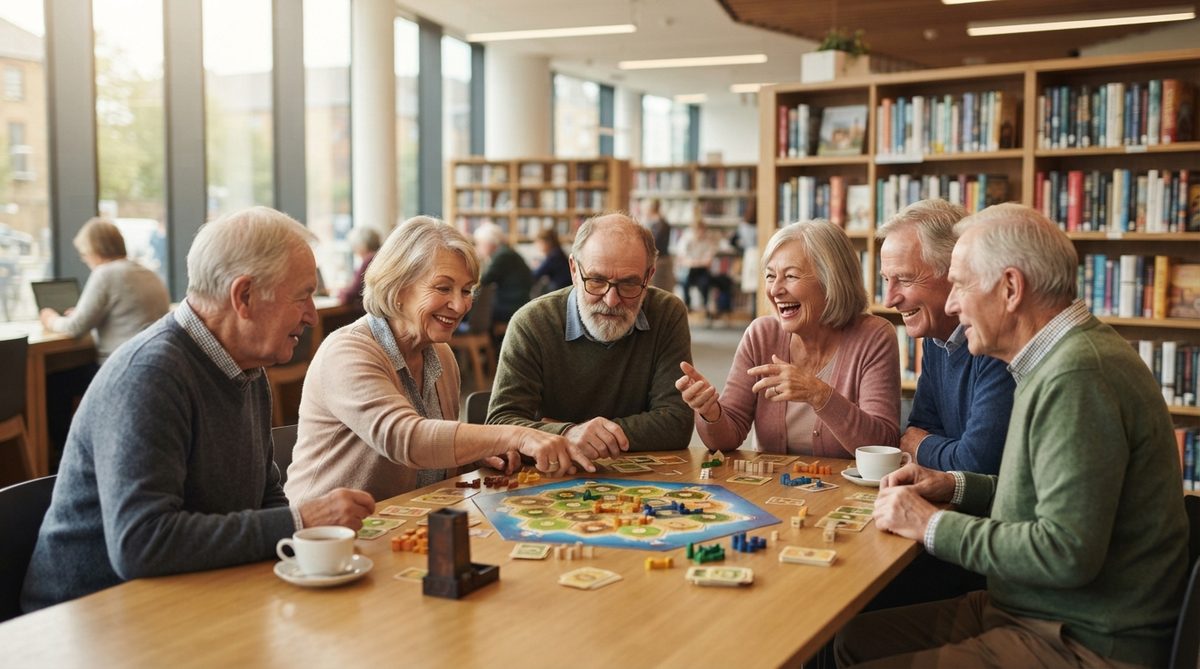
This is where Gerald’s story picks back up. His daughter, a physical therapist, convinced him to join a weekly chess club at the Tucson public library. He’d played casually in college but hadn’t touched a board in decades. The first few weeks were humbling — he lost every game.
But within two months, something shifted. He was thinking three moves ahead again. He started reading chess strategy books. He downloaded an app to practice problems. And here’s the detail that stopped me mid-interview: he told me his neighbor’s name was Dave, and he’d remembered it without hesitation for the first time in over a year.
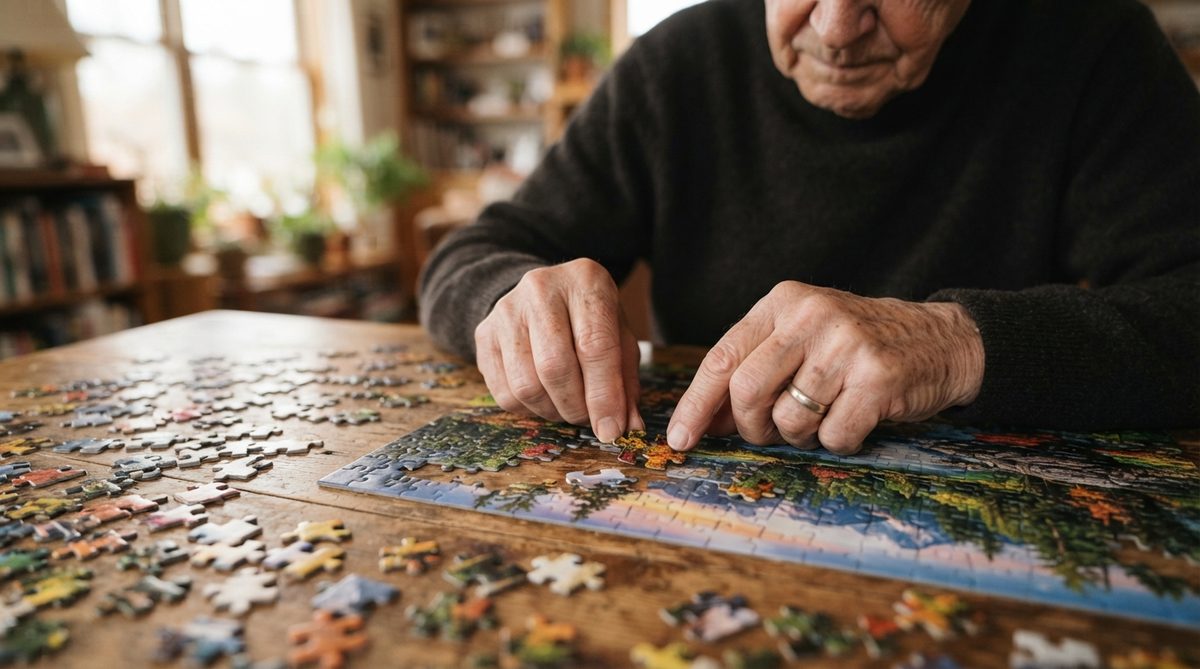
A 2024 study in the journal JAMA Network Open found that adults over 60 who played strategic games at least three times per week showed significant improvements in executive function and processing speed over a 12-month period. Chess, Go, bridge, and even complex jigsaw puzzles all qualified.
And speaking of puzzles — doctors are increasingly recommending that retirees pick up a beloved childhood toy: building blocks and construction sets like LEGO. The spatial reasoning, fine motor control, and planning required to assemble a complex set activates multiple brain regions simultaneously.
2. Learning a Musical Instrument
If I could prescribe one hobby to every person over 50, it would be learning an instrument. The neuroscience here is extraordinary. Playing music engages auditory processing, motor coordination, visual reading (if you’re reading sheet music), emotional expression, and memory — all at the same time. No other single activity lights up as many brain regions on an fMRI scan.
You don’t need to become a concert pianist. Ukulele, harmonica, keyboard, even hand drums — the instrument matters less than the act of learning. A 2022 study from the University of Edinburgh found that adults aged 60-79 who took beginner piano lessons for six months showed measurable improvements in attention, planning, and multitasking ability compared to a control group.
The best part? Technology has made learning accessible and affordable. If you’re already comfortable with your smartphone or tablet, you can explore apps and online tutorials that meet you exactly where you are. Smartphones and Senior Brain Health: How Tech Keeps You Sharp explores how digital tools can support cognitive fitness in ways that weren’t possible even a decade ago.
3. Gardening With Intention
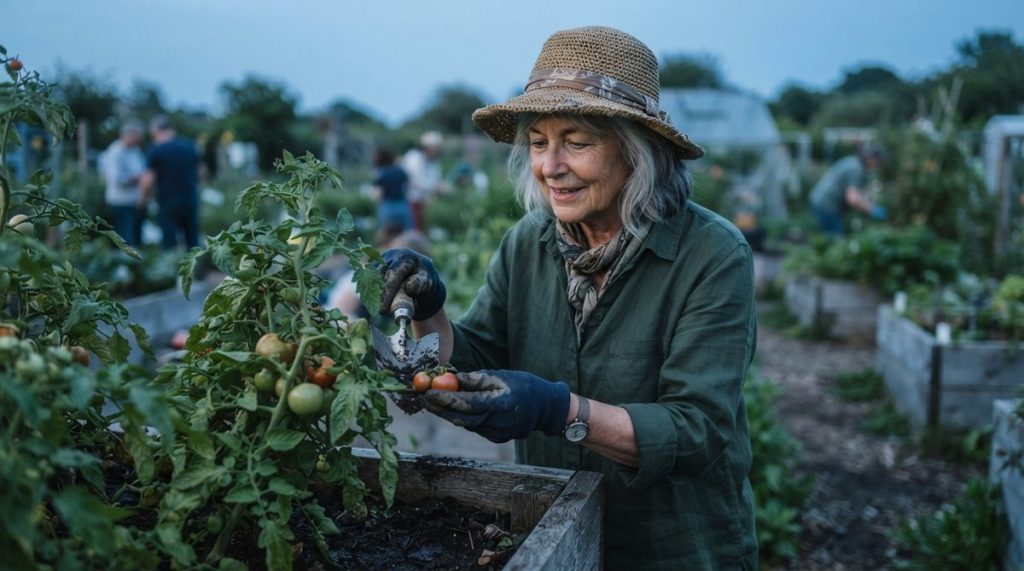
I can already hear some readers thinking, “I’ve been gardening for thirty years.” And that’s wonderful for stress relief and physical activity. But the brain benefits spike when you push into new territory: planning a pollinator garden, learning companion planting, growing vegetables you’ve never attempted, or even studying botany.
The National Council on Aging highlights gardening as one of the top recommended activities for older adults because it uniquely combines physical movement, exposure to nature, planning and problem-solving, and sensory stimulation. A 2019 study in the International Journal of Environmental Research and Public Health found that community gardening specifically reduced the risk of cognitive decline by 36% among adults over 60.
The “with intention” part matters. If you garden on autopilot every season, challenge yourself. Sketch a new layout. Research permaculture. Start seeds indoors. Teach a grandchild. Make it new.
4. Creative Writing or Journaling
Writing forces you to organize thoughts, retrieve vocabulary, construct logical sequences, and imagine perspectives beyond your own. It’s a full-brain workout disguised as a quiet afternoon activity.
I often tell my readers that memoir writing is one of the most powerful cognitive exercises available to people over 50. You’re not just remembering — you’re curating, interpreting, and creating narrative structure from raw experience. That process engages the prefrontal cortex (planning), the hippocampus (memory retrieval), and the temporal lobe (language) simultaneously.
Join a writing group if you can. The social accountability and feedback loop add layers of cognitive demand that solo journaling can’t match.
5. Dance — Any Style, Any Level
The research on dance and brain health is so compelling that some neurologists have started calling it “the best medicine we can’t bottle.” A landmark study published in the New England Journal of Medicine tracked adults over 75 for more than two decades and found that dancing reduced dementia risk by 76% — more than reading (35%), doing crossword puzzles (47%), or even cycling.
Why? Dance requires you to learn sequences, coordinate with a partner or a rhythm, navigate spatial awareness, and make split-second decisions. Line dancing, ballroom, salsa, square dancing — the style doesn’t matter. What matters is that you’re moving your body while simultaneously engaging your mind.
Many community centers across the U.S. offer free or low-cost dance classes specifically for older adults. And if money is a concern — which it is for many retirees, especially as inflation continues to eat into fixed incomes — know that dance is one of the most cost-effective brain health interventions available. If you’re worried about stretching your retirement dollars, Retirees Depleting Savings Faster: A CPA’s Inflation Analysis offers strategies for protecting your savings while still investing in your wellbeing.
6. Learning a New Language
Bilingualism has been shown to delay the onset of dementia symptoms by an average of 4-5 years, according to a frequently cited study from York University. But you don’t need to achieve fluency. The act of learning — wrestling with unfamiliar grammar, memorizing vocabulary, training your ear to hear new sounds — is what builds cognitive reserve.
At 50, 60, or 70, you won’t learn a language the way a child does. And that’s actually the point. The effort your brain expends to acquire a new language at this stage is precisely what strengthens it. Apps like Duolingo, Babbel, or community college continuing education courses make this more accessible than ever.
I interviewed a 68-year-old woman in Portland last year who started learning Italian at 63 for a planned trip to Rome. She never took the trip — life got in the way — but she kept studying. Five years in, she hosts a weekly Italian conversation group at her local library. Her neurologist told her at her last checkup that her cognitive test scores had actually improved since her previous visit three years earlier.
7. Photography as a Practice
Photography — real, intentional photography, not just snapping shots with your phone — combines technical learning, artistic composition, spatial awareness, and mindfulness in a way few other hobbies can match. Learning to control aperture, shutter speed, and ISO requires understanding abstract relationships. Composing a shot demands that you see the world differently.
What I recommend specifically is themed photography projects: photograph every door on your street, document the changing seasons in one specific tree, create a portrait series of friends. Constraints force creativity, and creativity forces neural growth.
8. Volunteering in Skill-Based Roles
This might surprise you, but volunteering — when it involves applying or learning complex skills — functions as a powerful cognitive hobby. Tutoring students in math, mentoring entrepreneurs at a SCORE chapter, building homes with Habitat for Humanity, or organizing a community event all require planning, problem-solving, social navigation, and adaptability.
The AARP reports that volunteers over 50 who engage in skill-based service score consistently higher on cognitive assessments than their non-volunteering peers. The combination of social engagement and intellectual challenge appears to be the key differentiator.
How to Actually Start: A Step-by-Step Plan
Knowing which hobbies that keep your brain sharp after 50 are backed by science is one thing. Actually integrating them into your life is another. Here’s the framework I recommend to readers who are ready to act but aren’t sure where to begin:
- Audit your current week honestly. Write down how you spend each hour for seven days. Most people discover 15-25 hours of passive screen time they didn’t realize they were accumulating. That’s not a judgment — it’s an opportunity.
- Choose one hobby that genuinely interests you. Don’t pick chess because a study said so if you hate chess. Compliance without enthusiasm won’t last. Pick the activity that makes you curious, even if it also makes you nervous.
- Set a minimum viable commitment. Twenty minutes, three times a week. That’s it to start. Research consistently shows that frequency matters more than duration for cognitive benefits.
- Find a social component. Join a class, a club, an online community. The social dimension adds accountability and an additional layer of cognitive demand. Coordinating with others is brain exercise in itself.
- Schedule a 30-day check-in with yourself. Mark it on your calendar. After one month, assess: Do you enjoy this? Are you showing up consistently? If yes, continue and gradually increase. If no, pivot to a different hobby without guilt.
- Add a second hobby after 90 days. Variety matters. Doing two different cognitively demanding activities creates broader neural engagement than doing one activity for twice as long.
- Track your progress in a journal. Note how you feel mentally — not just whether you “performed well” at the hobby, but whether you’re thinking more clearly, sleeping better, feeling more engaged with life. These subjective markers often appear before any formal cognitive test would detect a change.
The Hobbies That Don’t Help as Much as You Think
I want to be honest about something that many lifestyle writers gloss over: not every hobby provides meaningful cognitive benefits. Activities you’ve been doing for decades without variation — the same crossword puzzle format every morning, the same knitting pattern, the same walking route — provide comfort and routine, and those have real value. But they don’t build new neural pathways.
The brain needs novelty. It needs to struggle. When an activity becomes automatic, the cognitive benefits plateau. This is why I always emphasize progression: if you’ve been doing Monday crosswords for five years, switch to Thursday puzzles (they’re harder in the New York Times). If you’ve been knitting scarves, attempt a complicated sweater pattern. If you’ve been walking the same loop, learn orienteering and navigate unfamiliar trails.
Television, even quality programming, is almost entirely passive. Social media scrolling offers an illusion of engagement but requires minimal cognitive effort. These activities fill time; they don’t fill your cognitive reserve account.
What About Physical Exercise?
I’d be remiss not to mention this: aerobic exercise remains the single most powerful intervention for brain health at any age. A 2023 meta-analysis in the British Journal of Sports Medicine found that 150 minutes per week of moderate aerobic exercise reduced cognitive decline risk by 28-38%.
The ideal combination is physical exercise plus a cognitively demanding hobby. Dance achieves both simultaneously. So does competitive tennis, trail hiking with navigation, or even vigorous gardening paired with the planning and learning elements I described earlier.
If your body limits intense exercise — and many readers over 50 have joint issues, balance concerns, or chronic conditions — prioritize the cognitive hobbies. A sedentary chess player still gains significant brain benefits. Don’t let physical limitations become an excuse to skip mental ones.
The Financial Side of Brain-Boosting Hobbies
One concern I hear repeatedly: “This all sounds great, but I’m on a fixed income.” It’s a legitimate worry. Retirement savings don’t stretch as far as they used to, and inflation has hit seniors particularly hard in recent years.
Here’s the good news: most of the best hobbies that keep your brain sharp after 50 are remarkably affordable. Public libraries offer free chess clubs, language learning resources, writing groups, and puzzle collections. YouTube contains millions of free music lessons, photography tutorials, and dance instruction videos. Community gardens typically charge $20-50 per season for a plot. Many volunteer organizations provide all materials and training at no cost.
The most expensive option on this list — learning a musical instrument — can start at under $50 for a beginner ukulele or a secondhand keyboard from a thrift store. Compare that to the cost of cognitive decline: assisted living facilities in the U.S. average $4,500-$5,000 per month in 2025, according to Genworth’s Cost of Care Survey.
Investing a small amount now in brain-healthy hobbies is one of the best financial decisions a retiree can make. And if you’re looking at the bigger picture of retirement planning, 7 Ways to Maximize Your Social Security Check in 2026 can help ensure you have the resources to support an active, engaged lifestyle.
Gerald’s Update — Six Months Later
I checked in with Gerald last November, roughly six months after our first conversation. He was still playing chess every Wednesday at the library. But he’d added two things: beginner Spanish lessons through a community college (his daughter-in-law is from Mexico City, and he wanted to speak to her parents in their language), and a photography walk he takes every Saturday morning in different Tucson neighborhoods.
“I’m not going to tell you I feel like I’m 40 again,” he said, laughing. “But I feel like I’m here again. Present. My wife says I’m arguing with her more, which she considers a good sign because it means I have opinions again.”
His neighbor’s name is Dave. He hasn’t forgotten once since April.
Start Before You Think You Need To
If there’s one message I want to leave you with after 16 years of writing about this topic, it’s this: don’t wait for a scare. Don’t wait for the moment you can’t remember your neighbor’s name or you lose your car in a parking lot or you forget a word that’s been in your vocabulary for fifty years.
The best time to start building cognitive reserve was twenty years ago. The second best time is today. Pick one hobby from this list — or any activity that’s new, challenging, and engaging — and commit to 20 minutes, three times this week.
Your brain has been working for you your entire life. It’s time to return the favor.
About Jennifer Adams, 16 Years in Lifestyle Journalism
Jennifer Adams is a lifestyle journalist with 16 years of experience writing about travel, hobbies, relationships, home life, and the art of aging well. She has contributed to national publications focused on the interests and aspirations of adults over 50 — from budget-friendly travel destinations to rediscovering hobbies in retirement. At Daily Trends Now, Jennifer writes warm, practical articles that celebrate life after 50 and help readers make the most of every chapter.