

The Phone Call That Nearly Cost Margaret Everything
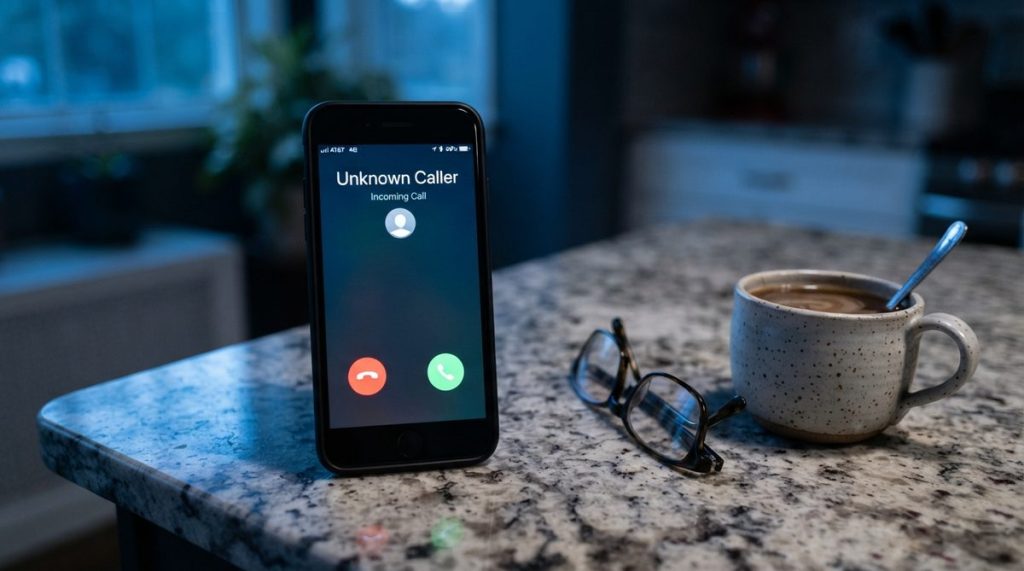
Margaret Chen, a 72-year-old retired school principal in suburban Phoenix, considered herself sharp. She managed her own investment portfolio, used her iPhone daily, and even helped friends troubleshoot their streaming services. So when she received a phone call from someone claiming to be a fraud investigator at her bank, she didn’t immediately hang up.
The caller knew her full name, the last four digits of her debit card, and even the branch where she’d opened her account. He told her that suspicious transactions had been flagged and that her savings were at risk. Over the next 45 minutes, he walked her through “securing” her account — which actually meant transferring $47,000 to a cryptocurrency wallet controlled by criminals.
Margaret caught on only when the caller asked her to keep the conversation secret from her family. She hung up, called her bank directly, and managed to freeze the transfer before it fully processed. She recovered most of her money, but not all of it. And the emotional toll — the shame, the sleeplessness, the broken trust — lasted far longer than any financial loss.
I know Margaret’s story because she contacted me after the incident, looking for guidance on how to protect herself going forward. In my 14 years working in cybersecurity and digital privacy research, I’ve heard hundreds of stories like hers. And what strikes me every single time is this: the victims are not naive. They’re intelligent, capable people who encounter criminals operating with sophisticated tools and psychological precision.
The Staggering Scale of Financial Scams Targeting Older Adults
The FBI’s Internet Crime Complaint Center (IC3) reported that in 2024, Americans over 60 lost more than $4.8 billion to fraud — a 43% increase from the previous year. That figure almost certainly underestimates the real damage, because the FTC estimates that only about 5% of fraud victims ever file a report.
What I see most often is a dangerous combination: criminals are getting more technologically sophisticated at the exact moment that older adults are adopting technology faster than ever before. According to AARP’s 2025 technology survey, 79% of adults over 50 now own a smartphone, and 54% use at least one smart home device. That’s wonderful for independence, connection, and quality of life. But it also means more attack surface for scammers.
Financial scams targeting older adults aren’t random. They’re engineered, tested, and refined — often by organized criminal networks operating internationally. Understanding how these scams work is the single most effective defense you can build.
The Five Scams I See Destroying Retirement Savings
The “Bank Fraud Department” Call
This is what hit Margaret, and it’s the scam I encounter most frequently in my research. Criminals use caller ID spoofing to make it look like your actual bank is calling. They may already have partial information about you — purchased from data breaches on the dark web for as little as $2 per record.
The psychology is brilliantly manipulative. They create urgency (“Your account is being drained right now”), establish authority (“I’m calling from the fraud prevention team”), and isolate you (“Don’t tell anyone — it could compromise the investigation”). These three tactics — urgency, authority, and isolation — appear in virtually every successful scam.
Your defense is simple but requires discipline: hang up and call the number on the back of your bank card. Every time. No exceptions. A real fraud department will never be offended that you want to verify their identity.
Tech Support Scams
You’re browsing a website when a terrifying full-screen pop-up appears: “YOUR COMPUTER HAS BEEN INFECTED. CALL MICROSOFT SUPPORT IMMEDIATELY.” A phone number flashes in red. If you call it, a calm, professional-sounding person will ask for remote access to your computer and a payment of $200 to $500 to “fix” the problem.
Here’s what I tell my clients: Microsoft, Apple, and Google will never display a phone number in a pop-up alert. Ever. If your screen is frozen by one of these fake warnings, simply force-restart your device. On a PC, hold the power button for ten seconds. On a Mac, do the same. On a phone, a standard restart clears it. CISA, the federal agency responsible for cybersecurity guidance, has published extensive warnings about this exact scam type, and their website is an excellent resource for staying current on emerging threats.

Romance and Companionship Fraud
This one is particularly cruel. Scammers create fake profiles on dating apps, Facebook, and even faith-based community groups. They invest weeks or months building a genuine-feeling emotional connection before the financial requests begin. The median loss in romance scams targeting adults over 60 was $9,000 in 2024, but I’ve worked with individuals who lost over $300,000.
The red flags are consistent: the person can never video chat (or the video is glitchy and brief), they claim to be working abroad (often military or engineering), and they always have a reason they need money sent through gift cards, wire transfers, or cryptocurrency — methods that are essentially untraceable.
Government Impersonation Scams
Calls or emails claiming to be from the IRS, Social Security Administration, or Medicare. The scammer says you owe back taxes, your Social Security number has been “suspended,” or your Medicare benefits are about to be canceled. They demand immediate payment or personal information.
The critical fact to remember: the Social Security Administration will never call you threatening arrest. The IRS initiates contact by mail, not phone. And Medicare will never call you unsolicited asking for your Medicare number. These agencies have been clear and consistent about this, yet the scams persist because fear is a powerful motivator.
Investment and Cryptocurrency Fraud
This category exploded in 2024, with losses among older adults exceeding $1.8 billion according to the FBI. Scammers promote fake investment platforms — often through social media ads or even text messages — promising guaranteed high returns. Some victims are shown fake dashboards showing their “investments” growing, which encourages them to deposit more money before the platform vanishes entirely.
If you’re looking for legitimate ways to grow retirement savings, sticking with established, regulated investment vehicles is essential. Resources like our guide to high-return low-risk investments for retirees in 2026 can help you evaluate real options with actual regulatory oversight.
Why Older Adults Are Targeted — And Why It’s Not About Intelligence
I want to be very direct about something because I think it matters: being targeted by a scammer is not a reflection of cognitive decline. In my research, I’ve found that the primary reasons older adults are disproportionately targeted have nothing to do with mental sharpness.
- Higher accumulated wealth. Adults over 60 hold roughly 53% of household wealth in America. Criminals go where the money is.
- Generational trust patterns. Many older adults grew up in communities where a phone call from an authority figure was inherently trustworthy. Scammers exploit that social conditioning.
- Social isolation. Adults living alone are significantly more vulnerable — not because they’re less intelligent, but because they don’t have someone nearby to say, “Wait, that sounds suspicious.”
- Data exposure. Decades of using your real name, address, and phone number in public directories, voter rolls, and loyalty programs means your personal information is abundantly available to criminals.
The financial consequences of these scams can be devastating for people on fixed incomes. Losing $50,000 at age 35 is painful but recoverable. Losing $50,000 at age 70 can fundamentally change the trajectory of your retirement — a challenge compounded by the broader pressures many retirees are already facing with outliving their savings.

Building Your Personal Defense System
After working in digital security for over a decade, I’ve distilled my advice for older adults into a framework I call the “Pause-Verify-Protect” system. It’s not complicated, but it requires making these behaviors habitual.
Pause: Break the Urgency Loop
Every sophisticated scam depends on preventing you from thinking clearly. The scammer creates a crisis and demands immediate action. Your single most powerful defense is to pause. Tell the caller you need to think about it. Close the browser tab. Put the letter down and come back to it tomorrow.
I often tell my readers that if someone is pressuring you to act right now — whether it’s a “bank representative,” a “grandchild in trouble,” or an “investment advisor” with a limited-time opportunity — that pressure itself is the biggest red flag. Legitimate organizations give you time to make decisions.
Verify: Use Independent Channels
Never use a phone number, link, or email address provided by the person contacting you. Instead, look up the organization’s official contact information independently. Go to your bank’s website by typing the URL yourself. Call the phone number on your Social Security card. Look up the company on the FTC’s consumer advice website.
If someone claims to be a grandchild or family member in distress, call that person directly on the number you already have saved. If they don’t answer, call another family member to verify. This takes two minutes and can save tens of thousands of dollars.
Protect: Layer Your Security
Technical protections don’t need to be complicated to be effective. Here are the measures I consider non-negotiable:
- Enable two-factor authentication on your email, banking, and social media accounts. This means that even if someone steals your password, they can’t access your account without a second verification code.
- Use a password manager. Apps like 1Password or Bitwarden create and store unique passwords for every account. You only need to remember one master password. Consumer Reports regularly reviews and recommends password managers suitable for all experience levels.
- Freeze your credit with all three bureaus (Equifax, Experian, TransUnion). It’s free, it takes about 15 minutes total, and it prevents anyone from opening new accounts in your name.
- Keep your phone’s operating system updated. Those software updates you keep postponing often contain critical security patches.
- Register your number on the National Do Not Call Registry and consider using your phone’s built-in call screening features to filter unknown callers.
What to Do If You’ve Been Scammed
If you suspect you’ve fallen victim to a scam — or even if you’re not sure — acting quickly can make a real difference in recovery. Here’s what I recommend based on both my professional experience and the guidance of federal agencies:
- Contact your bank or credit card company immediately. Many institutions have fraud recovery teams that can freeze or reverse transactions if reported quickly.
- File a report with the FBI’s IC3 at ic3.gov. This is the central clearinghouse for internet fraud complaints and helps law enforcement identify criminal networks.
- Report the scam to the FTC at ReportFraud.ftc.gov. Your report contributes to enforcement cases and helps protect others.
- Tell someone you trust. Shame keeps people silent, and silence is what scammers rely on. Talking to a family member, friend, or counselor is not weakness — it’s strategy.
For a broader look at protecting yourself and your finances from fraud, our detailed guide on how to avoid financial scams targeting older adults in 2025 covers additional scenarios and defenses worth reviewing.
Technology Is Still Worth Embracing
I want to end where I started — with Margaret. Six months after her near-miss, she emailed me. She had set up two-factor authentication on every account. She’d frozen her credit. She’d started a monthly “scam awareness” discussion at her local senior center, sharing what she’d learned with dozens of neighbors. And she was still using her iPhone every day — FaceTiming her grandchildren, managing her investments, and streaming her favorite shows.
“I’m not going to let them scare me off the internet,” she wrote. “But I’m going to be a much harder target.”
That’s exactly the right mindset. The surge in technology adoption among older adults is overwhelmingly positive. Smartphones, smart home devices, telehealth apps, and digital banking offer genuine improvements in independence, health management, and connection. The goal isn’t to retreat from technology — it’s to use it with the same common sense you’d apply to locking your front door or checking the credentials of a contractor.
In my experience, the older adults who are safest online aren’t the ones who know the most about technology. They’re the ones who’ve developed the habit of pausing before they act, verifying before they trust, and protecting their accounts with basic but effective tools. Those three habits are more powerful than any antivirus software on the market.
You’ve spent decades building your financial security. Protecting it in the digital age doesn’t require a computer science degree. It requires awareness, a healthy dose of skepticism, and the willingness to hang up the phone.
About Dr. Priya Sharma, PhD in Computer Science, CISSP
Dr. Priya Sharma is a cybersecurity expert with a PhD in Computer Science and a Certified Information Systems Security Professional (CISSP) credential. She has spent 14 years researching digital privacy, online fraud, and data protection — with a particular focus on the risks facing older internet users. At Daily Trends Now, Dr. Sharma writes about online scams, password security, smartphone privacy, and the practical steps readers can take to stay safe in an increasingly connected world.