

Key Takeaways
- Nearly 90% of adults over 65 want to age in their own homes, but most haven't made the modifications needed to do so safely.
- A proposed Senate bill could offer up to $10,000 in tax credits for senior home upgrades, making critical modifications more affordable.
- The most impactful aging-in-place modifications—grab bars, lever handles, and improved lighting—often cost under $500 total to install.
- A room-by-room safety audit is the single best starting point, and you can do the first pass yourself before hiring a certified specialist.
Why Aging in Place Matters More Than Ever
Here’s a number that stopped me in my tracks when I first encountered it: according to AARP, 89% of adults aged 50 and older say they want to remain in their current home as they age. That’s not a slight preference—it’s an overwhelming consensus. Yet fewer than 10% of American homes have the basic accessibility features needed to support someone through their 70s, 80s, and beyond.
In my 16 years covering lifestyle topics for older adults, I’ve watched this gap between desire and reality widen. People tell me they want to stay home, but when I ask whether they’ve installed a single grab bar or replaced a round doorknob with a lever handle, the answer is almost always no. The good news? Learning how to make your home safe for aging in place doesn’t require a full renovation. It requires a plan, a realistic budget, and the willingness to start before a crisis forces your hand.
This guide walks you through the entire process—from conducting your own safety audit to prioritizing modifications that deliver the biggest safety returns per dollar spent. I’ve also included the latest information on financial assistance, including a proposed federal tax credit that could put $10,000 back in your pocket.
Step 1: Conduct a Room-by-Room Safety Audit
Before you spend a dime, walk through your home with fresh eyes. Pretend you’re visiting for the first time and looking for anything that could trip, trap, or injure someone with reduced mobility, balance issues, or diminished vision. I recommend doing this with a trusted friend or family member—they’ll catch things you’ve stopped noticing.
What to Look for in Each Room
- Entryways: Count the steps. Note whether handrails exist on both sides of exterior stairs. Check that the threshold is flush or has a gentle transition—anything over half an inch is a tripping hazard.
- Bathroom: Step into the tub or shower and honestly assess how stable you feel. Check whether the toilet height is comfortable (standard is 15 inches; comfort height is 17-19 inches). Note the flooring material—glossy tile is a fall waiting to happen.
- Kitchen: Can you reach your most-used items without a step stool? Are cabinet handles easy to grip? Is the flooring cushioned enough to reduce injury from a fall?
- Bedroom: Is the path from bed to bathroom clear of cords and furniture? Is the bed height easy to get in and out of? Is a light switch reachable from bed?
- Hallways and stairs: Are hallways well-lit with no loose carpet edges? Do interior stairs have sturdy handrails? Are light switches at both ends of every hallway?
- Laundry area: Is the washer/dryer front-loading or top-loading? Can you reach the detergent shelf without stretching overhead?
- Outdoor spaces: Check walkway surfaces for cracks, uneven pavers, or moss. Evaluate outdoor lighting—can you safely navigate from the car to the front door after dark?
Write everything down. You’ll use this list to prioritize modifications in the next step. For a more comprehensive professional assessment, the National Council on Aging recommends hiring a Certified Aging-in-Place Specialist (CAPS) through the National Association of Home Builders. These assessments typically cost $200-$500, but they catch structural and safety issues a layperson might miss.
Step 2: Prioritize the High-Impact, Low-Cost Modifications First
What I see most often is people getting overwhelmed by the full list of possible upgrades and then doing nothing at all. Don’t fall into that trap. The Centers for Disease Control and Prevention reports that one in four Americans aged 65 and older falls each year, and falls are the leading cause of injury-related death in that age group. Many of those falls happen at home and are preventable with inexpensive modifications.
“The three modifications that prevent the most falls—grab bars in the bathroom, improved lighting throughout the home, and removal of tripping hazards—can be completed in a single weekend for under $500. There’s no reason to wait.”
Your Weekend Quick-Win List
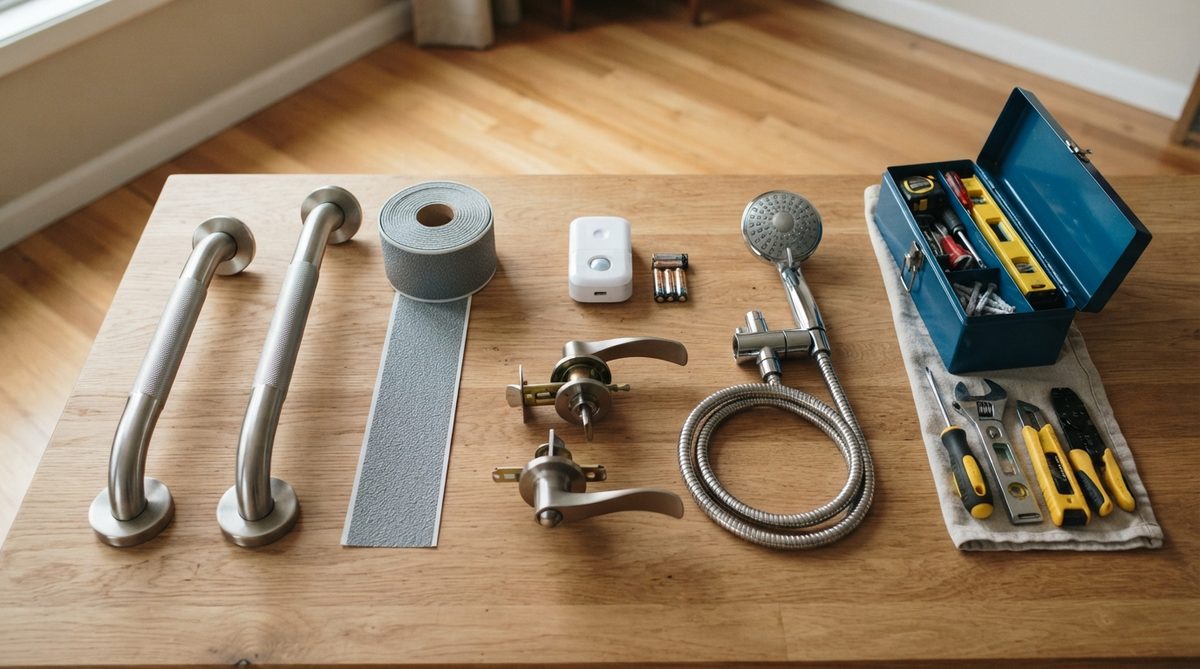
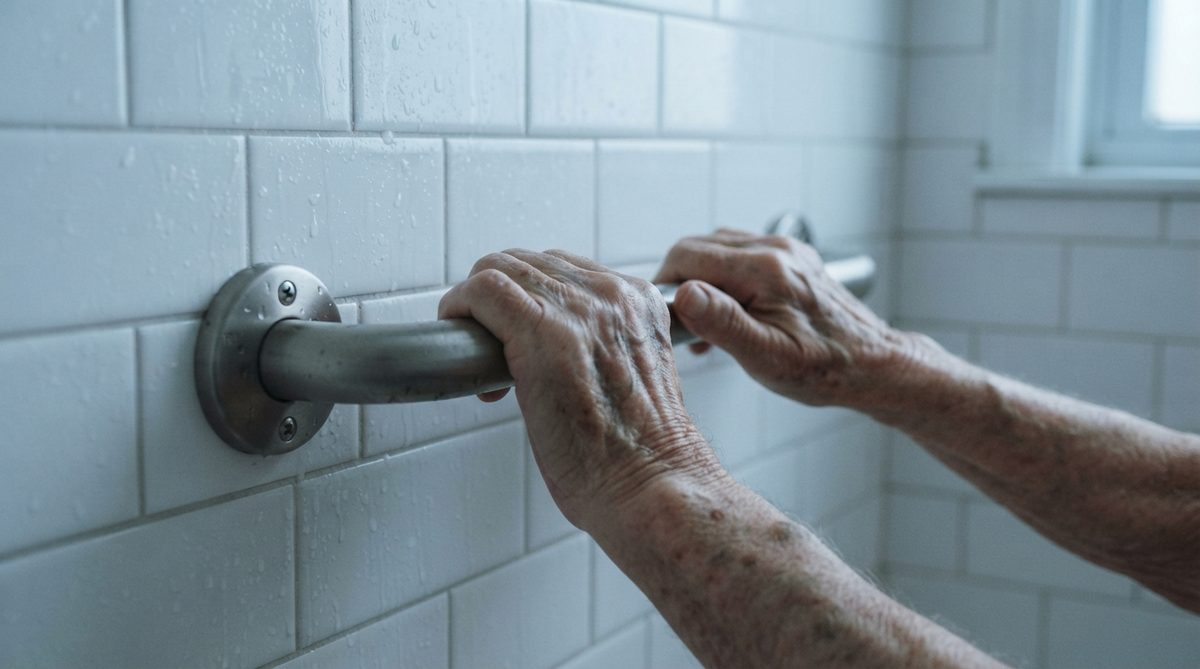
- Install grab bars next to the toilet and inside the shower or tub. Use bars rated for at least 250 pounds, anchored into wall studs—not just drywall. Cost: $15-$40 per bar, plus installation.
- Add non-slip strips or mats in the tub, shower floor, and in front of the kitchen sink. Cost: $10-$25 each.
- Replace round doorknobs with lever handles. These are dramatically easier to operate with arthritic hands. Cost: $15-$30 per handle.
- Install motion-sensor nightlights along the path from bedroom to bathroom. Cost: $8-$15 each.
- Remove or secure throw rugs. If you love them, use double-sided carpet tape or non-slip rug pads. Better yet, remove them entirely.
- Move everyday items to counter height or lower shelves—no step stools needed.
These changes are small individually, but together they transform the safety profile of your home. If you’re also concerned about how rising costs might affect your ability to fund larger modifications down the road, I’d recommend reading 7 Ways to Stop Inflation From Draining Your Retirement Savings for practical budgeting strategies.
Step 3: Tackle the Bigger Projects That Make the Biggest Difference
Once you’ve handled the quick wins, it’s time to plan for the modifications that require more time, money, and possibly professional help. These are the upgrades that truly determine whether your home can support you through your later decades.
Bathroom Overhaul
The bathroom is the most dangerous room in the house for older adults. The combination of water, hard surfaces, and the need to transfer weight makes it a fall hotspot. A full aging-in-place bathroom renovation can cost $8,000-$25,000, but you can phase the work:
- Walk-in shower conversion: Replacing a tub with a curbless or low-threshold shower eliminates the most dangerous daily movement in many homes. Cost: $3,000-$8,000.
- Comfort-height toilet: ADA-compliant toilets (17-19 inches) reduce strain on knees and hips. Cost: $200-$600 installed.
- Handheld showerhead on a slide bar: Allows seated or standing use. Cost: $30-$100.
- Anti-scald valve: Prevents dangerous water temperature spikes. Cost: $100-$300 installed.
Kitchen Accessibility
Kitchens matter because independence in the kitchen directly correlates with overall independence. Consider pull-out shelving in lower cabinets ($100-$300 per cabinet), a wall-mounted oven at counter height, and touch-activated or lever-style faucets. If a full kitchen remodel isn’t in the budget, simply reorganizing storage so that daily-use items live between waist and shoulder height makes a measurable difference.
Stairway Solutions
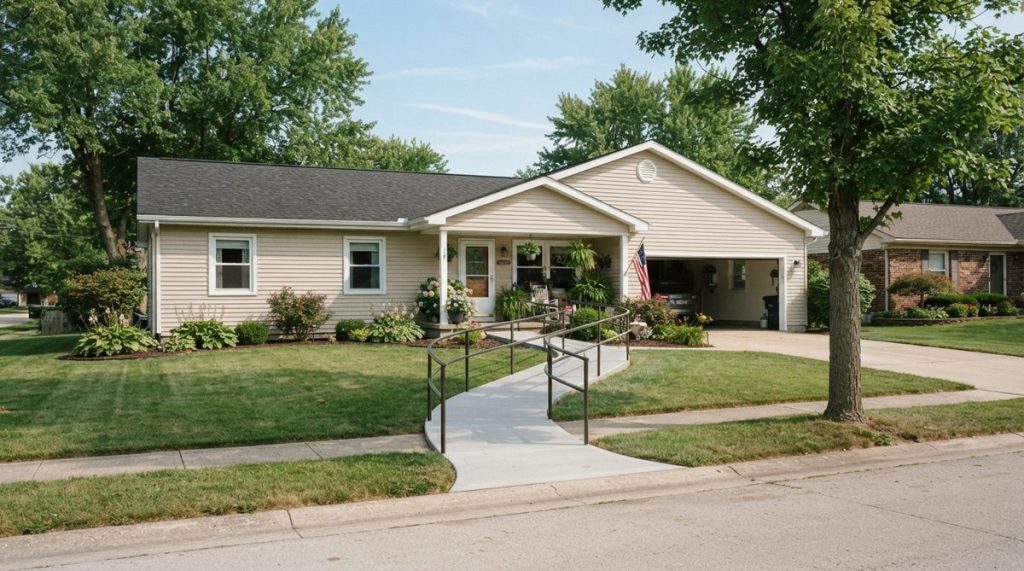
If your home has stairs, you have three options: install a stair lift ($2,000-$5,000 for a straight staircase), move your primary living to one floor, or at minimum ensure handrails are on both sides and are continuously graspable. I often tell my readers that if you’re choosing a home to retire in, single-story living eliminates one of the biggest categories of fall risk entirely.
Step 4: Upgrade Lighting and Technology
Poor lighting is a stealth hazard. The National Institute on Aging notes that a 60-year-old needs three times more light than a 20-year-old to see the same level of detail. By age 80, that multiplier increases to five times.
Lighting Improvements Worth Making
- Switch to LED bulbs rated at 3000K-4000K (bright but not harsh) in every room.
- Add under-cabinet lighting in the kitchen and bathroom.
- Install illuminated light switches or rocker-style switches that are easier to find and operate in the dark.
- Use smart bulbs or smart plugs that can be controlled by voice—no more crossing a dark room to flip a switch.
Smart Home Technology for Safety
Technology has become a genuine ally for aging in place. Video doorbells let you see who’s at the door without getting up. Smart locks with keypad entry eliminate fumbling with keys. Water-leak sensors placed under sinks and near water heaters can alert you—or a family member—before minor drips become catastrophic floods. For a deeper look at how tech can support independence, check out 7 Ways Older Adults Can Use Tech to Stay Safe and Independent.
Step 5: Understand the Financial Help Available to You
Cost is the number-one reason people delay making their homes safer. But there’s more financial assistance available than most people realize, and more may be on the way.
The Proposed $10,000 Senior Home Modification Tax Credit
A Senate bill introduced in 2025 proposes a tax credit of up to $10,000 for home modifications that support aging in place. The credit would cover grab bars, ramps, widened doorways, stair lifts, and other qualifying upgrades. As of mid-2025, the bill is still in committee, but bipartisan support suggests it has a real chance of advancing. I’ll be tracking this closely—it could be a game-changer for millions of homeowners.
Existing Programs You Can Use Now
- Medicaid Home and Community-Based Services (HCBS) Waivers: Many states cover home modifications for Medicaid-eligible seniors. Eligibility and covered modifications vary by state.
- USDA Rural Development Grants: Homeowners aged 62+ in rural areas may qualify for grants up to $10,000 for home safety repairs.
- Area Agency on Aging (AAA): Your local AAA can connect you with state and local programs that fund modifications. Find yours at the Eldercare Locator (1-800-677-1116).
- Veterans’ benefits: The VA offers Specially Adapted Housing (SAH) and Home Improvement and Structural Alteration (HISA) grants for eligible veterans.
- Nonprofit organizations: Groups like Rebuilding Together provide free home modifications to low-income older adults in many communities.
If you’re weighing how these expenses fit into your overall retirement budget, understanding the broader financial landscape is critical. Take a look at 7 Biggest Financial Concerns for Retirees in 2025 and How to Fix Them for additional context on managing retirement expenses.
Step 6: Build a Support Network Beyond the Physical Home
Making your home safe for aging in place isn’t only about hardware. It’s also about the human infrastructure around you. In my experience, the people who age most successfully at home are those who’ve built intentional support systems before they need them urgently.
“A grab bar can prevent a fall, but a neighbor who checks in weekly can prevent isolation. Aging in place works best when the ‘place’ includes people, not just walls.”
Key Support Systems to Establish
- Emergency contacts and medical alert systems: Wearable medical alert devices cost $20-$50 per month and can summon help with a single button press. Modern versions include fall detection.
- Neighbor and community connections: Introduce yourself to nearby neighbors if you haven’t already. Consider joining or forming a “village” network—a grassroots model where neighbors exchange help with rides, errands, and check-ins.
- Professional care relationships: Establish a relationship with a home health agency before you need one. Know who to call for non-medical home care (meal prep, light housekeeping, companionship) and for skilled nursing if recovery from surgery or illness requires it.
- Legal and financial planning: Ensure your advance directive, healthcare proxy, and power of attorney are current and accessible. Keep a binder with key documents in a known location.
Step 7: Reassess Annually—Your Needs Will Change
The modifications that keep you safe at 62 may not be sufficient at 78. I recommend treating your home safety plan like a living document. Set a recurring date each year—many of my readers tie it to their birthday or a seasonal milestone—to walk through your home with the same critical eye you used in Step 1.
Ask yourself: Has my mobility changed? Am I avoiding any part of my home because it feels unsafe? Have I had any near-misses—almost-falls, difficulty getting up from a chair, trouble reaching something overhead? These are signals, not failures. They’re your home telling you it’s time for the next round of adjustments.
Aging in place isn’t a one-time project. It’s an ongoing commitment to matching your home to your evolving needs. The families I’ve spoken with who do this well share a common trait: they plan ahead, they start with small changes, and they never stop adapting. Your home has sheltered you for years. With thoughtful modifications, it can keep doing that job for decades to come.
Frequently Asked Questions
How much does it cost to make a home safe for aging in place?
Basic modifications like grab bars, non-slip mats, and improved lighting can cost under $500. More extensive projects—walk-in shower conversions, stair lifts, widened doorways—range from $3,000 to $25,000 depending on scope. Financial assistance programs and a proposed $10,000 federal tax credit may significantly offset these costs.
What is the most important home modification for aging in place?
Bathroom safety modifications, particularly grab bars and a curbless or low-threshold shower, are widely considered the highest-impact changes. The bathroom is where the majority of in-home falls among older adults occur, making it the top priority room for upgrades.
Does Medicare cover home modifications for aging in place?
Traditional Medicare generally does not cover home modifications like grab bars, ramps, or shower conversions. However, some Medicare Advantage plans offer supplemental benefits that include home safety modifications. Medicaid waiver programs in many states do cover qualifying home modifications for eligible individuals.
When should I start making aging-in-place modifications to my home?
Experts recommend starting in your 50s or early 60s, well before modifications become urgent. Early planning lets you spread costs over time, make changes when you're physically able to manage some projects yourself, and avoid the pressure of modifying a home during a health crisis.
About Jennifer Adams, 16 Years in Lifestyle Journalism
Jennifer Adams is a lifestyle journalist with 16 years of experience writing about travel, hobbies, relationships, home life, and the art of aging well. She has contributed to national publications focused on the interests and aspirations of adults over 50 — from budget-friendly travel destinations to rediscovering hobbies in retirement. At Daily Trends Now, Jennifer writes warm, practical articles that celebrate life after 50 and help readers make the most of every chapter.