

Key Takeaways
- Nearly 90% of adults over 65 want to age in place, yet fewer than half feel fully confident they can do so safely long-term.
- Physical preparation—including balance training, strength work, and fall prevention—is just as critical as home modifications for aging in place successfully.
- Mental health care, sleep quality, and social connection are often-overlooked pillars that determine whether someone thrives or merely survives at home.
- Starting a concrete aging-in-place plan in your 50s or early 60s dramatically improves outcomes compared to waiting until a health crisis forces decisions.
The Morning Everything Changed for Margaret
Margaret Chen was 74 years old, sharp as a tack, and fiercely independent. She’d lived in the same three-bedroom ranch house in suburban Ohio for 31 years. She hosted book club on Tuesdays, walked her golden retriever every morning, and managed her own finances online. By every measure, she was thriving.
Then one February morning, she stepped out of the shower onto a damp bath mat, lost her footing, and fractured her left hip.
I met Margaret six weeks after surgery, when she was referred to my outpatient clinic for rehabilitation. She was determined to get back home—not to her daughter’s house in Colorado, not to assisted living, but to her house. “This is where I belong,” she told me on day one, gripping the parallel bars with white knuckles. “I just need someone to show me how to stay.”
In my 18 years as a board-certified geriatric physical therapy specialist, I’ve worked with hundreds of Margarets. People who are capable, motivated, and emotionally anchored to the homes they’ve built their lives in. The desire to age in place is nearly universal among older Americans—but the gap between wanting it and being prepared for it is wider than most people realize.
The Confidence Gap in Aging in Place
Recent survey data confirms what I see in my clinic every week. According to the National Institute on Aging, approximately 90% of adults over 65 express a strong preference for remaining in their current homes as they age. The AARP’s 2024 Home and Community Preferences Survey found similar numbers—yet only about 46% of respondents said they felt “very confident” they’d actually be able to do so.
That’s a staggering disconnect. Nearly half of the people who want to age in place don’t fully believe they can pull it off.
When I dig into why, the reasons tend to cluster into a few categories: fear of falling, anxiety about affording home modifications or in-home care, worry about cognitive decline, and a nagging sense that they should be planning but don’t know where to start. These are not irrational fears. They’re legitimate concerns that deserve concrete answers.
Why the Plan Matters More Than the Wish
What I often tell my patients is this: wanting to age in place is step one. Having a plan is what actually makes it happen. And the best time to build that plan isn’t after a crisis—it’s years before one.
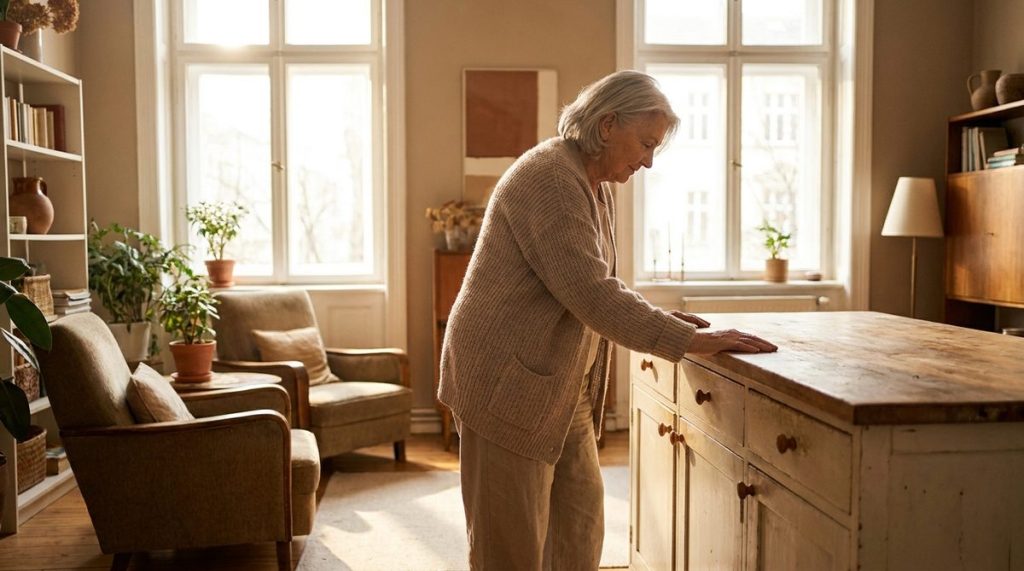
Margaret’s story is instructive because she had done almost nothing to prepare her home or her body for the realities of aging. No grab bars. No non-slip flooring. She hadn’t done structured balance or strength training in years. She assumed that because she felt fine, she was fine. That assumption cost her a hip, eight weeks of rehabilitation, and a $14,000 out-of-pocket bill after Medicare.
The Physical Foundation: Your Body Is Your First Home
Before we talk about ramps and grab bars, let’s talk about the house you can never leave—your body. In geriatric physical therapy, we have a saying: the safest home in the world won’t protect you if your balance and strength have deteriorated past a critical threshold.
The CDC reports that one in four Americans aged 65 and older falls each year, and falls are the leading cause of injury-related death in that age group. In 2023, fall-related medical costs in the U.S. exceeded $50 billion. These numbers are staggering, but here’s what frustrates me as a clinician: the vast majority of falls are preventable.
Balance and Strength: The Non-Negotiables
After age 50, we lose roughly 1-2% of muscle mass per year if we’re sedentary. By 70, that can translate to a 30-40% reduction in the leg strength you had at 40. Your proprioception—the body’s internal GPS that tells you where your limbs are in space—also declines. Together, these changes turn everyday tasks like stepping over a threshold or reaching for a high shelf into genuine risk events.
The good news? Strength and balance are remarkably trainable at any age. A landmark 1994 study published in the Journal of the American Medical Association showed that adults in their 80s and 90s could double or even triple their leg strength with just 10 weeks of progressive resistance training. More recent research from 2023 confirms that structured balance programs reduce fall risk by up to 40%.
What I prescribe most often for my aging-in-place patients includes:
- Standing balance challenges (single-leg stands, tandem walking, heel-to-toe sequences) performed daily for 10-15 minutes
- Lower-body resistance exercises (sit-to-stands, step-ups, calf raises) three times per week
- Grip and upper-body strength work to maintain the ability to use assistive devices and manage household tasks
- Functional practice—rehearsing the specific movements required in their own home, from getting in and out of the bathtub to navigating stairs
Many of the myths about aging and exercise convince people that it’s too late to start or that they’ll hurt themselves trying. In my experience, the opposite is true. Doing nothing is the riskiest choice of all.
The Home Itself: Small Changes, Massive Impact
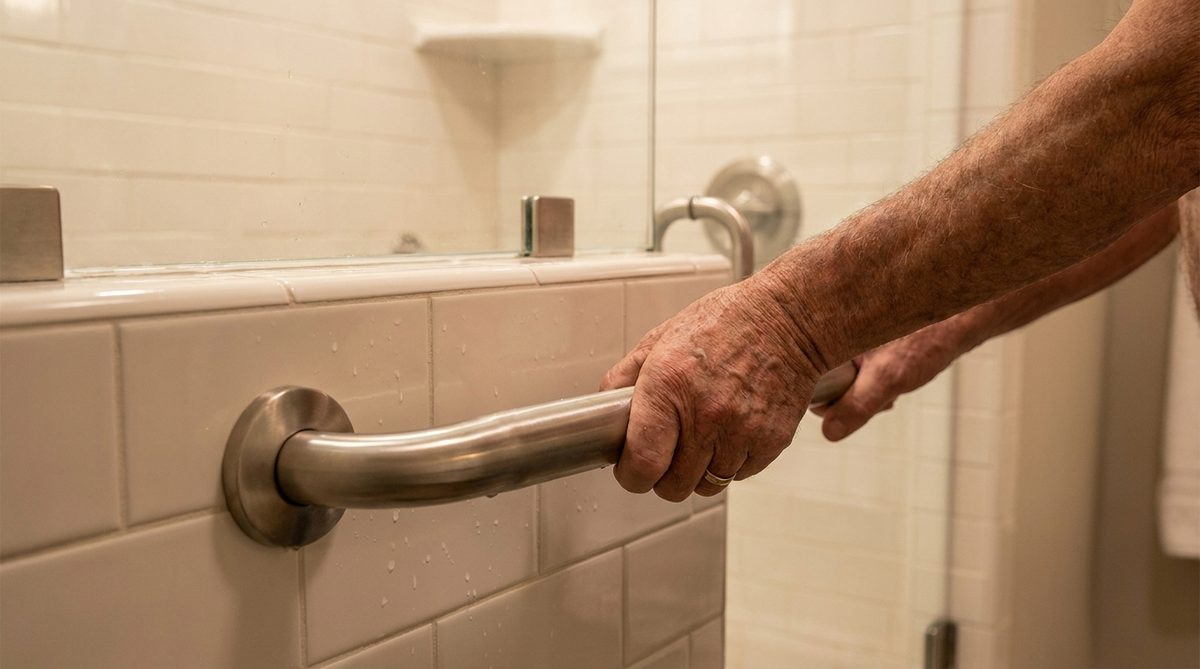
Margaret’s fall happened in a bathroom with no grab bars, a slick porcelain tub, and a cotton bath mat that bunched up under her feet. Every single one of those hazards could have been addressed for under $500 total.
When I do home safety assessments—which I recommend every older adult request from their physical therapist or occupational therapist—I’m looking for the quiet dangers that people have walked past a thousand times without noticing.
The High-Priority Modifications
The modifications that deliver the most safety per dollar are surprisingly affordable and straightforward:
- Grab bars in the bathroom (beside the toilet, inside the shower or tub)—professionally installed for $100-$300
- Non-slip flooring or adhesive strips in wet areas
- Adequate lighting throughout the home, especially in hallways, stairwells, and bathrooms (motion-sensor night lights cost $10-$20 each)
- Removal of throw rugs and loose cords from walkways
- Lever-style door handles and faucet handles for arthritic hands
- A raised toilet seat or comfort-height toilet for anyone with hip or knee issues
For a deeper breakdown of what these upgrades cost and how to prioritize them, I recommend reading this guide to home modifications for aging in place. It lays out realistic budgets that won’t decimate your retirement savings.
Thinking Bigger: When the House Needs Structural Changes
Some homes simply aren’t built for aging. Multi-level colonials with narrow staircases, split-level entries with no alternative access, bathrooms too small for a walker—these are harder problems. But even here, solutions exist. Stairlifts range from $2,000 to $5,000 installed. Zero-threshold showers can replace tub-shower combos for $3,000-$8,000. First-floor bedroom conversions give you single-level living without leaving your house.
The key is evaluating these needs before the emergency. I’ve watched too many families make panicked, expensive decisions from a hospital room because no one had the conversation earlier.
The Overlooked Pillar: Mental Health and Cognitive Wellness
Here’s something that doesn’t get enough attention in the aging-in-place conversation: your mental health determines whether your home feels like a sanctuary or a prison.
A 2024 study from the University of Michigan’s National Poll on Healthy Aging found that 34% of adults aged 50-80 reported feeling isolated, and isolation was the single strongest predictor of whether someone eventually chose—or was forced—to leave their home. It wasn’t the physical space. It was loneliness.
The Mayo Clinic has documented robust links between chronic social isolation and accelerated cognitive decline, increased cardiovascular risk, and higher rates of depression in older adults. When I assess a patient’s readiness for aging in place, I ask about their social connections with the same urgency I ask about their balance.
Building Your Support Ecosystem
Aging in place doesn’t mean aging alone. The people who do it most successfully tend to have what I call a “support ecosystem”—a network of relationships, services, and routines that keeps them connected and monitored.
- Regular check-ins with neighbors, friends, or family (daily or every-other-day contact)
- Participation in community activities, faith groups, or senior center programs
- Telehealth access for routine medical appointments and mental health support
- A relationship with a primary care provider who understands geriatric needs
- Awareness of local Area Agency on Aging services (every U.S. county has one)
I also encourage my patients to explore how their overall lifestyle habits support their cognitive and emotional health. Diet, sleep, movement, stress management, and purpose—these aren’t luxuries. They’re infrastructure.
Sleep, Nutrition, and the Biology of Staying Independent
Recent research has made it increasingly clear that the biological fundamentals—how you sleep, what you eat, how you manage inflammation—directly affect your ability to remain independent at home.
Sleep: The Underrated Superpower
A 2024 study published in the journal Aging Cell found that both too little sleep (under six hours) and too much sleep (over nine hours) were associated with accelerated biological aging markers in adults over 60. The sweet spot appears to be seven to eight hours, with an emphasis on sleep quality—meaning uninterrupted, restorative cycles—not just quantity.
Poor sleep worsens balance, reaction time, cognitive function, and mood. I’ve had patients whose fall risk dropped measurably once we addressed their sleep apnea or adjusted medications that were disrupting their sleep architecture.
Diet: You Can Shift Your Biology in Weeks
Some of the most exciting research I’ve seen recently involves dietary interventions that appear to reverse markers of biological aging in as little as four weeks. A 2024 clinical trial showed that older adults who followed a Mediterranean-style diet rich in leafy greens, fatty fish, nuts, and olive oil—while reducing processed foods and added sugars—demonstrated measurable improvements in DNA methylation patterns associated with cellular aging.
You don’t need a radical overhaul. What I see most often is that small, consistent changes—adding a serving of berries at breakfast, swapping white bread for whole grain, eating fish twice a week—compound into significant benefits over months and years.
The Financial Reality: Planning Before the Crisis
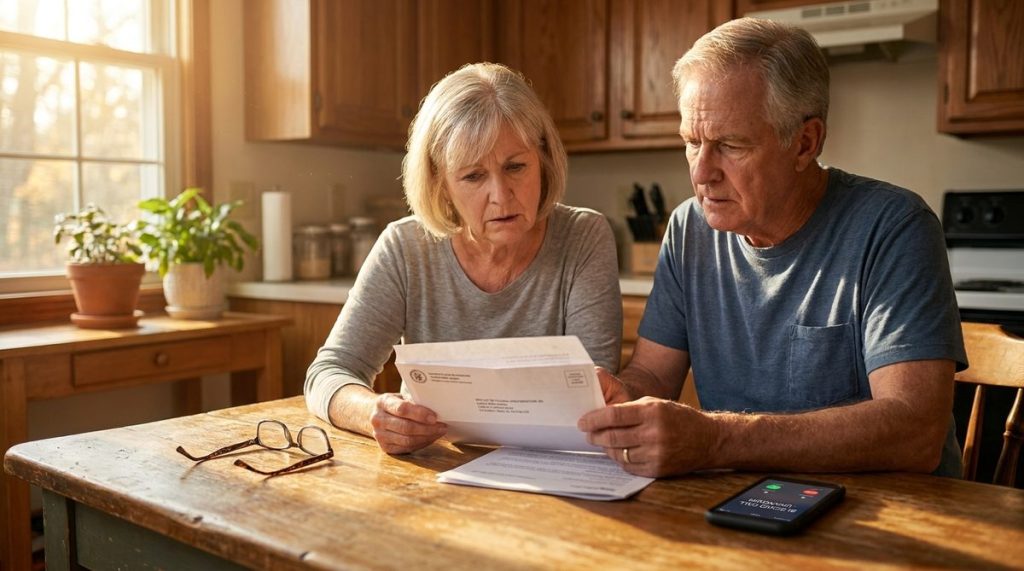
Let’s be honest about money, because it’s the elephant in every aging-in-place conversation. The median annual cost of a home health aide in the U.S. is approximately $75,500 for full-time care (according to Genworth’s 2024 Cost of Care Survey). Even part-time assistance—say, 20 hours a week—runs $30,000-$40,000 annually. Medicare covers very little of this.
This is why financial planning and healthcare cost management can’t be separated from the aging-in-place discussion. Understanding how Medicare premiums interact with your Social Security income helps you budget realistically for the care you may eventually need.
Options to explore include:
- Long-term care insurance (most cost-effective if purchased before age 60)
- Veterans’ Aid and Attendance benefits for qualifying veterans and spouses
- State Medicaid waiver programs that fund home-based care for low-income seniors
- Reverse mortgages as a last-resort funding mechanism for home modifications
- Community-based volunteer programs (like Village to Village Network) that provide free or low-cost support services
Margaret’s Ending—and Your Beginning
Margaret went home. It took 12 weeks of rehabilitation, a bathroom renovation, and some hard conversations with her daughter about emergency plans and daily check-ins. She also started a twice-weekly strength and balance program at our clinic, which she continued for two years before transitioning to a community exercise group.
When I last saw her—18 months after her fall—she was walking her golden retriever again. She’d installed grab bars in both bathrooms, replaced her hallway lighting, and signed up for a meal delivery service three days a week so she could focus her energy on the cooking she actually enjoyed on the other days.
“I should have done all this five years ago,” she told me. “But I thought preparing meant admitting I was old.”
That might be the most important sentence in this entire article. Preparing to age in place isn’t a concession to frailty. It’s a declaration of independence. It’s saying: I love this life, I love this home, and I’m going to do the smart, proactive work to keep both for as long as possible.
If you’re reading this in your 50s or 60s, you have an extraordinary advantage. Start the strength training now. Get the home assessment now. Have the financial conversation now. The people who age in place successfully aren’t the ones who got lucky—they’re the ones who got ready.
And if you’re reading this at 75 or 80, know that it’s not too late. I’ve seen patients in their late 80s make changes that gave them years of safe, joyful independence at home. The body is more adaptable than you think. The home is more modifiable than you assume. And the plan is simpler than you fear.
Your home is waiting. Make sure you’re ready to stay in it.
Frequently Asked Questions
What is the best age to start planning for aging in place?
The ideal time to begin planning is in your mid-50s to early 60s, when you have the physical capacity and financial flexibility to make gradual home modifications, build strength and balance habits, and research long-term care funding options before any health crisis forces reactive decisions.
Does Medicare pay for home modifications like grab bars or wheelchair ramps?
Traditional Medicare generally does not cover home modifications. However, some Medicare Advantage plans offer supplemental benefits that include home safety modifications. Medicaid waiver programs, Veterans Affairs benefits, and certain state and local grants may also help cover costs depending on your eligibility.
How often should seniors have a home safety assessment?
I recommend a professional home safety assessment at least once every two to three years after age 65, or immediately after any significant health change such as a fall, new diagnosis, surgery, or noticeable decline in balance or vision. Physical therapists and occupational therapists can conduct these assessments, and many are covered by insurance with a physician's referral.
Can exercise really reduce fall risk for adults over 70?
Yes, strong clinical evidence shows that structured exercise programs focusing on balance, lower-body strength, and functional mobility can reduce fall risk by 23-40% in older adults. Even individuals in their 80s and 90s can experience significant strength gains with progressive resistance training, making exercise one of the single most effective fall-prevention strategies available.
About Michael Torres, DPT, Board-Certified Geriatric Specialist
Michael Torres is a Doctor of Physical Therapy and board-certified geriatric clinical specialist with 18 years of experience working with older adults. He has treated thousands of seniors recovering from hip replacements, managing arthritis, rebuilding strength after hospitalizations, and preventing dangerous falls. At Daily Trends Now, Michael writes practical guides on exercises, mobility, pain management, and the physical strategies that help seniors stay strong and independent.