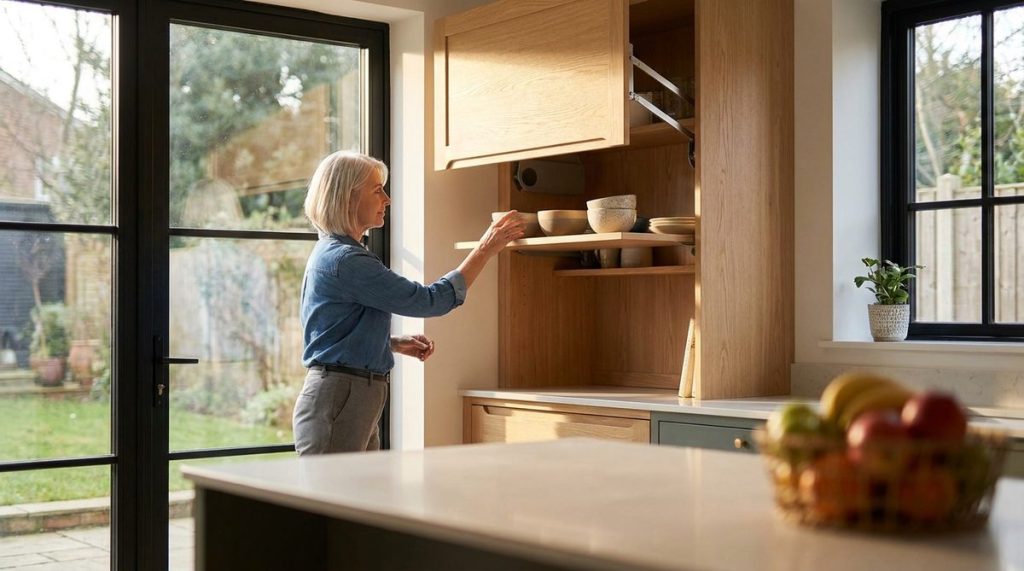


Most of What You’ve Heard About Aging in Place Is Wrong
After 14 years as a Certified Aging-in-Place Specialist, I can tell you that the biggest obstacles to staying safely in your own home aren’t physical barriers. They’re bad assumptions. Outdated beliefs about home modifications, costs, and timing lead homeowners over 50 to either overspend on the wrong upgrades or—more dangerously—do nothing at all.
According to AARP, roughly 77% of adults 50 and older want to remain in their current home as they age. Yet fewer than half have taken any concrete steps to make that possible. The gap between intention and action is almost always filled with myths—myths I hear repeated at consultations, expos, and even by well-meaning family members.
Let me walk you through the seven most common aging in place myths I encounter, explain why each one is wrong, and show you what the evidence actually supports. Some of these may surprise you. A few could save you thousands of dollars.
Myth 1: “Aging in Place Modifications Are Only for People With Disabilities”
This is the misconception I fight most often. Families assume that grab bars, wider doorways, and lever-style handles are “medical equipment” meant for someone who already has a disability. The truth is that universal design features benefit every person in a household—including grandchildren, guests carrying groceries, and anyone recovering from a temporary injury.
The National Council on Aging reports that one in four Americans aged 65 and older falls each year, and falls are the leading cause of injury-related death in that age group. Most of these falls happen in homes that haven’t been modified at all. Preventive modifications aren’t reactive—they’re protective.
I often tell my clients: “You don’t buy homeowner’s insurance after the fire. Don’t wait for a fall to install a grab bar.” The ideal time to make aging in place modifications is in your 50s or early 60s, when you can plan thoughtfully, shop for competitive contractor bids, and integrate changes into renovations you were already considering.
Myth 2: “It Costs a Fortune to Age-Proof Your Home”
Headlines like “Age-Proofing a Home Won’t Come Cheap” scare people into paralysis. Yes, a full-scale renovation with an elevator, roll-in shower, and first-floor master suite can run $50,000 or more. But that’s the extreme end of the spectrum, not the starting point.
What I see most often is that a targeted set of high-impact modifications—totaling between $2,000 and $10,000—addresses 80% of the fall risks and mobility challenges in a typical home. The key is prioritization, not perfection.
| Modification | Average Cost (2025) | Impact Level | DIY Possible? |
|---|---|---|---|
| Grab bars (bathroom, 3–4 bars) | $150–$400 | Very High | Yes, if into studs |
| Lever door handles (whole house) | $200–$500 | Moderate | Yes |
| Non-slip flooring (bathroom/kitchen) | $500–$2,000 | High | Depends on material |
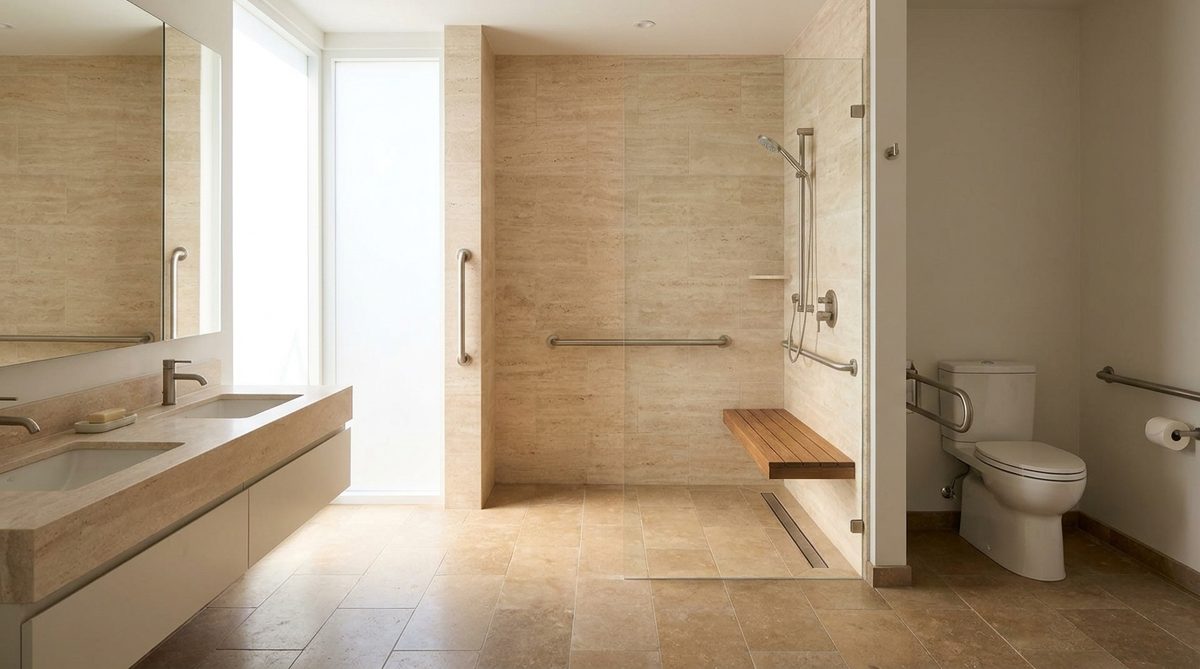
| Curbless/zero-threshold shower | $2,500–$7,000 | Very High | No |
| Stair handrails (both sides) | $200–$800 | High | Yes |
| Motion-sensor lighting (interior) | $100–$400 | High | Yes |
| Stairlift installation | $3,000–$8,000 | High (if stairs exist) | No |
| Front entry ramp or zero-step entry | $1,500–$5,000 | Very High | Sometimes |
Notice that five of the eight modifications on this list cost under $1,000 and can be done in a weekend. You don’t need a general contractor for most of them. For a deeper look at which upgrades deliver the best return, check out Home Modifications for Aging in Place: 7 That Pay Off Most.
Myth 3: “The Bathroom Is the Only Room That Matters”
Bathrooms get all the attention—and for good reason. They’re slippery, cramped, and involve transitions between sitting and standing. But focusing exclusively on the bathroom ignores the rooms where people spend most of their waking hours.
In my experience, kitchens cause nearly as many problems as bathrooms for older adults. Reaching overhead cabinets, standing at a stove for extended periods, and navigating cluttered floor space are daily injury risks. A 2023 study published by the National Institute on Aging found that kitchen-related burns and falls account for a significant share of emergency room visits among adults over 65.
Room-by-Room Priorities Beyond the Bathroom
Kitchen: Install pull-down shelving, add under-cabinet task lighting, replace round knobs with D-pull handles, and consider a wall oven at waist height if you’re already remodeling.
Bedroom: Position the bed so you can access it from both sides. Add a nightlight path to the bathroom. Make sure the mattress height allows easy sit-to-stand transitions (typically 20–23 inches from the floor).
Entryways: A zero-step entry eliminates the single most common barrier to remaining in your home long-term. If your front door has even one step without a handrail, that’s a priority fix.
Laundry area: A front-loading washer and dryer on pedestals reduces bending. If your laundry is in the basement, consider relocating it to the main floor during your next renovation cycle.
Myth 4: “Smart Home Devices Are Too Complicated for Seniors”
This myth is both ageist and outdated. Today’s voice-activated assistants, smart doorbells, and automated lighting systems are designed for simplicity—not tech expertise. In 2024, AARP found that 54% of adults 50+ own at least one smart home device, up from 34% in 2019.
What I recommend to clients is starting with three foundational devices: a smart speaker (for medication reminders and emergency calls), smart light bulbs with motion sensors, and a video doorbell. Total investment: under $250. No wiring. No apps required for basic functions.
If you’re curious about which devices work best for aging in place, Age Tech for Seniors: Devices That Help You Age in Place covers the landscape in detail.
Myth 5: “Medicare or Insurance Will Cover Home Modifications”
This is the myth that stings the most, because people plan their budgets around it. Traditional Medicare (Parts A and B) does not cover home modifications. Period. It won’t pay for grab bars, ramps, stairlifts, or widened doorways. Medicare Advantage plans occasionally offer limited home safety benefits—sometimes $500–$1,500 per year—but coverage varies wildly by plan and by state.
Medicaid waiver programs in some states do provide aging in place modification funding for qualifying low-income seniors, but the waitlists can stretch 12 to 24 months. Veterans may access grants through the VA’s Home Improvements and Structural Alterations (HISA) program or the Specially Adapted Housing (SAH) grant.
Realistic Funding Sources for Modifications
- Review your Medicare Advantage plan’s supplemental benefits. Call the plan directly and ask specifically about “home safety” or “home modification” benefits. Get the dollar cap and any required documentation in writing.
- Check your state’s Medicaid waiver programs. Search “[your state] Medicaid home and community-based waiver” for eligibility details. Apply early—waitlists are common.
- Explore nonprofit grants. Rebuilding Together, the Administration for Community Living, and many Area Agencies on Aging offer free or subsidized modification services for income-qualifying homeowners.
- Use a home equity line of credit (HELOC) strategically. If you have equity and plan to stay in your home, a small HELOC at a competitive rate can fund modifications that prevent far costlier nursing home stays later.
- Claim the medical expense deduction. If a doctor prescribes a modification as medically necessary (e.g., a ramp for a mobility impairment), the cost may be deductible on your federal tax return if your total medical expenses exceed 7.5% of adjusted gross income.
- Budget incrementally. Spread modifications across two or three years. Tackle the highest-impact, lowest-cost items first, then save for larger projects like a curbless shower.
Understanding how your Social Security income might shift in coming years also matters for this planning. Social Security COLA 2027: A Retiree’s Guide to What’s Coming breaks down the projections worth watching.
Myth 6: “You Should Only Make Changes After Something Goes Wrong”
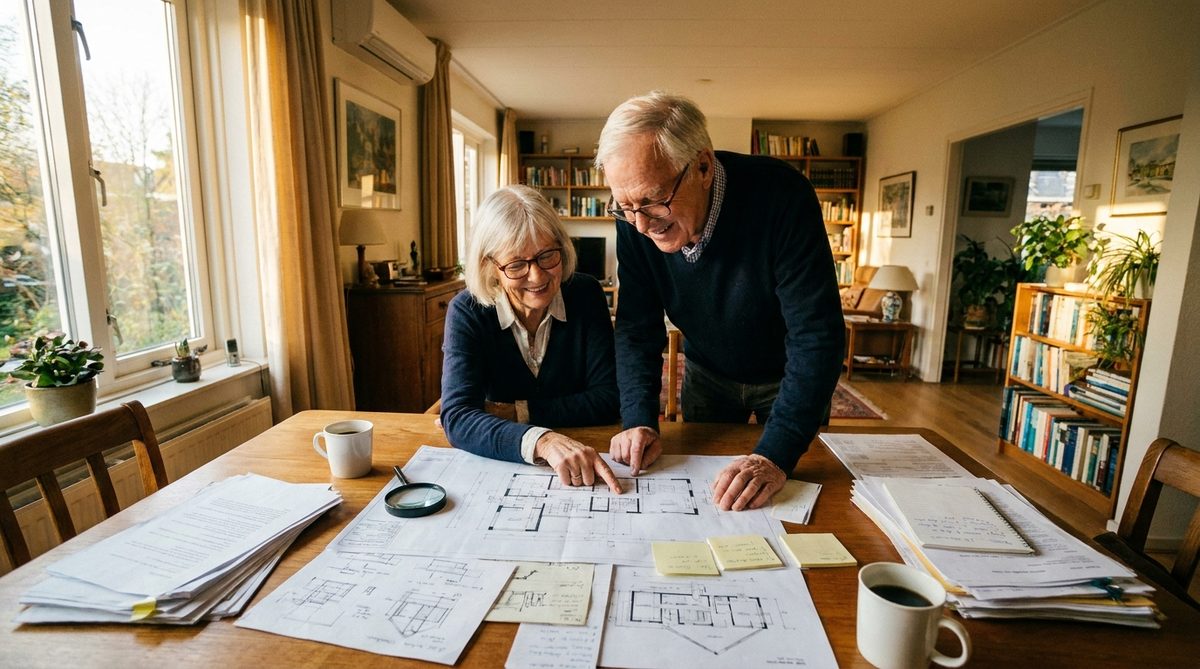
This is the reactive mindset that fills rehabilitation centers. In my 14 years of experience, I’ve seen hundreds of families scramble to modify a home while a parent is still recovering from a hip fracture in a skilled nursing facility. The modifications happen under time pressure, with limited contractor choices, at premium prices—and often in configurations that aren’t ideal because no one had time to plan properly.
Compare that to a proactive approach: a couple in their late 50s installs a curbless shower during a planned bathroom remodel. They choose the tile they love, the bench style they prefer, and negotiate contractor rates during the slow season. The modification costs 20–30% less than the same work done urgently, and the result looks like a high-end spa rather than a clinical afterthought.
The data supports early action. A 2022 study from the AARP Public Policy Institute found that proactive home modifications reduce fall-related hospitalizations by up to 26% among adults over 65. That’s not marginal—that’s transformative. And since the average hospital stay for a fall-related hip fracture costs over $35,000 (according to CDC data), prevention is not just safer, it’s dramatically cheaper.
Myth 7: “Aging in Place Means Aging Alone”
Perhaps the most damaging myth of all is the assumption that choosing to stay in your home means isolating yourself from community and care. In reality, a well-designed aging in place plan actively builds in connection, support, and professional oversight.
Home health aides, telehealth appointments, adult day programs, meal delivery services, and neighborhood-based mutual aid networks all fit within an aging in place framework. So do technologies like medical alert systems and remote health monitoring, which allow family members and healthcare providers to stay informed without requiring relocation to a facility.
I often tell my clients that aging in place is not a solo project—it’s a team strategy. Your team might include an occupational therapist who assesses your home, a CAPS-certified remodeler who executes the modifications, a geriatric care manager who coordinates services, and family members who stay engaged through regular check-ins.
If you’re managing a chronic condition while planning to stay home, 7 Ways to Age in Place Safely When You Have Chronic Conditions is an essential companion read.
What Actually Works: The Evidence-Based Starting Point
After debunking the myths, here’s what I recommend to every client who asks me, “Where do I actually begin?”
- Walk your home with fresh eyes. Go room by room and note every threshold, step, dim corridor, slippery surface, and hard-to-reach switch or outlet. Write it all down.
- Prioritize by frequency and risk. The modifications that matter most are in the spaces you use every day—the path from bedroom to bathroom, the kitchen, the main entry—not the guest room you use twice a year.
- Fix the lighting first. It’s cheap, fast, and disproportionately effective. The National Institute on Aging specifically recommends 100-watt equivalent bulbs in all task areas for adults over 60, whose eyes may need up to three times more light than a 20-year-old’s.
- Install grab bars in the bathroom this month. Not next year. Not after a fall. This month. Properly anchored grab bars cost under $50 each and are the single most protective modification per dollar spent.
- Schedule a professional home assessment. A CAPS-certified specialist or occupational therapist can identify risks you’ll miss. Many Area Agencies on Aging offer free or low-cost assessments.
- Create a three-year modification roadmap. Map out which changes to make each year based on budget and urgency. This prevents the financial shock of doing everything at once and ensures you stay on track.
- Revisit the plan annually. Your needs will evolve. A plan that was right at 62 may need updating at 67. Build in a yearly review, ideally with input from your physician.
The Bottom Line on Aging in Place Myths
The biggest risk to aging in place successfully isn’t your home’s floor plan or your bank account. It’s acting on misinformation. Every myth I’ve outlined above leads to the same outcome: delayed action, wasted money, or preventable injury.
The good news is that the evidence on what works is clear, the costs are more manageable than most people believe, and the right time to start is almost always now—not after a crisis forces your hand. Whether you’re 55 and remodeling a kitchen or 75 and reconsidering your bathroom layout, the principles are the same: prioritize, plan, and act before you have to react.
Your home has served you well for decades. With the right information—and without the myths—it can keep serving you for decades more.
Frequently Asked Questions
What is the average cost to modify a home for aging in place?
Most homeowners spend between $2,000 and $10,000 on targeted, high-impact modifications like grab bars, improved lighting, non-slip flooring, and lever handles. Full-scale renovations including curbless showers and zero-step entries can reach $20,000–$50,000, but starting with low-cost, high-impact changes addresses the majority of safety risks.
Does Medicare pay for aging in place home modifications?
Traditional Medicare (Parts A and B) does not cover home modifications such as grab bars, ramps, or stairlifts. Some Medicare Advantage plans offer limited home safety benefits ranging from $500 to $1,500 per year. Medicaid waiver programs and VA grants may also provide funding for qualifying individuals.
When should I start making aging in place modifications to my home?
Certified specialists recommend beginning modifications in your 50s or early 60s, well before any health event creates urgency. Proactive modifications are typically 20–30% less expensive than emergency changes, allow for better planning and design choices, and have been shown to reduce fall-related hospitalizations by up to 26%.
About Marcus Bell, Certified Aging-in-Place Specialist (CAPS)
Marcus Bell is a Certified Aging-in-Place Specialist (CAPS) with 14 years of experience helping American seniors create safer, more comfortable living environments. He has consulted on hundreds of home modifications — from bathroom safety upgrades to smart home installations — and writes extensively about the products, services, and strategies that help older adults live independently for longer. At Daily Trends Now, Marcus covers home improvement, aging-in-place solutions, gardening, and practical lifestyle tips for seniors.