

The Phone Call That Changed Linda’s Retirement Math
Consider the situation of a 71-year-old living alone in a ranch-style home outside Phoenix who depends on Social Security for roughly 62% of monthly income. After reading conflicting headlines—one suggesting the Social Security COLA 2027 could land around 2.8%, another pegging it at 3.9%—the natural question arises: which number is real, and should you be celebrating or worrying?
This is a question financial professionals field hundreds of times. The honest answer is always more nuanced than any single headline. Understanding what the latest estimates mean, where the confusion comes from, and—most critically—the concrete steps you can take right now to protect yourself no matter where the final number lands, requires a closer look.
This article is that same conversation, expanded for everyone navigating the same uncertainty.
Why the Social Security COLA 2027 Estimates Are All Over the Map
If you’ve been following the news, you’ve likely seen estimates for the 2027 cost-of-living adjustment ranging from 2.8% all the way up to 3.9%. That spread isn’t a sign that someone is wrong—it reflects different organizations using different time windows and methodologies to forecast Consumer Price Index data that hasn’t been finalized yet.
Here’s how the official process works. The Social Security Administration calculates each year’s COLA by comparing the average CPI-W (Consumer Price Index for Urban Wage Earners and Clerical Workers) from the third quarter of the current year to the same quarter of the prior year. The 2027 COLA won’t be officially announced until October 2026, based on July, August, and September 2026 CPI-W data.
The Senior Citizens League (TSCL) recently projected a 2.8% COLA, while the Committee for a Responsible Federal Budget and several independent analysts have pegged the estimate closer to 3.9% based on the latest inflation trajectory. The gap exists because TSCL’s model weights recent grocery and energy disinflation more heavily, while other projections factor in sticky shelter and medical costs that continue to climb.
“A 1.1 percentage point difference in COLA might sound small, but on an average Social Security benefit of $1,976 per month, that’s the difference between a $55 monthly raise and a $77 monthly raise—roughly $264 more per year. For someone like Linda, that’s a month of groceries.”
What Drove the 2026 COLA—and Why It Disappointed
To understand where 2027 is heading, it helps to look back. The 2026 COLA came in at 2.5%, which was the smallest adjustment since the 1.3% bump in 2021. After years of elevated inflation—including the eye-popping 8.7% COLA for 2023—many retirees expected larger raises to continue. They didn’t, and the pain was compounded by a simultaneous increase in Medicare Part B premiums.
As detailed in a previous analysis, Medicare Part B premiums effectively ate about a third of the 2026 Social Security raise for many beneficiaries. The standard Part B premium rose to $185 per month in 2026, up from $174.70 in 2025—a $10.30 monthly increase that was automatically deducted from Social Security checks before retirees ever saw a dime of their COLA.
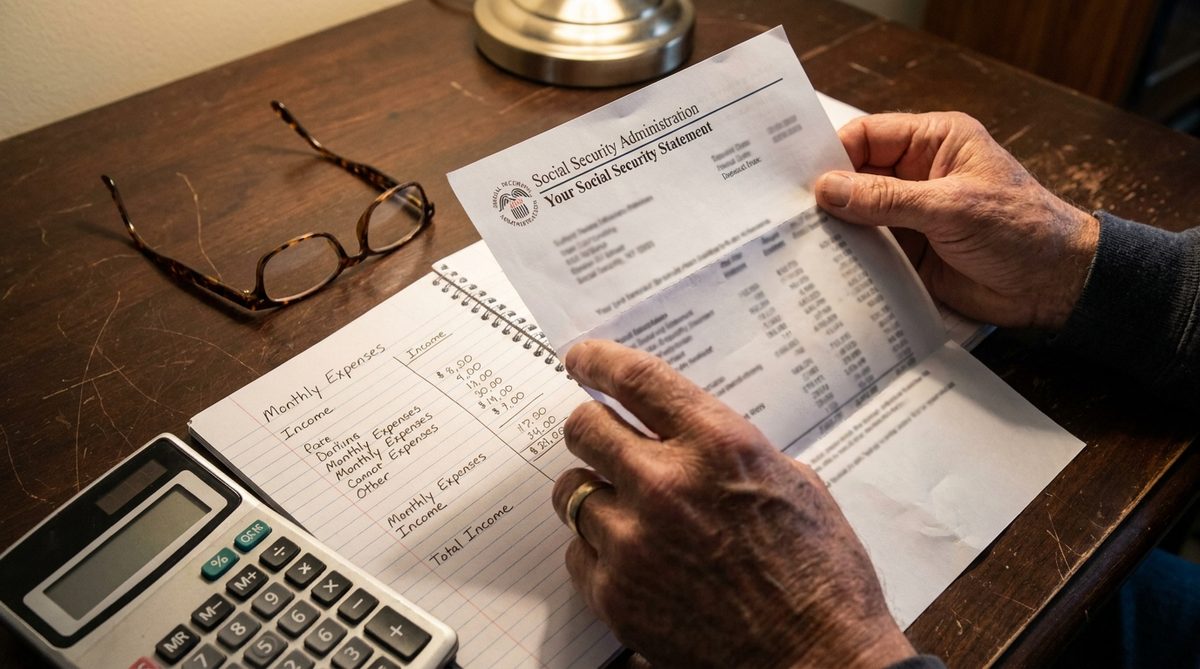
The Real Problem: COLA Rarely Keeps Pace with Actual Senior Expenses
Here’s something that surprises many retirees: even a “generous” COLA usually understates the inflation you actually experience. The CPI-W tracks spending patterns of urban wage earners—working-age people—not retirees. Seniors typically spend a larger share of your budgets on healthcare and housing, two categories that have consistently outpaced general inflation.
The Bureau of Labor Statistics does publish an experimental index called the CPI-E (for elderly consumers), and it has historically run 0.2 to 0.3 percentage points higher than the CPI-W annually. Over a 20-year retirement, that gap compounds into significant purchasing power loss. According to TSCL’s 2024 analysis, Social Security benefits have lost approximately 20% of their purchasing power since 2010.
Whether the Social Security COLA 2027 turns out to be 2.8% or 3.9%, it is unlikely to fully offset the rising costs you face in medical co-pays, supplemental insurance premiums, property taxes, and home maintenance.
The Medicare Squeeze Isn’t Going Away
One of the biggest wild cards for 2027 is what happens with Medicare costs. The Centers for Medicare & Medicaid Services will announce 2027 premiums in the fall of 2026, right around the same time SSA announces the COLA. In recent years, premium increases have consumed anywhere from 20% to 40% of the COLA benefit.
For a deeper look at how Medicare changes are reshaping retiree budgets right now, review the ongoing Medicare Part B vs. Social Security COLA battle in 2026. The dynamics described there will almost certainly repeat in 2027.
What I Told Linda: A 5-Step Action Plan for Any COLA Scenario
When facing uncertain COLA figures, the question becomes: what should you actually do? Here’s an action plan used with retirement clients who depend heavily on Social Security—the same framework that applies broadly to your situation.
- Run a “COLA stress test” on your budget today. Take your current monthly Social Security benefit and calculate what a 2.5%, 3.0%, and 3.9% raise would look like in dollar terms. Then subtract an estimated $8–$15 monthly Medicare Part B increase. Can your budget absorb the net difference? If the answer is no at the lower end, you need to act now—not in October.
- Review your Medicare coverage during Open Enrollment (October 15–December 7, 2026). Every year, retirees leave money on the table by auto-renewing plans without comparing. Drug formularies change. Network providers shift. A plan that saved you money in 2026 might cost you hundreds more in 2027. Use the Medicare Plan Finder tool at medicare.gov to run a side-by-side comparison with your actual prescriptions.
- Check whether you qualify for Medicare Savings Programs or Extra Help. Roughly 1 in 3 eligible seniors never applies. If your monthly income is below $1,715 (individual) or $2,320 (couple) in 2026, you may qualify for programs that pay some or all of your Part B premiums, deductibles, and co-pays. That can effectively double the value of your COLA.
- Build or replenish a small emergency fund—even $1,000 matters. A 2024 survey by the Employee Benefit Research Institute found that 29% of retirees have less than $1,000 in liquid savings outside of Social Security. When inflation outpaces your COLA, that thin margin disappears fast. Even setting aside $50 per month from a COLA increase creates a buffer against unexpected dental bills, car repairs, or appliance failures.
- Consider one strategic income move before year-end. This could be a partial Roth conversion on a low-income year to reduce future Required Minimum Distributions and tax drag, selling underperforming investments to harvest losses, or picking up part-time seasonal work during the holidays. The IRS allows you to earn up to $22,320 in 2025 (if you’re under full retirement age) before Social Security benefits are temporarily reduced. If you’re past full retirement age, there’s no earnings limit at all.
The Savings Depletion Crisis Nobody Wants to Talk About
A darker trend behind the COLA conversation deserves attention. A recent survey highlighted by multiple financial outlets found that older adults are depleting retirement savings earlier than expected due to persistent inflation. Financial advisors increasingly observe that clients who entered retirement in 2019 or 2020 with what seemed like adequate 401(k) or IRA balances have seen those cushions shrink faster than their financial plans projected.
The culprit isn’t just inflation. It’s the compounding effect of inflation plus medical cost increases plus the emotional spending that often accompanies anxiety. When people feel financially squeezed, they sometimes make reactive decisions—cashing out investments during market dips, taking on credit card debt for essentials, or deferring medical care until small problems become expensive emergencies.
“The biggest retirement risk isn’t a stock market crash or a low COLA—it’s the slow, invisible erosion of purchasing power that happens year after year while retirees believe they’re doing fine because their check went up by 2 or 3 percent.”
If you’re feeling this squeeze, you’re far from alone. And the solution isn’t to panic—it’s to plan with precision.

Smart Low-Risk Moves to Supplement Your Social Security
For retirees who can’t afford to wait and hope for a favorable COLA, there are several relatively safe strategies to generate supplemental income or reduce expenses.
Treasury I Bonds and Treasury Bills
I Bonds are still paying a composite rate that tracks inflation, and they’re backed by the full faith of the U.S. government. You can purchase up to $10,000 per person annually through TreasuryDirect.gov. Short-term Treasury bills (4-week to 52-week maturities) currently offer yields in the 4.0%–4.3% range as of mid-2025, which is meaningfully above most savings accounts. For retirees with even $20,000 to $50,000 in idle savings, shifting to short-term Treasuries can add $800 to $2,000 in annual income with virtually no risk.
Reducing Housing Costs Without Moving
Housing is the single largest expense for most retirees, and it’s also where some of the biggest savings hide. Property tax exemptions for seniors exist in 45 states—but you usually have to apply. Homestead exemptions, senior freezes, and deferrals can save $500 to $3,000 per year depending on your state and county. If you’re planning to stay in your home long-term, you might also explore age tech devices that help you age in place and reduce costs associated with in-home care or monitoring services.
The SNAP Benefit That Seniors Overlook
The Supplemental Nutrition Assistance Program isn’t just for working-age families. According to the Consumer Financial Protection Bureau, millions of eligible seniors don’t apply for SNAP benefits because of stigma or because they assume they won’t qualify. In many states, seniors with monthly incomes below $1,580 (individual) can receive $100 to $291 per month in grocery assistance. That’s real money that frees up Social Security dollars for other essentials.
What Happens If the Trust Fund Issue Isn’t Resolved?
You deserve a straightforward assessment of the larger picture. The Social Security Board of Trustees projects that the combined Old-Age and Survivors Insurance (OASI) trust fund will be able to pay full scheduled benefits until approximately 2033. After that, incoming payroll tax revenue would cover roughly 79% of scheduled benefits.
That does not mean Social Security “goes bankrupt” or disappears. It means Congress will eventually need to act—through some combination of payroll tax increases, benefit adjustments, changes to the retirement age, or other reforms. In every previous funding crisis (1977 and 1983), lawmakers reached bipartisan solutions before benefits were cut. But “eventually” is getting closer, and the political landscape is more fractured than it was in 1983.
For a more detailed analysis of how a larger COLA could paradoxically accelerate trust fund depletion, take a look at why a bigger Social Security raise could actually backfire.
Practical guidance: plan as if you’ll receive full benefits, but build financial resilience as if you might face a 10–15% reduction in your mid-70s or 80s. Hope for the best, prepare for the possible.
Linda’s New Plan—and What You Can Learn From It
By the end of our conversation, Linda had a clearer picture and a calmer mind. Here’s what she decided to do:
She’s going to review her Medicare Advantage plan during Open Enrollment this fall, because her cardiologist left her plan’s network and she’s been paying out-of-network rates without realizing it. She’s applying for Arizona’s property tax senior freeze, which she didn’t know existed. She’s moving $15,000 from a savings account earning 0.4% into a 26-week Treasury bill ladder. And she’s setting aside 30% of whatever her 2027 COLA increase turns out to be into a dedicated emergency fund.
None of these moves are dramatic. None require sophisticated financial knowledge. But together, they could put an extra $2,500 to $3,500 back into Linda’s annual budget—far more than even the most optimistic Social Security COLA 2027 projection would provide on its own.
The Bottom Line for 2027 and Beyond
The Social Security COLA 2027 will matter. Whether it lands at 2.8%, 3.9%, or somewhere in between, it will directly affect the monthly checks that 67 million Americans depend on. But it’s only one variable in a much larger equation.
Evidence from financial planning shows this: the retirees who thrive aren’t the ones who get the biggest COLA. They’re the ones who treat every adjustment—up or down—as a prompt to review, optimize, and take one more small step toward financial resilience.
Don’t wait for October. The best time to prepare for your 2027 COLA is right now, while you still have months to make moves that compound in your favor. Your future self will thank you.